

Genuine or Fake Obsidian: How to Identify an Authentic Natural Stone
- Introduction
- What exactly is obsidian?
- Why are there fake obsidians on the market?
- The visual characteristics of genuine obsidian
- How to recognize genuine obsidian: the most reliable criteria
- Common mistakes that make people think obsidian is fake
- Fake tests to absolutely avoid
- Why authenticity matters in lithotherapy
- How to buy genuine obsidian without making a mistake
- In summary: the best signs for recognizing genuine obsidian
- Conclusion: recognizing obsidian properly to buy with confidence
- FAQ: Genuine or Fake Obsidian
Introduction
Obsidian intrigues, fascinates, and immediately draws the eye. With its deep appearance, almost mirror-like shine, and powerful reputation in lithotherapy, it is one of the most sought-after Natural Stones. Yet one question often comes up among mineral lovers, jewelry enthusiasts, and people seeking authenticity: how can you tell whether you are dealing with genuine obsidian or an imitation?
This question is far from trivial. Today, the stone market has grown considerably. Between specialized boutiques, marketplaces, general sellers, and less scrupulous resellers, it can sometimes be difficult to distinguish an authentic natural stone from simple tinted glass. And when you buy obsidian for its beauty, symbolic uses, or lithotherapy, authenticity truly matters.
In this article, we are going to look at what obsidian really is, why it can be confused with glass, which signs help identify genuine obsidian, which pitfalls to avoid when buying, and why this verification is essential when you are interested in Natural Stones. You will also discover concrete criteria, frequent mistakes, useful advice, and reference points that are rarely explained clearly.
As a complement, to better understand the symbolic significance of this stone, you can read the article Obsidian: Stone of Truth and Spiritual Protection.
Our Obsidian Jewelry
What exactly is obsidian?
Before trying to determine whether a stone is real or fake, you first need to understand its nature. Obsidian is a natural volcanic rock formed when lava cools very quickly. This sudden cooling prevents the complete crystallization of minerals, which explains its unique texture and its smooth, dense, and shiny appearance.
This is exactly where the confusion begins. Many people are surprised to discover that obsidian looks like glass. In reality, this is not a coincidence: obsidian is often described as a natural volcanic glass. This means it naturally has a glassy appearance without being an imitation or an artificial material.
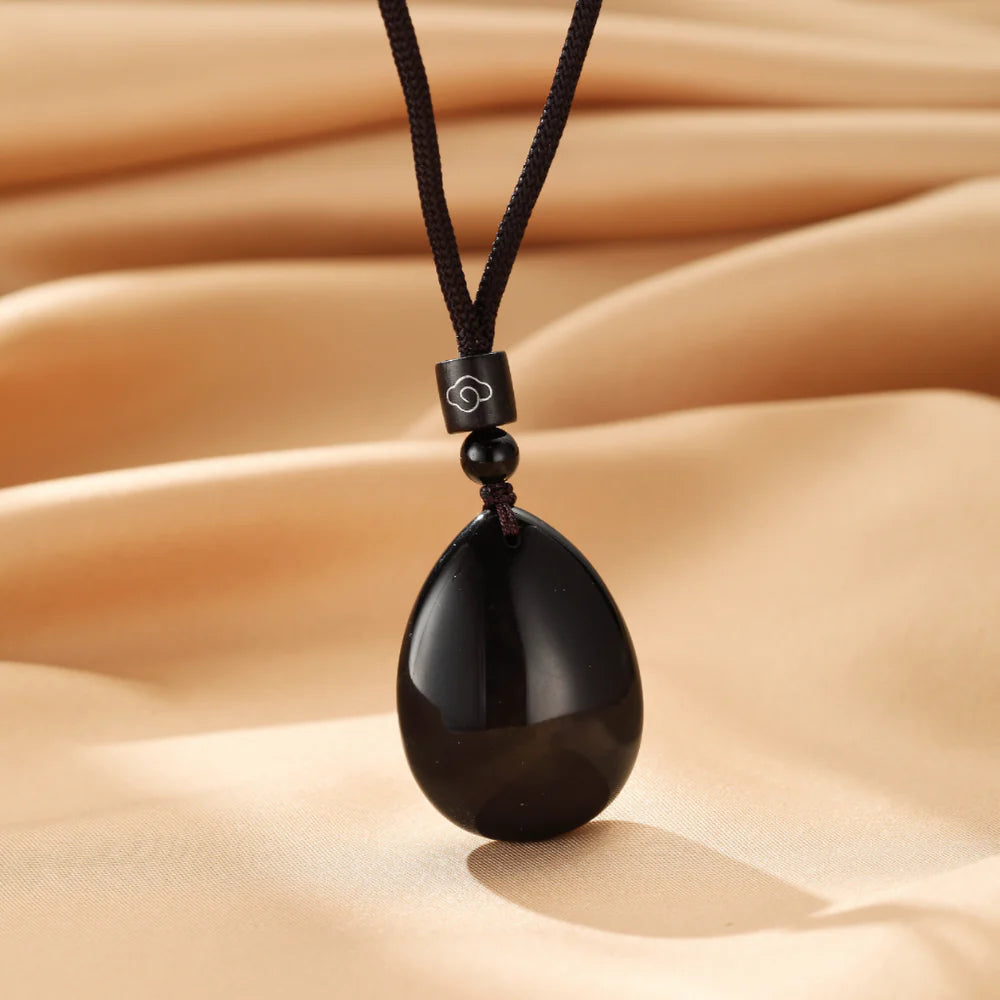
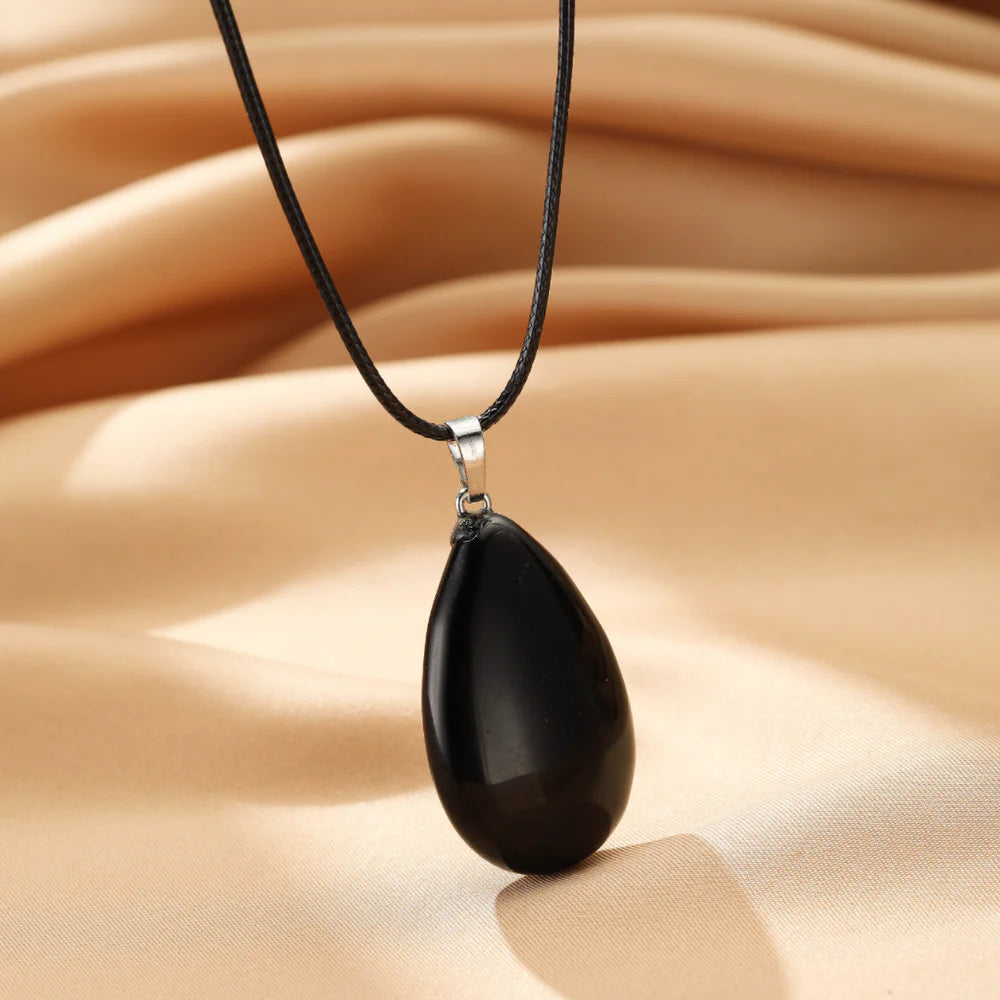
This clarification is essential to avoid the most common mistake: believing that a shiny obsidian must automatically be fake. Genuine obsidian can be very shiny, very dark, very smooth, and can even display a mirror-like effect once polished. Its appearance is therefore not a flaw, but a natural characteristic linked to its formation.
There are also several varieties of obsidian, each with its own visual features:
- black obsidian, the best known;
- golden obsidian, with subtle luminous reflections;
- silver obsidian, more nuanced;
- snowflake obsidian, marked by light inclusions;
- mahogany obsidian, blending black and reddish brown;
- rainbow obsidian, highly appreciated for its concentric reflections.
In other words, genuine obsidian does not always look the same. That is what makes identifying it both fascinating and sometimes a little delicate.
To go deeper into the symbolic properties and the different ways of approaching this stone, you can also read Benefits and Properties of Obsidian.

Why are there fake obsidians on the market?
Obsidian’s popularity is not new, but it has increased with the growing interest in Natural Stones, energy jewelry, and lithotherapy. The more popular a stone is, the more it attracts imitations. Obsidian is no exception.
Several reasons explain the presence of fake obsidians on the market:
- its dark color is easy to imitate;
- its glassy look can be reproduced with industrial glass;
- its popularity encourages some sellers to offer substitute products;
- many beginner buyers do not know the criteria of authenticity;
- some commercial names deliberately maintain confusion.
In the most common cases, “fake obsidian” is nothing more than black or brown tinted glass shaped to resemble a natural stone. At first glance, the illusion can work. Under flattering light, with retouched photos or a vague description, doubt becomes real.
There is also another, more subtle phenomenon: imprecise product listings. The seller does not clearly state whether the stone is natural, reconstructed, synthetic, or simply decorative. As a result, the buyer believes they are ordering genuine obsidian when in fact they receive a material with no particular mineral value.
This situation is all the more problematic because obsidian is often chosen for its symbolic meaning. When someone looks for a stone of protection, grounding, or introspection in lithotherapy, they are not just buying an aesthetic object. They are seeking a natural material, an origin, a vibration, a story.
The visual characteristics of genuine obsidian
The eye remains the first tool of observation. Even without being a gemologist, it is possible to spot very useful clues to determine whether obsidian seems authentic.
A natural and deep shine
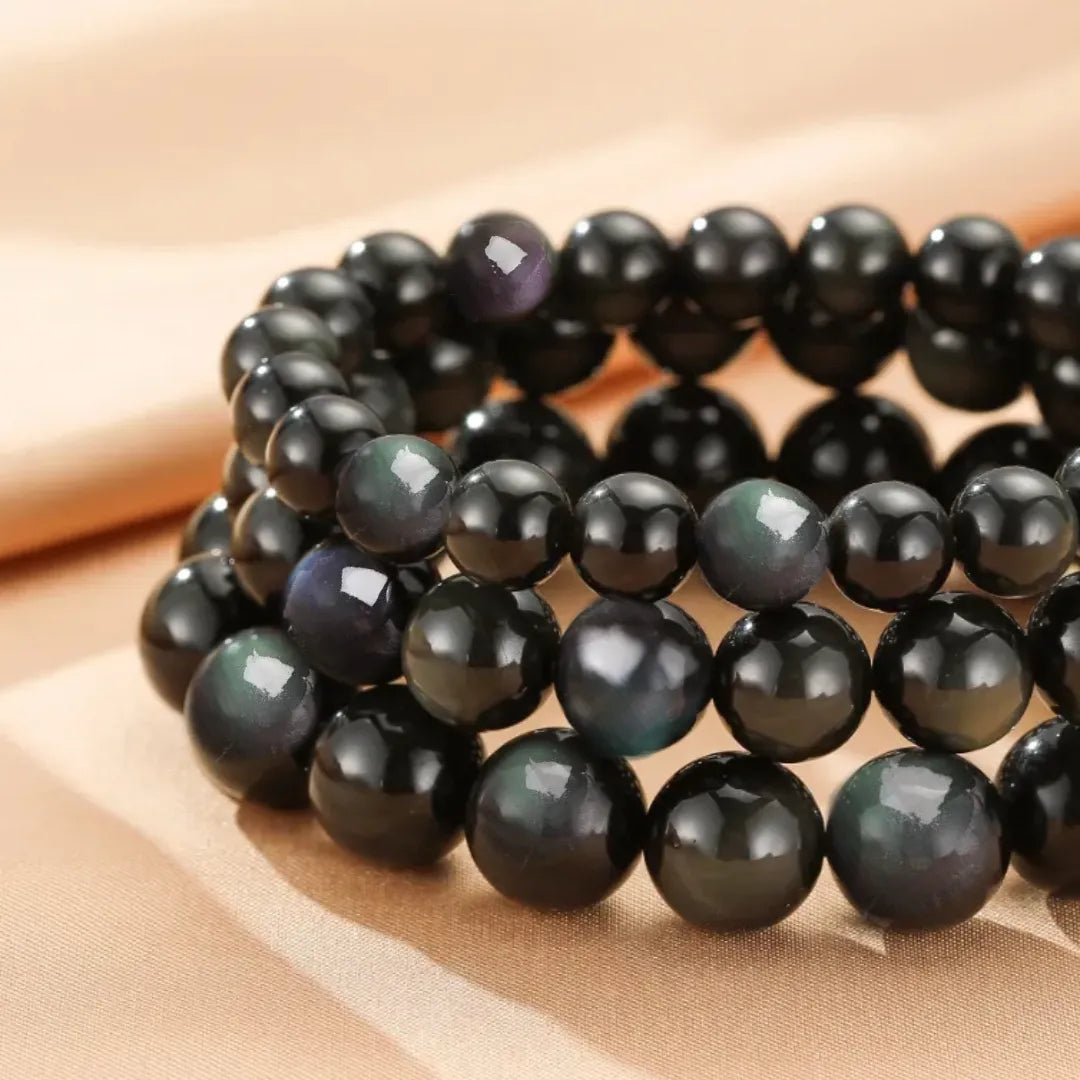
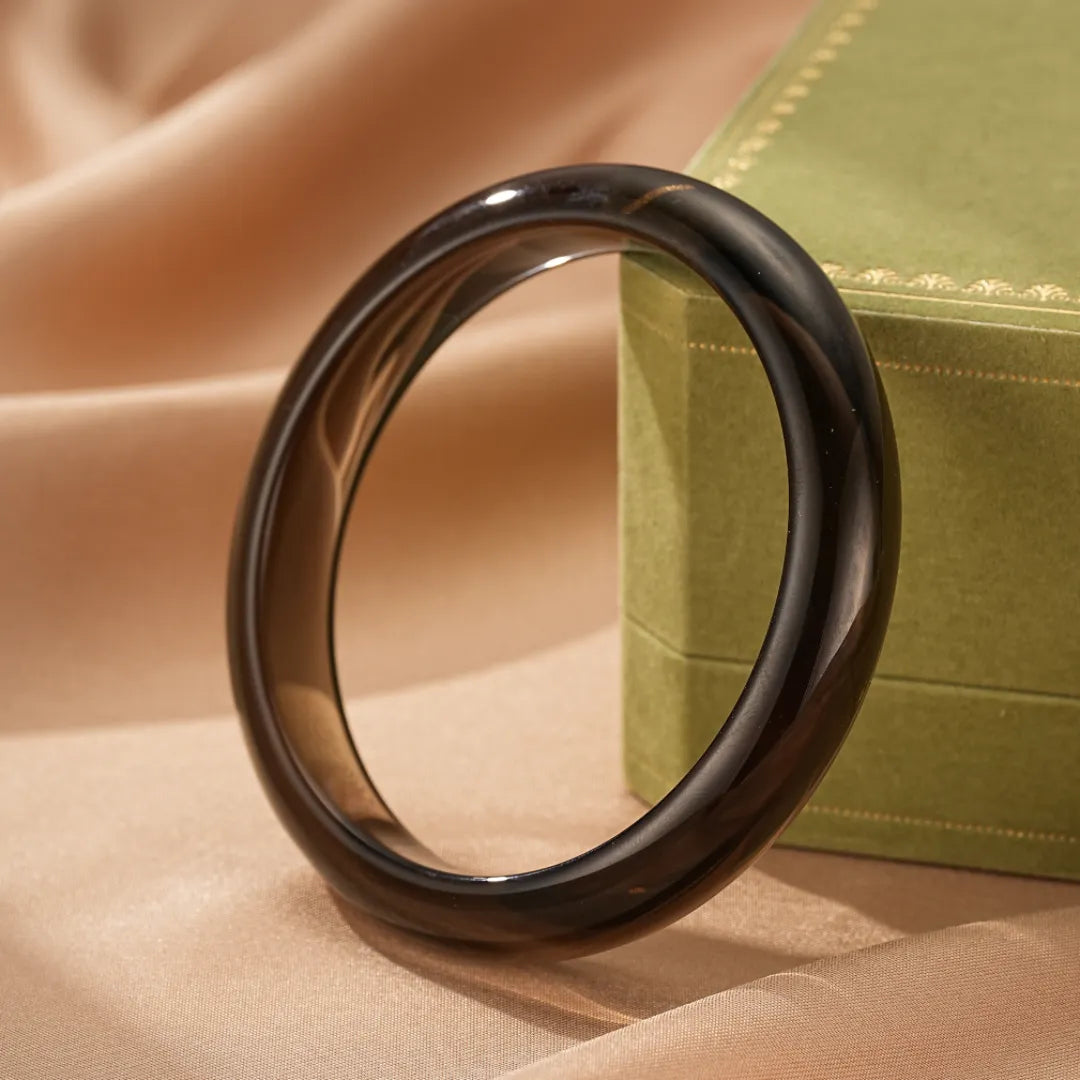
Obsidian often has a natural glassy luster. Its surface can reflect light sharply, especially when polished. This shine is not suspicious in itself. On the contrary, it is typical of this kind of volcanic rock.
What you need to observe is not simple shine, but its quality. Genuine obsidian often shows visual depth. Light does not simply “bounce” off the surface: it seems to reveal internal nuances, denser areas, and richer reflections than plain flat glass.
An intense color, but not always uniform
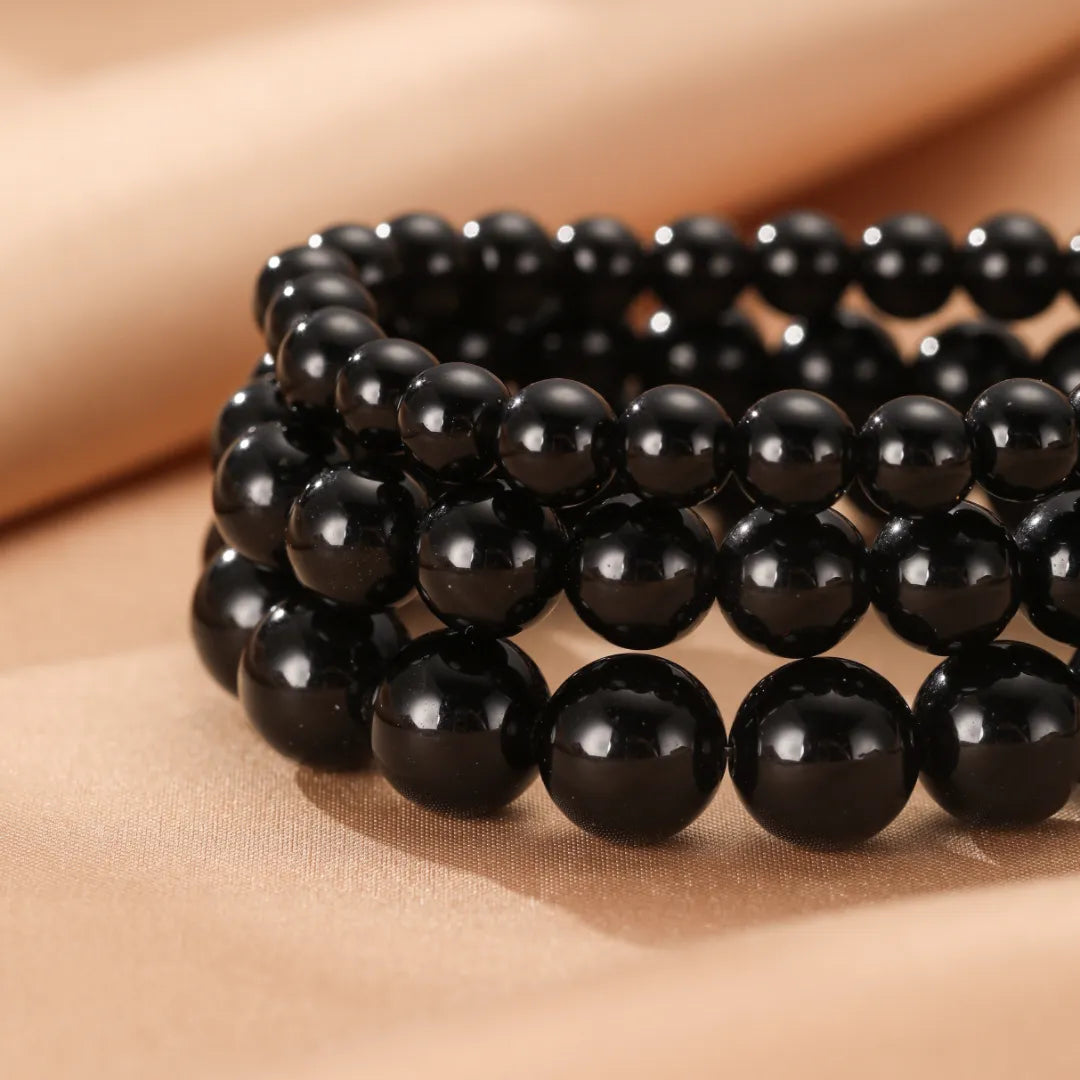
Black obsidian is known for its intensity. However, a stone that looks too uniform, too perfect, or too “plastic” in its appearance should call for caution. Natural Stones often have a visual personality. Even when they seem simple, they frequently reveal small subtleties: depth, variable opacity, discreet reflections, slight translucency along thin edges.
Genuine obsidian does not necessarily need to show visible flaws, but it rarely has an artificial or repetitive look.
Particular reflections depending on the variety
Some obsidians are specifically sought after for their visual effects. Golden obsidian reveals warm reflections in the light. Silver obsidian offers cooler shades. Snowflake obsidian displays light patterns created by mineral inclusions. Rainbow obsidian can reveal fascinating iridescent halos.
These variations are important because many buyers think real obsidian must be uniformly black. That is false. This belief sometimes leads people to reject an authentic stone simply because it seems too nuanced.
Slight translucency on thin edges
Here is a little-known but very useful detail. When obsidian is thin or worked into a fine slice, its edges can sometimes let a slight brownish or smoky light pass through. This phenomenon does not always appear, but it can be an interesting sign of authenticity depending on the variety and the thickness of the piece.
On the other hand, transparency that is too clear, too uniform, and too similar to decorative glass deserves greater caution.
If you would like to discover how this stone is highlighted in elegant and symbolic creations, you can read Obsidian Jewelry: Elegance and Energy.

How to recognize genuine obsidian: the most reliable criteria
Let us now move on to the most useful practical points. No single clue is always enough to guarantee authenticity, but combining several criteria makes it possible to form a much more reliable opinion.
Observe the overall consistency of the stone
Genuine obsidian has a natural visual consistency. Its color, density, shine, and reflections form a harmonious whole. An imitation, on the other hand, sometimes seems “too well made” or, on the contrary, too simplistic.
Ask yourself a few questions:
- does the stone look natural or artificially standardized?
- does the rendering seem deep or superficial?
- do the reflections change depending on the light?
- does the object look like a stone or like a molded decorative material?
This overall reading is often more relevant than a fake “miracle test.”
Examine the surface in the light
Place the obsidian under natural light or fairly neutral white light. Look at it from several angles. Genuine obsidian may reveal:
- discreet internal variations;
- areas that are more opaque or more luminous;
- metallic or silky reflections depending on the variety;
- a depth that changes with the angle.
An imitation made of uniform black glass often gives a flatter, poorer, more repetitive effect.
Check the feel and density
Like many Natural Stones, obsidian generally gives a cool sensation to the touch. It feels dense, stable, and mineral. A material that is too light or too “warm” to the touch can raise doubt, even though this criterion remains secondary.
The polish can be very smooth, but the sensation should remain mineral. A natural stone has a presence. That may sound subjective, yet people who regularly handle minerals quickly learn to feel the difference between a natural material and a basic imitation.
Beware of patterns that are too repetitive
In mass-produced jewelry, a certain degree of uniformity is normal. However, if several stones display exactly the same patterns, the same internal effects, and the same reflections down to the millimeter, this may indicate a manufactured or imitation material.
Nature likes balance, not photocopies.
Read the product description carefully
A good Natural Stones seller clearly describes what they sell. At minimum, they specify:
- the nature of the stone;
- its variety;
- its use as jewelry or a decorative object;
- sometimes its geographical origin;
- sometimes its visual characteristics.
On the contrary, a vague, very short listing focused only on marketing without any mineral precision should raise suspicion.
Assess the seller’s credibility
The seller’s seriousness plays an essential role. A specialized shop that is consistent in its descriptions, visuals, and universe inspires more confidence than an isolated listing without context. Realistic photos, zooms, details, and educational content are good signs.
To see how obsidian can be presented in a dedicated universe, you can take a look at the Obsidian Jewelry Collections.

Common mistakes that make people think obsidian is fake
When you are starting out, it is easy to make mistakes. And sometimes, people reject genuine obsidian for the wrong reasons.
Believing that “if it looks like glass, it is fake”
This is probably the number one mistake. Obsidian is naturally close to glass in appearance. Its shine, smoothness, and visual density are part of its identity. Polished obsidian can be very shiny without losing its authenticity.
Thinking a natural stone must necessarily be matte or rough
Many people associate Natural Stones with a raw, irregular, or dusty look. Yet a polished stone can remain perfectly natural. Polishing changes the appearance, not the nature of the material.
Relying only on price
A price that is too low can indeed be suspicious. But a high price is not absolute proof of quality. Some artificial products are sold at high prices simply because they are well presented. The right reflex is to compare the price with the visual quality, the description, and the shop’s reputation.
Thinking all authentic obsidian is black
As we have seen, obsidian exists in several forms. Silver, golden, mahogany reflections, or snowy patterns can be perfectly natural. The absence of absolute black is not proof of falseness.
Looking for a universal test on the internet
On social media, you can find all kinds of simplistic tips: scratching the stone, hitting it, heating it, or comparing it to a metallic object. These practices are rarely reliable and sometimes destructive. A natural stone deserves better than an improvised test.
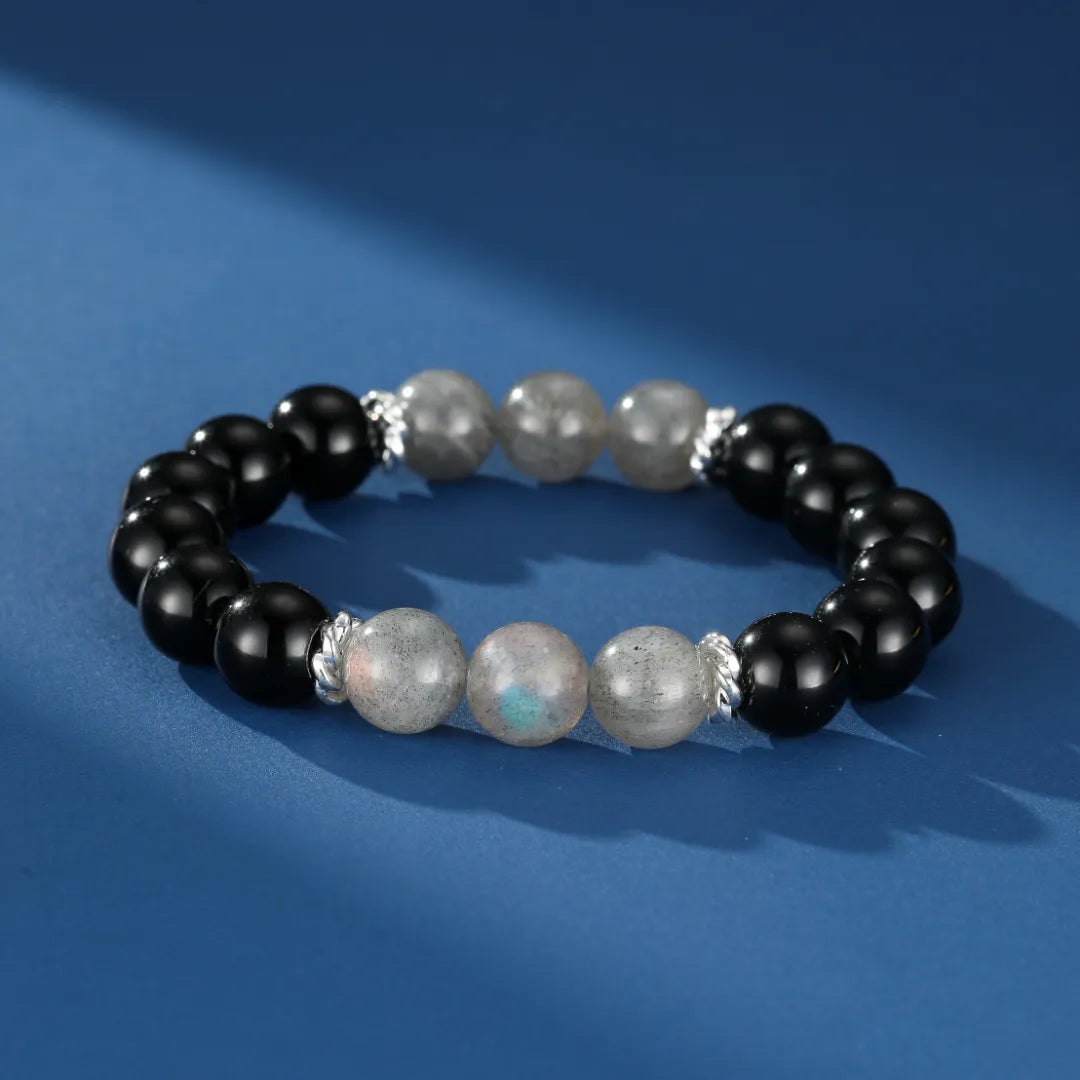
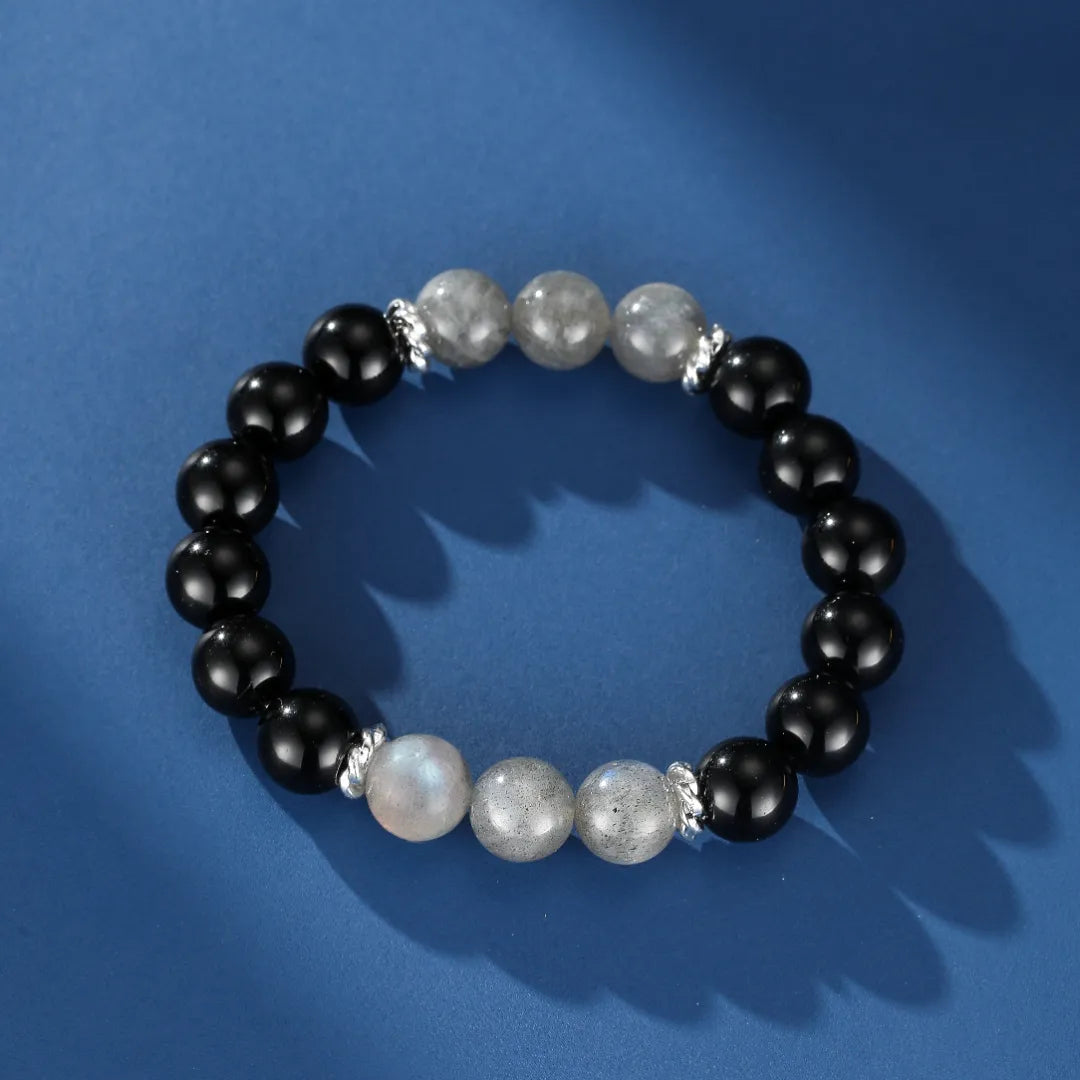
Fake tests to absolutely avoid
In the search for authenticity, it is tempting to want to “prove” that a stone is real. Yet some methods do more harm than good.
In particular, avoid:
- deliberately scratching the stone;
- striking it to observe how it breaks;
- exposing it to a heat source;
- soaking it in aggressive products;
- relying on a single viral video as a reference.
Why? Because these tests do not take obsidian’s specific characteristics into account. A natural stone can be sensitive to shocks, and a poorly interpreted result can lead you to the wrong conclusion. Authenticity is better verified through observation, visual consistency, the quality of the description, and the reliability of the source.
The best guidelines are often the simplest:
- observe the stone in detail;
- compare several pieces with one another;
- choose a transparent seller;
- learn about the real characteristics of obsidian.
Why authenticity matters in lithotherapy
Lithotherapy plays a central role in the interest shown in obsidian. This stone is traditionally associated with protection, grounding, lucidity, and inner truth. It is often chosen by people who wish to work on their emotional stability, discernment, or need to recenter themselves.
From this perspective, authenticity is not a detail. When you are looking for a stone for its symbolic energy, you want a material that comes from nature, not a decorative imitation made in bulk. Genuine obsidian carries a geological history, a density, and a singularity that lithotherapy enthusiasts consider essential.
It is also a matter of consistency. A person may buy a stone for its beauty, style, or symbolism. In all cases, knowing what you are buying allows you to make a conscious choice.
Here is why genuine obsidian is generally preferred in lithotherapy:
- it truly belongs to the world of Natural Stones;
- it has a clear mineral identity;
- it responds to a broader search for authenticity;
- it fits into a more serious and respectful approach to the mineral world.
How to buy genuine obsidian without making a mistake
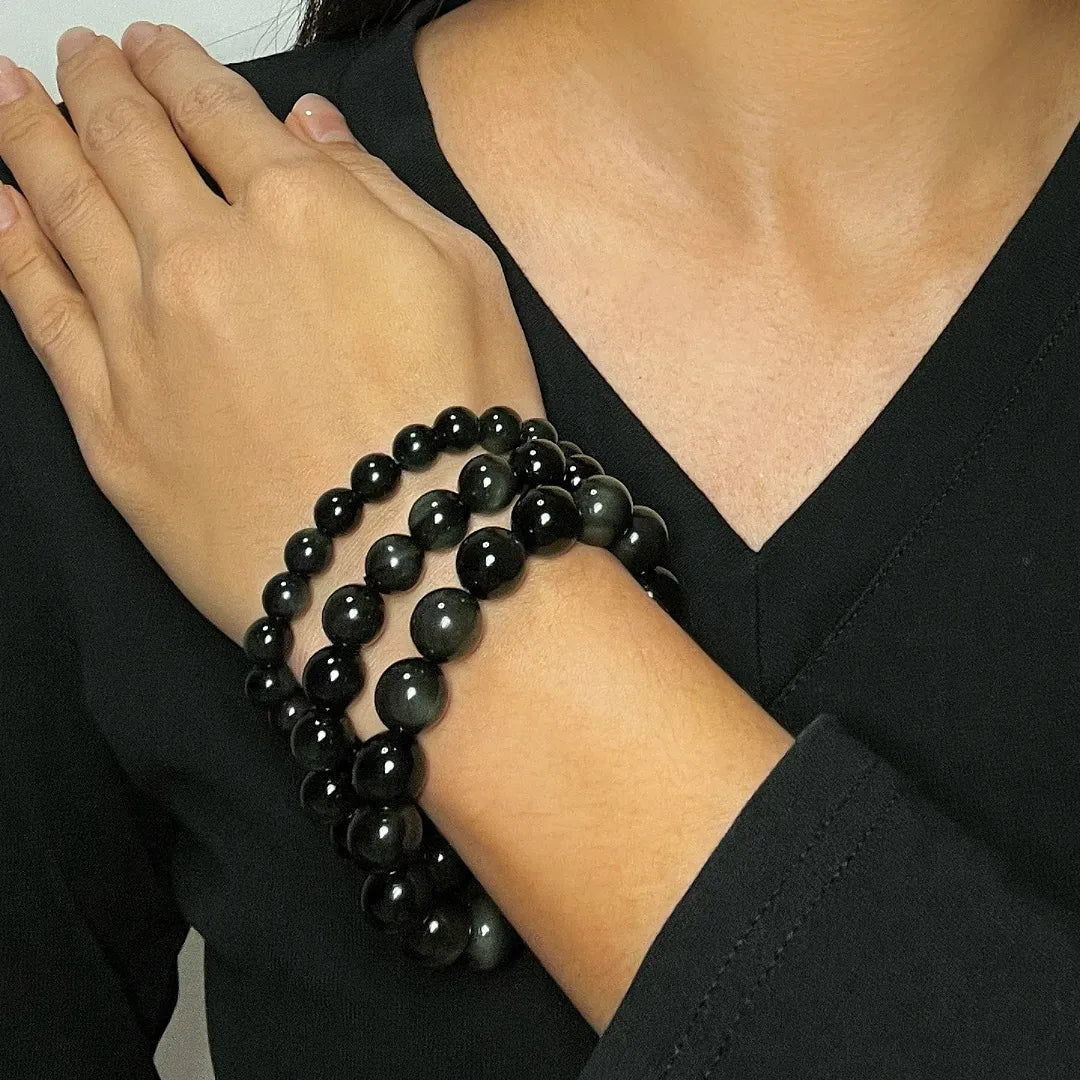
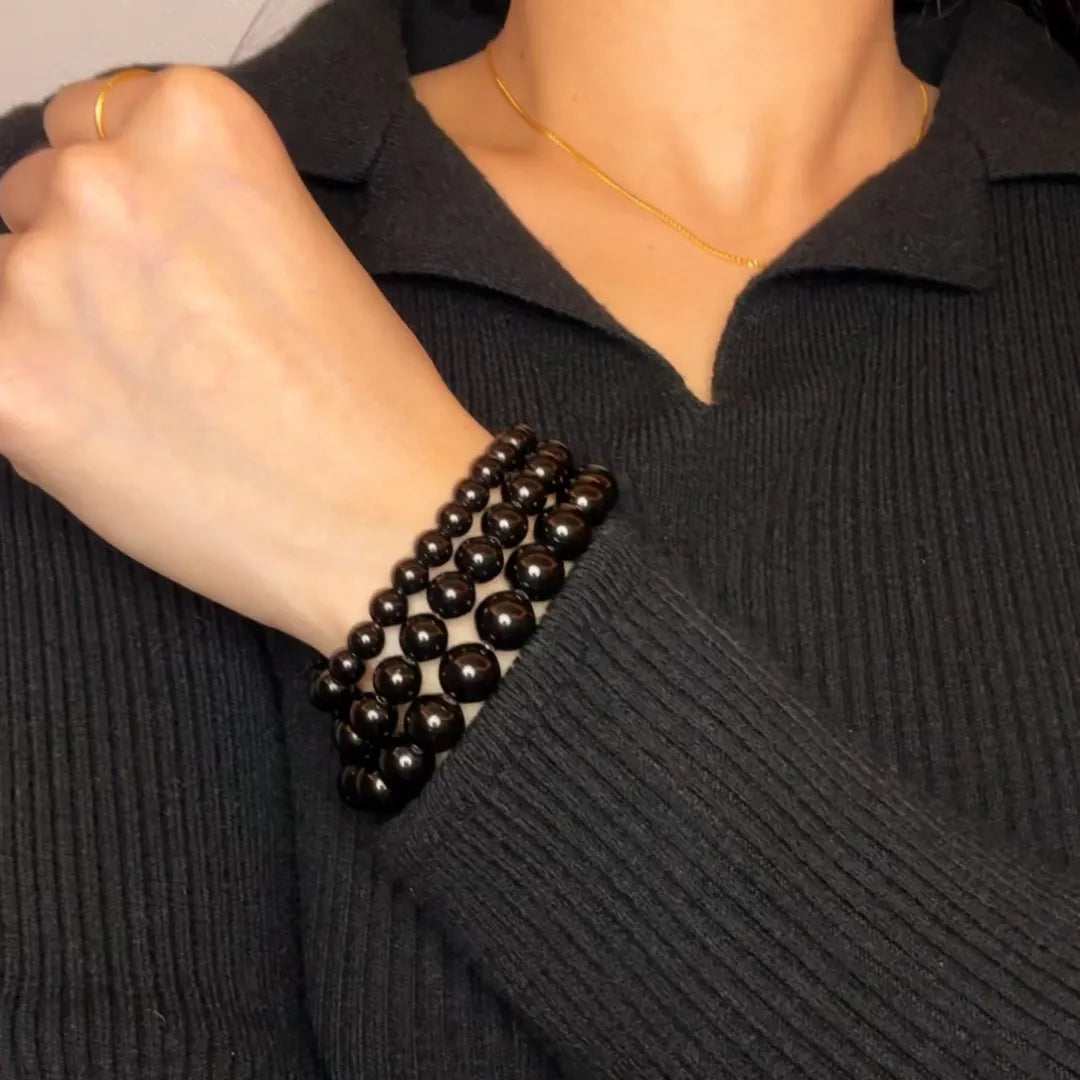
Buying obsidian can be simple as long as you adopt a few good habits. Whether you are looking for a tumbled stone, a pendant, a bracelet, or a decorative object, some criteria always deserve your attention.
The right reflexes before buying
- check that the stone is clearly presented as natural;
- look at several photos, if possible from different angles;
- read the full description, not just the title;
- see whether the shop offers informative content about stones;
- compare the pieces with one another to spot real nuances;
- be wary of wording that is too vague or too sensationalist.
What a good product page should contain
To optimize your choice, prefer pages that clearly mention:
- the exact name of the stone;
- the variety of obsidian, if it is known;
- the dimensions or type of jewelry;
- the possible presence of natural reflections;
- care advice;
- an honest presentation, without exaggerated promises.
The signs that inspire confidence
Some details really make the difference:
- a consistent universe around Natural Stones;
- sharp and realistic visuals;
- educational blog articles;
- a balanced approach between aesthetics, mineralogy, and lithotherapy;
- a serious editorial line, without confusion between materials.
In summary: the best signs for recognizing genuine obsidian
To help you remember the essentials, here is a simple summary.
Genuine obsidian often has:
- a natural glassy shine;
- beautiful visual depth;
- nuances or reflections depending on the variety;
- a dense and cool mineral feel;
- overall natural consistency;
- a clear description from the seller.
What should make you cautious:
- an appearance that is too plastic or too uniform;
- identical patterns from one piece to another;
- a vague or empty description;
- a product sold as “stone” without any precision;
- transparency that looks too artificial;
- excessive marketing without real information.
Conclusion: recognizing obsidian properly to buy with confidence
Identifying genuine obsidian does not mean looking for absolute perfection, but learning to read the right signs. Obsidian is a singular natural stone, at once mysterious, elegant, and intense. Its glassy appearance should not be misleading: it is part of its nature. What matters is the overall consistency, the visual richness, the seller’s credibility, and transparency of information.
For lithotherapy enthusiasts, lovers of symbolic jewelry, or curious people discovering the world of Natural Stones, knowing how to recognize genuine obsidian allows you to buy with greater peace of mind. It is also a way to better appreciate the stone, not only for its beauty, but also for its geological history and symbolic significance.
Before making your choice, take the time to observe, compare, and inform yourself. A beautiful stone is not just appealing at first glance: it inspires lasting confidence.
How can you recognize genuine obsidian?
Genuine obsidian is distinguished by its natural glassy shine, visual depth, and sometimes its subtle reflections depending on the light.
Can obsidian look like glass?
Yes, that is normal. Obsidian is a natural volcanic glass, which explains its smooth and shiny appearance.
Is very shiny obsidian fake?
Not necessarily. Genuine obsidian can be very shiny, especially when it is polished.
Can you test obsidian at home?
Yes, by observing it in the light and checking its visual consistency, but it is better to avoid aggressive or destructive tests.
Is obsidian a good stone for beginners in lithotherapy?
Yes, it is highly appreciated in lithotherapy for its symbolism of protection, grounding, and inner truth.
Read more

Obsidian is one of the most highly valued natural stones in crystal healing for its properties of protection, grounding, and inner truth. In this article, discover the benefits of obsidian, its eve...

Discover why obsidian jewelry is so captivating in the world of natural stones. Combining timeless elegance, strong symbolism, and uses in crystal healing, obsidian stands out as a stone that is bo...


