
Genuine or Fake Gemstones: How to Recognize Authentic Stones
- Introduction: Natural Stones and Illusions, a Very Real Issue ```
- Why Is It Crucial to Recognize an Authentic Natural Stone?
- The Different Forms of Counterfeits to Know
- How to Recognize Real Natural Stones? Basic Methods and Pro Tips
- Where to Buy Quality Natural Stones? Criteria for Making the Right Choice
- Your Intuition, the Seasons and the Stars: Another Way to Validate
- Practical Guide: How to Recognize a Genuine Natural Stone?
- Luuckk Handcrafted Products: Authenticity at the Heart of Every Creation
- Conclusion: Don’t Be Fooled Anymore—Become an Informed Buyer
- Need Support or a Personalized Opinion?
- FAQ – Authentic Natural Stones
Introduction: Natural Stones and Illusions, a Very Real Issue
Natural stones have always been fascinating. Used in jewelry, decoration, and for their virtues in lithotherapy, they occupy an increasingly important place in our daily lives. But with this growing popularity comes an essential question: how to recognize real natural stones and avoid counterfeits?
Today’s market is full of synthetic stones, tinted glass, or reconstituted minerals. Result: consumers are often lost, torn between the charm of a stone and the fear of a fraudulent purchase.
In this comprehensive article, we’ll dive into the mineral world to help you identify authentic natural stones, spot fakes, understand the different falsification methods, and above all, buy with confidence.
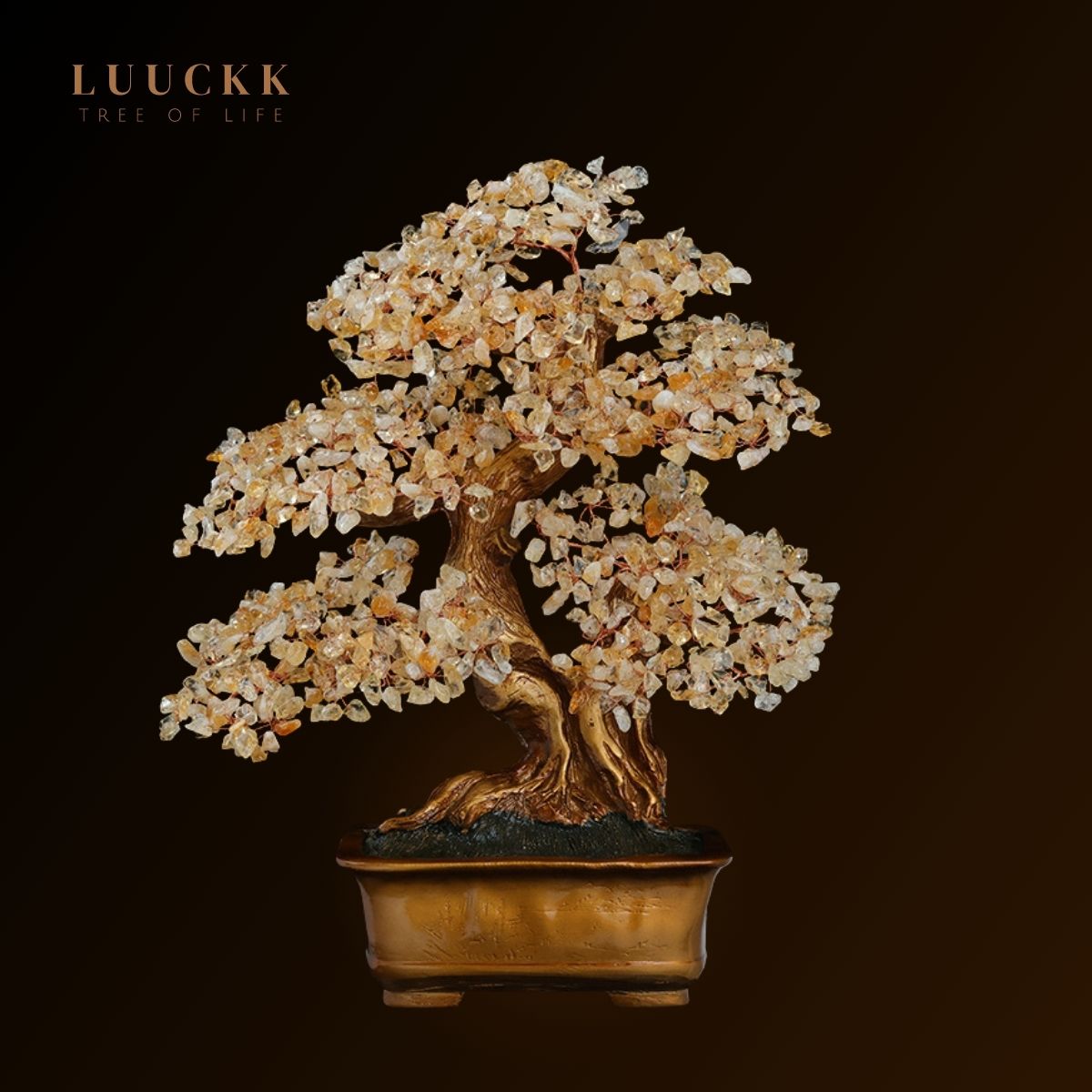
Our Tree of Life in Natural Stones
Why Is It Crucial to Recognize an Authentic Natural Stone?
At first glance, a fake stone may seem harmless. After all, if it looks nice, why not wear it? However, when it comes to lithotherapy and the energetic use of minerals, authenticity becomes a priority.
Real Stones Vibrate… Fakes Don’t
Natural stones are living entities, filled with history, geological formation and vibrational energy. Their power lies in their crystal structure, chemical composition and interaction with our own energy field. By contrast, an industrially manufactured “stone”, often made of plastic, resin or glass, has no vibrational value. It is neutral, with no impact on the energetic level.
A Matter of Well-Being and Emotions
Using a fake stone during a meditation or healing session—or even as jewelry worn daily—blocks a potential flow of energy. Hoping to find calm with an amethyst? If it’s violet glass, the effect will be purely aesthetic… and frustrating.
If you want to deepen your understanding of the benefits of natural minerals, the following article is essential reading:
Benefits and Properties of Natural Stones in Lithotherapy

The Different Forms of Counterfeits to Know
Before you even learn to recognize authentic natural stones, it’s crucial to identify the most common techniques used to deceive buyers.
Dyeing and Chemical Coloring
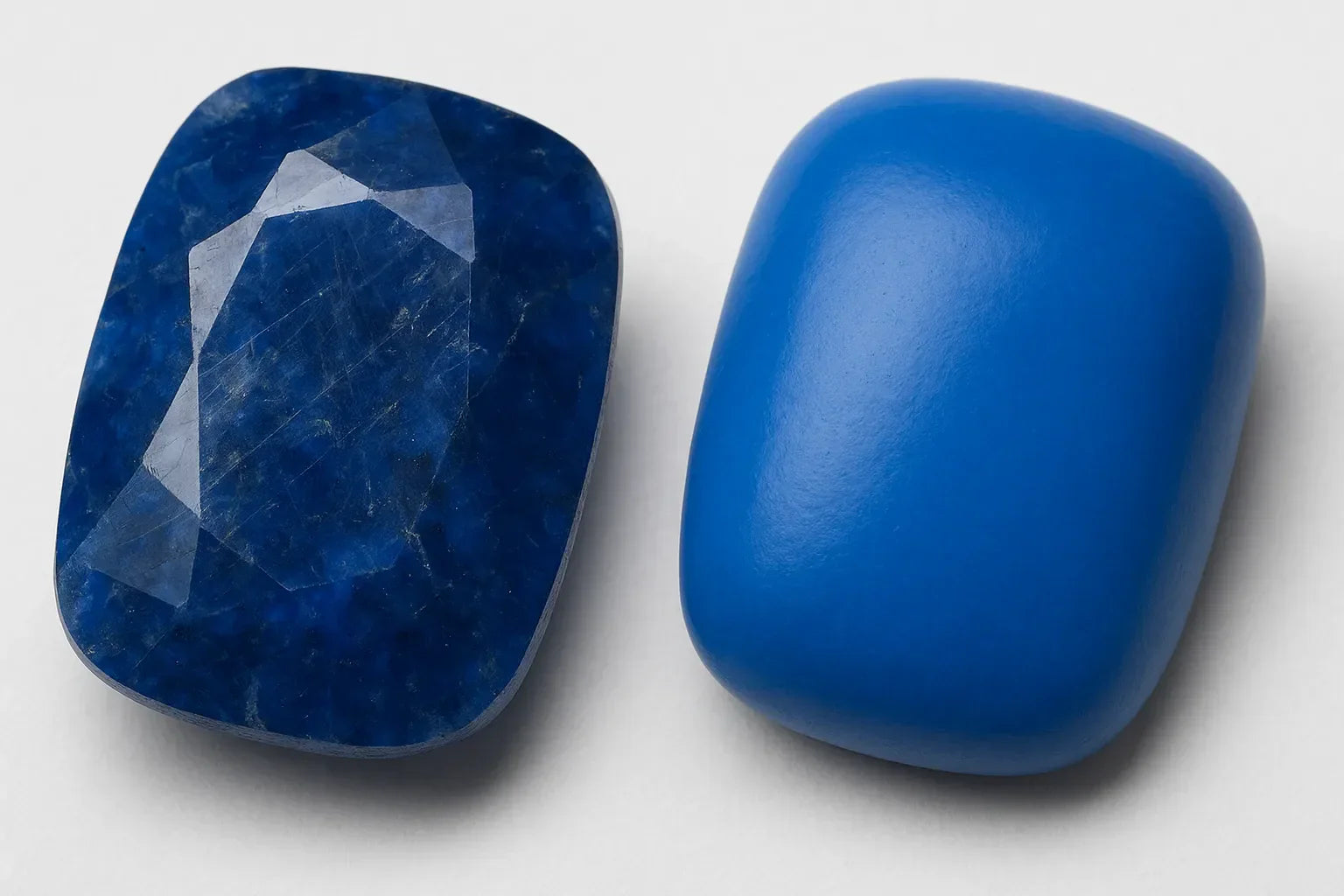
Some light stones like howlite are often dyed to imitate turquoise. Result: a stone that looks like turquoise but without its real properties. Clear quartz is also often dyed bright pink or electric blue to imitate precious stones.
Tinted Glass
Glass is widely used to imitate crystals like amethyst, citrine or smoky quartz. To the naked eye, it can be hard to tell—especially if the work is well done. But to the touch and upon analysis, glass is lighter, smoother and sometimes… too perfect.
Reconstituted Stones
There are also “stones” created from ground mineral powder mixed with resins. They are then compressed to form a pebble or bead. These so-called “reconstituted” stones are often sold as natural, whereas they are actually processed products.
Doublets and Triplets
In some cases, fragments of natural stones are glued between two pieces of glass or another material. The result can be visually impressive, but again, it is not a whole, authentic natural stone.
To understand how to integrate stones into your daily life and avoid pitfalls, read:
How to Use Natural Stones Daily: Jewelry, Decoration and Meditation


How to Recognize Real Natural Stones? Basic Methods and Pro Tips
Knowing how to recognize an authentic natural stone requires a bit of observation, curiosity… and sometimes a few simple tests. Here’s what to look at:
Visual Appearance: Imperfections Are Clues
Contrary to popular belief, a real stone is rarely perfect. It may contain veins, inclusions, tiny internal cracks or color irregularities. These signs often reflect its natural geological formation.
A stone that’s too smooth, too uniform or too brightly colored is often… suspicious.
Touch and Temperature
A real natural stone feels cool to the touch, even after being held in the hand for a few minutes. Glass or plastic warms up very quickly. In hand, an authentic stone also gives an impression of density and weight.
Light Test
Under strong light, a natural stone often shows irregular areas of transparency, or even internal inclusions. A fake stone (glass or plastic) often appears perfectly transparent or uniformly opaque.
Hardness Test (Mohs Scale)
A very simple test to do at home. The Mohs scale ranks minerals according to hardness. For example, quartz (hardness 7) can scratch glass, while glass (hardness 5.5) will not scratch quartz. So try lightly scratching a glass surface with your stone to check.
Magnifying Glass Test
A 10× magnifying glass lets you see bubbles (often present in glass) or lines that are too regular. Natural inclusions are usually random and irregular.
If you need to choose stones that meet specific energetic needs, you’ll find useful advice here:
How to Choose Natural Stones According to Your Energy Needs

Where to Buy Quality Natural Stones? Criteria for Making the Right Choice
Now that you know how to recognize a natural stone, the next step is knowing where to buy them with confidence. Because even if you’re vigilant, the best protection is to go through reliable sellers.
Favor Specialized Shops
Avoid dubious platforms or markets where prices are abnormally low. Prefer shops specializing in lithotherapy or natural crystals. These professionals generally have controlled sourcing and can answer your questions.
Ask for Precise Information
A serious seller should be able to provide information on:
- The stone’s origin
- Any treatments performed
- Its exact classification (mineral type, variety, hardness…)
Beware of Prices That Are Too Tempting
A 200 g rock crystal sold for 3 euros… isn’t credible. Real stones have a price—even a modest one—that reflects their rarity, quality and authenticity.
Certificates and Transparency
Some shops offer certificates or lab tests. This isn’t mandatory, but it can be a good indicator of reliability.
And don’t forget that even the purest stones require regular energetic maintenance. For that, read:
How to Cleanse and Recharge Natural Stones: Methods and Tips

Your Intuition, the Seasons and the Stars: Another Way to Validate
There’s one last method—more intuitive but just as valuable: listen to your feelings. Some people are naturally drawn to stones that match their needs of the moment.
Seasonal Needs
In winter, our bodies and minds are more vulnerable. Stones like labradorite, carnelian or smoky quartz can bring support and vitality.
For more seasonal ideas, see this article:
Which Stones Help Combat Winter Ailments?
Stones and Zodiac Signs
Each zodiac sign has a natural affinity with certain stones. These correspondences aren’t magical, but they can serve as a starting point for choosing a mineral that resonates with you.
To explore this link between signs and minerals, see:
Natural Stones and Zodiac Signs: Which Stone Suits You?
Practical Guide: How to Recognize a Genuine Natural Stone?
Because it’s not always easy to distinguish a real natural stone from an imitation, here is a step-by-step practical guide you can do at home, with simple tools and a good dose of observation.
Checklist to Verify the Authenticity of a Natural Stone:
- Observe the stone in natural light: Look for inclusions, small veins, imperfections. Natural stones are rarely perfect. A color that is too vivid or uniform may indicate chemical dyeing.
- Touch the stone: It should be cool to the touch at first (the stone takes time to warm up). It should have a certain density, a natural weight (unlike plastic or glass).
- Lightly scratch a glass surface with the stone (hardness test): If the stone scratches glass, it is likely natural (e.g., quartz). Caution: this test isn’t valid for all stones—some are naturally soft.
- Look at the stone under a 10× loupe: Check for bubbles (often signs of glass). Verify the regularity of the structure: too smooth = suspicion.
- Hot water test: Soak a piece of cotton in hot water and rub the stone. If color bleeds… it is probably a dyed stone.
- Do a UV test if possible: Some stones glow under UV light, others don’t. The result varies, but it can help rule out fake stones that are too “fluorescent.”
- Compare with a reliable reference: If you own a stone purchased from a trusted supplier, compare texture, color, shine and weight.
This short guide will already help you rule out the most obvious imitations. To complement it, you can also read:
How to Choose Natural Stones According to Your Energy Needs
Luuckk Handcrafted Products: Authenticity at the Heart of Every Creation
At Luuckk, each piece in natural stone is designed with care and passion… and above all, with a commitment to authenticity. Unlike jewelry or objects mass-produced with questionable stones, our handcrafted products are made from genuine natural stones, selected for their beauty and vibrational energy.
An Artisanal, Responsible and Transparent Approach
- Verified origin of stones: our suppliers follow strict quality standards.
- Handcrafted: each bracelet, tree of life or accessory is made by hand, by skilled artisans.
- No chemical treatments: the stones are neither dyed nor artificially heated.
A Few Examples of Handcrafted Creations Available at Luuckk:
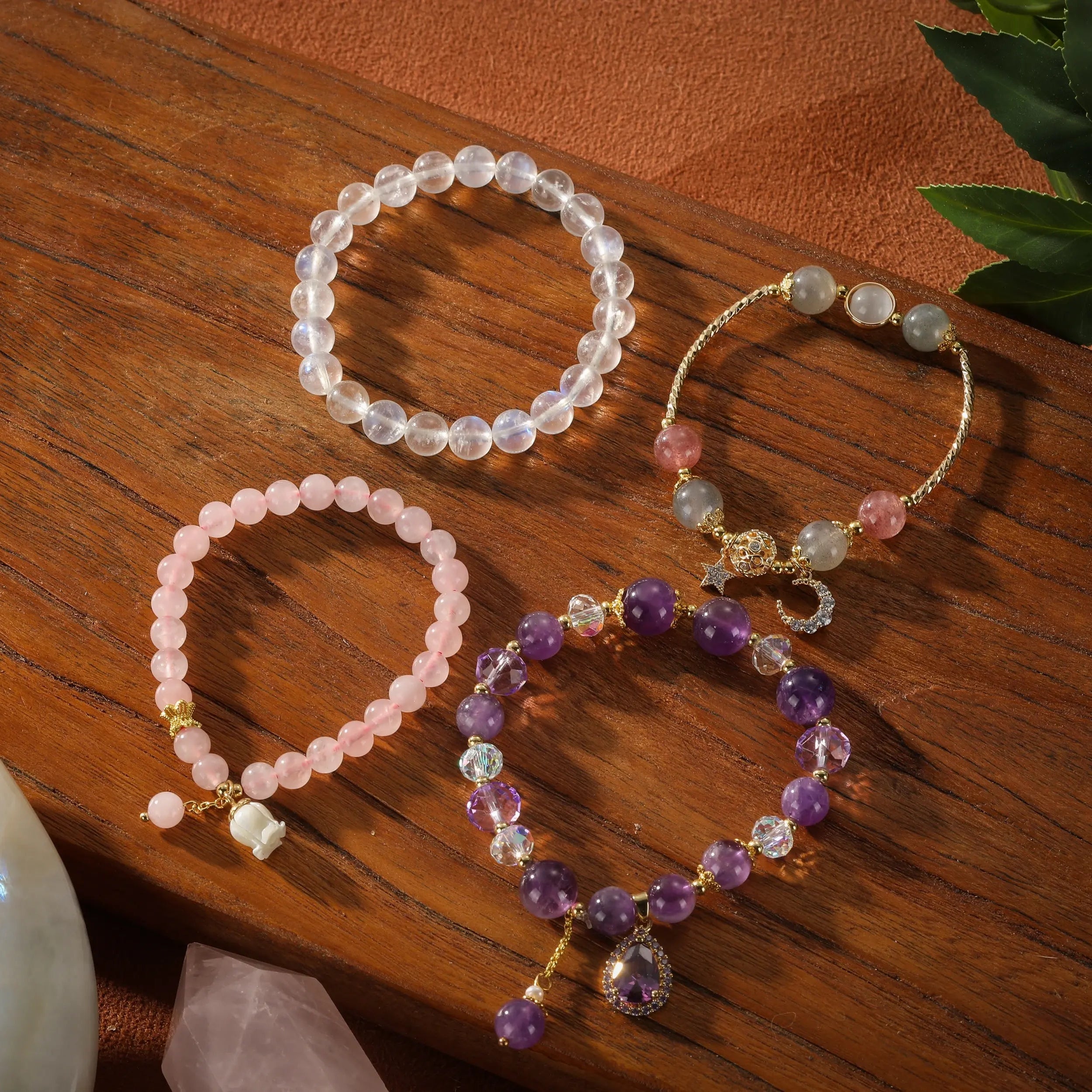
- Bracelets in authentic natural stones for protection, grounding or self-confidence.
- Necklaces and pendants in semi-precious stones such as labradorite, moonstone or rose quartz.
- Decorative tree of life in natural stones, true talismans for harmony at home.
To discover how to integrate these pieces into your daily life and benefit from their energy, read:
How to Use Natural Stones Daily: Jewelry, Decoration and Meditation
Conclusion: Don’t Be Fooled Anymore—Become an Informed Buyer
Recognizing a genuine natural stone isn’t just a matter of aesthetics. It’s an act of knowledge, awareness, and respect for yourself. By choosing authenticity, you access the full energetic richness of minerals and enter a world of deep natural connection.
And if you’re looking for trustworthy handcrafted products made with authentic natural stones, feel free to visit our online store. Each piece is an invitation to serenity, balance… and beauty.
Need Support or a Personalized Opinion?
Our shop offers a selection of authentic natural stones, certified and accompanied by informative sheets to help you make the right choice. Above all, we’re available to answer your questions.
Explore the shop now and choose your stone with complete peace of mind.
How can you tell if a stone is natural or synthetic?
Look at the details: a natural stone often has veins, inclusions or irregularities. Touch it (it should feel cool), test its hardness, or use a loupe to detect bubbles (a sign of glass).
Are natural stones always imperfect?
Yes—and that’s a good sign! A real stone may have internal fissures, color nuances or small inclusions. Stones that are too perfect are often synthetic.
Do natural stones lose their power over time?
They don’t lose their energy, but they can become “negatively charged.” It’s therefore important to cleanse and recharge them regularly.
Can you use a fake stone as jewelry?
Yes, for aesthetics only. But if you’re looking for benefits in lithotherapy, you absolutely need an authentic natural stone.
How can you avoid buying fake stones online?
Buy from specialized sites with a clear policy on stone provenance. Avoid offers that seem too good to be true, and always check the descriptions.
Read more
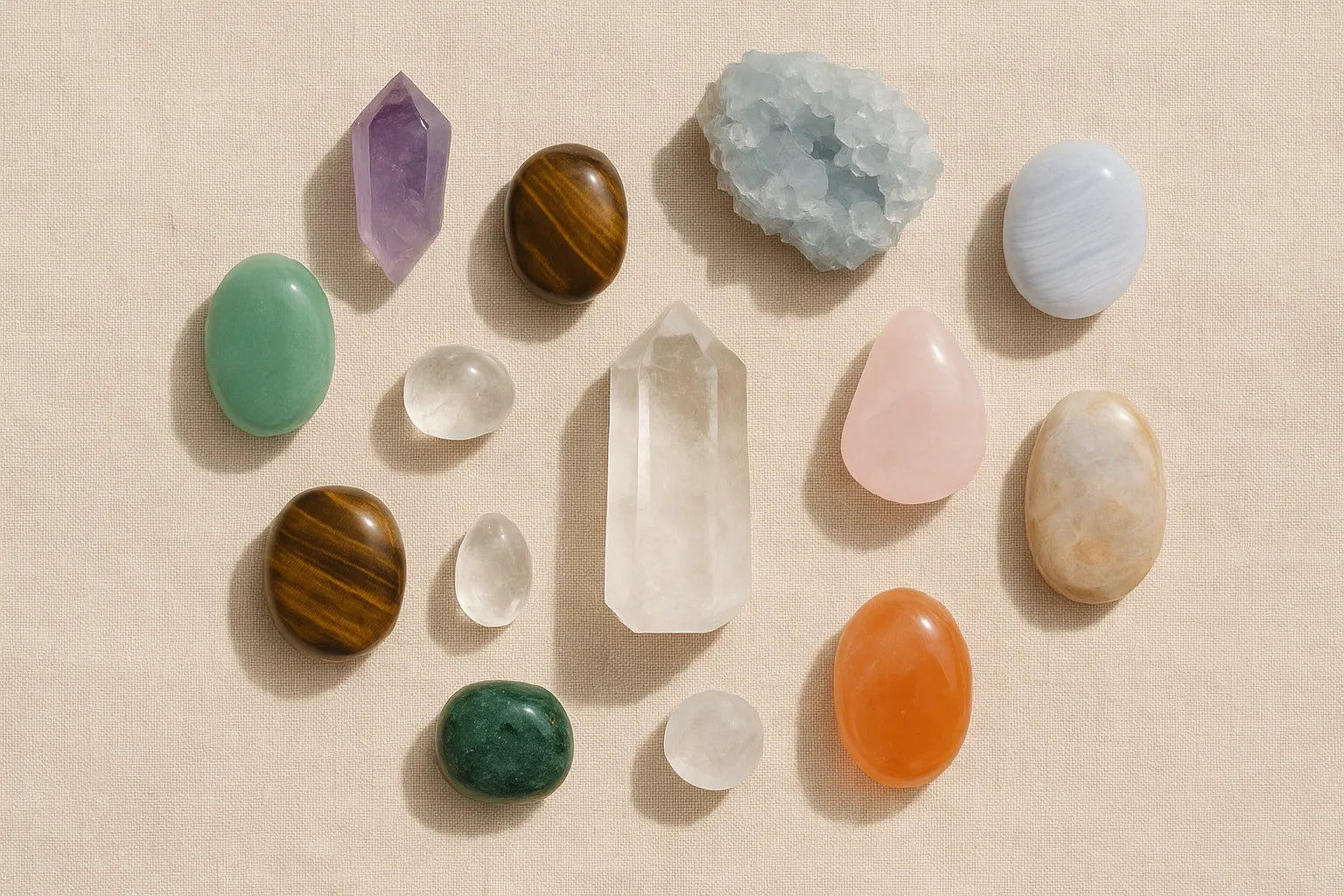
Discover how natural stones can support your physical, emotional, and spiritual well-being through lithotherapy. This comprehensive guide reveals their properties, benefits, and the best ways to us...
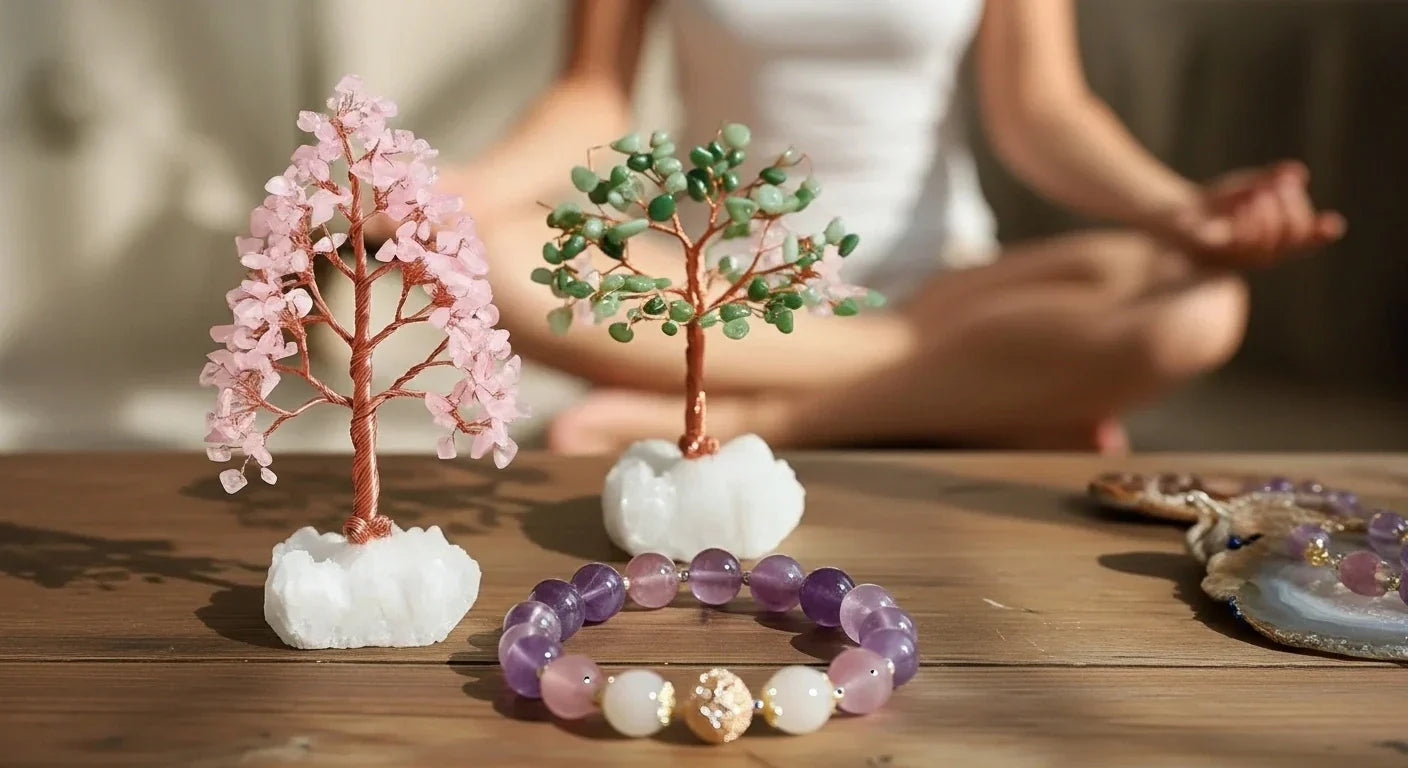
How to Use Natural Stones in Everyday Life ? Discover practical tips to integrate natural stones into your daily routine, as jewelry, decorative items, or meditation tools. A complete guide to...


