

Labradorite: Stone of Protection and Intuition
- Introduction
- Labradorite: identity card of a natural stone unlike any other
- Why labradorite is associated with protection in lithotherapy
- Benefits attributed to labradorite: what people say, and how to use it wisely
- Meaning and symbolism: what labradorite “represents” in modern traditions
- How to wear labradorite: jewelry, pocket stone, living space
- Labradorite in the home: gentle protection, ambiance and well-being
- Cleansing and recharging: keeping your labradorite “fresh” over time
- Natural or treated labradorite: recognizing an authentic stone without becoming a gemology expert
- Pairing labradorite with other natural stones: useful combinations based on your needs
- Conclusion: making labradorite a simple, beautiful and useful ally
- Further Reading
- FAQ – Labradorite: frequently asked questions
Introduction
Labradorite has that rare little talent: it is both spectacular (its blue, green, or golden reflections leave no one indifferent) and highly sought after in lithotherapy for its “shield effect.” Do you feel like you absorb the atmosphere of a room like a sponge? Do you end some days more drained than the battery of an old phone? The natural labradorite stone often comes up in conversations as soon as people talk about protection, mental clarity, and intuition.
In this article, we’ll go beyond the usual descriptions. You’ll discover concrete information, practical usage tips, useful mineralogical details, and above all how to integrate labradorite into a simple and realistic routine, whether you’re a beginner or already passionate about Natural Stones.
Our Labradorite Jewelry
Labradorite: identity card of a natural stone unlike any other
A visual signature: labradorescence
What immediately sets labradorite apart is its iridescent play of light, called labradorescence. Unlike simple “shine,” it is an optical phenomenon linked to the mineral’s internal structure: light diffracts through fine lamellae, creating reflections that seem to move when the stone is tilted. That is exactly what makes some labradorites hypnotic… and others, more “calm,” just as interesting but often better suited to discreet everyday use.
Where does labradorite come from?
Historically, it was identified in Labrador (Canada), which is where its name comes from. Today, notable deposits can be found in several regions of the world (for example Madagascar, Finland, Canada…). Origin can influence:
- the color of the reflections (intense blue, multicolor, golden),
- transparency,
- perceived hardness (some pieces are more fragile depending on microcracks and cutting quality),
- price.
Labradorite vs. “look-alike stone”
In real life, many people confuse labradorite with other reflective stones:
- moonstone (adularescence, milky reflections),
- certain related feldspars,
- treated/dyed stones intended to imitate iridescence.
Hence the value of understanding authenticity criteria (we’ll come back to that later).
Also read: Complete Guide to Natural Stones: Properties, Meaning and Use

Why labradorite is associated with protection in lithotherapy
Let’s be honest: in the language of lithotherapy, “protection” does not mean an “invisible magical wall that solves everything.” It’s more the idea of energetic support, grounding, better emotional stability, and a kind of filter against heavy atmospheres.
The typical profile of people drawn to labradorite
Without putting people into boxes, there are patterns:
- highly sensitive or very empathic people,
- jobs where you “receive” a lot: customer relations, care work, teaching, support, supervision,
- people going through mental overload, change, or a feeling of “too much.”
Labradorite is often described as a stone that helps you keep your own energy instead of being overwhelmed by other people’s energy. It obviously does not replace rest, breathing, or a healthy lifestyle, but it can become a marker, a daily “reminder.”
Protection and intuition: a logical duo
Why pair protection with intuition? Because when you are less disturbed by outside noise (other people’s emotions, ambient stress, fatigue), you hear your own signals more clearly. Many people describe a very simple effect: “I feel clearer,” “I react less impulsively,” “I have more perspective.”
Also read: Introduction to Lithotherapy: Understanding the Energy of Natural Stones
Benefits attributed to labradorite: what people say, and how to use it wisely
When you read lists of virtues, you can quickly end up with 30 promises in 10 lines. The most useful approach is to connect each “benefit” to a concrete use.
Soothing emotional overload
Labradorite is often chosen when you tend to:
- absorb other people’s emotions,
- ruminate,
- feel “drained” after an interaction.
Concrete use: wear the stone as jewelry on social days, or keep it with you during important appointments.
Strengthening mental clarity
It is also associated with the ability to sort things out: distinguishing what is urgent from what is simply noisy.
Concrete use: keep a stone on your desk, or wear jewelry during decision-making periods.
Supporting intuition
Here, we’re mainly talking about inner listening: recognizing your signals, your feelings, your limits. It’s not about “predicting the future,” but rather refining discernment.
Concrete use: short meditation (5 minutes) while holding the stone, or regular wear during periods of transition.
Also read: Benefits and Properties of Natural Stones in Lithotherapy





Meaning and symbolism: what labradorite “represents” in modern traditions
The meaning of a stone evolves depending on eras and cultures. Today, labradorite is often associated with:
- transformation (going through a period, changing your stance),
- protection (preserving your energy),
- intuition (clarifying your inner compass),
- the passage from “fog” to a clearer vision.
A simple way to work with this symbolism is to ask yourself a question before wearing it:
- “What do I want to protect today?”
- “Where am I letting in too many outside influences?”
- “What decision do I need to clarify?”
This small “intention” practice is often more effective than waiting for a spectacular effect. It puts your mind in the right direction, and the stone becomes a tangible reminder.
Also read: Meaning of Natural Stones and Spiritual Symbolism
How to wear labradorite: jewelry, pocket stone, living space
Labradorite lends itself to several uses. The best choice depends on your daily life: mobility, work environment, sensitivity, style.
As jewelry: the “simple and regular” choice
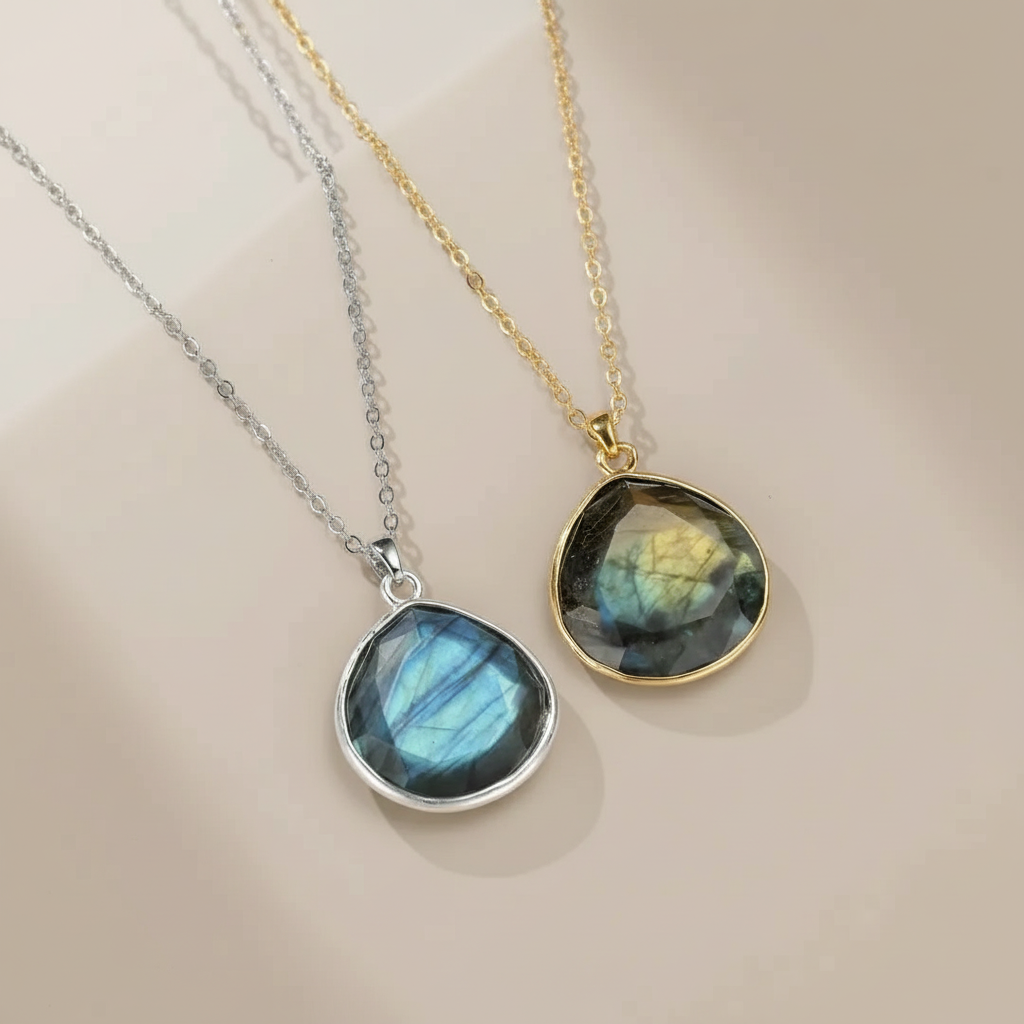
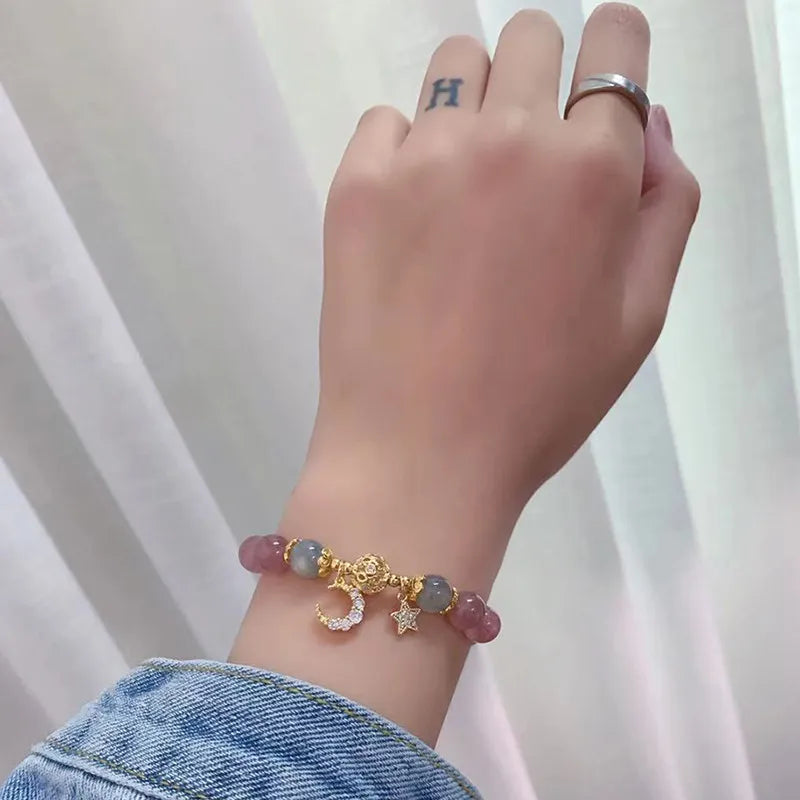
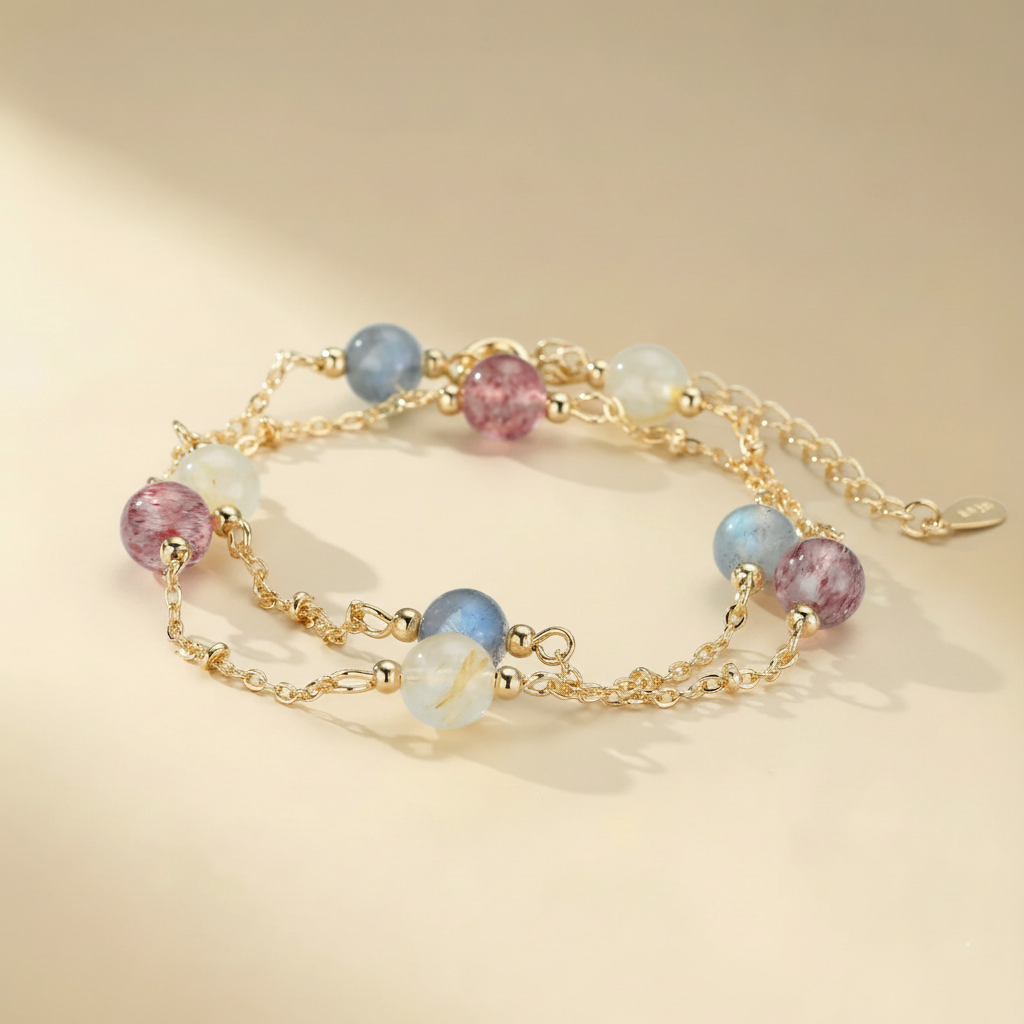
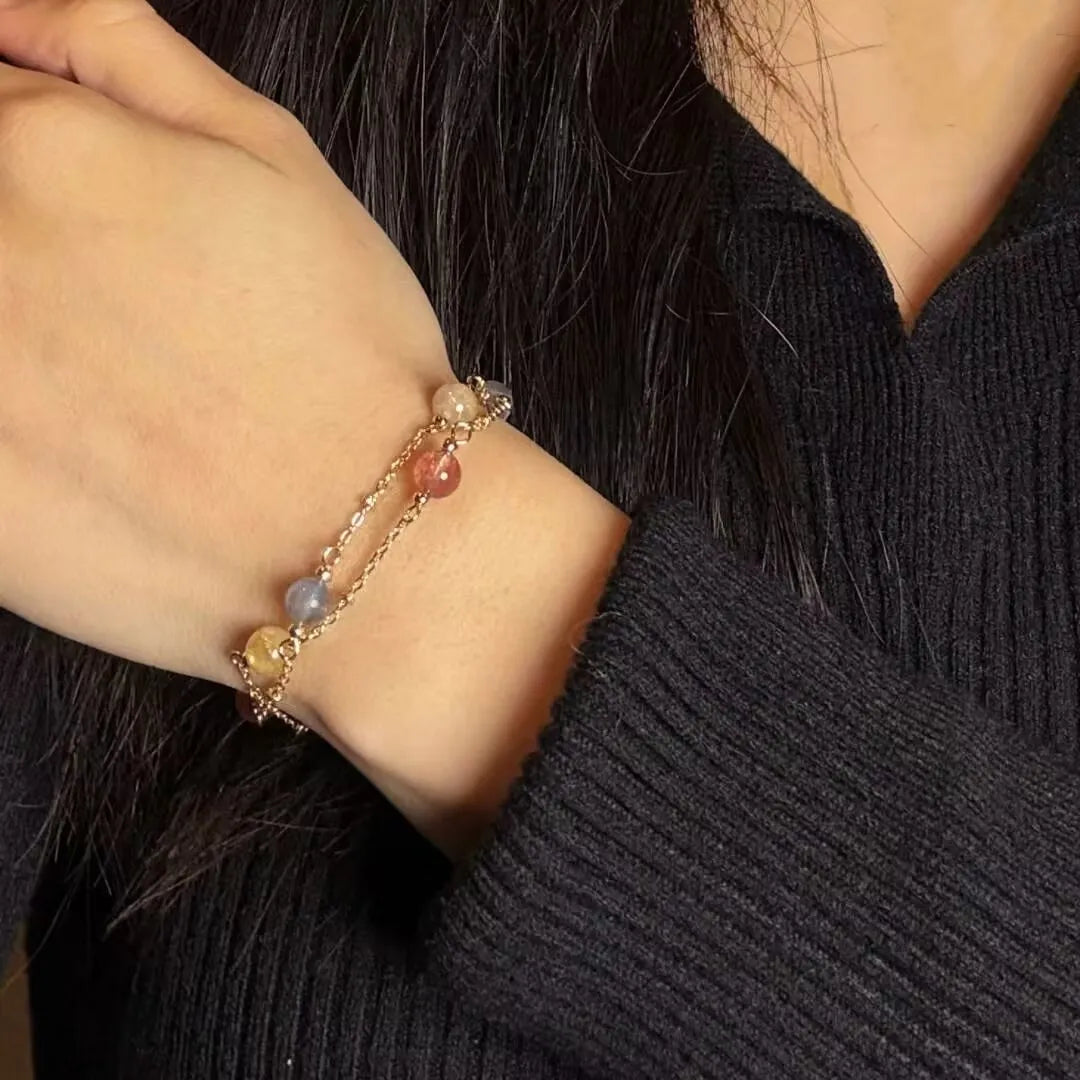
Jewelry is often the best option because it ensures a continuous presence without having to think about it. Bracelet, necklace, pendant, ring… each has its advantages.
- Bracelet: practical, visible, easy to touch when you need to refocus.
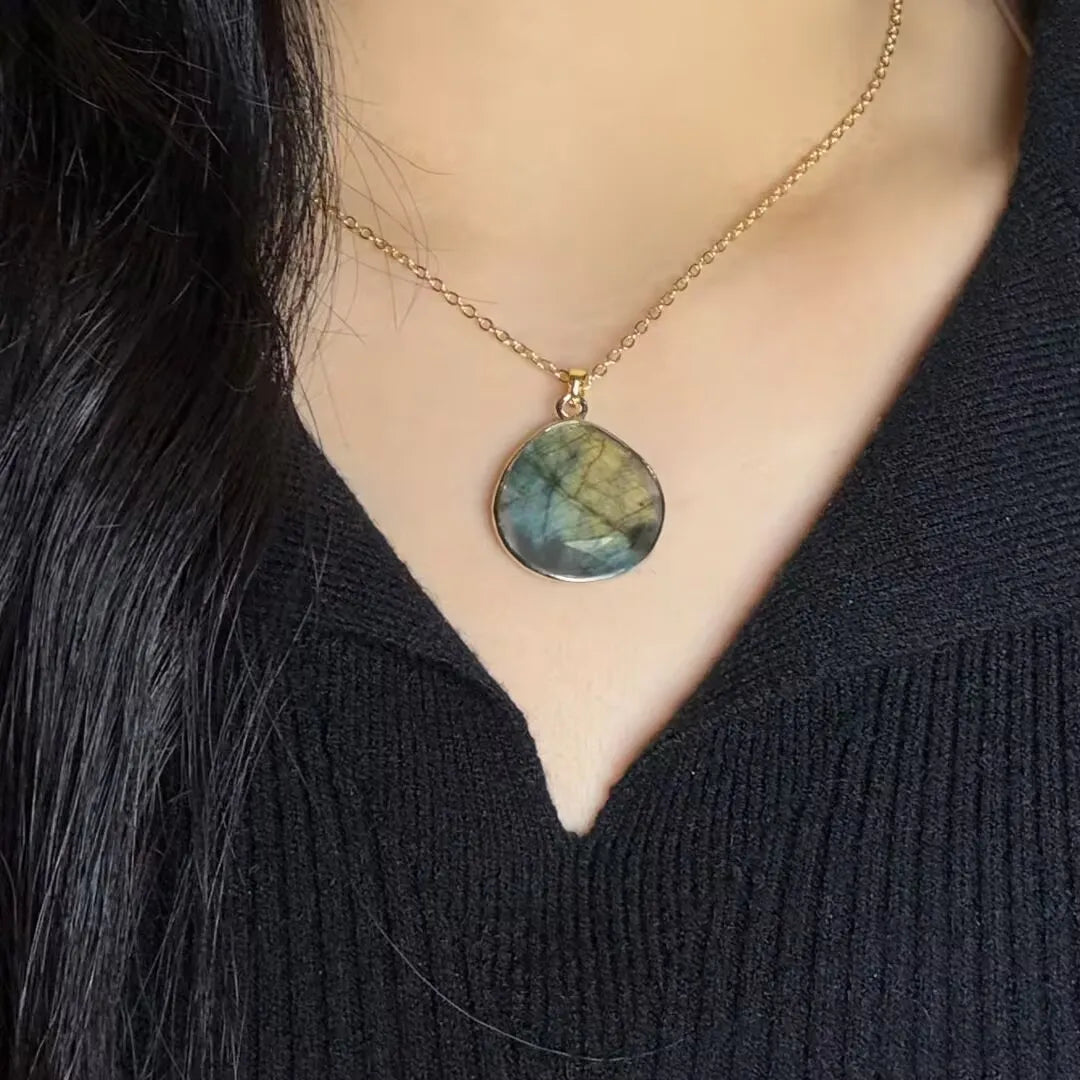
- Necklace/pendant: close to the upper body, often chosen for the “protective” aspect.
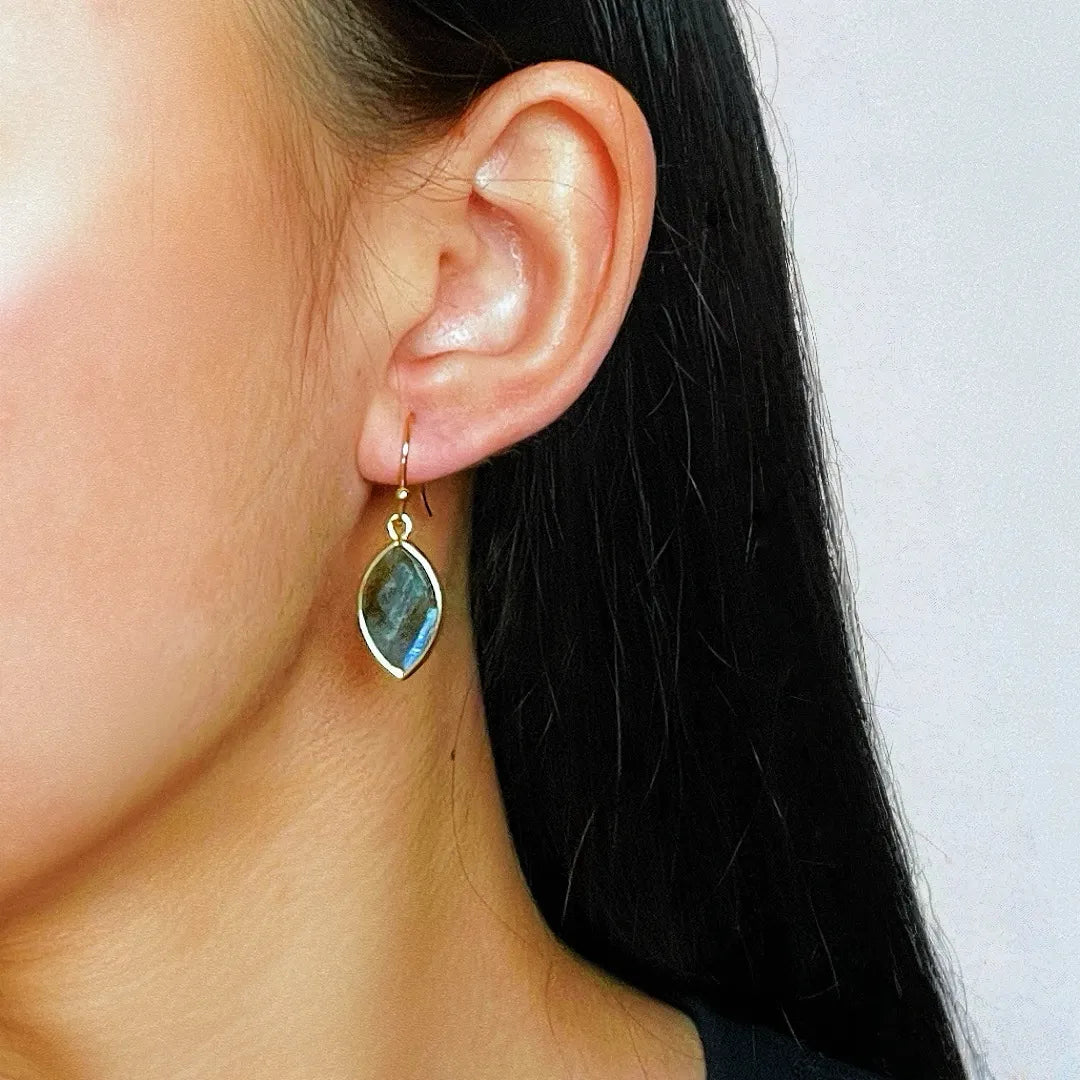
- Earrings: rarer but very aesthetic depending on the settings.
The other advantage of jewelry: it blends elegance and intention. And let’s be honest, if a stone is beautiful, you’re more likely to wear it often.
Also read: Natural Stone Jewelry: Elegance, Benefits and Symbolism
Labradorite jewelry: when aesthetics meets energy
Labradorite is highly appreciated in jewelry because it “comes alive” in the light. The same piece can seem understated at rest and suddenly reveal itself, which makes it as fascinating as it is versatile.
- For a discreet style: labradorite with soft reflections, fine setting.
- For a bold style: large cabochon, intense blue reflections, statement design.
Also read: Labradorite Jewelry: Elegance and Energy
The dedicated collection
If you’re looking directly for pieces to wear every day, our dedicated collection lets you choose according to your style (bracelets, necklaces, etc.) and your budget.
Labradorite in the home: gentle protection, ambiance and well-being
People often think “lithotherapy = jewelry,” but your living space plays a huge role. A stone placed in the right spot can become a visual marker and an anchor point.
Where to place labradorite?
- Entryway: to symbolize a threshold, a transition between outside and your home.
- Desk: to stay focused without absorbing all the ambient stress.
- Living room: if you host a lot and the energy “circulates.”
- Bedside table: possible, but some people prefer gentler stones for sleep (test according to your feeling).
Simple but effective idea: the “intention corner”
A small tray (wood, ceramic), a candle, a labradorite, and possibly another complementary stone. The goal is not to turn your interior into a museum, but to create a place that reminds you to breathe and come back to yourself.
Also read: Decoration and Well-being: How to Incorporate Natural Stones into Your Interior

Cleansing and recharging: keeping your labradorite “fresh” over time
In lithotherapy, a stone is considered capable of becoming “charged” with ambient energy. Cleansing and recharging it becomes a maintenance routine, just like cleaning a piece of jewelry or airing out a room.
Cleanse: simple methods
- Smoke cleansing (sage, palo santo): fast, practical.
- Sound (singing bowl, bell): interesting if you like a vibrational approach.
- Water: possible for many labradorites, but be cautious depending on quality, setting, and the presence of cracks. Avoid long soaking.
Recharge: classic options
- Moonlight: gentle, often recommended.
- Quartz geode/cluster: practical if you have several stones.
- Intention + rest: some people like to “set down” the stone and leave it quiet for a while.
One useful rule: observe the stone
Beyond the rules, trust concrete signs: if you find it “dull,” if you no longer feel like wearing it, or if it has been heavily used (intense period), maintenance is often welcome.
Also read: Benefits and Properties of Labradorite
Natural or treated labradorite: recognizing an authentic stone without becoming a gemology expert
The Natural Stones market is fascinating… and sometimes a little tricky. Between dyed, heated, reconstructed, or simply misnamed stones, it helps to have a few points of reference.
Common signs of an authentic labradorite
- Reflections that appear depending on the angle, not constantly in a uniform way.
- Iridescent areas: often localized, not perfectly “placed.”
- Small variations: a natural stone rarely has “too industrial” perfection.
Warning signs
- Abnormally low price for a large size with perfect reflections.
- Very uniform reflections across the whole surface, without nuances.
- Seller unable to specify the stone (or mixing up names).
Practical tip
If you buy jewelry, also look at the quality of the cut and the sturdiness of the setting: a beautiful labradorite deserves a mount that protects it.
Also read: Natural or Treated Labradorite: How to Recognize an Authentic Stone

Pairing labradorite with other natural stones: useful combinations based on your needs
Pairing stones is a bit like building a playlist: you can aim for harmony… or choose a useful contrast. The idea is not to wear ten stones at once, but to create a coherent duo (or trio).
Labradorite + Amethyst: calming the mind, stabilizing intuition
A duo often appreciated during periods of mental stress, when you’re trying to sleep better or calm rumination.
Also read: Amethyst: Stone of Wisdom and Spiritual Harmony
Labradorite + Rose Quartz: protecting without closing yourself off
Rose quartz is often associated with emotional softness. With labradorite, you get a less “hard,” more enveloping form of protection.
Also read: Rose Quartz: Stone of Love and Gentleness
Labradorite + Obsidian: stronger protection, truth and lucidity
For those who want a more direct duo. Obsidian is often described as a stone of truth, sometimes intense. Together, this may suit periods when you want to cut through the fog.
Also read: Obsidian: Stone of Truth and Spiritual Protection
Labradorite + Tiger’s Eye: confidence and grounding in action
A very good duo if you tend to pick up emotions and then hesitate. Tiger’s eye is often associated with confidence and taking action.
Also read: Tiger’s Eye: Stone of Strength and Self-Confidence
Labradorite + Lapis Lazuli: intuition + communication
If your challenge is saying things clearly (without over-adapting yourself), lapis lazuli is an interesting pairing.
Also read: Lapis Lazuli: Stone of Truth and Communication
Labradorite + Aquamarine: serenity and smoother exchanges
A combination appreciated when you want to communicate calmly, without feeling overwhelmed.
Also read: Aquamarine: Stone of Serenity and Communication
Labradorite + Malachite: emotional transformation (with gentleness and caution)
Malachite is often associated with transformation. If you are going through a period of change, this duo can support introspective work.
Also read: Malachite: Stone of Transformation and Emotional Healing
Labradorite + Citrine: finding light again
Useful when mental fatigue makes you lose momentum. Citrine is often associated with joy and abundance.
Also read: Citrine: Stone of Joy and Abundance
Labradorite + Green Aventurine: growth and balance
If you want to move forward without tensing up, green aventurine can be a good complement.
Also read: Green Aventurine: Stone of Luck and Personal Growth
Labradorite + Carnelian: energy and motivation
Interesting if you protect yourself well… but lack the momentum to take action.
Also read: Carnelian: Stone of Vitality and Motivation
Labradorite + Jade: harmony, wisdom and stability
Jade is often associated with a stable, harmonizing energy, useful when you want a “grounded” and lasting form of protection.
Also read: Jade: Stone of Wisdom, Harmony and Prosperity
Labradorite + Peridot: renewal and lightness
For periods when you want to let go of emotional heaviness and start again with more clarity.
Also read: Peridot: Stone of Light and Renewal
Labradorite + Moonstone: feminine intuition and cycles
Moonstone and labradorite often meet in routines centered on intuition, transition phases, and self-listening.
Also read: Moonstone: Stone of Femininity and Intuition
Labradorite + Turquoise: balance, communication, relational protection
An interesting pairing for those who want to protect themselves while staying open in their interactions.
Also read: Turquoise: Stone of Balance and Communication
Conclusion: making labradorite a simple, beautiful and useful ally
Labradorite is not “just” a pretty stone. It is a natural labradorite stone known in lithotherapy for its symbolism of protection and intuition, but its true daily power is mostly to become a marker: a reminder to recenter yourself, filter outside noise, and keep your energy for what matters.
If you want to move into practice, the simplest thing is to choose jewelry you’ll enjoy wearing often, then adopt a minimalist routine: intention in the morning, regular wear, maintenance from time to time. And if you’re curious, test a stone pairing according to your current need.
Also discover: Natural Stone Jewelry: Elegance, Benefits and Symbolism
Further Reading
To go deeper into some concepts and explore other Natural Stones, here are useful contents from the site:
- Complete Guide to Natural Stones: Properties, Meaning and Use
- Benefits and Properties of Natural Stones in Lithotherapy
- Meaning of Natural Stones and Spiritual Symbolism
- Introduction to Lithotherapy: Understanding the Energy of Natural Stones
What is labradorite used for in lithotherapy?
Labradorite is mainly appreciated for energetic protection, emotional soothing, and supporting intuition. It helps maintain a feeling of “clarity” when the atmosphere around you feels heavy.
Who is the natural labradorite stone ideal for?
It is especially suitable for sensitive, empathic people, or those in constant contact with the public (care, teaching, customer relations). It is also useful during periods of mental fatigue or change.
How should you wear labradorite daily?
The simplest way is to wear it as jewelry (bracelet, necklace, ring). Otherwise, a tumbled stone in your pocket or bag works very well, especially on socially intense days.
Can you sleep with labradorite?
Yes, but not systematically. If you sleep less well, move it away from the bed or choose a gentler stone for sleep.
How do you recognize authentic labradorite?
Real labradorite shows reflections that appear at certain angles, with non-uniform iridescent areas. Be cautious of reflections that are too perfect and constant, and prices that are unusually low.
Read more
Discover why carnelian jewelry is so popular: a luminous, elegant natural stone that is easy to wear every day. This article explains the meaning of Carnelian, its uses in crystal healing, how to c...

Discover the benefits and properties of Labradorite, an essential natural stone in crystal healing. Known for its energetic protection, emotional support, and intuitive power, Labradorite captivate...


