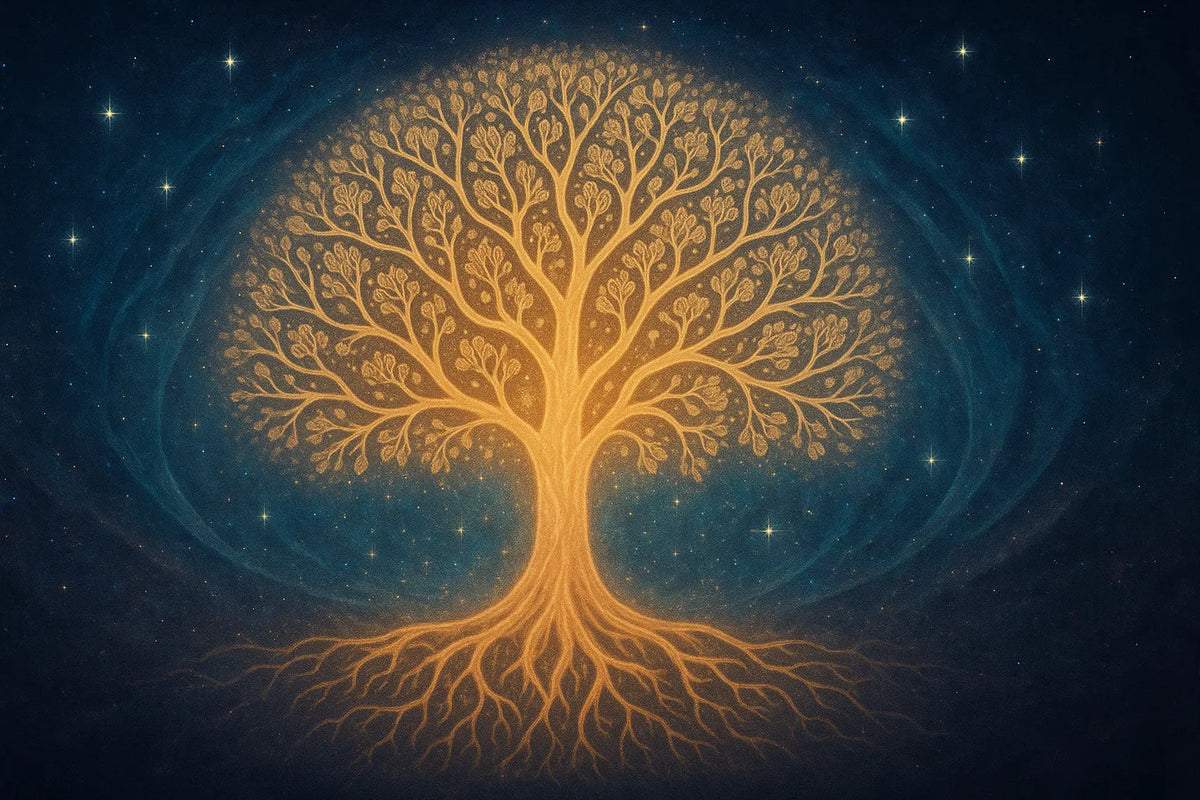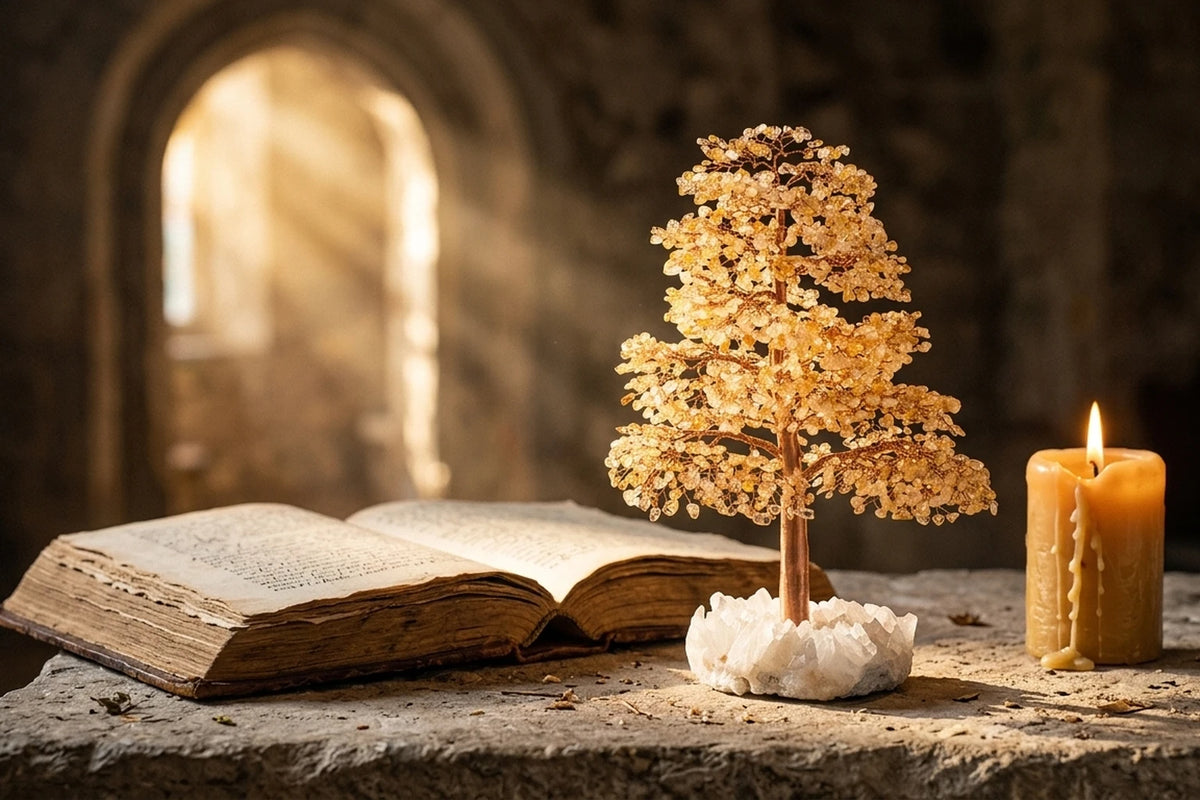
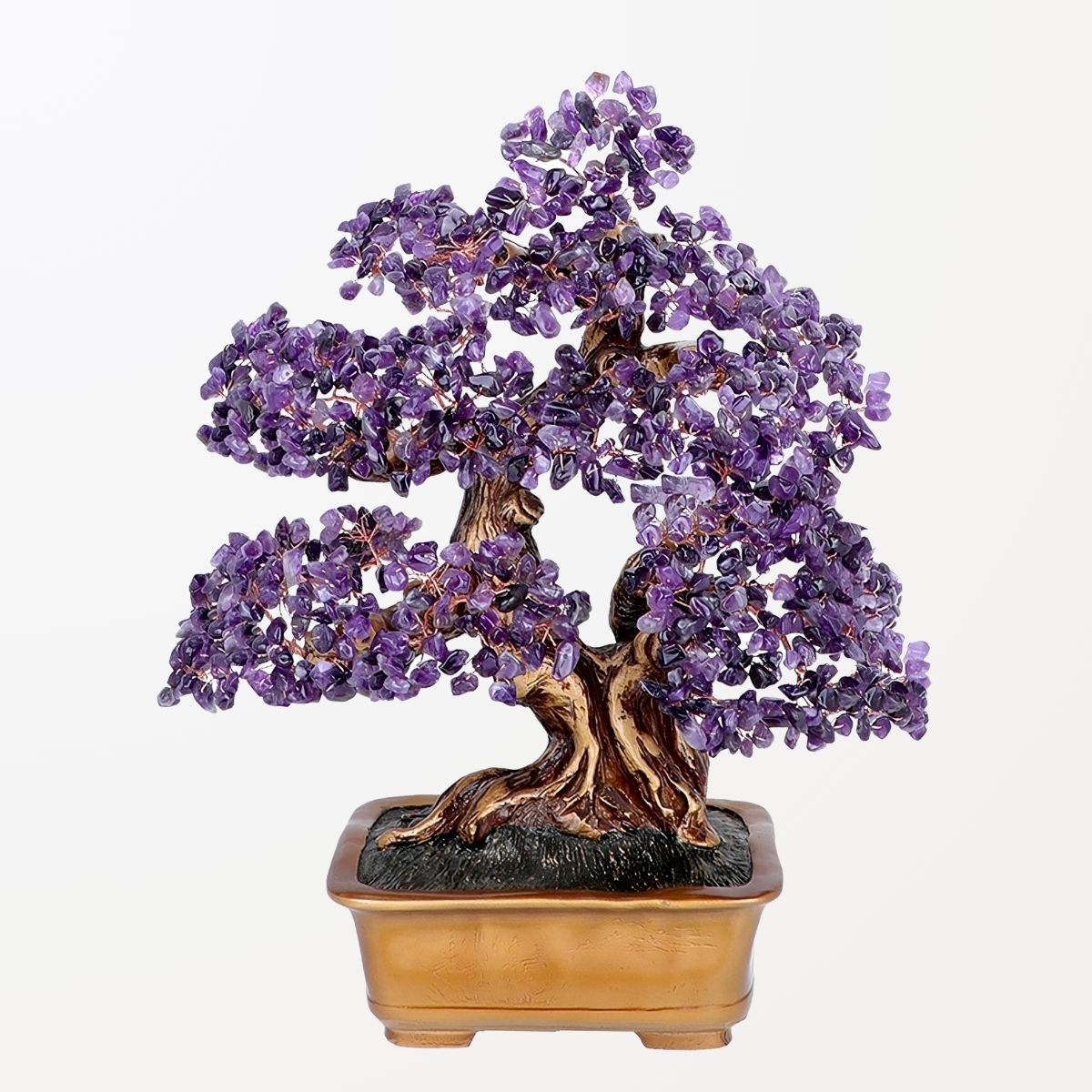
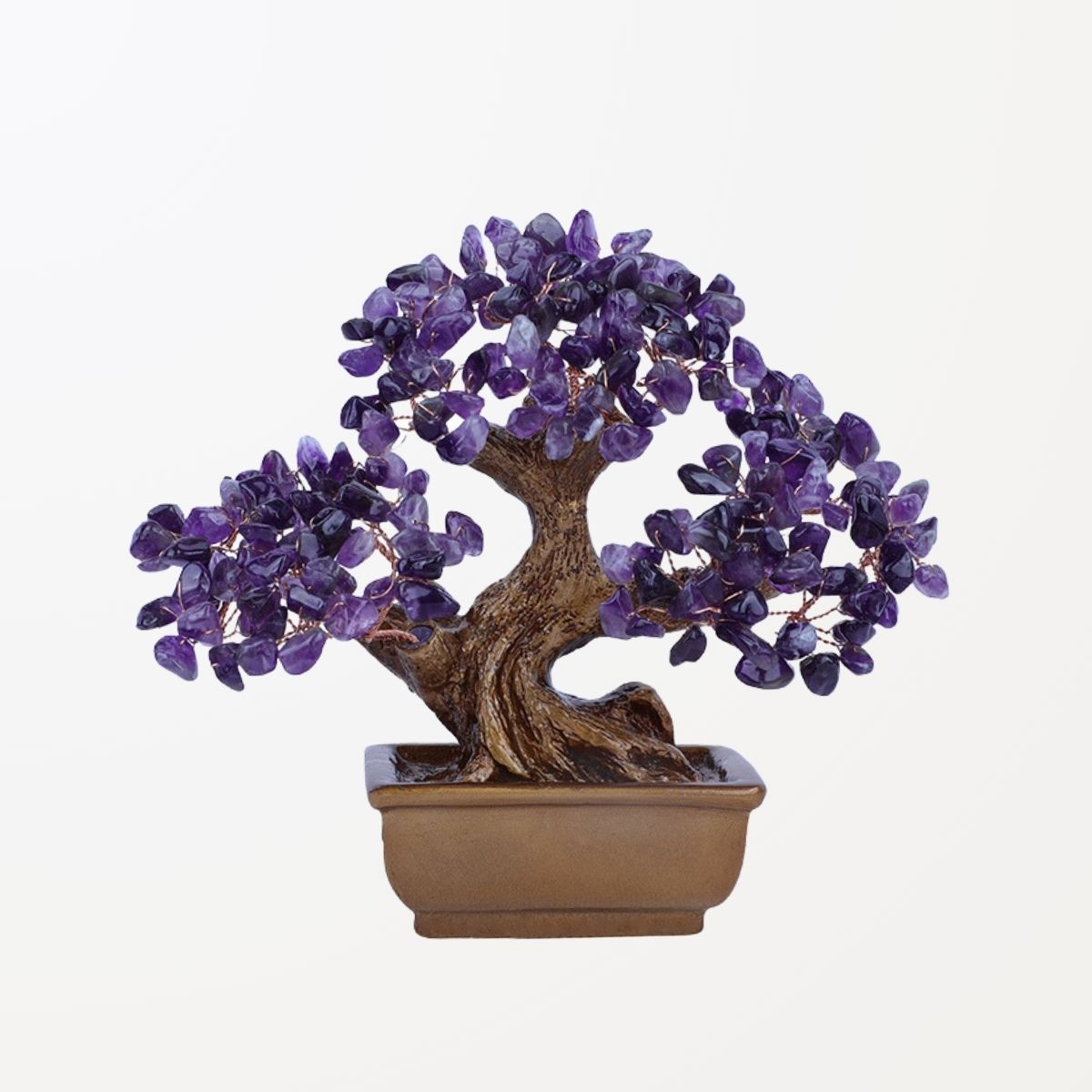





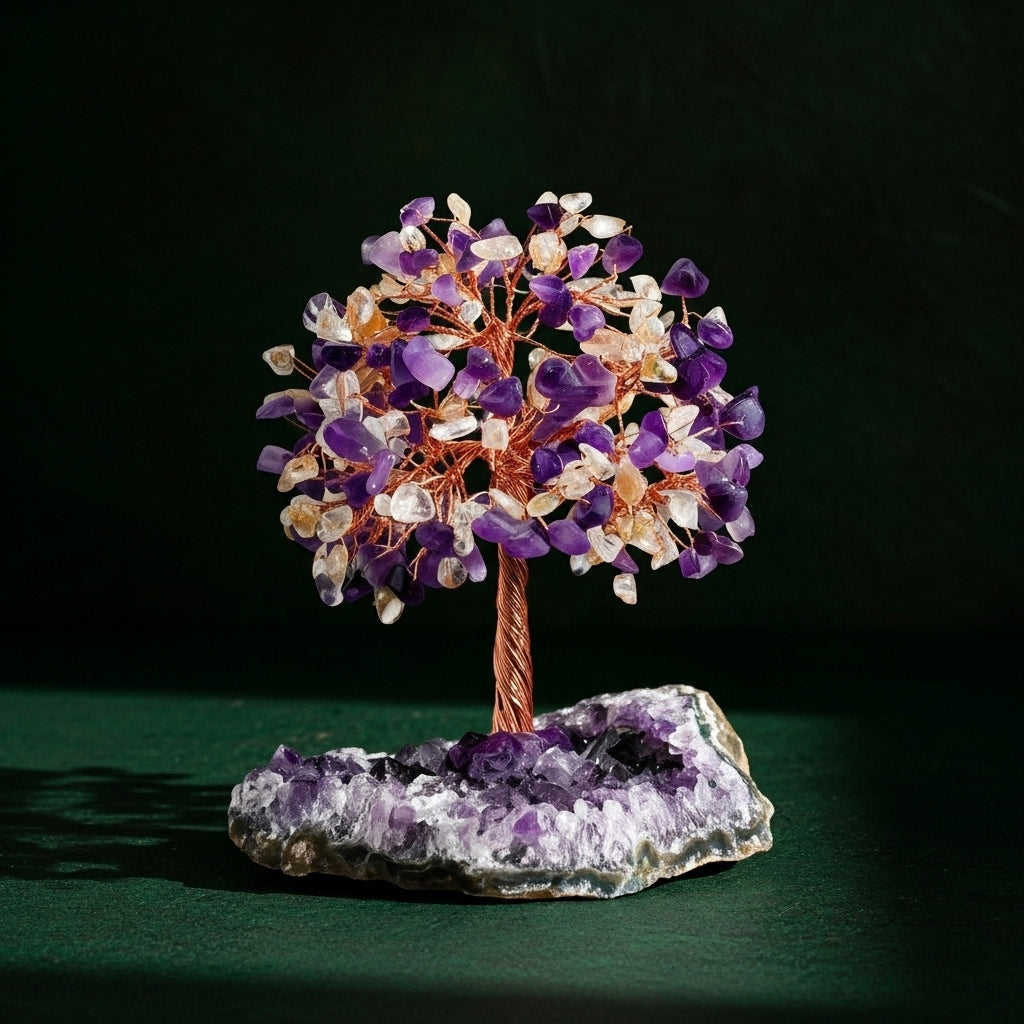
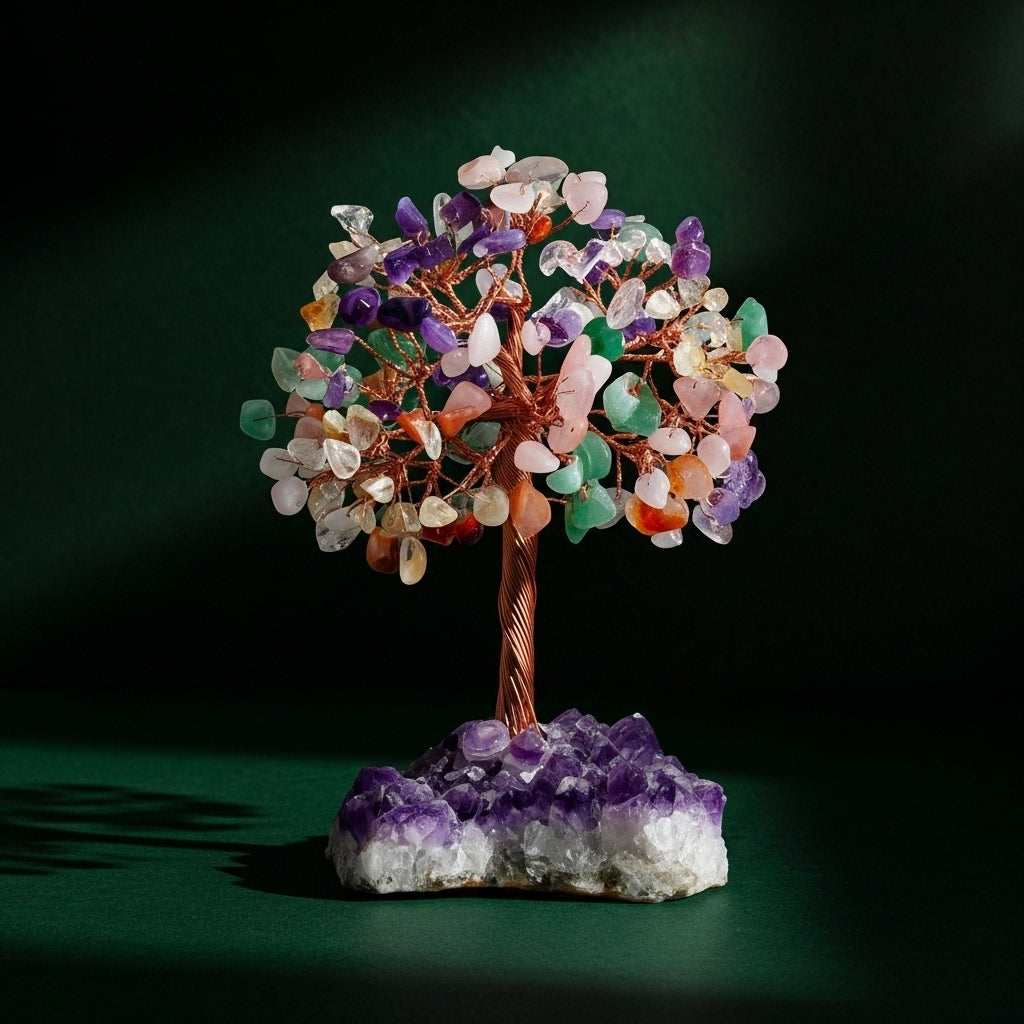


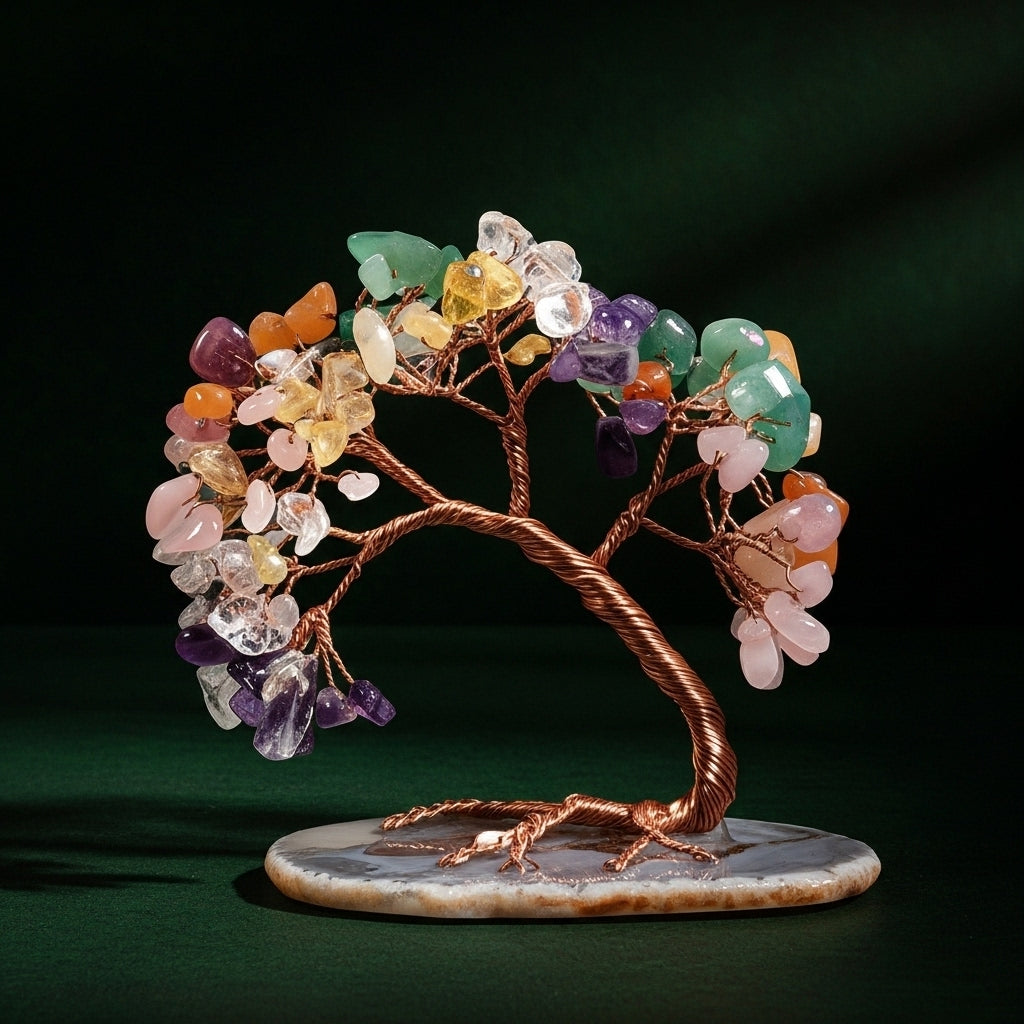

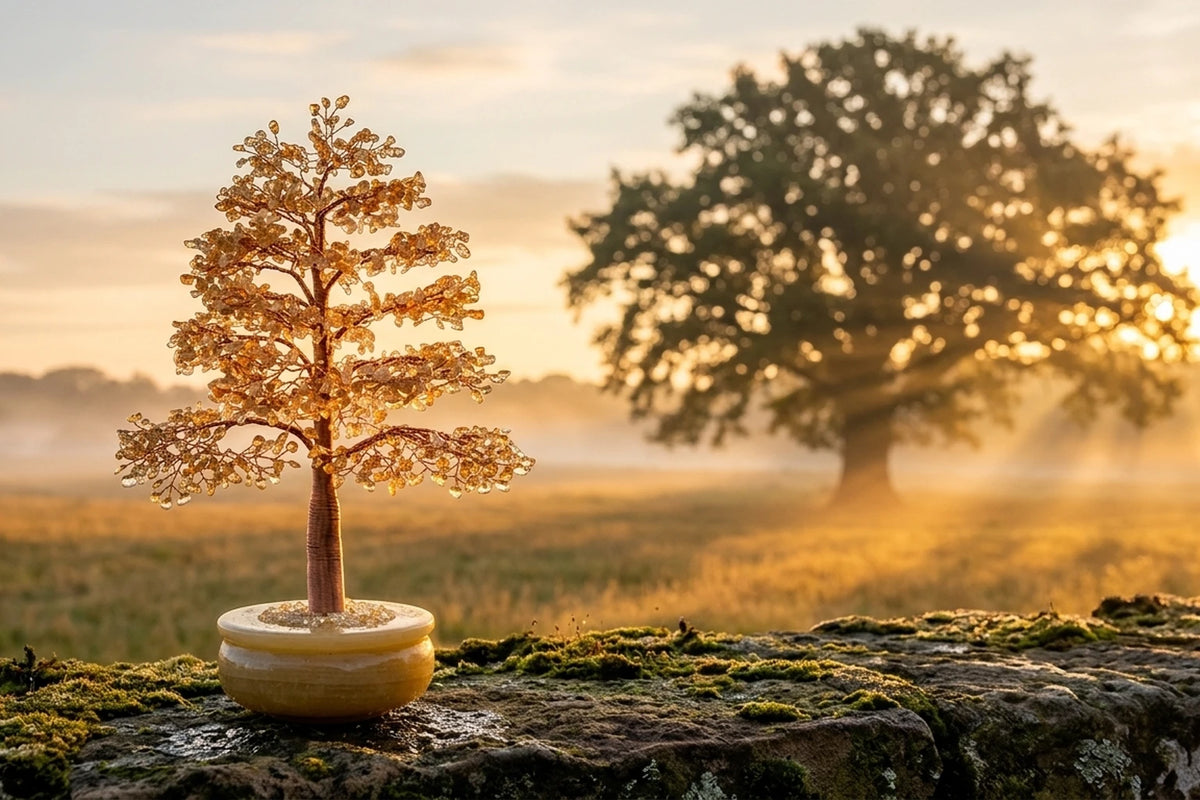
Since the dawn of time, the Tree of Life has fascinated civilizations across the globe. From spirituality to interior decor, from sacred religions to crystal healing, this ancient emblem re-emerges today with renewed vitality in our modern lives. Yet beneath the aesthetic allure of a piece of jewelry or a wall sculpture lies a universal symbol rich with multifaceted meaning.
So, what does the Tree of Life truly represent? What are its tangible benefits? Why does it continue to inspire spiritual seekers and holistic decor enthusiasts alike? This article offers an in-depth exploration of its cultural, religious, philosophical, and energetic roots.
Definition and Origin of the Tree of Life: A Universal Symbol
The Tree of Life is undoubtedly one of the oldest, richest, and most universal symbols in human history. It can be found across geographically distant mythologies, diverse spiritual paths, and philosophical systems bridging both the metaphysical and the scientific. Its ubiquitous presence is no coincidence: it fulfills a fundamental human need to represent the cycle of life, the interconnection between worlds, and the balance of natural forces.
A Timeless and Intercultural Archetype
Even before becoming a religious or esoteric emblem, the Tree of Life is what Carl Jung identified as a universal archetype. It embodies essential principles deeply woven into human psychology:
- Growth: from seed to mature tree, it symbolizes human development and self-realization.
- Grounding: its roots buried deep within the earth evoke our origins, our ties to the past, family lineage, and collective memory.
- Elevation: its branches reaching toward the heavens represent the aspiration for knowledge, spirituality, and transcendence.
- Resilience: it withstands seasons, storms, and natural cycles while remaining standing—an allegory for our own life journey.
In other words, the Tree of Life is a living metaphor for the human condition: grounded in reality, weathering the trials of existence, yet ever turning toward light and expansion.
A Cosmic Symbol: Axis Mundi and Sacred Tree
In countless ancient traditions, the Tree of Life is far more than an ordinary tree: it serves as the axis of the world (Axis Mundi), uniting heaven, earth, and the underworld. This concept of arboreal cosmology positions the tree as the central pillar of the cosmos, around which all reality is organized.
In Norse tradition, this sacred tree is known as Yggdrasil, a colossal ash tree bridging the nine realms of Viking cosmology.
Among shamanic peoples of Siberia and Mesoamerica, the sacred tree is revered as an initiatory gateway between dimensions, enabling spirits and shamans to journey across planes.
In Mesopotamian temples, stylized carvings depict a central tree flanked by winged deities, symbolizing both cosmic order and earthly fertility.
This cosmic dimension is paramount: it demonstrates that the Tree of Life is not merely a personal or ornamental motif. It is a universal blueprint for the organization of life itself—a mirror between the macrocosm (the universe) and the microcosm (the individual).
The Tree as a Blueprint for Life
Part of the Tree of Life's enduring fascination lies in its ability to offer a simple yet profoundly symbolic visual language for deciphering complex concepts:
- The Roots: embody the past, the subconscious, and foundational stability. They evoke ancestral heritage, lineage, and Mother Earth.
- The Trunk: symbolizes the present, the physical vessel, and inner core strength. It acts as our symbolic spine—the grounded center from which all vitality radiates.
- The Branches: reach toward the future, expansion, and infinite possibilities. They represent our relationships, creative endeavors, and conscious thoughts.
- The Leaves and Fruits: signify the visible rewards of our growth—our talents, accomplishments, wisdom, and life lessons learned.
This symbolic framework makes the Tree of Life an empowering tool for personal development. It allows you to visualize your inner equilibrium, identify areas of imbalance (fragile roots? scattered branches?), and evolve with mindful clarity.
An Archetype Within the Collective Unconscious
Even without exposure to sacred scriptures or philosophical treatises, humans instinctively resonate with the symbolic power of a tree. This is why the Tree of Life is embraced across diverse fields:
- In education, to illustrate growth, curiosity, and learning curves.
- In psychology, as a foundation for narrative therapy.
- In coaching, to map and harmonize different life spheres.
- In design, to craft imagery that evokes immediate, universal connection.
This timeless emblem transcends disciplines, eras, and cultures, steadfastly upholding one central truth: the unity of life in all its expressions.
The Tree in Creation Narratives
Another crucial element in understanding the sacred aura of the Tree of Life is its recurrent presence in ancient creation myths. From the biblical Genesis to the Mayan Popol Vuh, and from Babylonian epics to Hindu scriptures, the tree consistently serves as an origin point or vital nexus for the world.
It acts alternatively as:
- The guardian of divine mysteries (the forbidden fruit or the fruit of supreme wisdom).
- The cradle or birthplace of humanity.
- A bridge between mortals and the divine.
This prominence in founding mythologies immediately elevates it to the sacred: it is not merely botanical, but a transcendent entity imbued with spiritual power.
The Tree of Life Today: Renaissance of an Ancient Emblem
In contemporary society, our yearning for meaning, grounded roots, and harmonious reconnection with nature has sparked a vibrant resurgence of the Tree of Life. Today, this ancestral talisman is celebrated as:
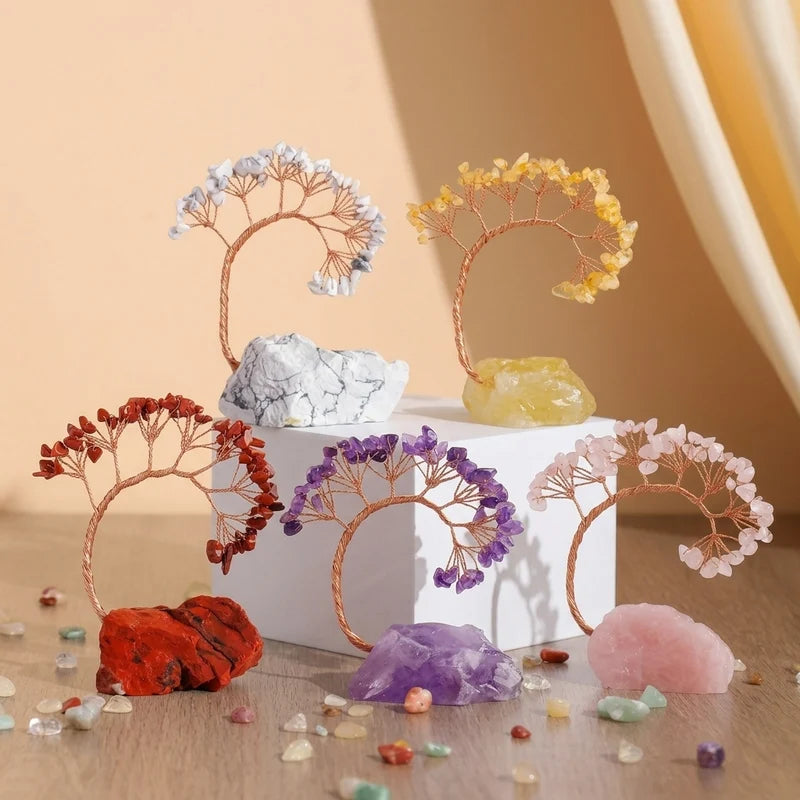
- Harmonious decor infused with energetic properties (particularly in natural gemstone trees).
- Meaningful jewelry offering spiritual protection and intention.
- A sacred anchor in meditation, yoga, and energy healing rituals.
Its multidimensional nature—simultaneously aesthetic, energetic, spiritual, and symbolic—makes it one of the rare talismans capable of resonating with every soul, regardless of cultural background or personal beliefs.
To explore its ancestral spiritual roots, read our article Origin and Spiritual Meaning of the Tree of Life in Ancient Beliefs.

Luuckk Crystal Selection: Tree of Life Meaning and Benefits
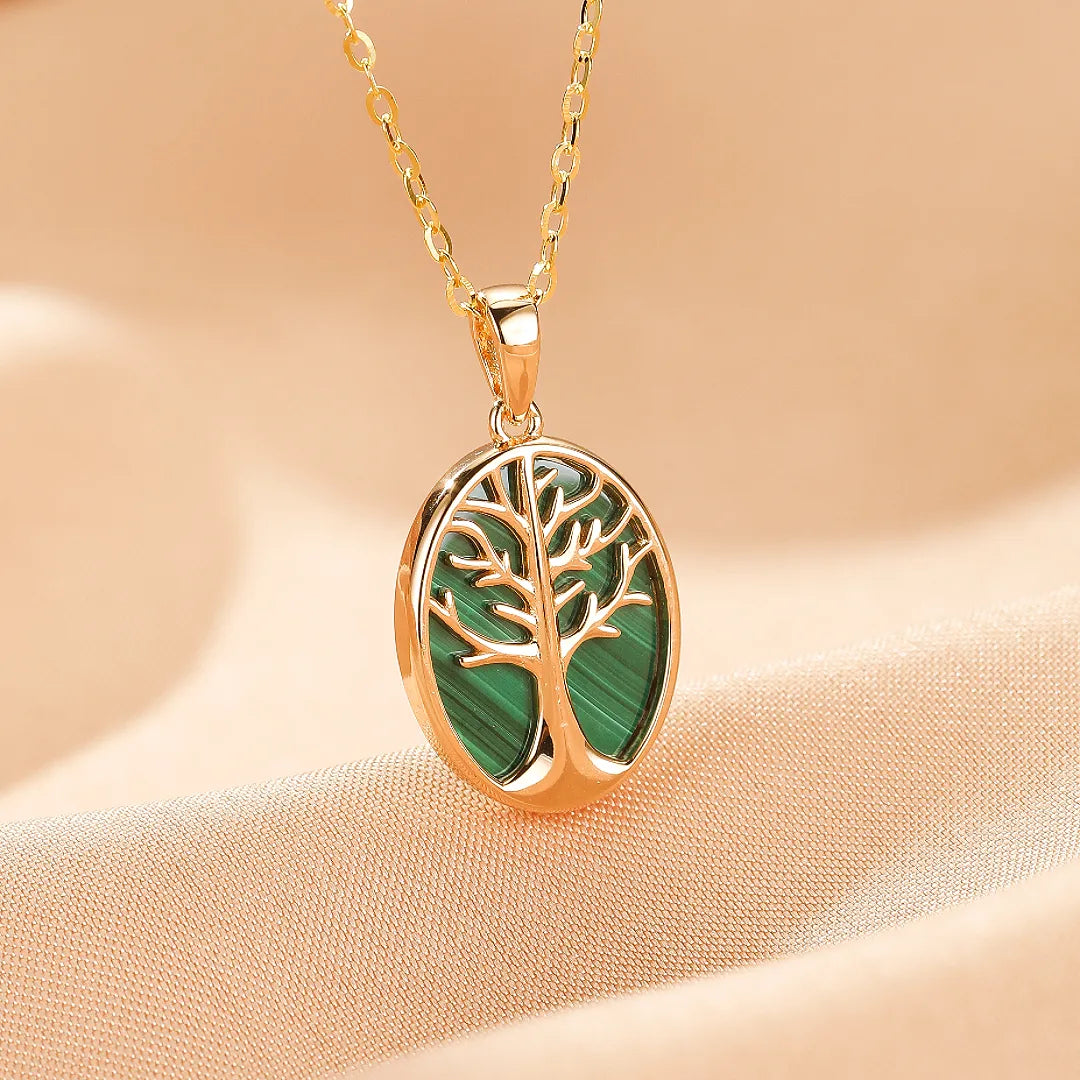
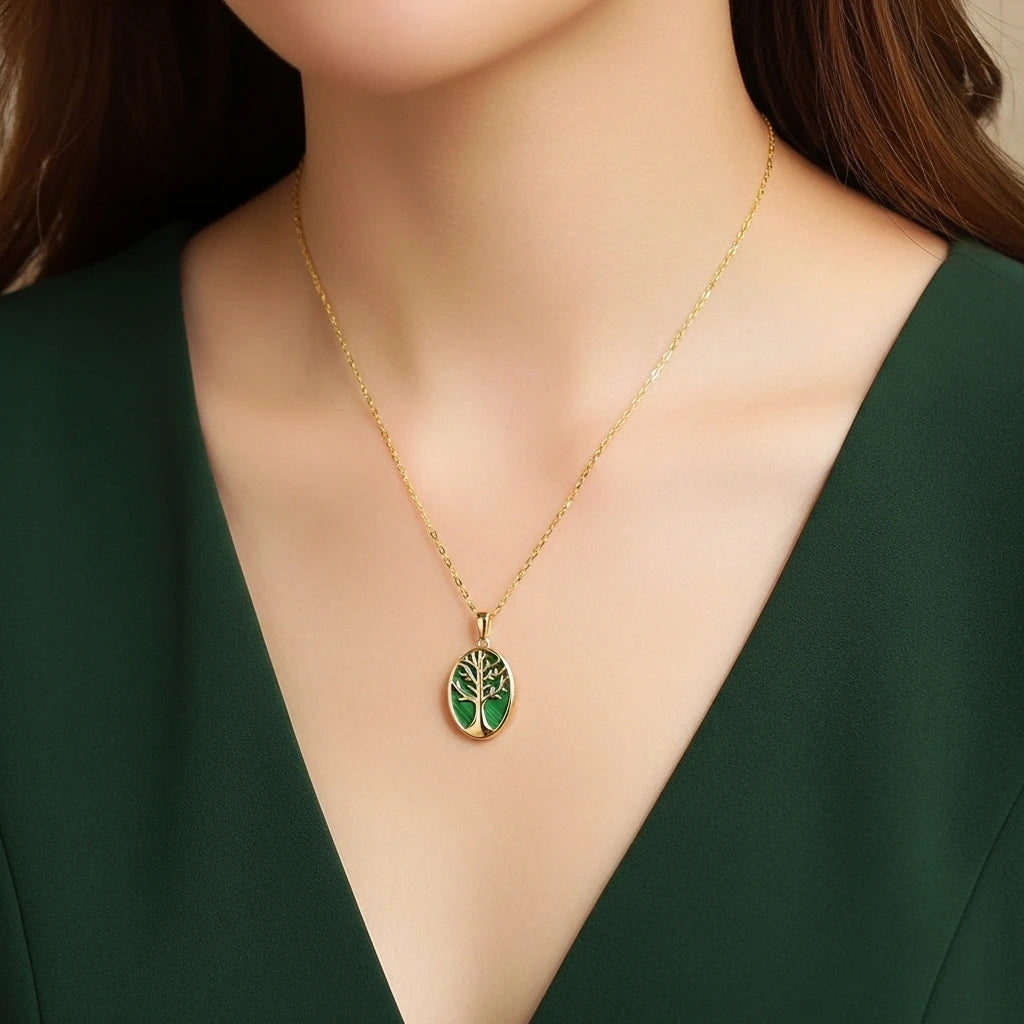


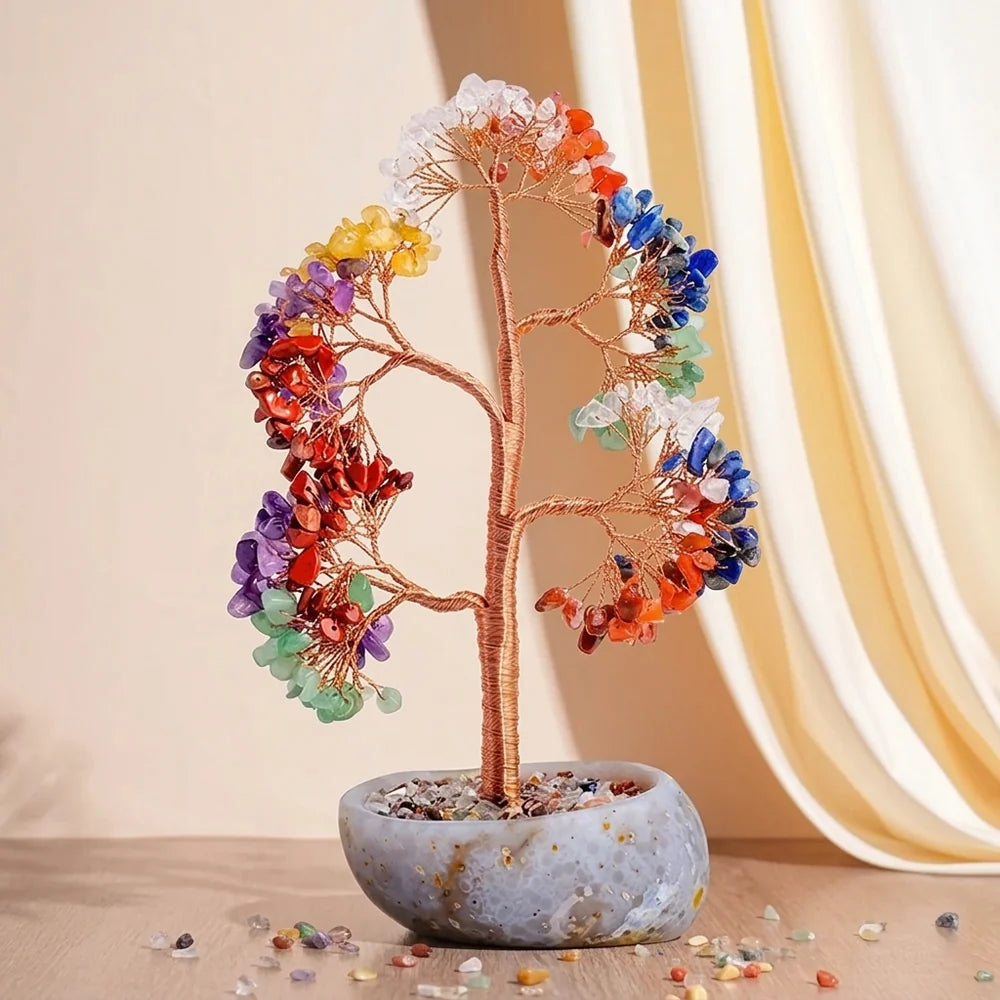
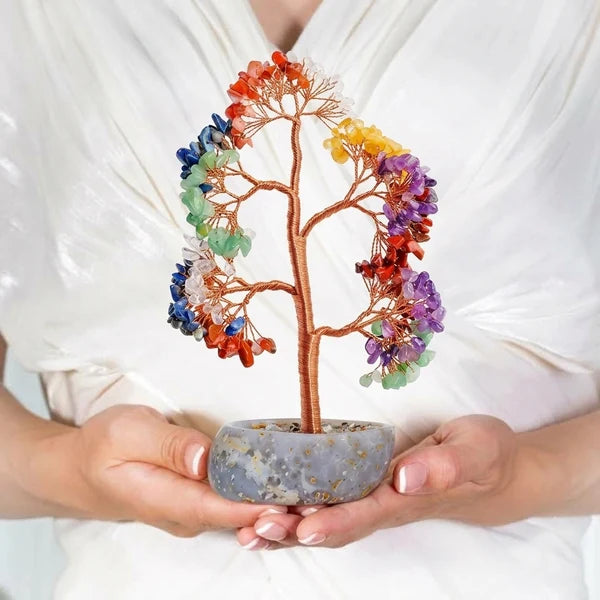
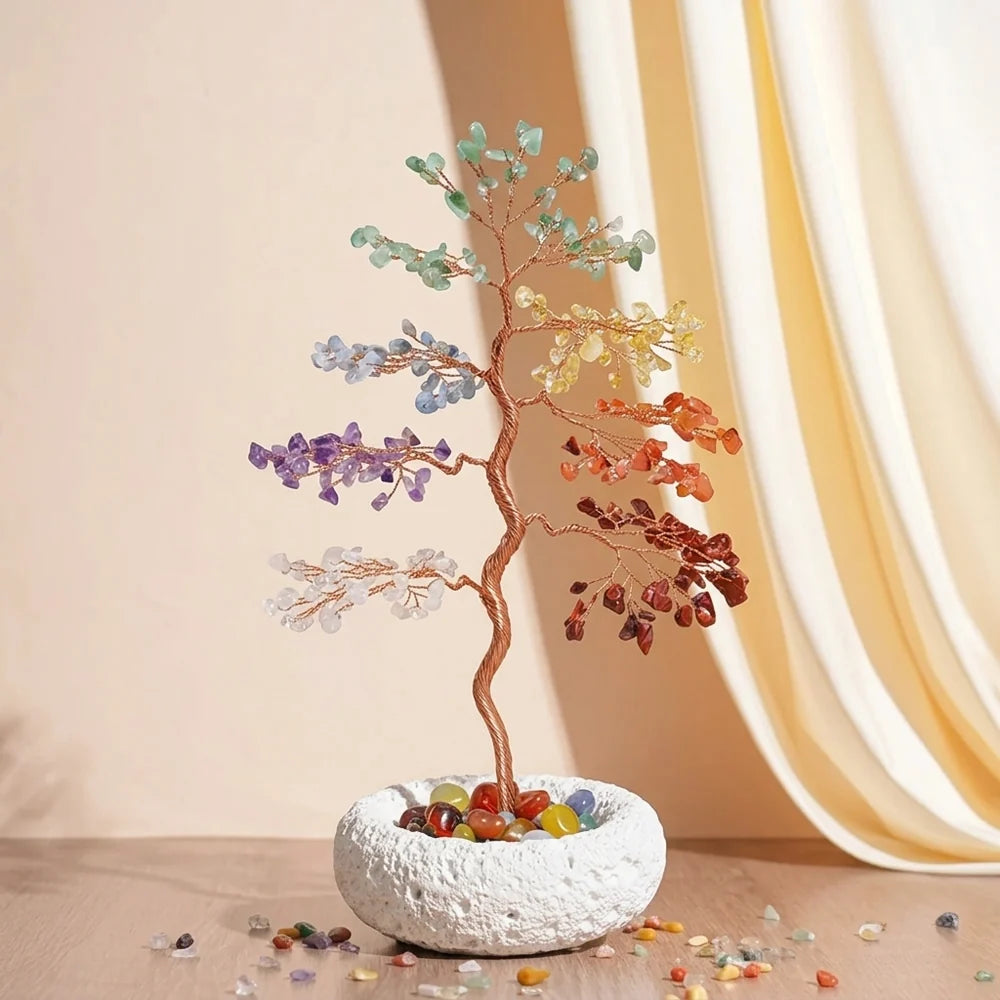
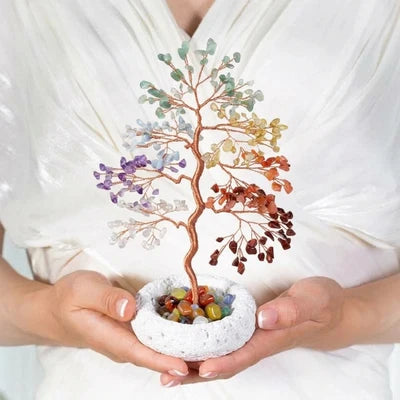
A Global Journey Through Cultural Meanings of the Tree of Life
If the Tree of Life is revered as a universal archetype, it is precisely because it emerges with striking parallels across foundational myths, cosmologies, and sacred systems throughout ancient civilizations. Its imagery crosses continents, languages, and belief systems without losing an ounce of its evocative grace.
In this section, we embark on a symbolic world tour to discover how diverse traditions interpret the Tree of Life. This panoramic view illuminates why this talisman continues to touch our hearts and minds so deeply today.
Ancient Egypt: The Ished Tree and the Gift of Eternity
In Pharaonic Egypt, the sacred Ished tree grew in the celestial gardens of Heliopolis, the City of the Sun. It bore fruits of immortality, and the deities inscribed the names of righteous pharaohs upon its leaves, granting them everlasting life in the afterlife.
- It was intimately connected to solar cycles and Thoth, the deity of wisdom and divine knowledge.
- It also held a central place in funerary rites as a symbol of rebirth and safe passage between the earthly realm and the divine.
The Egyptian perspective beautifully portrays the tree as a guardian of destiny, forever bound to time, ancestral memory, and the eternal renewal of existence.
Sumerian and Babylonian Civilizations: The Sacred Date Palm
Across ancient Mesopotamian bas-reliefs, the Tree of Life is frequently depicted as an ornate, stylized date palm flanked by winged deities or royal figures. This tree stood as an emblem of abundance, cosmic architecture, and divine sovereignty.
- Its roots plunged into the primeval waters of the underworld (Abzu), while its canopy touched the celestial heights.
- It represented cosmic order, watched over by the winged guardians (the Apkallu).
- The Mesopotamian tree was far from passive: it was a vibrant, organizing pillar of creation—the ultimate benchmark of cosmic stability.
India and Vedic Traditions: Kalpavriksha, the Wish-Fulfilling Tree
In Hinduism, Kalpavriksha is a divine, wish-granting celestial tree. Mentioned in the sacred Vedas, it is celebrated as one of the cosmic treasures that emerged during the churning of the ocean of milk (Samudra Manthan) by the devas and asuras.
- It is associated with prosperity, sacred abundance, and enlightened wisdom.
- It serves as a sacred bridge between the divine and humanity, generously granting the spiritual aspirations of sincere seekers.
Symbolically, Kalpavriksha embodies the benevolent, nurturing grace of the Tree of Life: a source that nourishes the needs of the soul as generously as those of the body.
Ancient China and Taoism: The Tree of Longevity
In Chinese tradition, the Tree of Life appears within Taoist narratives of immortality, flourishing on the mythical island of Mount Penglai where the Immortals dwell.
- Its legendary Peaches of Immortality ripen once every 3,000 years, bestowing eternal life upon whoever partakes.
- The tree is often depicted alongside symbolic animals like the crane or the phoenix, representing spiritual transcendence and longevity.
In traditional Chinese thought, the Tree of Life transcends mere decoration; it is the very heart of the Tao—the supreme harmony between Heaven, Humanity, and Earth.
Celtic Traditions: Crann Bethadh, the Druids' Sacred Oak
The Celts held deep reverence for the natural world, to the extent that every clan had a sacred central tree—the Crann Bethadh—planted at the heart of their settlement.
- It represented the delicate equilibrium between nature's forces and the sacred communion between mortals and deities.
- If an opposing tribe felled a clan's sacred tree, it was regarded as an act of spiritual warfare and a devastating desecration.
The Crann Bethadh stands as one of the most exquisite expressions of sacred botany, honored, protected, and woven into rituals of justice, healing, and silent meditation.
Norse Mythology: Yggdrasil, the Cosmic Ash
In Scandinavian lore, Yggdrasil is the quintessence of the World Tree. A colossal evergreen ash, it holds the nine realms of Norse cosmology within its branches: Asgard, Midgard, Helheim, and beyond.
- Its sacred roots delve into mystical wells, including Mímisbrunnr, the spring of divine wisdom.
- It endures continuous trials (gnawed by dragons, stags, and creatures of the wood), reflecting the delicate fragility of cosmic order.
Yggdrasil is a sentient, living nexus that illustrates the profound connection between wisdom, resilience, transformation, and rebirth. It mirrors our own world: intricately interconnected yet deeply vulnerable.

Pre-Columbian Americas: The Ceiba, Mayan Sacred Tree
To the ancient Maya, the sacred tree was the Ceiba (Yaxche), a towering tropical giant planted at the heart of cities and temple complexes.
- It represented the cosmic axis uniting the underworld (Xibalba), the mortal plane, and celestial heights.
- Frequently depicted as a botanical cross with four cardinal branches on stelae and codices.
- The Ceiba served as an energetic gateway through which shamans journeyed between dimensions in sacred trance, opening pathways to elevated states of consciousness.
West Africa: The Baobab, Tree of Life and Ancestral Memory
Across many African cultures, the venerable baobab is venerated as the ultimate Tree of Life. It offers life-sustaining water, nourishing fruit, durable shelter, and potent medicine. Simultaneously, it is revered as the tree of the ancestors, serving as a sanctuary of worship and sacred repose.
- It symbolizes an unbroken continuum across generations.
- Its hollow trunk frequently shelters benevolent guardian spirits and sacred ceremonial offerings.
In this rich tradition, the Tree of Life is the enduring bridge uniting the living and the ancestors, the fertile soil and spiritual memory, the individual and the collective spirit.
Islamic World and Sufism: The Tree of Light
Within Islamic tradition, the tree is evoked through rich symbolism. In Sufism, the mystical path of Islam, the tree frequently personifies divine radiance and the inner ascent of the soul.
- It symbolizes the soul’s sacred path: roots (Islam/Surrender), trunk (Iman/Faith), branches (Ihsan/Virtue), and fruit (Ma'rifa/Divine Gnosis).
- Sufi mystics often speak of the Tree of Light, nurtured by sincere contemplation, prayer, and purity of the heart.
Rather than an external image, this tree is experienced inwardly as a guiding archetype of spiritual transformation.
Indigenous Traditions: Trees as Guardian Spirits
Across indigenous cultures (Native American tribes, Australian First Nations, Siberian traditions), every tree can embody a sentient spirit, an energetic guide, and an ancestral presence.
There is not merely one isolated Tree of Life, but an entire forest of conscious life, each tied to clan lore, ancestral legends, and the natural elements.
Trees are consulted, thanked, and honored with heartfelt reverence, and any harvest requires rites of permission and gratitude.
For indigenous wisdom, the Tree of Life is never an abstract concept: it is a breathing, sacred relative—a living sanctuary uniting humanity with the earth.
Synthesis: A Universal Archetype with Diverse Expressions
This global survey unveils a vital truth: the concept of the Tree of Life transcends boundaries, yet adapts naturally to the unique geography, ethos, and spiritual longings of each culture.
Whether revered as a cosmic pillar, guardian of ancestral memory, source of eternal youth, or guide to inner wisdom, the Tree of Life keeps its sacred essence intact: bridging dimensions, balancing opposites, and channeling vital life force.
To dive deeper into each civilization's heritage, read our dedicated article: Meaning of the Tree of Life in Different Cultures.
Handcrafted Healing Crystal Creations & Tree of Life Collection
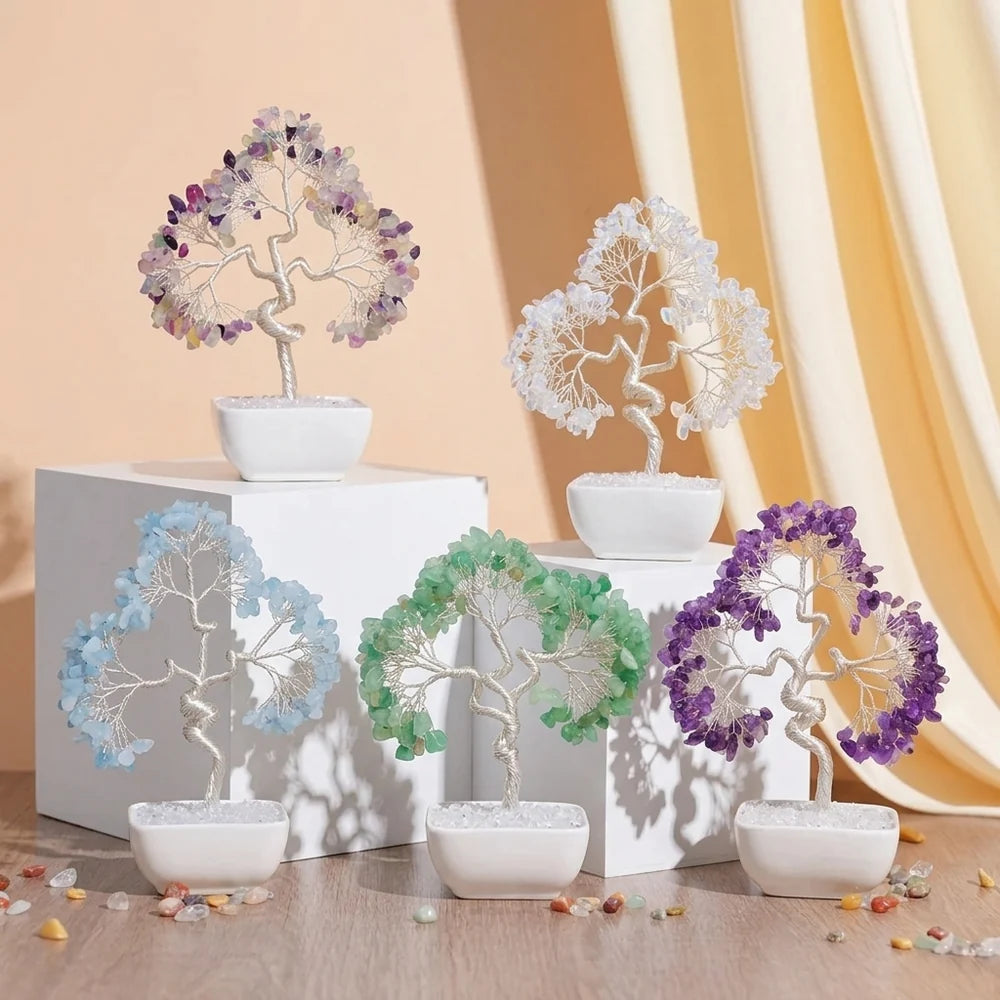
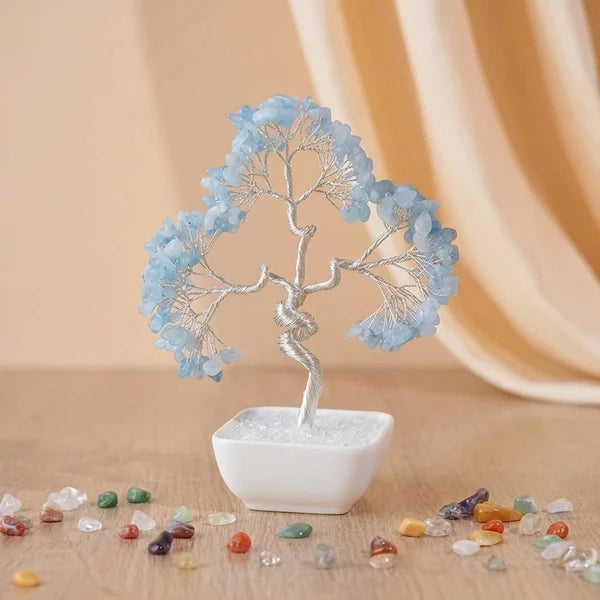
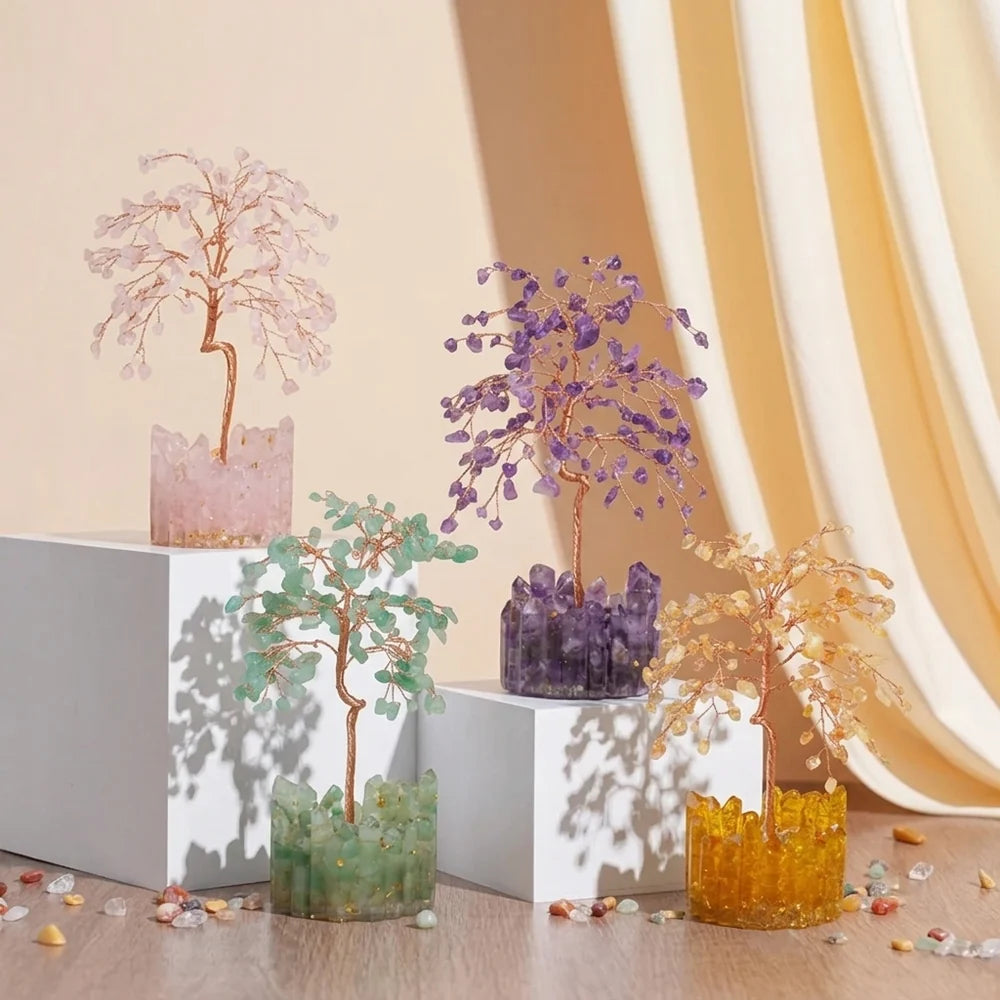
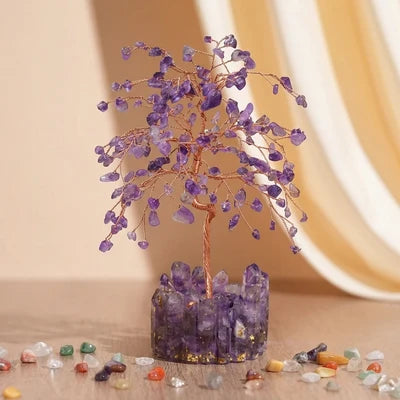
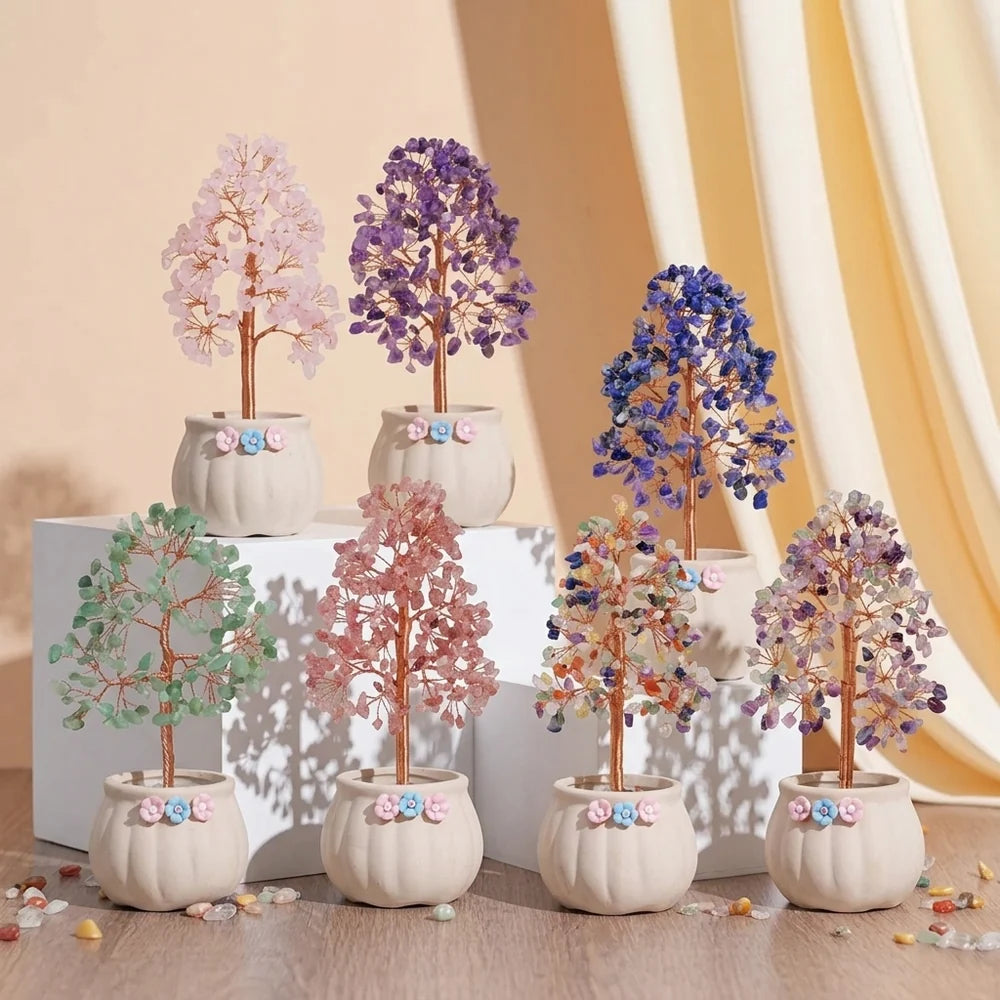
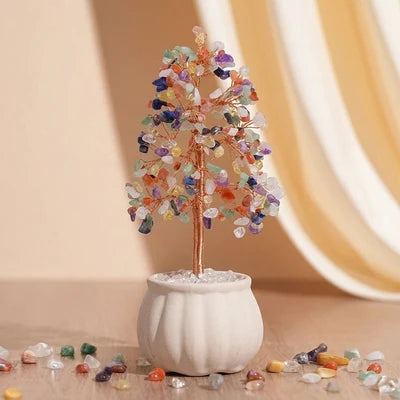
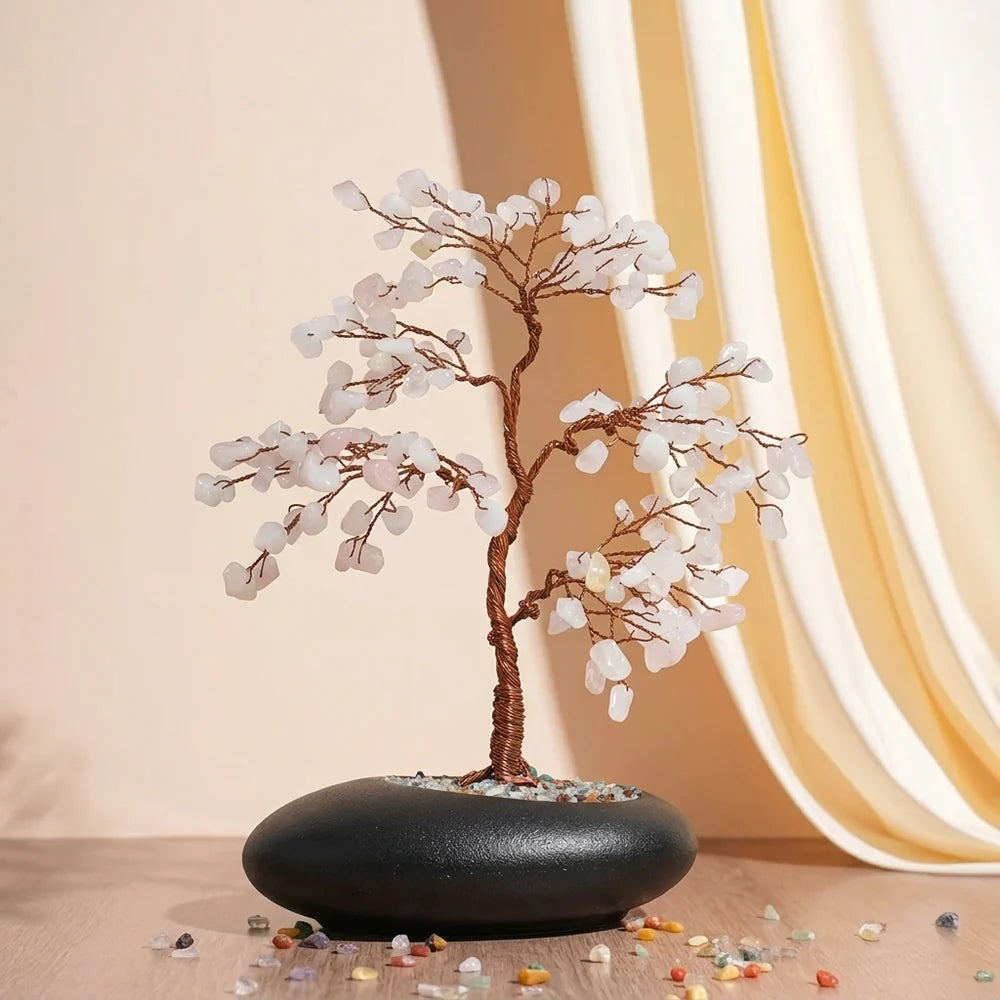
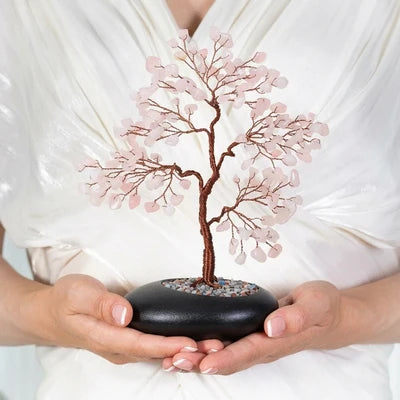
The Tree of Life in Christianity: A Symbol of Reconciliation and Eternity
In the Bible, the Tree of Life appears in the opening chapters of Genesis at the center of the Garden of Eden. It is frequently distinguished from the Tree of the Knowledge of Good and Evil.
The Tree of Life provides eternal communion. Following the fall of Adam and Eve, access to the tree was guarded, preserving humanity until the promise of spiritual restoration.
In Christian tradition and medieval theology, Christ is often allegorized as the new Tree of Life: the Cross becomes the tree granting eternal redemption and rebirth. In sacred Christian art, crucifixes are frequently crafted with blossoming branches, symbolizing resurrection and renewed grace.
To explore this spiritual perspective further, read Meaning of the Tree of Life in Christianity.

The Tree of Life in Islam: An Eternal Symbol of Wisdom and Devotion
In the Quran, the sacred tree is referred to as "Shajarat al-Khuld"—the Tree of Eternity. Similar to the biblical account, it occupies a central place in the story of Adam and Eve, while carrying a profound metaphorical dimension in Islamic metaphysics.
Islamic mystics and Sufi thinkers interpret the Tree of Life as a map of the human soul on its journey toward the Divine. The roots represent unwavering faith (Iman), the trunk embodies sacred divine law (Sharia), the branches channel wisdom and knowledge (Ma'rifa), and the blossoming fruits represent radiant spiritual virtues.
In Islamic art and calligraphy, the tree is gracefully stylized to honor geometric harmony while retaining its deep spiritual resonance.
Read more: What Does the Tree of Life Mean in Islam?
Feng Shui and the Tree of Life: Channeling Harmonious Life Energy
Feng Shui, the ancient Chinese art of spatial harmonization, rests upon a vital principle: life force energy (Chi) flows everywhere—through objects, environments, and living beings—shaping our vitality, abundance, and emotional well-being. Within this philosophy, the Tree of Life finds its quintessential home. As an emblem of steady growth, balance, and interconnected elements, it acts as a potent catalyst for uplifting, positive energy in your sacred space.
How does the Tree of Life integrate into Feng Shui philosophy? And how can you position it in your sanctuary to enhance vitality, invite prosperity, and cultivate peace?
The Feng Shui Symbolism of the Tree of Life
In Feng Shui, mindful decor is never inert: it radiates a subtle energetic signature that influences the environment. The Tree of Life represents a balanced harmony between the Five Elements (Wood, Fire, Earth, Metal, and Water):
- Wood (embodied by the tree structure) represents growth, radiant health, and new horizons.
- Fire is reflected in the vibrant crystals, blossoms, and life force of the tree.
- Earth is manifested through deep roots, offering grounding, calm, and stability.
- Metal (often present in delicate wirework or brass structures) channels focus, structure, and precision.
- Water is the energetic flow that nurtures the entire cycle: mirrored in the circular flow of a Tree of Life pendant or in gems like Amethyst and Clear Quartz.
The Tree of Life functions as a miniature cosmic mandala, harmonizing room energy and balancing elemental currents.
Benefits of the Tree of Life in Feng Shui Decor
Welcoming a Tree of Life into your home brings multifaceted energetic enhancements:
- Restores harmony to stagnant or energetically overwhelmed rooms.
- Enhances vitality and wellness in spaces dedicated to rest and nourishment (bedroom, relaxation corner).
- Fosters grounding, focus, and mental clarity in home offices and creative workspaces.
- Attracts prosperity, abundance, and organic growth in professional and personal endeavors.
- Deepens serene contemplation and spiritual connection when placed on a meditation altar.
By selecting specific natural gemstones and materials, you can amplify and fine-tune your intended vibrations.
Where to Place Your Tree of Life According to Feng Shui
According to the traditional Feng Shui Bagua energy map, different sectors of your home govern specific areas of your life. Here is how to position your Tree of Life for optimal energy flow:
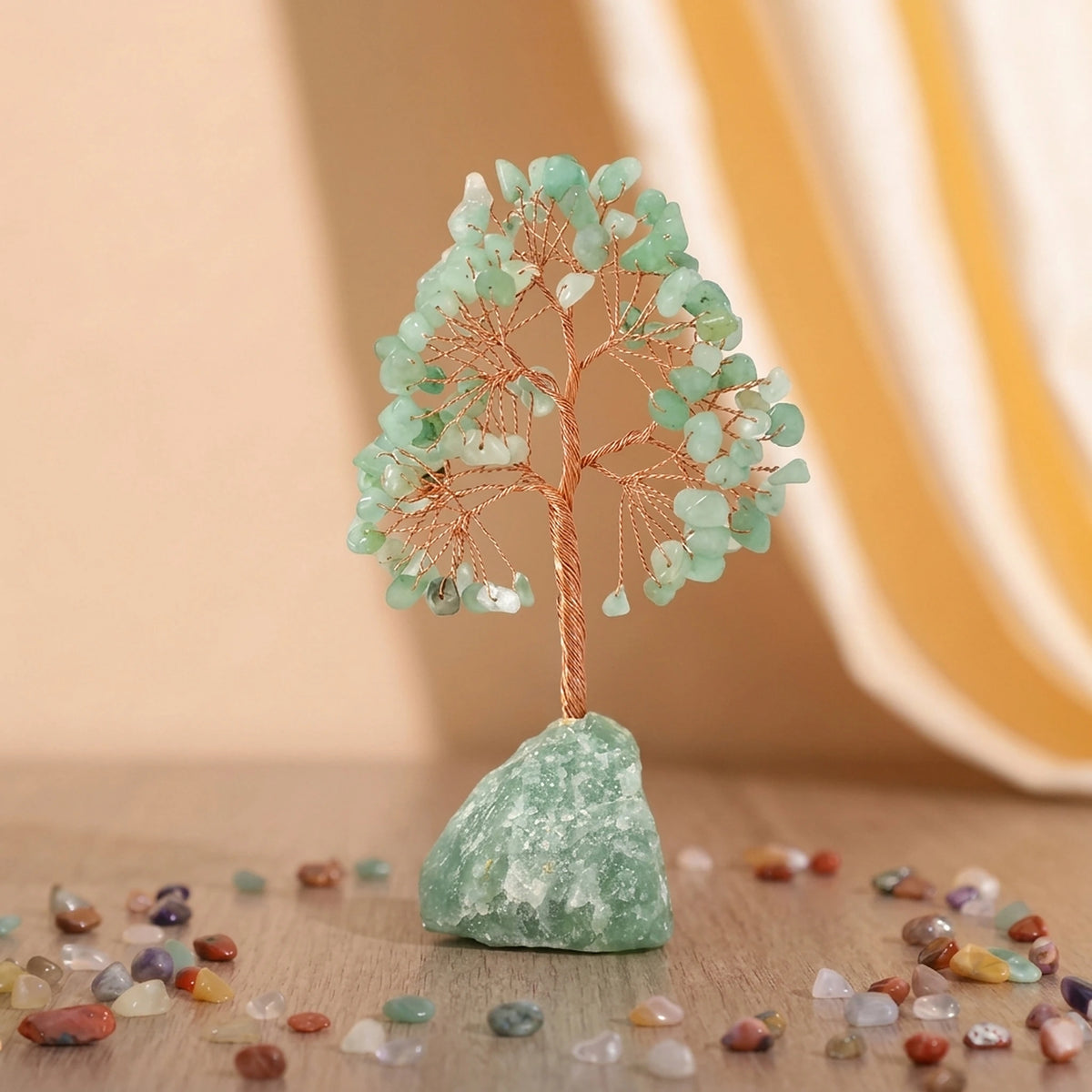
- East Sector (Health & Family): A wooden Tree of Life or one adorned with green stones (Aventurine, Jade) revitalizes well-being, strengthens family bonds, and nurtures emotional harmony.
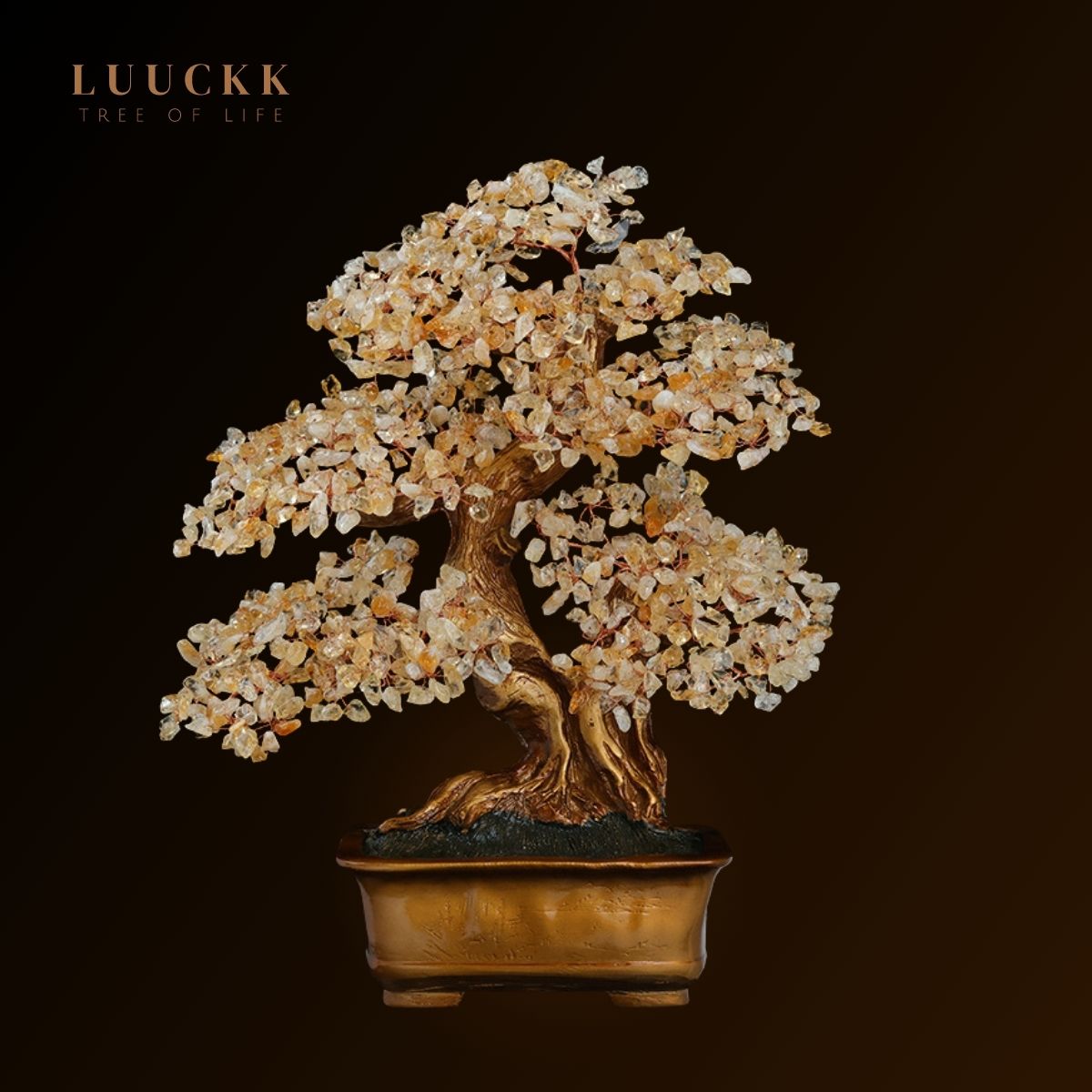
- Southeast Sector (Wealth & Abundance): Choose a gemstone tree with stones of prosperity (Citrine, Pyrite) to invite wealth and financial success.
- North Sector (Career & Life Path): A Tree of Life adorned with grounding, protective stones (Black Onyx, Obsidian, Tiger's Eye) sharpens focus, determination, and resilience.
- Southwest Sector (Love & Relationships): An artisanal tree featuring Rose Quartz or Rhodonite awakens unconditional love, tenderness, and heartfelt connection.
- Study or Workspace: A tree crafted with Lapis Lazuli or Fluorite promotes deep concentration, creative inspiration, and intuitive insight.
Design Tip: Avoid placing a Tree of Life in bathrooms or damp utility spaces where Chi energy can be easily drained.
The Tree of Life and Natural Gemstones: Energetic Synergy
Combining the wisdom of Feng Shui with crystal healing creates powerful synergy, particularly through handcrafted crystal Trees of Life.
Each mineral imbues the tree with its distinct vibrational frequency, creating a personalized energetic talisman for your interior:
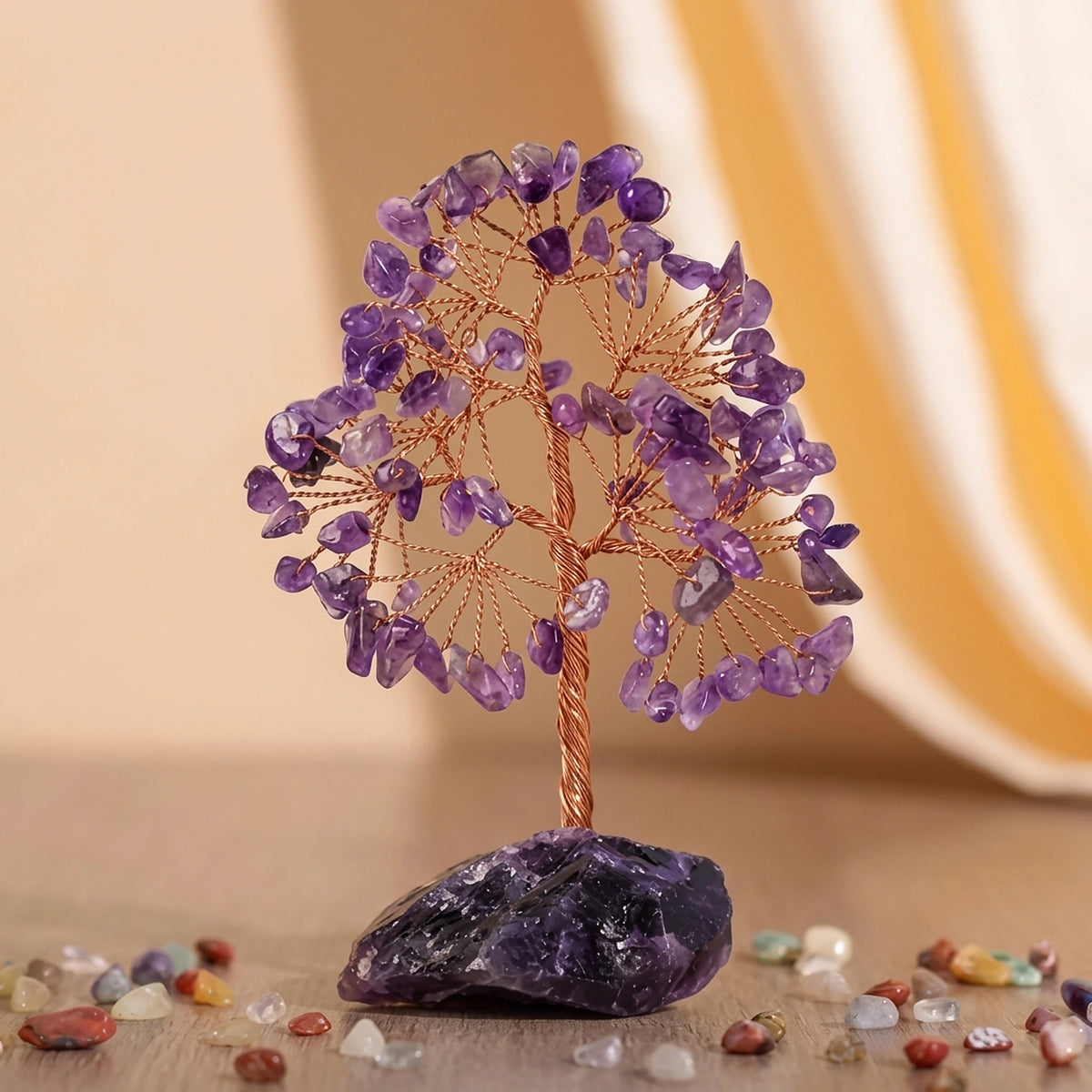
- Amethyst: mental clarity, peace, and spiritual ascension.
- Green Aventurine: optimism, confidence, and heart opening.
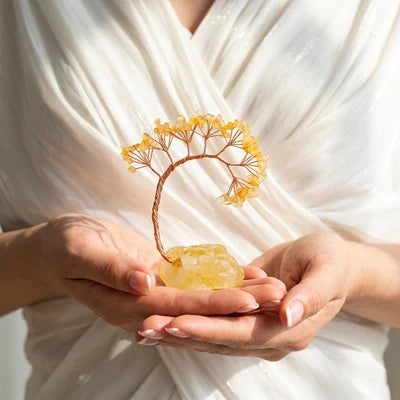
- Citrine: solar vitality, abundant wealth, and radiant joy.
- Rose Quartz: gentle love, deep comfort, and emotional healing.
- Labradorite: energetic shielding, aura protection, and heightened intuition.
- Tiger's Eye: inner strength, courage, grounding, and balance.
Choosing a Tree of Life adorned with natural crystals aligned with your present journey is a sublime way to elevate your interior aesthetics while enjoying their subtle metaphysical benefits.
How to Select Your Feng Shui Tree of Life
To allow your Tree of Life to radiate its fullest potential, keep these recommendations in mind:
- Select with clear intention, tuned to the energy you wish to welcome into your sanctuary.
- Favor genuine natural materials—untreated gemstones, fine wire, natural wood, or a Ceramic Pot Base—rather than artificial synthetic replicas devoid of life force.
- Display it in a luminous, clean, and open space where Chi energy flows freely.
A crystal tree left to gather dust behind closed doors will see its vibrant aura dimmed over time.
Care Tip: Periodically cleanse your gemstone tree with white sage, sacred incense, or focused mindful intention to renew its vibrational brilliance.
In Summary
When welcomed into a Feng Shui lifestyle, the Tree of Life is elevated far beyond an ornament: it becomes an energetic ally, a sacred anchor supporting your inner equilibrium and lifting the aura of your home. By harmonizing material, color, placement, and pure intention, you can transform this decorative piece into an inspiring catalyst for personal blossoming.
To dive deeper into this sacred art, explore our detailed guide: Tree of Life and Feng Shui: Meaning, Uses, and Sacred Practices.

The Tree of Life in Sacred Faiths: A Unifying Spiritual Thread
What makes the Tree of Life truly exceptional is its ability to transcend individual dogmas, appearing across virtually every sacred faith in human history.
Judaism and the Kabbalah
In Jewish Kabbalistic mysticism, the symbol is intricately mapped as the Etz Chaim (Tree of Life). Composed of ten Sephiroth, it depicts the metaphysical emanations through which the Divine interacts with creation and human consciousness. It serves as an initiatory map for meditation, self-realization, and cosmological understanding.
Buddhism
The sacred fig tree beneath which Siddhartha Gautama attained enlightenment is the Bodhi Tree (Ficus religiosa). It symbolizes transcendent awakening, profound inner peace, and liberation from worldly illusion.
Discover a detailed comparative analysis in our article The Tree of Life in Religions: Sacred Symbols and Interpretations.
Tangible Benefits of the Tree of Life in Contemporary Life
The renaissance of ancestral talismans in our modern lifestyle reflects a profound collective shift. In an era where more individuals seek purpose, emotional alignment, inner harmony, and a mindful reconnection with nature, the Tree of Life offers a grounding touchstone—both energetically and philosophically. It accompanies us seamlessly through crystal jewelry, home sanctuaries, mindful meditation, and conscious self-growth.
Let us explore the daily benefits of welcoming the Tree of Life into your personal sanctuary.
A Grounding Anchor in a Fast-Paced World
Amidst constant digital noise, rapid deadlines, and everyday distractions, the Tree of Life acts as a calming anchor, gently centering your awareness on what truly matters.
- Its roots encourage unwavering stability, emotional balance, and ancestral connection.
- Its trunk reminds you of your inner core, integrity, and personal strength.
- Its branches symbolize receptive grace, noble aspirations, and harmonious bonds with the world around you.
Wearing a Tree of Life pendant or placing a crystal tree in your office serves as a serene visual cue to stay grounded while reaching for your highest dreams.
In Crystal Healing: An Energetic Conduit
When paired with natural gemstones, the Tree of Life symbol acts as a subtle vibrational amplifier. It harmonizes, channels, and balances the energetic properties of each mineral, which is why gemstone Tree of Life jewelry is cherished worldwide.
Beloved crystal combinations include:
- Tree of Life + Amethyst: to quiet an overactive mind, support peaceful sleep, and awaken intuitive wisdom.
- Tree of Life + Rose Quartz: to nurture unconditional self-love, promote harmonious relationships, and heal emotional wounds.
- Tree of Life + Tiger's Eye: to instill grounded confidence, willpower, and psychic protection against negative energies.
- Tree of Life + Citrine: to attract prosperity, uplift your spirit with solar energy, and spark creative passion.
- Tree of Life + Labradorite: to create a protective vibrational shield—ideal for sensitive souls, empaths, and holistic practitioners.
In Home Sanctuary Decor: Harmonizing Ambiance and Serene Beauty
The Tree of Life makes an exquisite decorative centerpiece in any home, cultivating a tranquil, refined, and organically balanced environment. Within living areas, it helps to:
- Encourage the harmonious circulation of positive Chi throughout the room.
- Offer a focal point of mindful contemplation, instilling an immediate sense of peaceful serenity.
- Infuse natural, earthy elegance into modern or overly artificial interiors.
Refined decor ideas:
- A metal or carved wood Tree of Life wall hanging in your living room or entryway.
- A handcrafted natural gemstone tree on an open console table or meditation altar.
- An artisanal Tree of Life illustration in your sacred reading or yoga sanctuary.
In Personal Growth: An Inspiring Blueprint for Evolution
The Tree of Life is widely celebrated in mindful journaling, holistic coaching, and narrative therapy. Why? Because it offers an elegant framework for mapping personal transformation:
- Roots: our origins, core values, healing milestones, and dormant strengths.
- Trunk: our present identity, boundaries, resilience, and personal presence.
- Branches: our creative visions, noble goals, and expansive aspirations.
- Fruits: our achievements, wisdom, earned successes, and mindful breakthroughs.
- Leaves: our everyday thoughts, fleeting insights, and social connections.
This empowering archetype is frequently used in:
- Self-growth workshops: to clarify core life visions and values.
- Guided meditations: to ground into Mother Earth while expanding higher consciousness.
- Mindful journaling: to map emotions, aspirations, and personal milestones.
In Spiritual Practice: A Sacred Gateway to Higher Awareness
For seekers dedicated to spiritual awakening, the Tree of Life acts as an intuitive bridge between different dimensions of consciousness. It supports you to:
- Meditate upon the oneness of creation: everything is connected, woven as leaves upon the same universal tree.
- Elevate personal consciousness: tracing the branches upward during meditation to awaken higher insight.
- Channel ancient wisdom: tuning into the collective wisdom held within timeless sacred archetypes.
In modern holistic rituals, the Tree of Life is frequently embraced for chakra balancing, intention setting, and ceremonial grounding.
In Fine Jewelry & Lifestyle: Elegant Meaningful Adornment
The popularity of Tree of Life motifs in fine jewelry is far more than an ephemeral fashion trend. It fulfills a longing for jewelry imbued with soul. Wearing a Tree of Life necklace or ring expresses:
- A deep connection to authentic core values (nature, mindful living, inner peace).
- A dedication to continuous personal growth and self-mastery.
- An awareness of being part of a larger, magnificent cosmic design.
It is an elegant personal talisman that transcends standard accessories, explaining why:
- The motif graces fine necklaces, bracelets, earrings, keepsakes, and mindful leather journals.
- It speaks equally to spiritual practitioners and collectors of refined, nature-inspired jewelry.
In Summary
The Tree of Life is far from a relic of antiquity. It is a living, breathing emblem of transformation, effortlessly attuned to modern life. It accompanies us with quiet elegance—in our living spaces, close to our hearts, and within our daily intentions.
Whether you wish to bring harmonious energy into your home, accompany a pivotal chapter of growth, or wear an emblem of spiritual protection, the Tree of Life offers a reassuring and inspiring presence.
This unique balance of aesthetics, crystal resonance, and sacred symbolism makes it an indispensable companion for holistic living and well-being in the 21st century.
The Tree of Life in Interior Decor: Energy, Elegance, and Soul
In interior design, the Tree of Life enchants through its organic presence, profound symbolism, and natural elegance. It integrates effortlessly into modern zen, bohemian-chic, and minimalist interiors.
Why welcome it into your home?
- It fosters a serene, calming ambiance.
- It encourages the smooth flow of uplifting Chi energy.
- It serves as an enduring source of daily creative inspiration.
Ways to invite it into your space:
- Artisanal wall sculptures crafted in refined wood or metal.
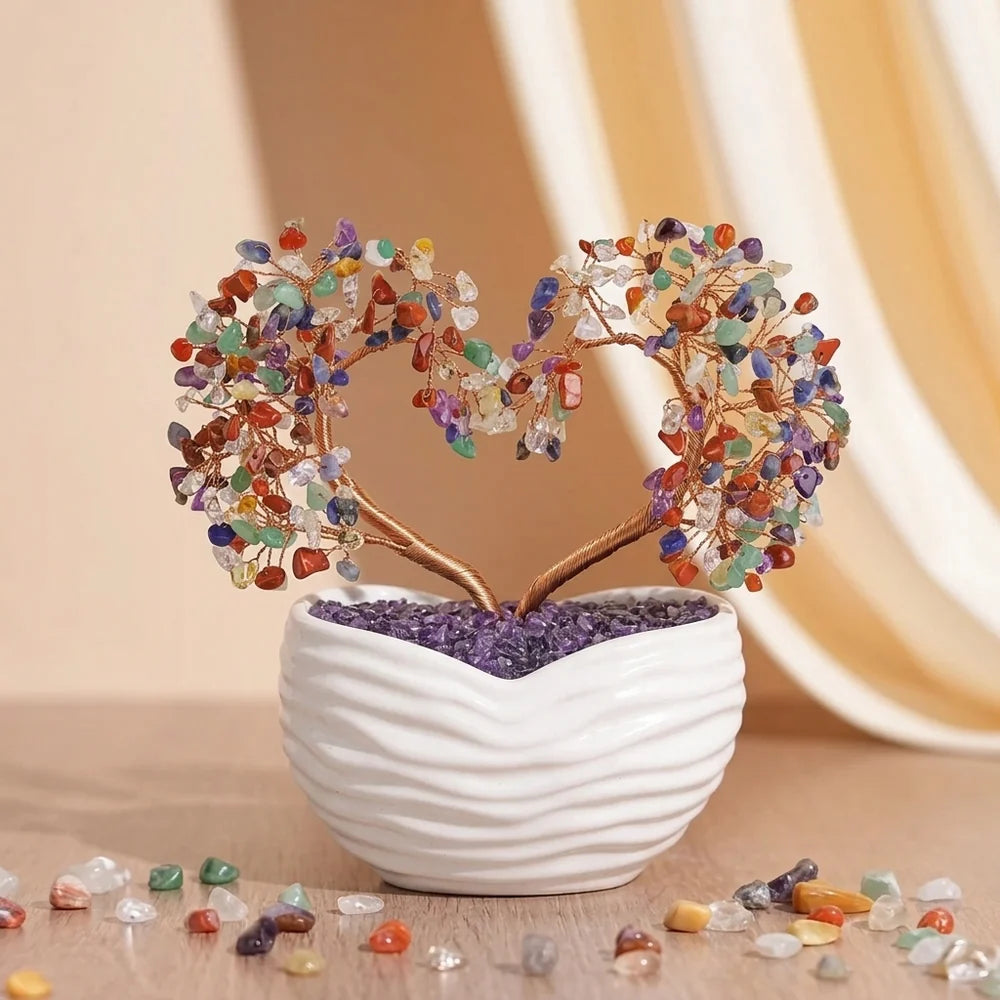
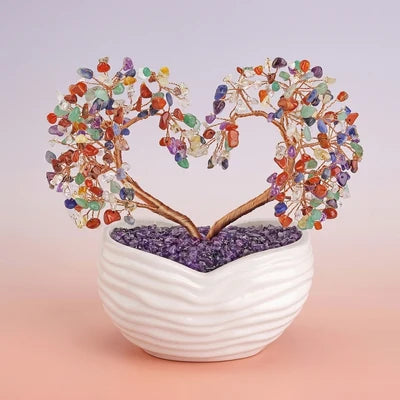
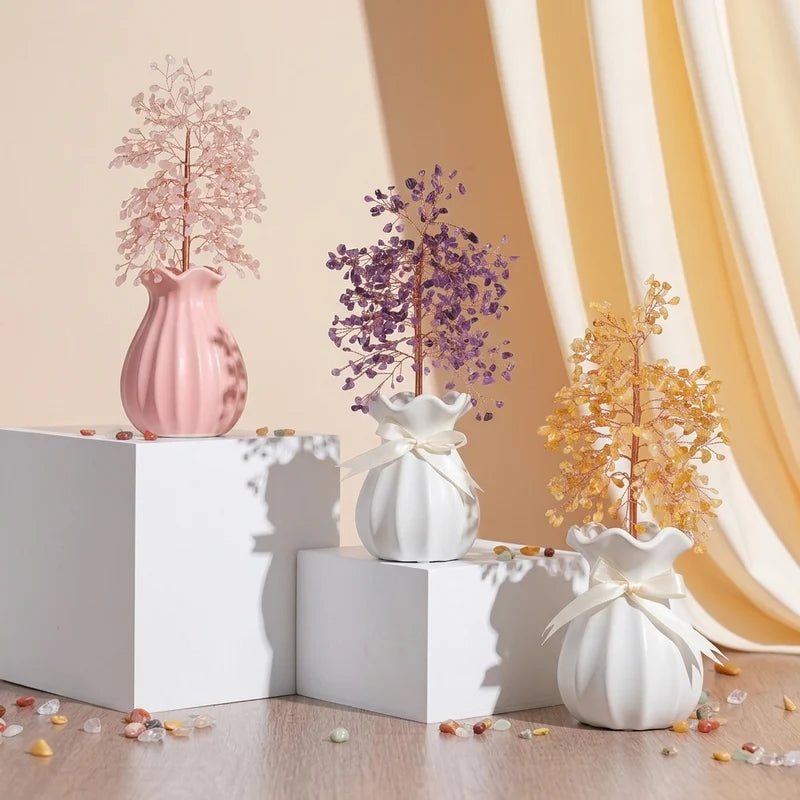
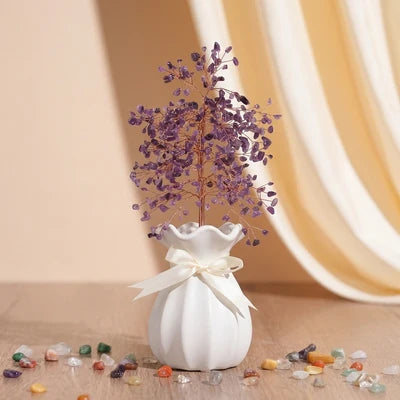
- Handmade crystal bonsai trees (featuring Amethyst, Clear Quartz, Aventurine, and more).
- Sculptural talismans for personal altars or yoga corners.
To discover more ways to style and energize your home with this sacred symbol, read our Complete Guide to the Tree of Life: Origin, Meaning, Home Decor, and Jewelry.
Why Wear Tree of Life Jewelry?
A piece of Tree of Life jewelry is far more than a refined adornment. It acts as an intimate talisman charged with personal intention.
It can symbolize:
- A loving tribute to family and cherished relationships.
- A daily intention for balance, clarity, and harmony.
- A steadfast anchor during seasons of renewal and personal transformation.
Furthermore, when adorned with natural healing crystals, its energetic aura becomes uniquely potent:
- Labradorite: intuitive insight and energetic protection.
- Carnelian: vitality, joy, and creative courage.
- Lapis Lazuli: authentic expression and ancient wisdom.
How to Choose the Perfect Tree of Life for Your Needs
In Fine Jewelry
- Select an artisanal design crafted with intention to resonate with its creative energy.
- Choose natural gemstones attuned to your current energetic intentions.
- Consider noble metals and balanced proportions to complement your style.
In Home Decor
- Wood: infuses warmth, organic serenity, and natural ease.
- Metal: offers structure, grounding clarity, and focused strength.
- Natural Gemstones: uplifts vibrational energy, spiritual alignment, and peaceful harmony.
Conclusion: The Tree of Life, An Ancestral Compass for Modern Living
The Tree of Life is far more than a sacred symbol. It is an inner map, an ancestral compass, and a bridge linking the tangible world to the metaphysical realm. In a world yearning for clarity, balance, and quiet peace, it gently whispers an essential truth: life is an eternal dance of grounded roots, patient growth, and radiant expansion toward the light.
This harmonious blend of simplicity and depth makes the Tree of Life a precious companion in spiritual practice, holistic interior decor, and conscious personal growth.
Ready to discover your ideal Tree of Life talisman?
Explore our boutique collection of handcrafted crystal jewelry, Feng Shui trees, and sacred creations inspired by this millenary archetype.
👉 Explore the Tree of Life Collection
Crystal Healing Comparison Table: Properties, Chakras & Care Guide
This comparison chart summarizes the key crystal properties, Mohs hardness ratings, chakra alignments, and cleansing rituals recommended by Lina.
Crystal Family & Intention | Chakra Alignment & Mohs Hardness | Cleansing, Charging & Feng Shui Placement |
Love, Compassion & Emotional Harmony | Heart Chakra (Anahata) — Mohs hardness 6 to 7/10; nurtures inner peace and emotional balance. | Place in the Southwest Bagua sector or bedroom; cleanse with white sage smudge and recharge under full moonlight. |
Grounding, Shielding & Confidence | Root & Solar Plexus Chakras — Mohs hardness 7/10; anchors energy and wards off negativity. | Position near the front entryway or workspace; smudge weekly with Palo Santo and recharge on a Clear Quartz cluster. |
Abundance, Clarity & 7-Chakra Balance | Crown, Third Eye & Full 7 Chakras — Mohs hardness 7/10; elevates focus and spiritual vitality. | Ideal for the living room or meditation corner (Southeast wealth sector); recharge on an Amethyst geode or Selenite plate. |
Recommended Reading:
-
Origin and Spiritual Meaning of the Tree of Life in Ancient Beliefs.
-
Meaning of the Tree of Life in Different Cultures
- Meaning of the Tree of Life in Christianity
- What Does the Tree of Life Mean in Islam?
- Tree of Life and Feng Shui: Meaning, Uses, and Sacred Practices
- The Tree of Life in Religions: Sacred Symbols and Interpretations
-
Complete Guide to the Tree of Life: Origin, Meaning, Home Decor, and Jewelry
Daily Energy, Protection & Harmony: Lina’s Favorites
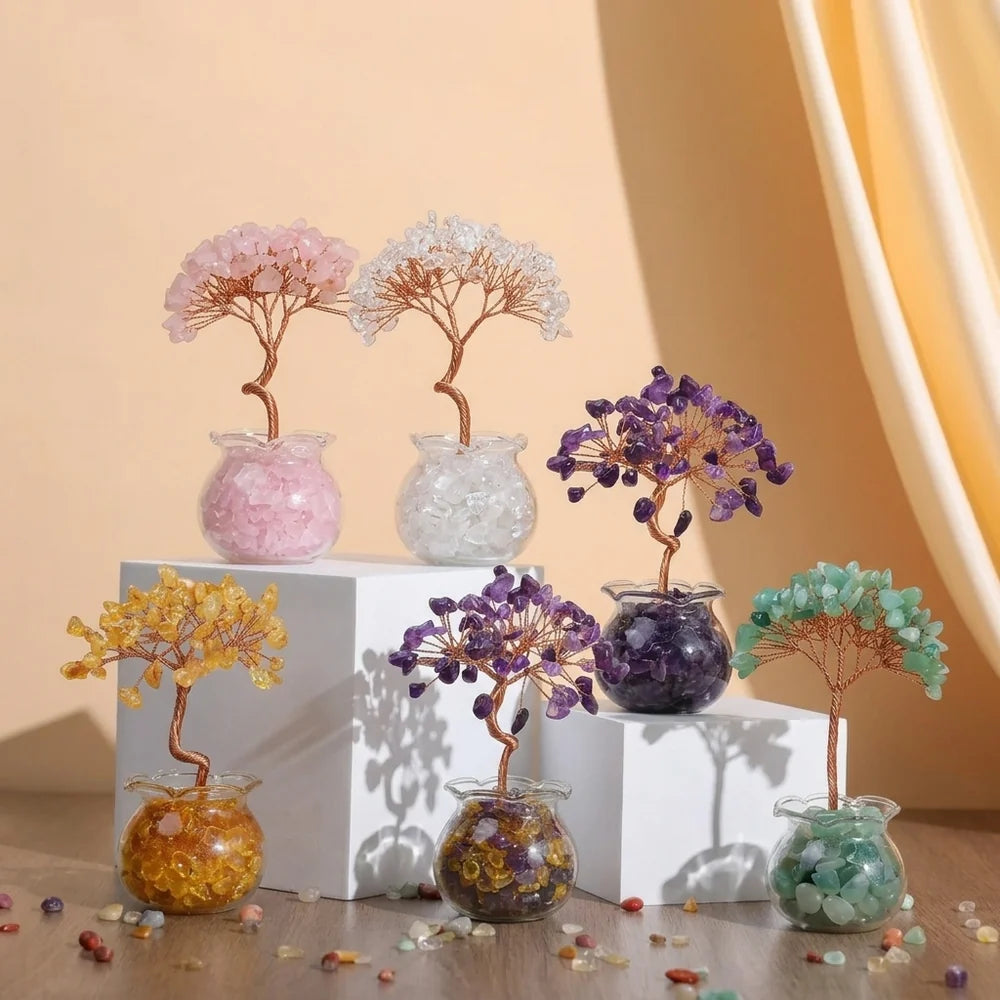
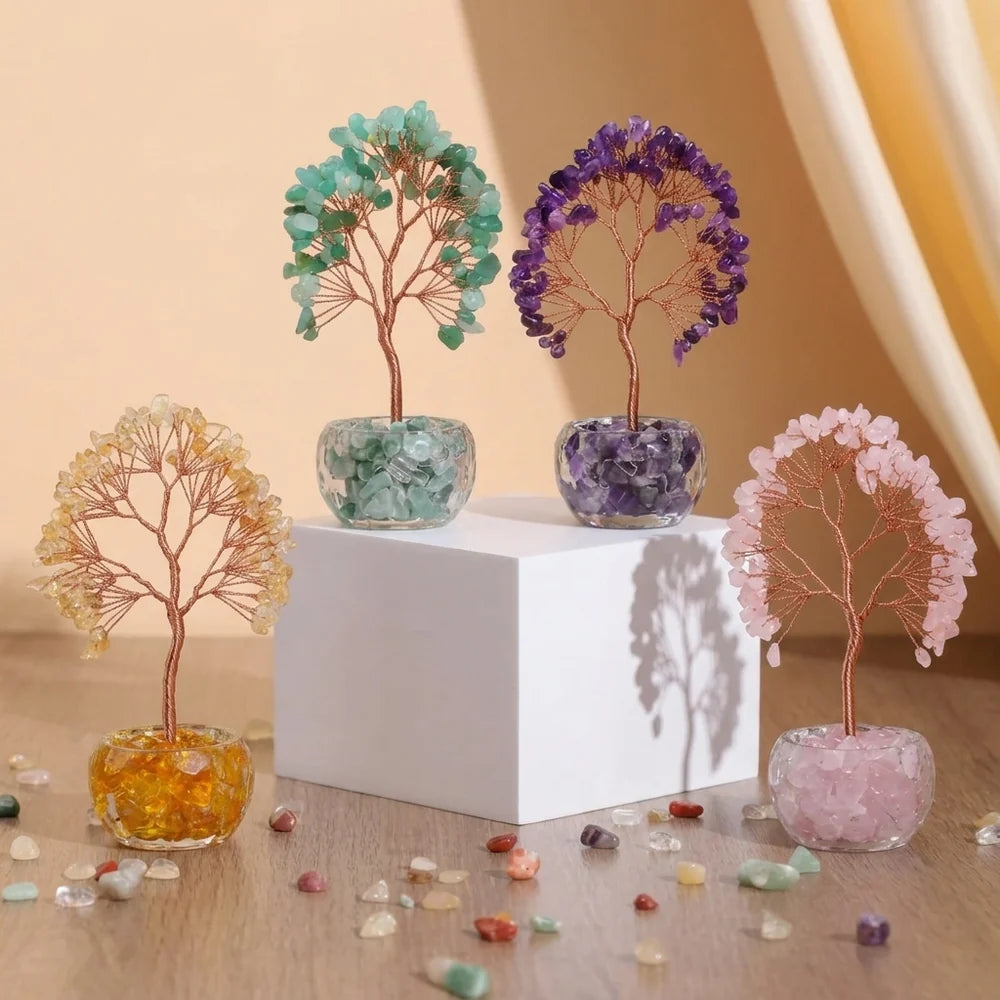
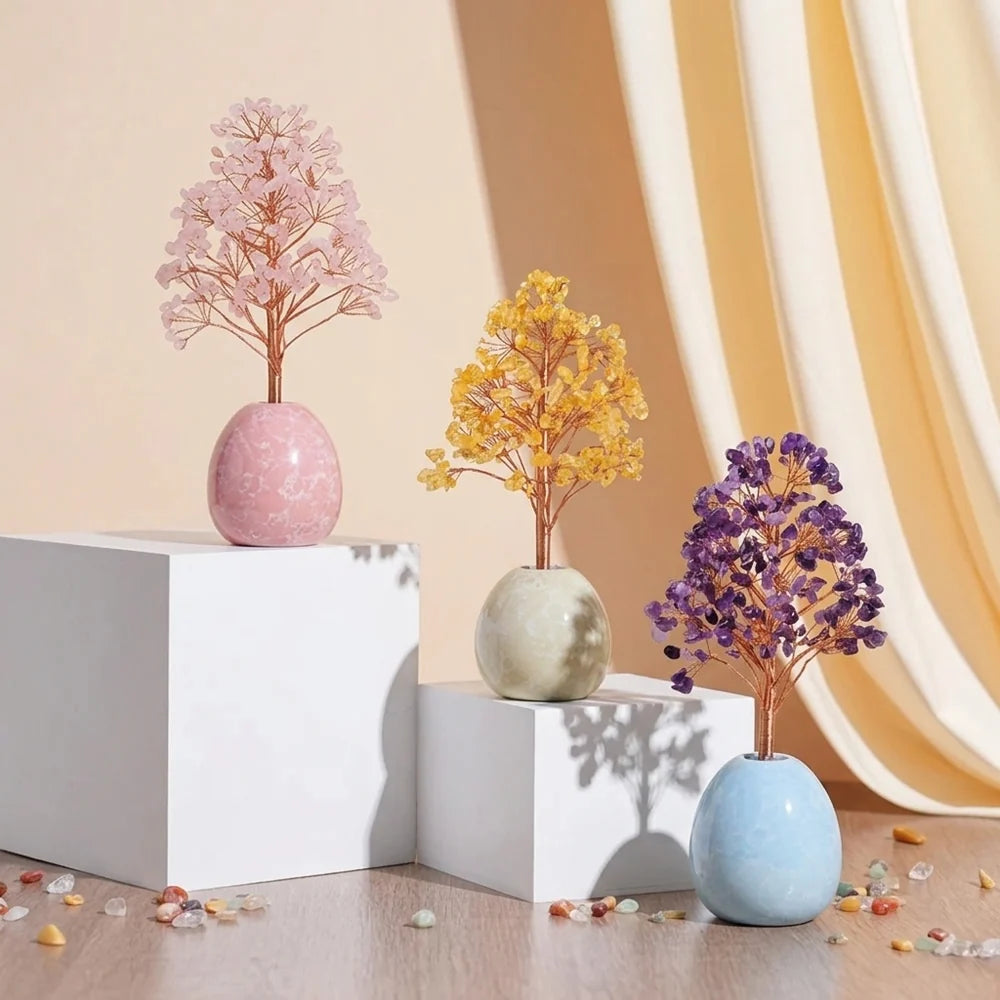
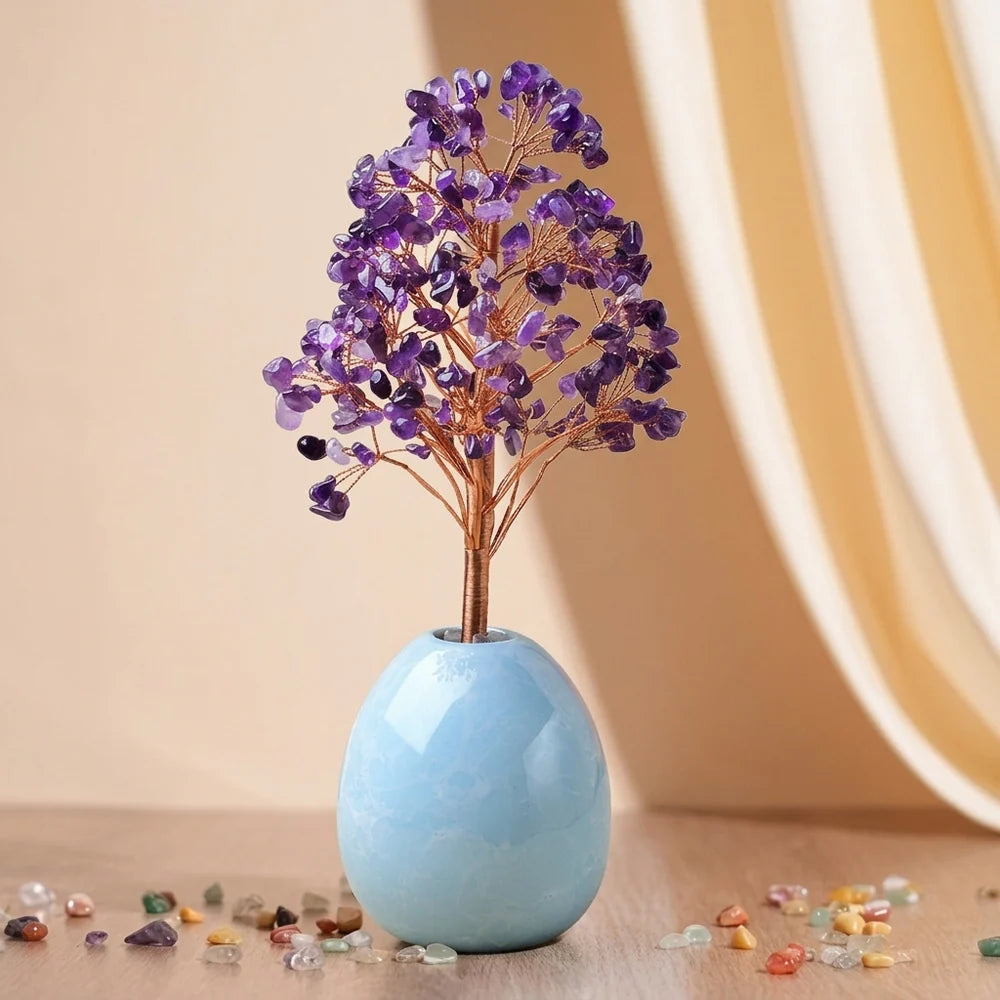
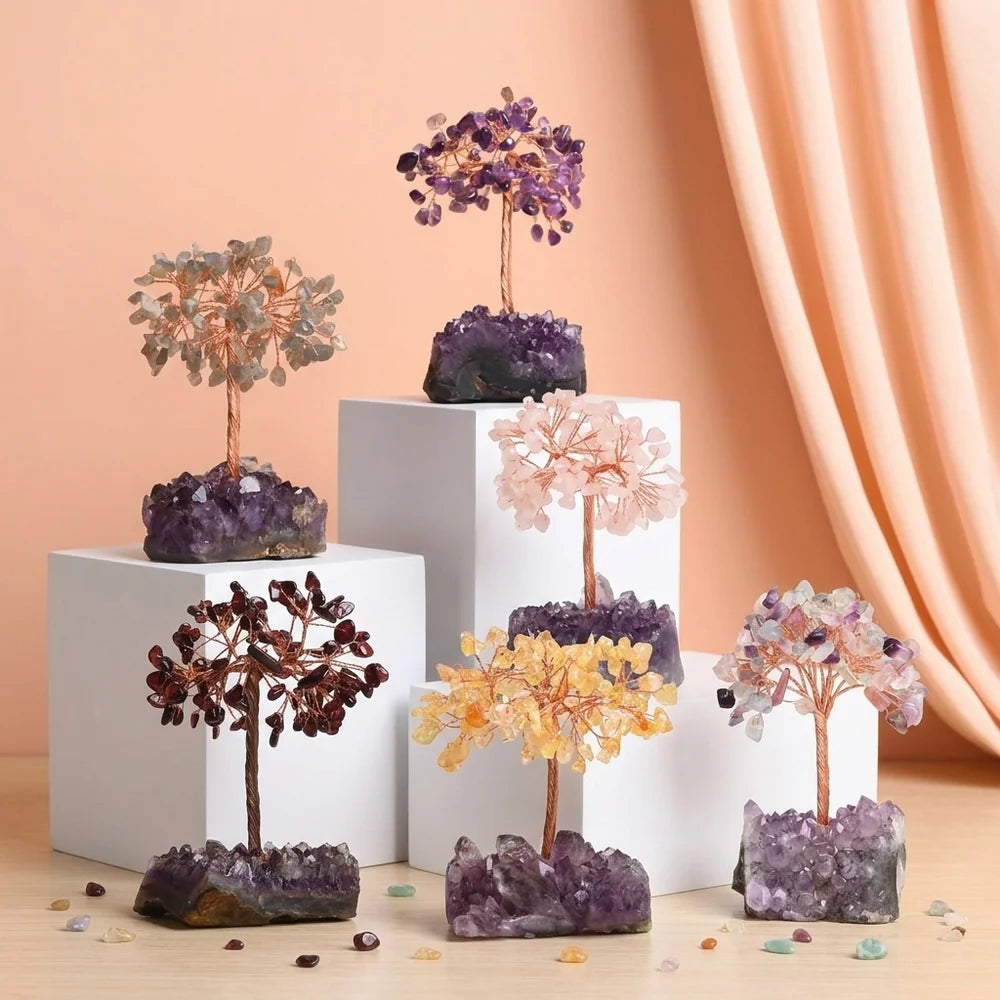
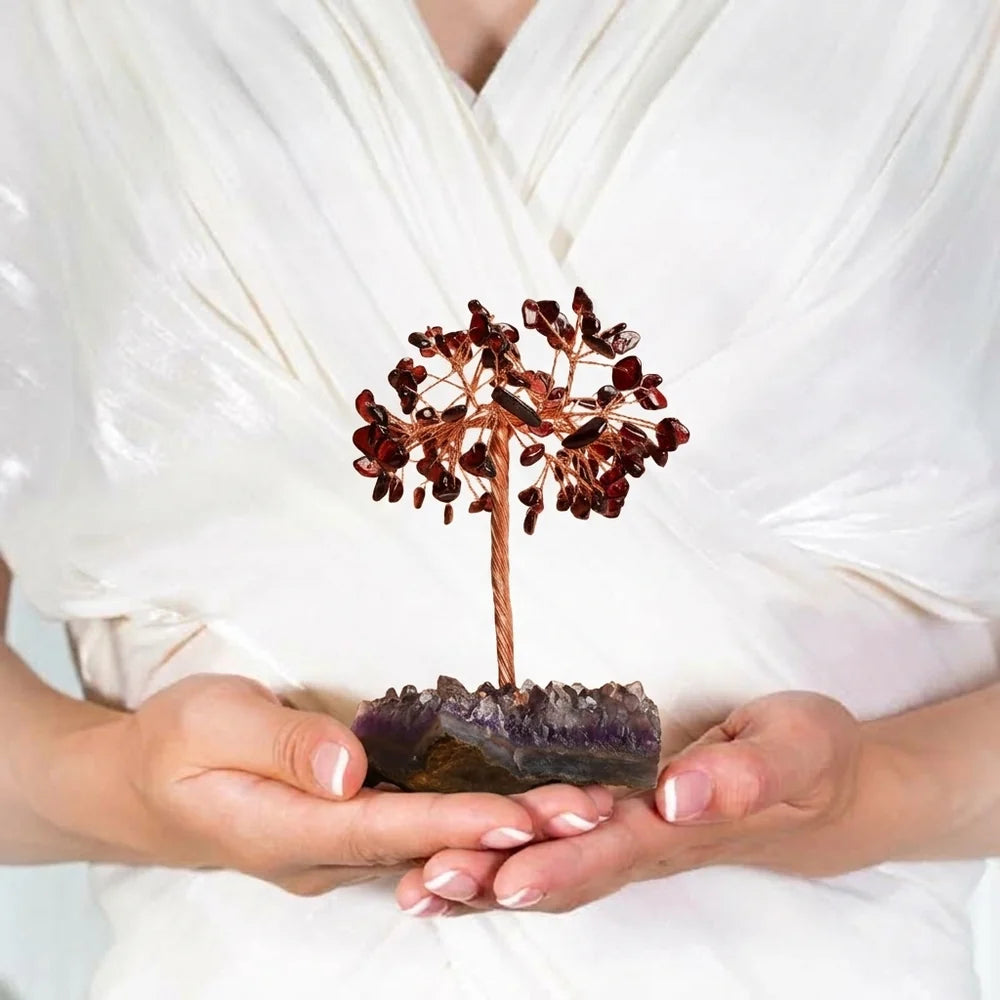
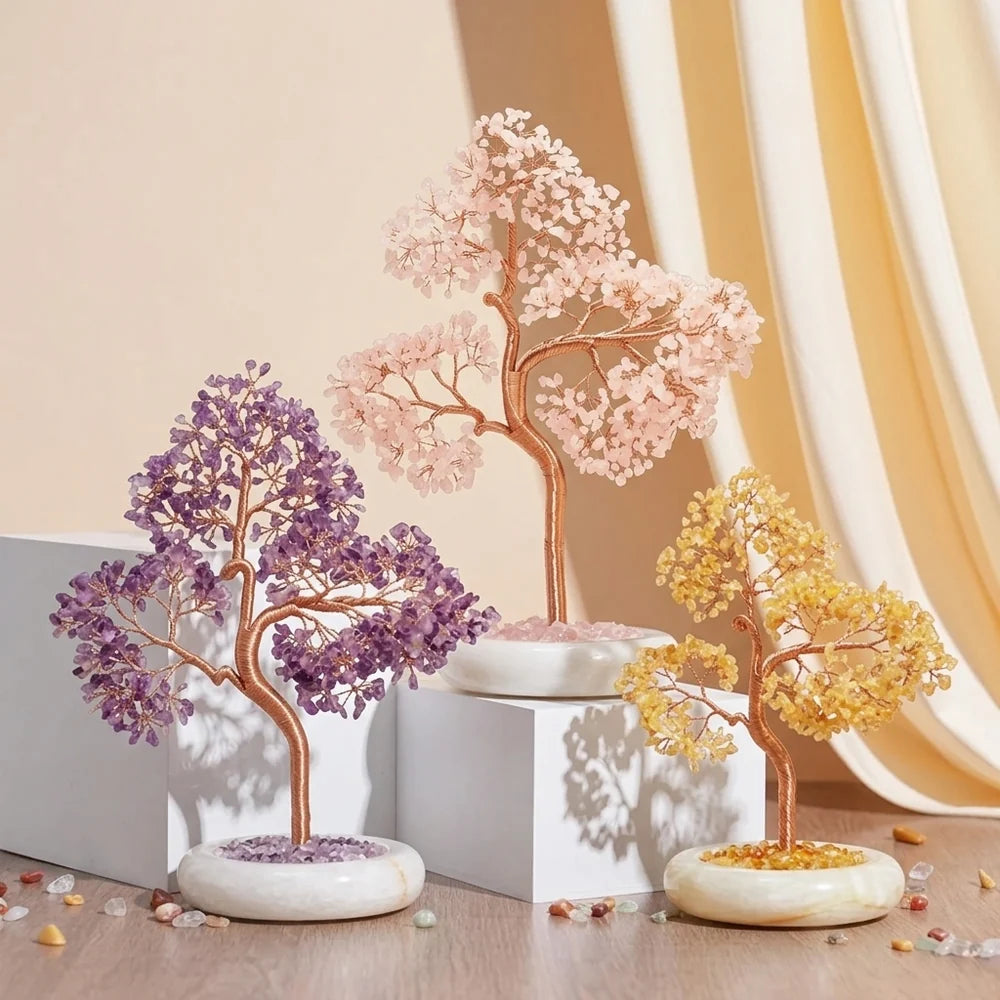
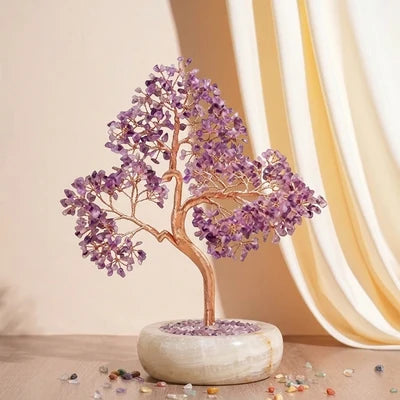
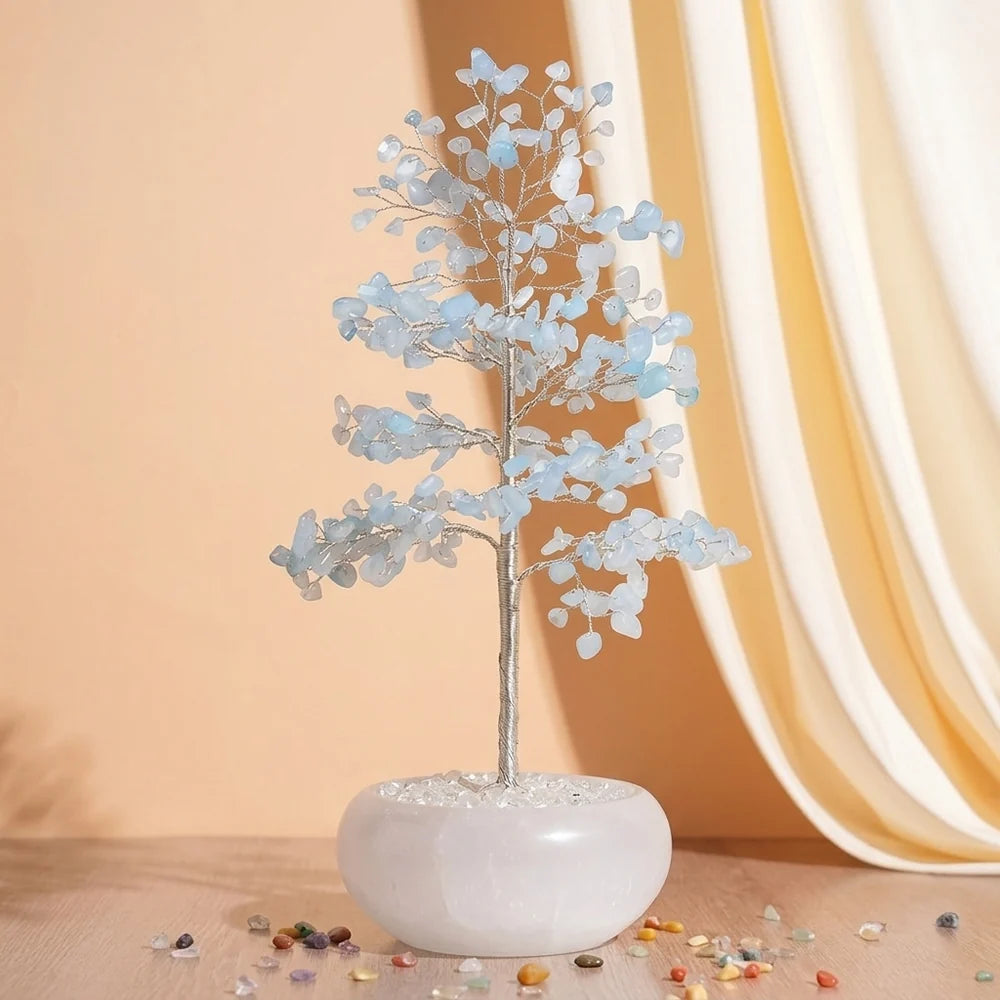
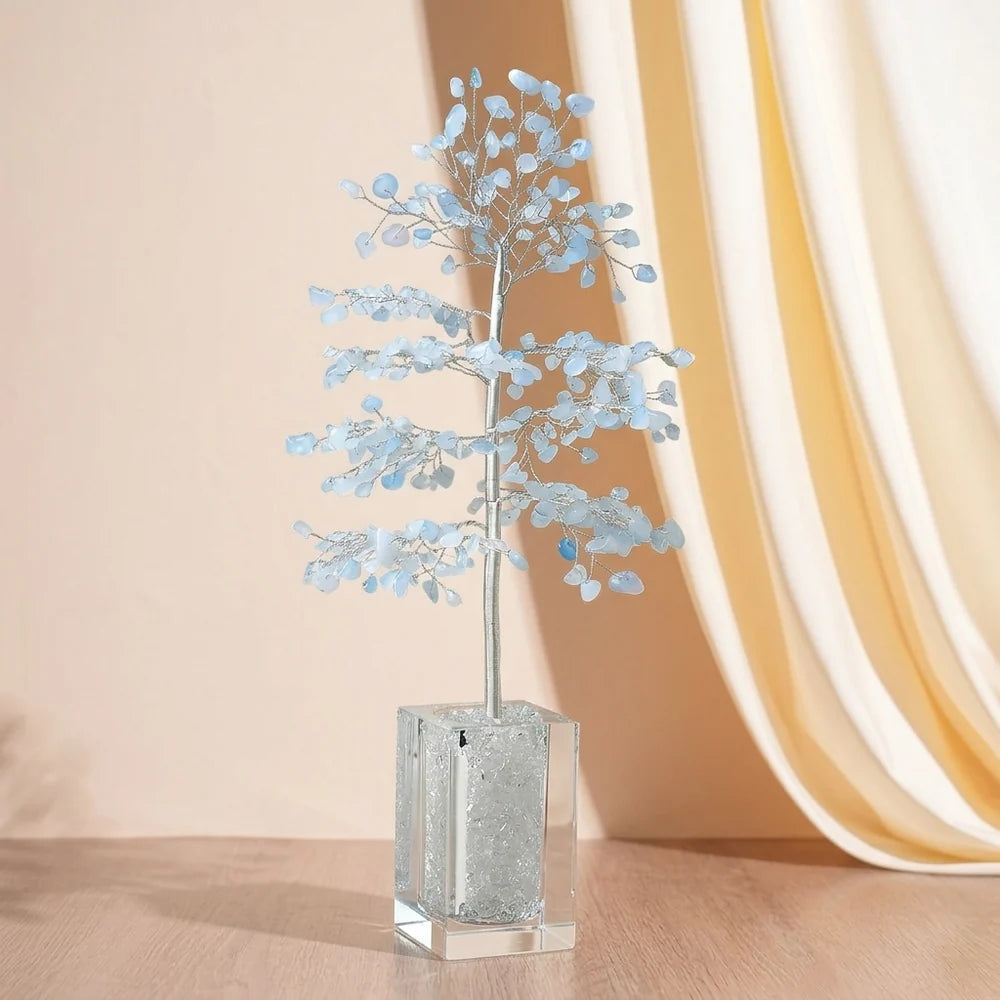
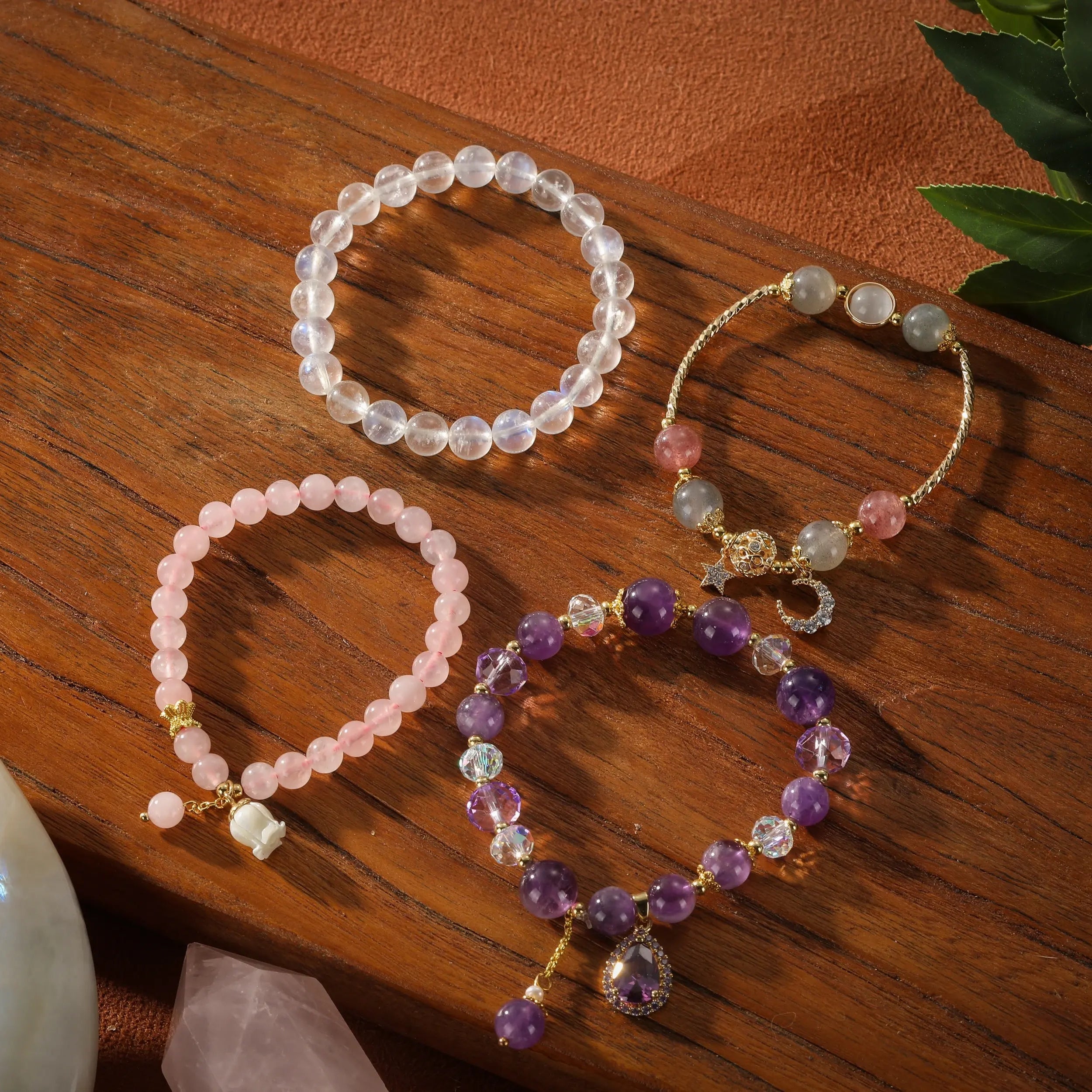
Explore our handcrafted crystal collections: Tree of Life Crystal Collection, Healing Crystal Jewelry, and Natural Crystal Bracelets. Read our related crystal guides: Significance And Benefits Of The Tree Of Life, The Tree Of Life In Natural Stone The Perfect Gift For Every Occasion, and Which Natural Stone To Choose For Your Tree Of Life.
Frequently Asked Questions: Tree of Life Meaning and Benefits
How can I tell if the healing crystals in Tree of Life Meaning and Benefits are 100% genuine?
Genuine healing crystals stay naturally cool to the touch, exhibit subtle internal mineral inclusions, and match their gemological Mohs hardness (7/10 for quartz varieties like amethyst, rose quartz, and citrine), unlike dyed glass or synthetic resins.
Where should I place a crystal Tree of Life or wear crystal jewelry for the best energy?
In Feng Shui, place your crystal Tree of Life at eye level in the room aligned with your intention: the bedroom (Southwest) with Rose Quartz for love, the entryway with Tiger’s Eye for protection, or the living room with Citrine and 7-Chakra crystals for abundance.
How do I safely cleanse and recharge my healing crystals without damaging them?
Smoke cleansing with white sage or Palo Santo for two minutes is the safest universal method, especially for softer or porous crystals like Selenite, Malachite, and Lapis Lazuli. Recharge your crystals overnight under moonlight or on an Amethyst geode.
Can I combine multiple healing crystals together in the same space or on my wrist?
Yes—crystals that share complementary chakra frequencies harmonize effortlessly. Clear Quartz amplifies all surrounding crystals, while Rose Quartz and Amethyst pair beautifully for emotional calm and restful sleep.
How often should I cleanse my Luuckk crystal jewelry or Tree of Life?
We recommend a gentle energetic smudging every two weeks for decorative crystal trees and once a week for crystal bracelets, rings, or necklaces worn directly against the skin.