
Natural or Reconstructed Turquoise: How to Recognize a Real Authentic Stone
- Introduction
- What Is Natural Turquoise?
- Reconstructed, Stabilized, or Dyed Turquoise: What Are the Differences?
- How to Recognize a Real Natural Turquoise Stone?
- Simple Tests to Avoid Unpleasant Surprises
- Comparison Table: Natural or Reconstructed Turquoise
- Why Is Authenticity Important in Lithotherapy?
- How to Choose Turquoise Jewelry Well?
- Mistakes to Avoid Before Buying Turquoise
- Conclusion: A Real Turquoise Should Be Chosen with Care
- FAQ: Recognizing a Real Turquoise
Introduction
Turquoise is one of those Natural Stones that immediately catch the eye. With its shades of sky blue, blue-green, or sometimes slightly greenish tones, it has that special something that recalls clear waters, distant travels, and old jewelry passed down with care. But behind this beauty lies a real question: how can you recognize a Natural Turquoise from reconstructed, dyed, or imitation turquoise?
Today, the market offers many stones sold under the name turquoise. Some are natural, others stabilized, reconstructed, or even completely artificial. As a result, it can sometimes be difficult to know whether you are buying an authentic natural turquoise stone or a well-disguised imitation. And let’s be honest, some imitations know very well how to pass themselves off as the star of the jewelry piece.
In this article, we will see how to distinguish a real turquoise, which clues to observe before buying, what differences exist between treatments, and why authenticity matters, especially in lithotherapy.
Our Turquoise Jewelry
What Is Natural Turquoise?
Natural Turquoise is a stone formed in nature, generally in areas rich in copper, aluminum, and phosphates. Its color depends on its mineral composition: copper often gives it a beautiful blue shade, while the presence of iron can bring greener tones.
Unlike a manufactured or reconstructed stone, natural turquoise forms slowly over time within rocks. It is this natural formation that gives it its unique appearance. No stone looks exactly like another, and that is precisely what gives it all its charm.
The Characteristics of a Real Natural Turquoise
A natural turquoise stone may display:
- A sky blue, blue-green, or soft green color.
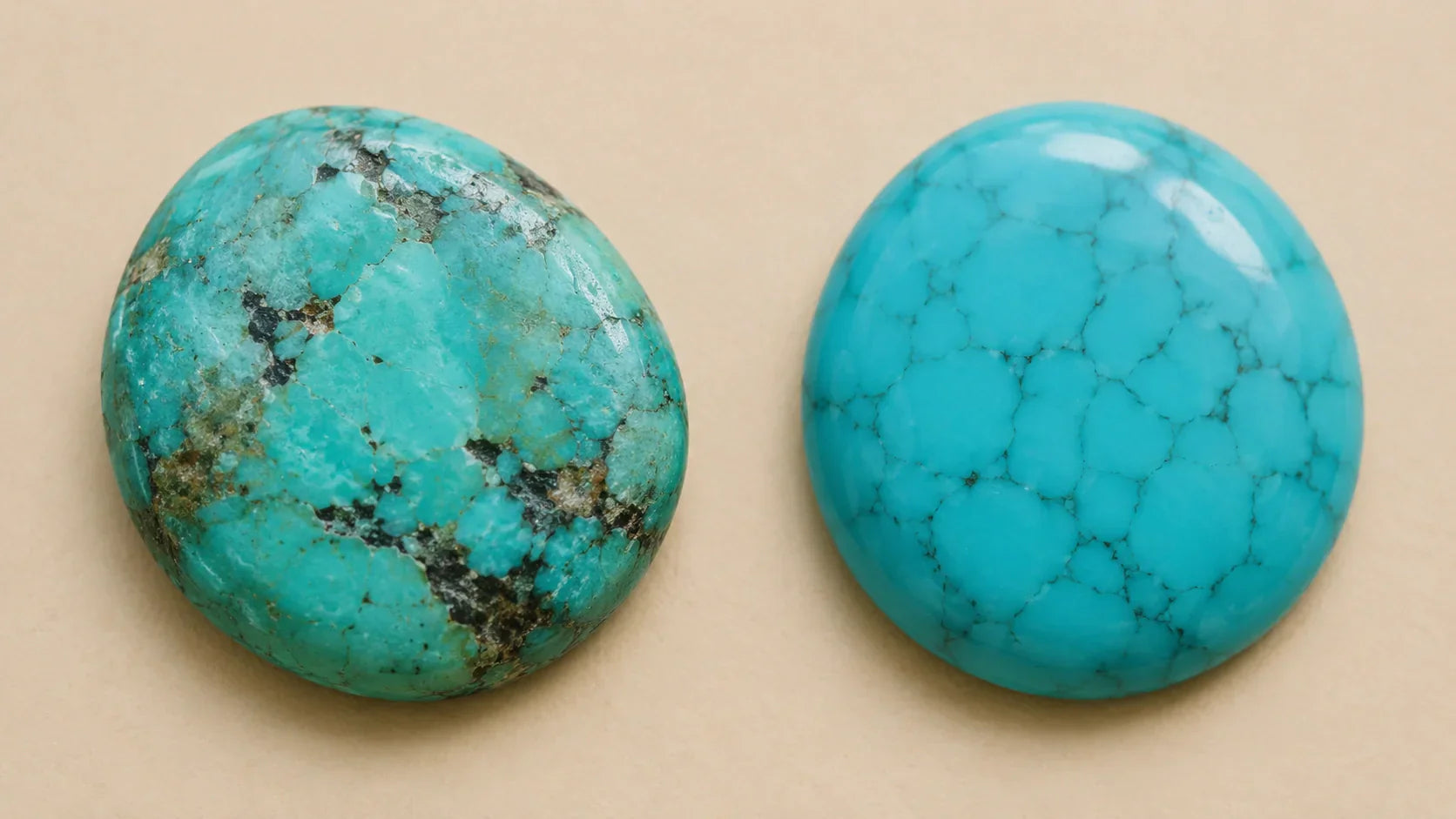
- Brown, black, or golden veins called matrix.
- Irregular shades.
- A mineral texture, sometimes slightly waxy.
- A unique appearance, never completely uniform.
It is important to know that a very pure natural turquoise, without visible matrix, can exist. However, it is often rarer and more expensive. Conversely, a stone with veins is not automatically authentic, because some imitations also reproduce this effect.
To better understand the symbolism and general properties of this stone, you can read the article Turquoise: Stone of Balance and Communication.

Reconstructed, Stabilized, or Dyed Turquoise: What Are the Differences?
Before buying jewelry or a stone, it is important to understand the terms used. They may seem technical, but they change many things about the value, quality, and authenticity of the stone.
Reconstructed Turquoise
Reconstructed turquoise is made from fragments, powder, or small pieces of turquoise mixed with a resin or binder. The whole mixture is then compacted to obtain a solid stone, often very regular and easy to work with in jewelry making.
It may contain real turquoise, but it is not considered pure Natural Turquoise. Its value is therefore generally lower.
Stabilized Turquoise
Stabilized turquoise is originally real turquoise, but it has been reinforced with resin to improve its strength. This treatment is common because turquoise is a relatively porous and sometimes fragile stone.
A stabilized turquoise is therefore not necessarily a fake stone. It remains natural at the base, but it has undergone a treatment.
Dyed Turquoise
Dyed turquoise is a stone whose color has been artificially modified or intensified. Sometimes, it is not even turquoise, but another porous stone, such as howlite, colored blue to imitate its appearance.
Turquoise Imitation
An imitation can be made of resin, plastic, glass, or another dyed stone. Visually, it can be attractive, but it does not have the same value, the same origin, or the same place in the world of Natural Stones.
How to Recognize a Real Natural Turquoise Stone?
Recognizing a real turquoise requires a bit of observation. It is not enough to quickly look at the color and say to yourself: “It’s blue, so it’s good.” Turquoise is more subtle than that.
Observe the Color
A Natural Turquoise rarely has a perfectly uniform color. Its shades may vary slightly from one area to another. A stone that is too blue, too vivid, or too regular may indicate dyeing or reconstruction.
The most common natural colors are:
- Soft sky blue.
- Blue-green.
- Light green.
- Slightly grayish blue.
- Blue with dark matrix.
A spectacular color is not necessarily a problem, but it should invite you to check the other criteria.


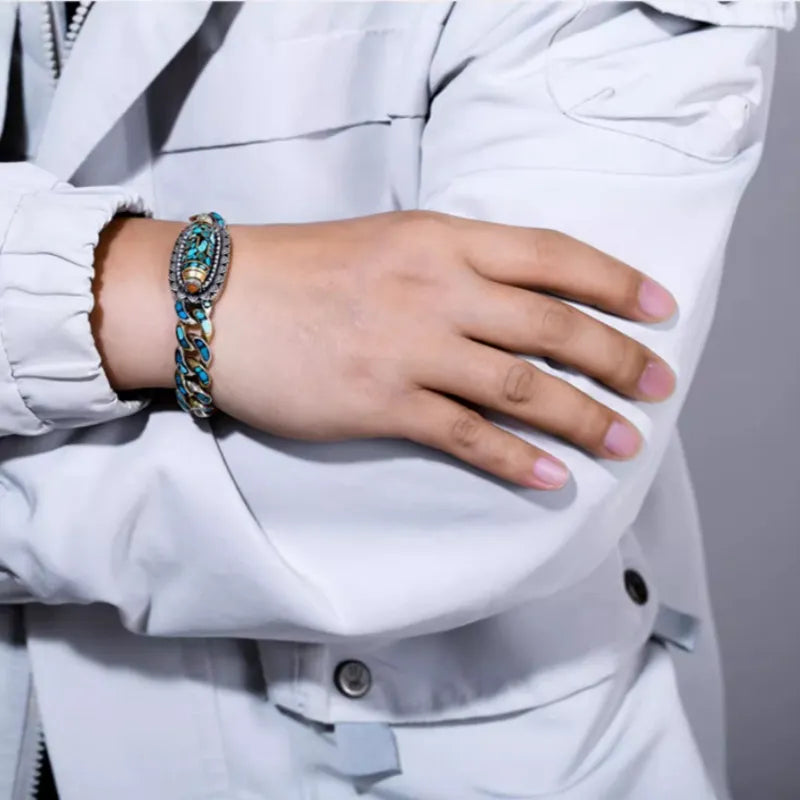
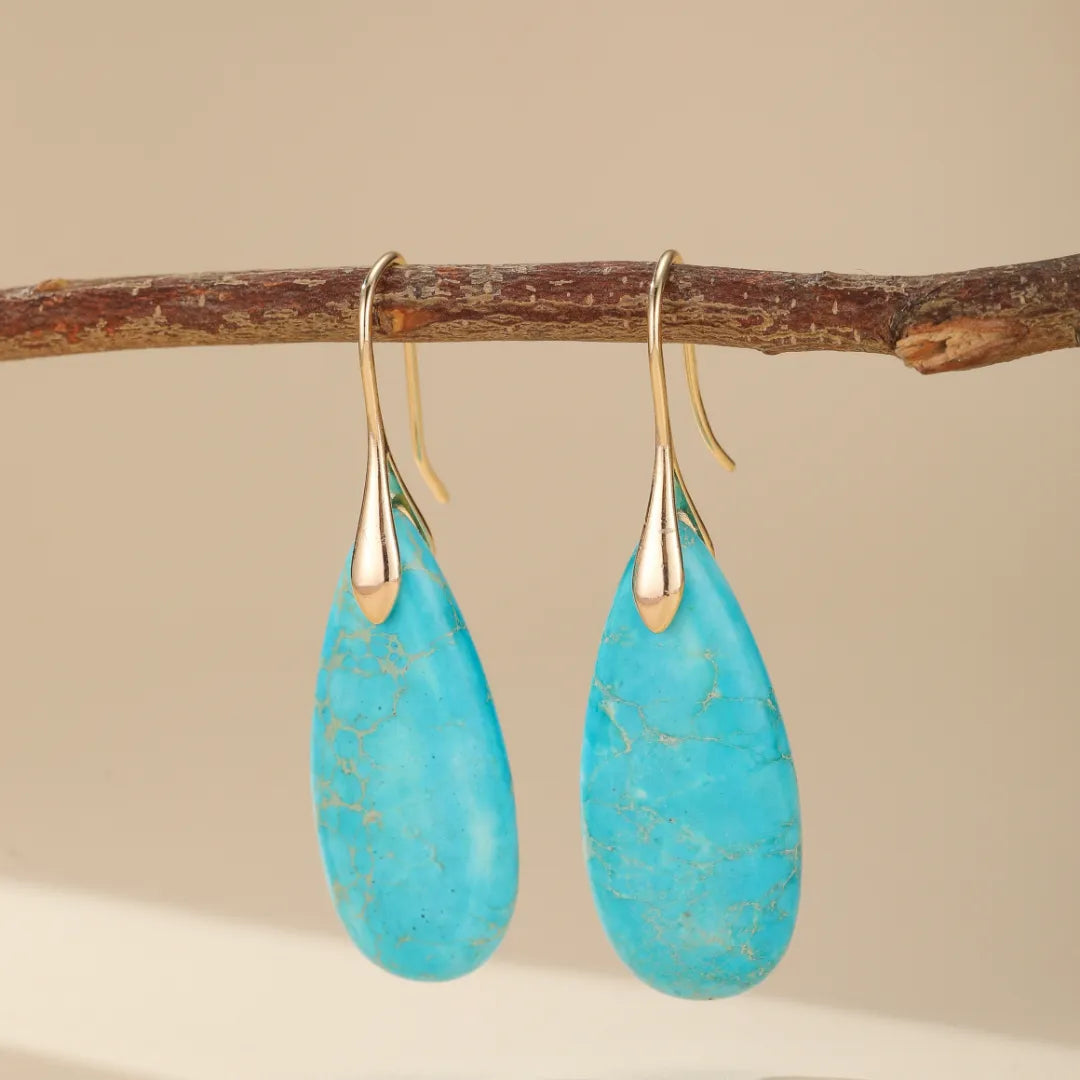
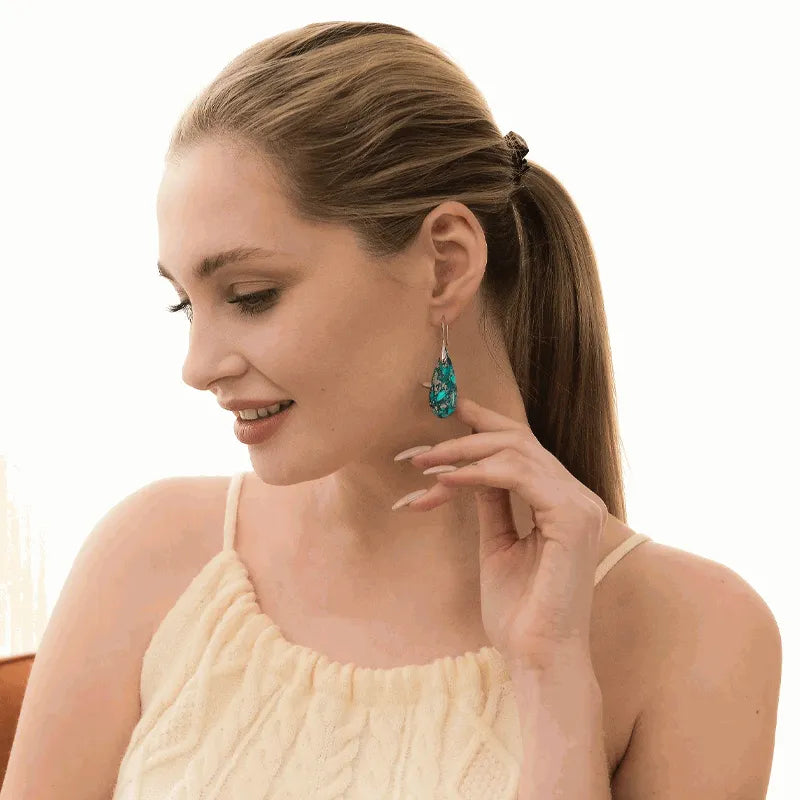


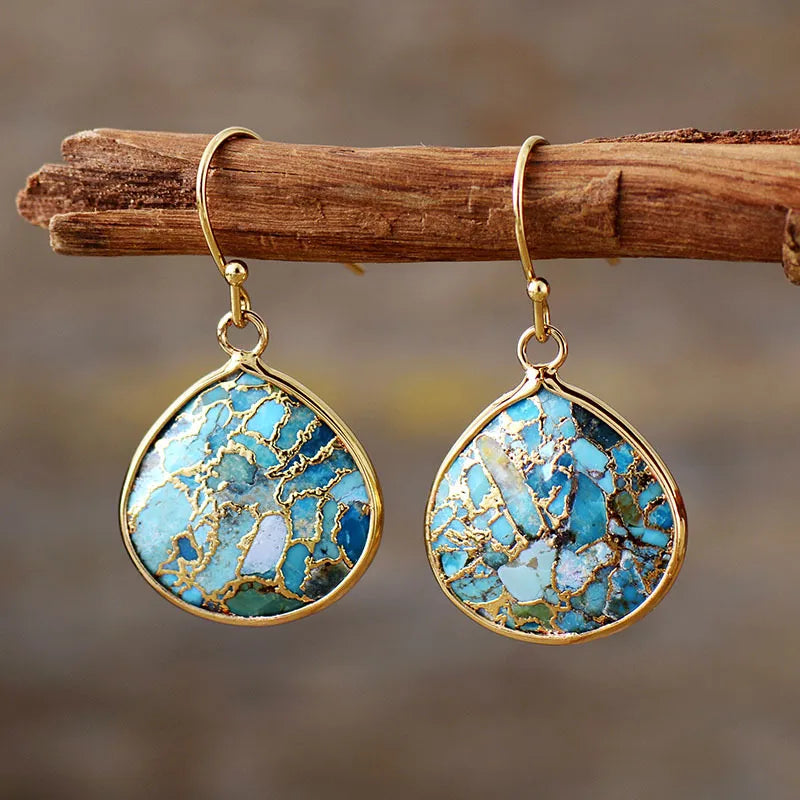
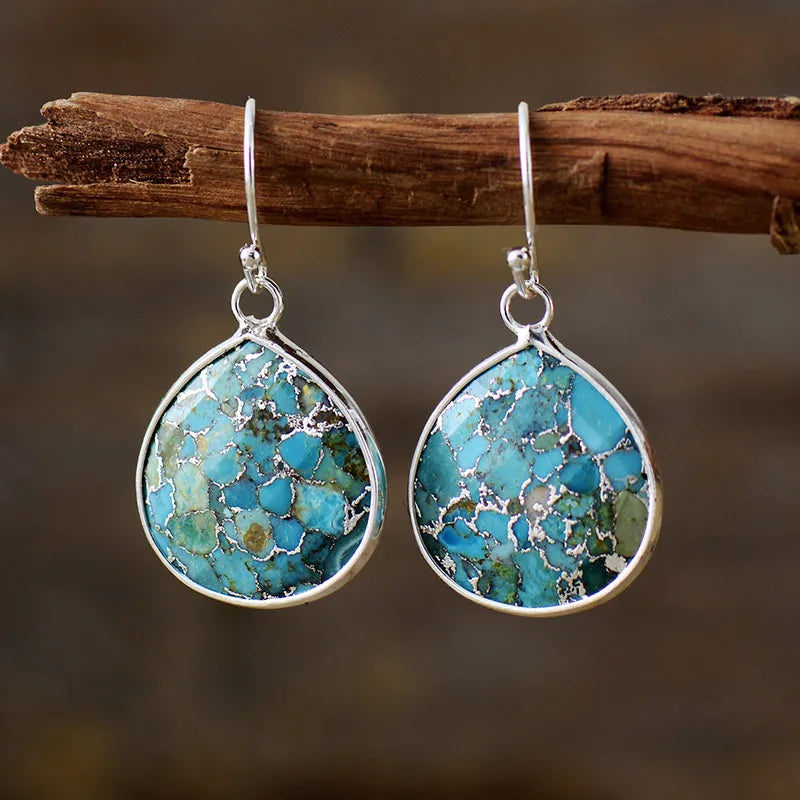
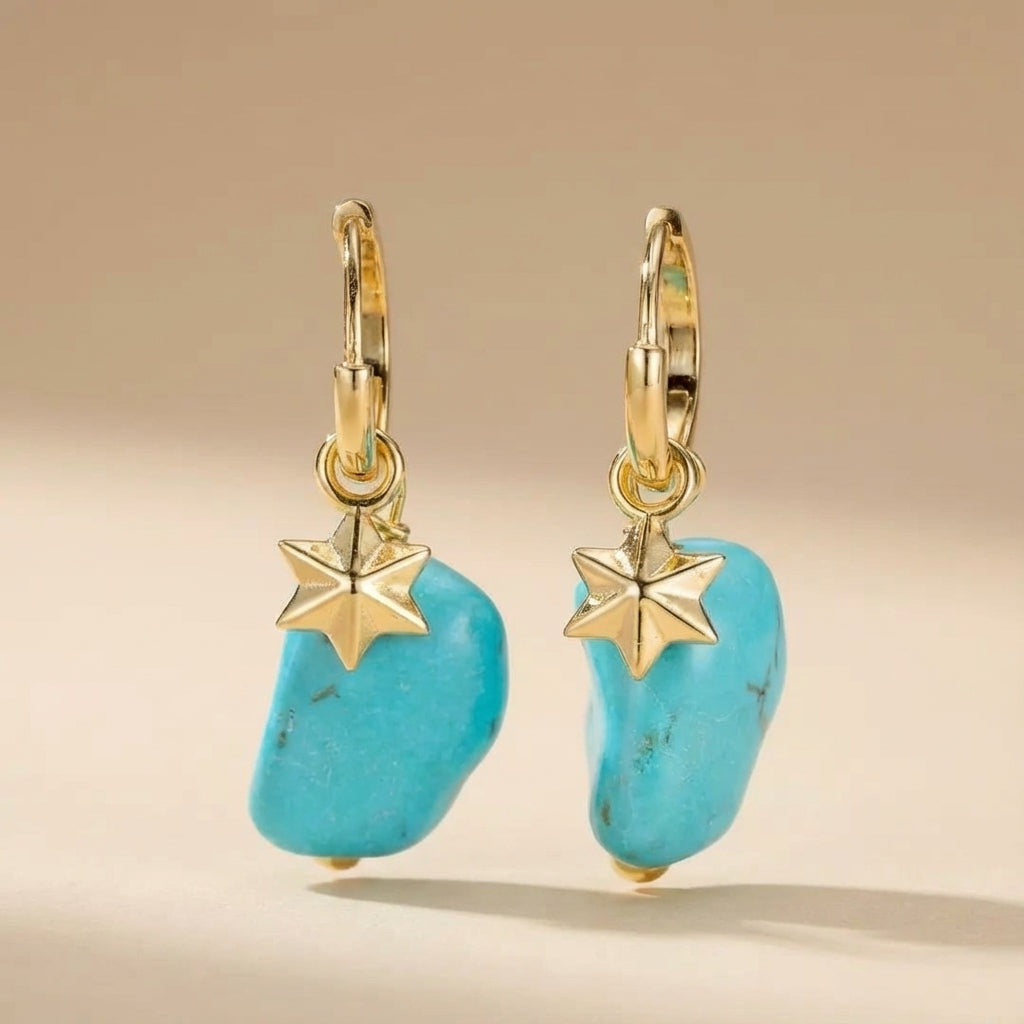
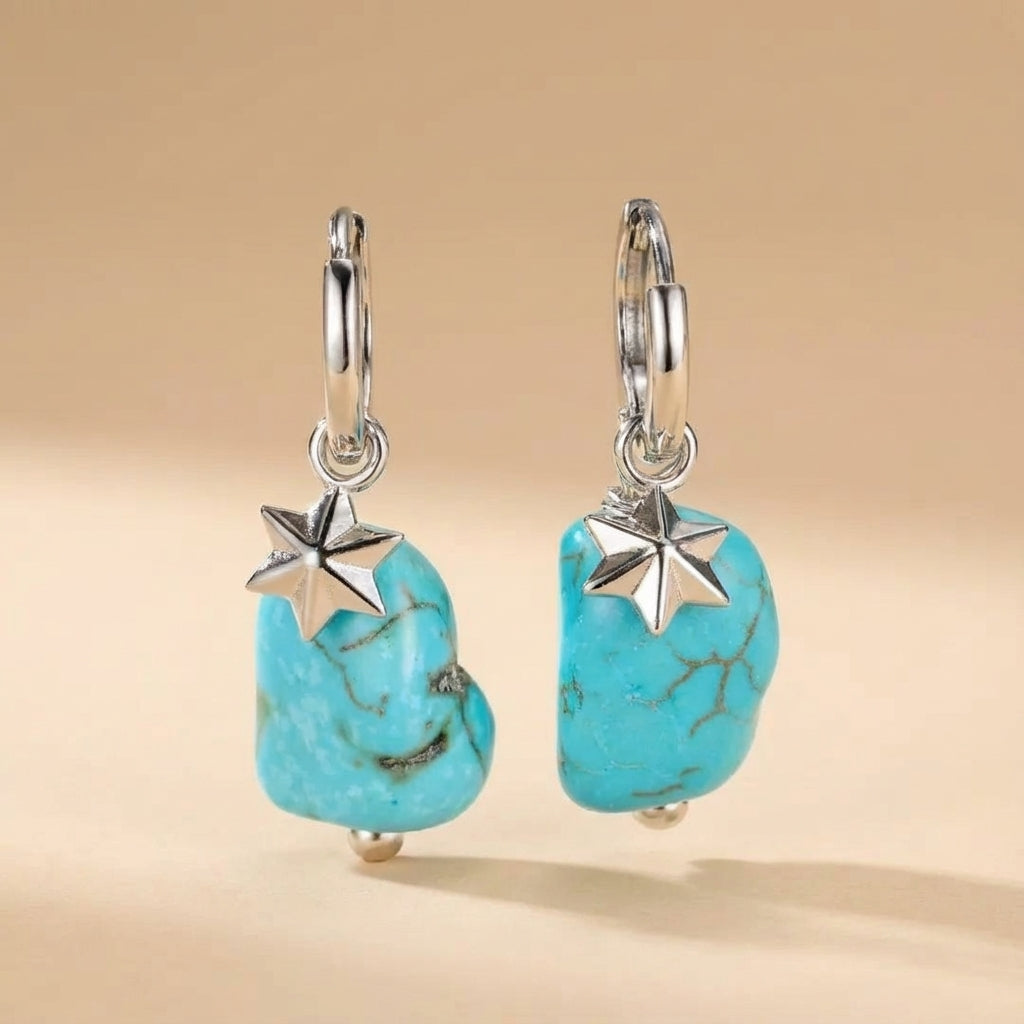
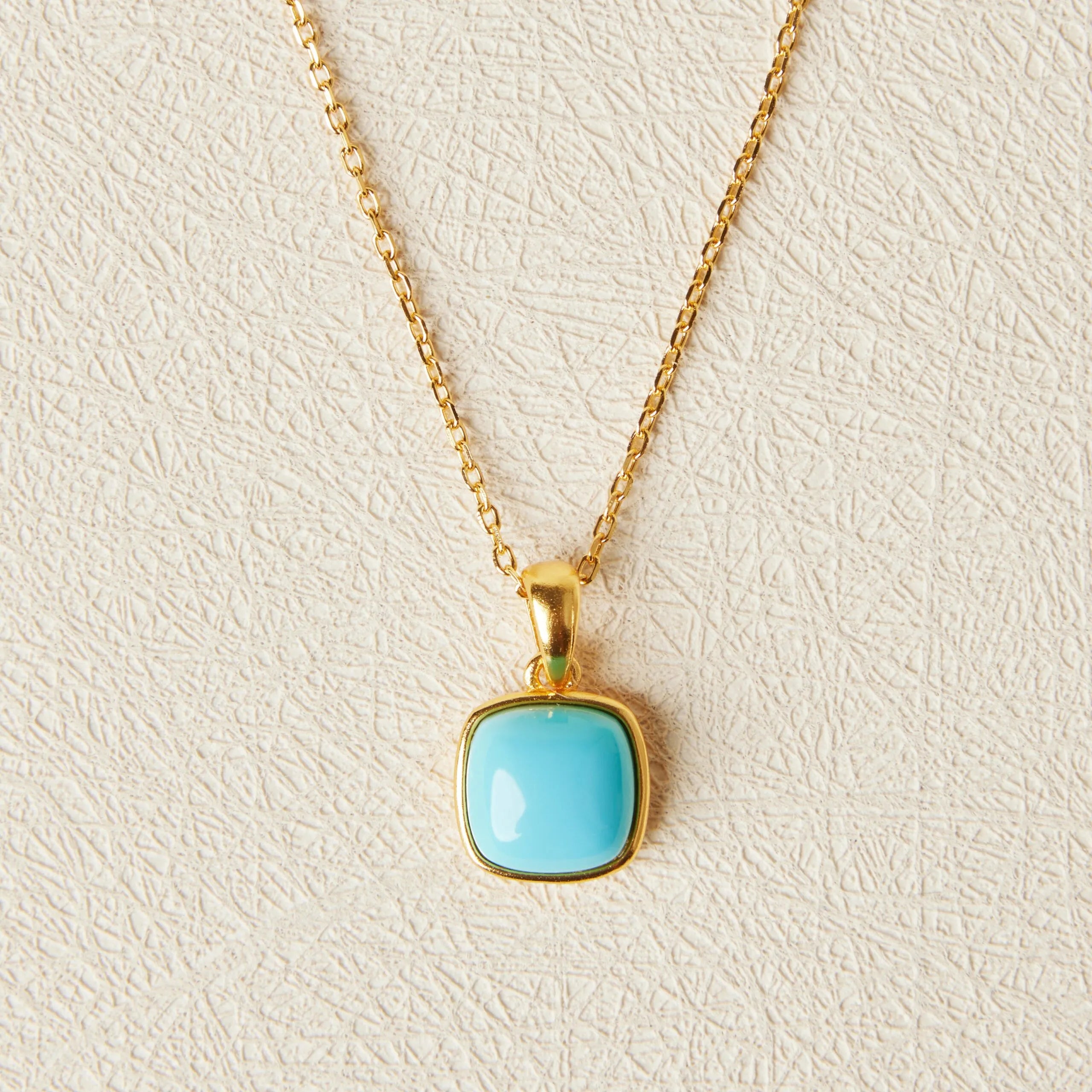
Examine the Veins and Matrix
The matrix corresponds to the visible lines in the stone. On a real turquoise, these veins are often irregular. They can be fine, wide, discreet, or very pronounced.
Beware of patterns that are too perfect. If the lines seem drawn with a pen or repeated like wallpaper, it is better to ask yourself a few questions.
Touch the Stone
Natural Stones are generally cool to the touch. A natural turquoise stone keeps a certain coolness for a few seconds when you hold it in your hand. An imitation made of plastic or resin tends to warm up very quickly.
This test is not sufficient on its own, but it can provide a first clue.
Observe the Shine
Natural turquoise often has a soft, sometimes waxy luster. An imitation may appear too shiny, too smooth, or too “plastic-like.” Of course, polishing can make a real stone shiny, but the overall appearance should remain consistent with a mineral material.
Simple Tests to Avoid Unpleasant Surprises
Some tests can give you a first idea, but they must be used with caution. A beautiful stone deserves a little delicacy.
The Magnifying Glass Test
With a magnifying glass, observe the surface of the stone. A real turquoise may show small natural irregularities, inclusions, and variations in texture. A resin imitation may sometimes show tiny air bubbles or a surface that is too homogeneous.

The Damp Cotton Test
Some dyed stones may leave a colored mark when gently rubbed with slightly damp cotton. However, this test can damage a fragile stone or a piece of jewelry. It should therefore be carried out with great caution, and never on a valuable piece without professional advice.
The Price Test
A quality natural turquoise has a certain price. If a piece of jewelry is presented as being made of rare Natural Turquoise, but sold at a surprisingly low price, it is better to check the description.
Price does not prove everything, but it remains a good indicator. A rare stone, naturally extracted and carefully worked, cannot be offered at the same price as an industrial imitation.
Comparison Table: Natural or Reconstructed Turquoise
| Criterion | Natural turquoise | Reconstructed turquoise |
| Origin | Naturally formed in rock | Made from powder or fragments |
| Appearance | Irregular shades, natural matrix | Often more uniform color |
| Value | Higher | More accessible |
| Composition | Natural stone | Mixture of turquoise and resin |
| Use | Jewelry, collection, lithotherapy | Decorative or fashion jewelry |
| Authenticity | Authentic stone | Transformed stone |
| Price | Generally more expensive | Generally less expensive |
This table helps you quickly understand that reconstructed turquoise is not necessarily “bad.” It can be beautiful and pleasant to wear. The real problem appears when it is sold as an authentic natural turquoise stone when it is not.
Why Is Authenticity Important in Lithotherapy?
In lithotherapy, turquoise is often associated with calm, communication, protection, and self-confidence. People who use Natural Stones in an energetic approach generally prefer stones that have been transformed as little as possible.
The idea is simple: the more natural the stone, the closer it is to its original energy. A reconstructed turquoise, mixed with resin or heavily treated, may therefore be perceived as less interesting from an energetic point of view.
Of course, lithotherapy belongs to personal well-being. It never replaces medical advice, a diagnosis, or professional treatment. But for stone enthusiasts, authenticity remains an important criterion.
To explore this energetic dimension further, you can read Turquoise and Energy: A Stone for Calm and Confidence.
How to Choose Turquoise Jewelry Well?
A turquoise jewel can be elegant, symbolic, and timeless all at once. But before falling for a bracelet, ring, or necklace, a few checks are necessary.
Check the Product Description
A serious shop should clearly indicate whether the stone is:
- Natural.
- Stabilized.
- Reconstructed.
- Dyed.
- Imitated.
The more transparent the description, the more reassuring the purchase. A vague product sheet, without details on the nature of the stone, should encourage caution.
Choose According to Your Goal
Your choice also depends on your intention:
- For energetic jewelry: choose a Natural Turquoise.
- For decorative jewelry: stabilized or reconstructed turquoise may be suitable.
- For a collector’s piece: ask for precise information about the origin.
- For a gift: choose a reliable shop and a clear description.
Take Style into Account
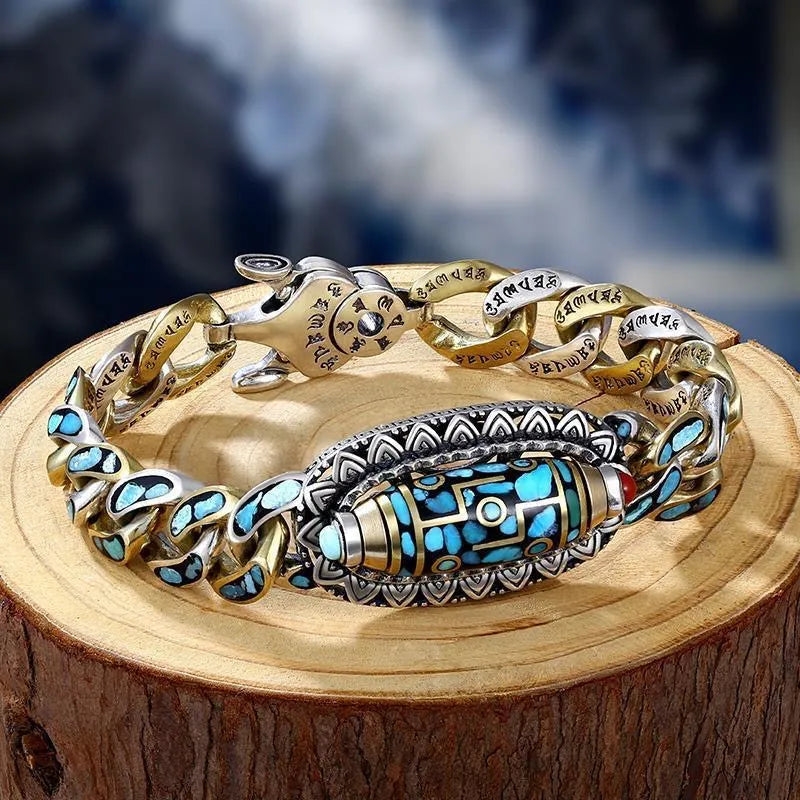
Turquoise pairs very well with silver, stainless steel, natural pearls, and bohemian materials. It brings a luminous touch without being too showy. It is a stone that knows how to stand out, but always with elegance.
To go further on choosing jewelry, read the article Turquoise Jewelry: Elegance and Energy.
Mistakes to Avoid Before Buying Turquoise
Even when you love stones, some mistakes are easy to make. Here are the most common ones.
Relying Only on Color
A beautiful color does not guarantee an authentic stone. Some imitations are visually very convincing.
Believing That All Veins Prove Authenticity
Veins can be natural, but they can also be imitated. You need to observe their irregularity, depth, and consistency.
Confusing Stabilized Turquoise with Fake Turquoise
Stabilized turquoise may be natural at the origin. It has simply been reinforced to make it more resistant.
Buying Without Reading the Details
The product description is essential. It often allows you to know whether you are buying a real natural turquoise stone or a transformed stone.
To better understand the properties associated with this stone, the article Benefits and Properties of Turquoise can complement your reading.
Conclusion: A Real Turquoise Should Be Chosen with Care
Distinguishing a Natural Turquoise from reconstructed turquoise requires a little observation, but it is not an impossible mission. Color, veins, texture, price, and seller transparency are all valuable clues.
Natural turquoise is often recognized by its subtle shades, its mineral appearance, and its unique character. Reconstructed turquoise can be beautiful, but it must be presented honestly. Ultimately, the most important thing is to buy with full knowledge.
Whether you choose this stone for its elegance, its symbolism, or its connection with lithotherapy, always favor clear information and a shop that truly values Natural Stones.
FAQ: Recognizing a Real Turquoise
How can you tell if a turquoise is natural?
You need to observe its color, matrix, texture, coolness to the touch, and the information provided by the seller. Professional expertise remains the most reliable method.
Is reconstructed turquoise a fake stone?
It may contain real turquoise fragments, but it is mixed with resin. It therefore does not have the same value as Natural Turquoise.
Is turquoise without veins necessarily fake?
No. Some natural turquoises can have almost no matrix. Several criteria must be analyzed, not just the veins.
Is natural turquoise better in lithotherapy?
Lithotherapy enthusiasts often prefer natural stones because they are considered more energetically authentic.
Why is natural turquoise more expensive?
It is rarer, more sought after, and its quality depends on many factors: origin, color, purity, matrix, cut, and artisanal work.
Read more
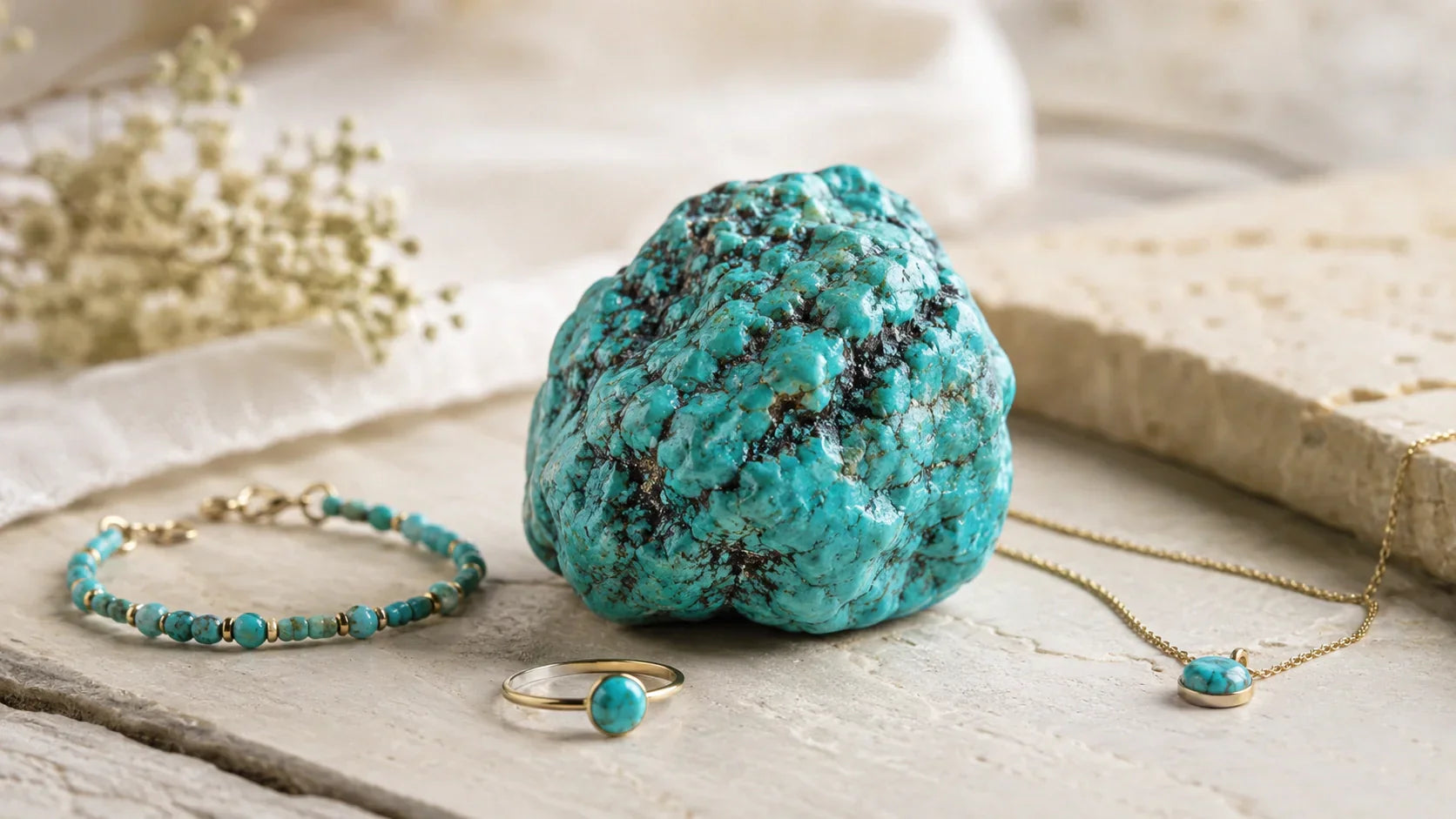
Discover the benefits and virtues of turquoise, a natural stone valued in lithotherapy for its soothing, protective and balancing energy. Associated with communication and self-confidence, natural ...
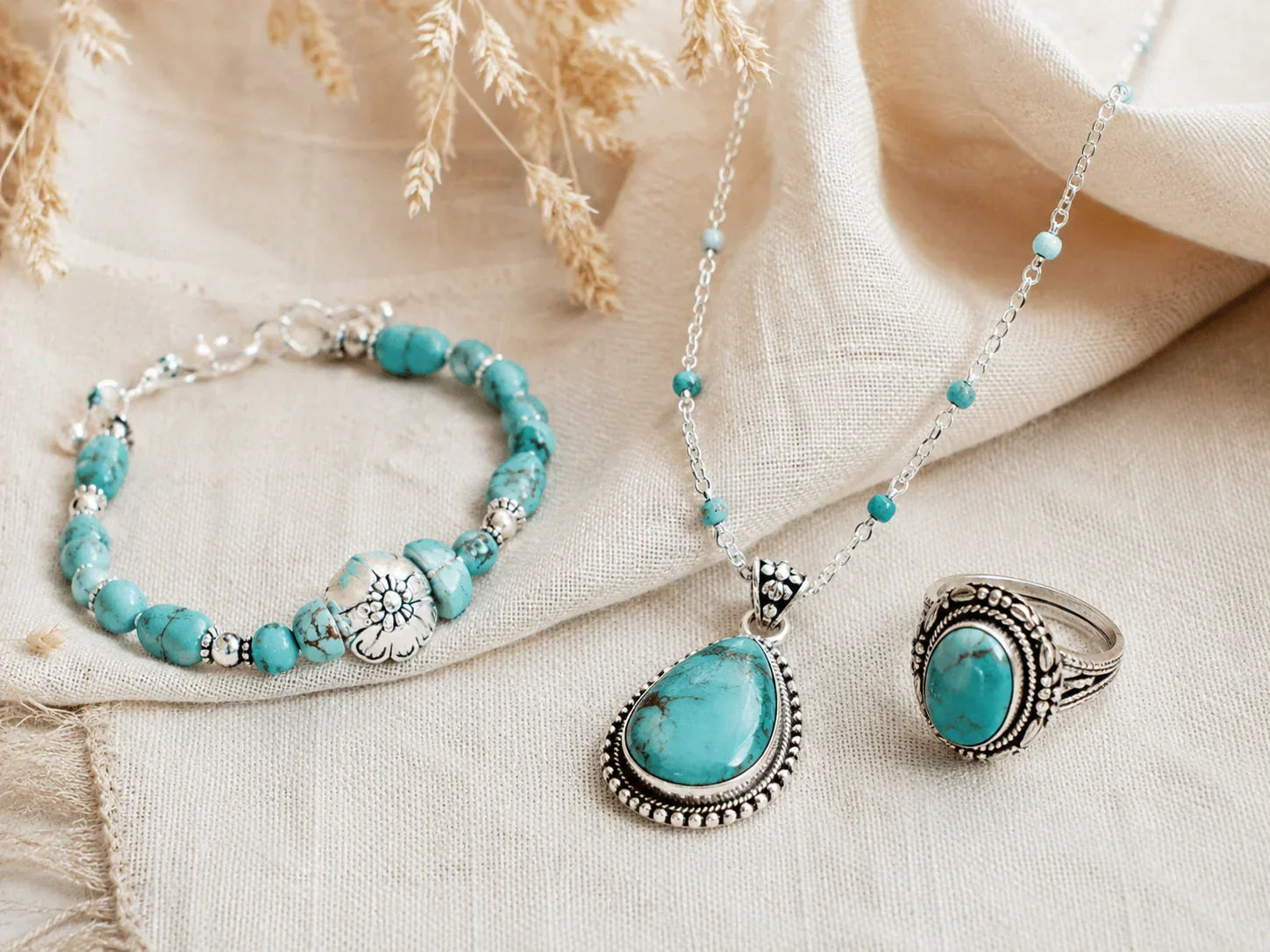
Discover the elegance of turquoise jewelry, featuring a luminous natural stone prized for its unique color and soothing symbolism. Blending style, energy, and crystal healing, turquoise captivates ...


