

Genuine or Fake Rose Quartz: Signs to Recognize Authenticity
- Introduction
- Why is rose quartz so often imitated?
- What does genuine rose quartz look like?
- How to recognize genuine rose quartz?
- Genuine rose quartz or fake stone: comparison table
- Rose quartz and lithotherapy: why does authenticity matter?
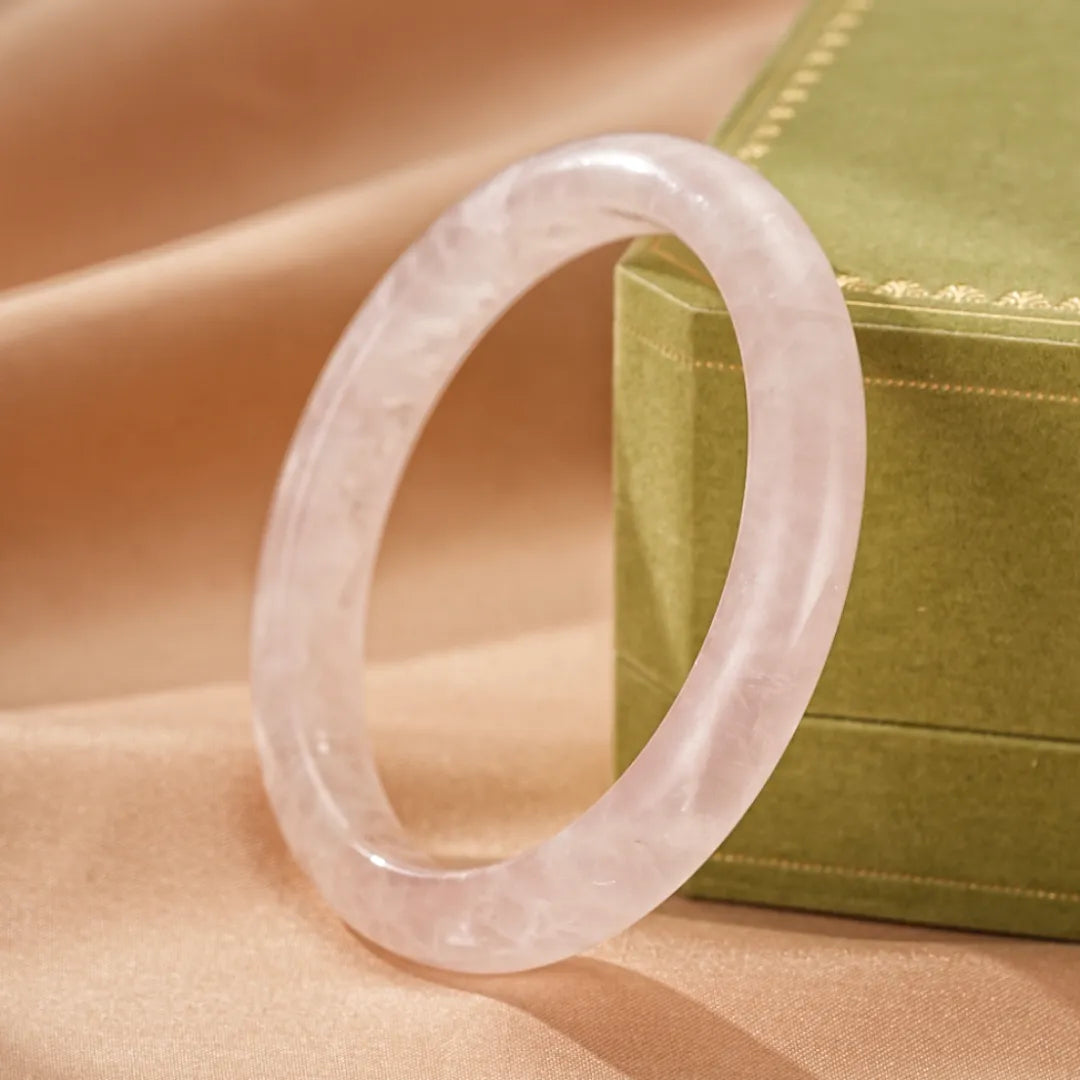
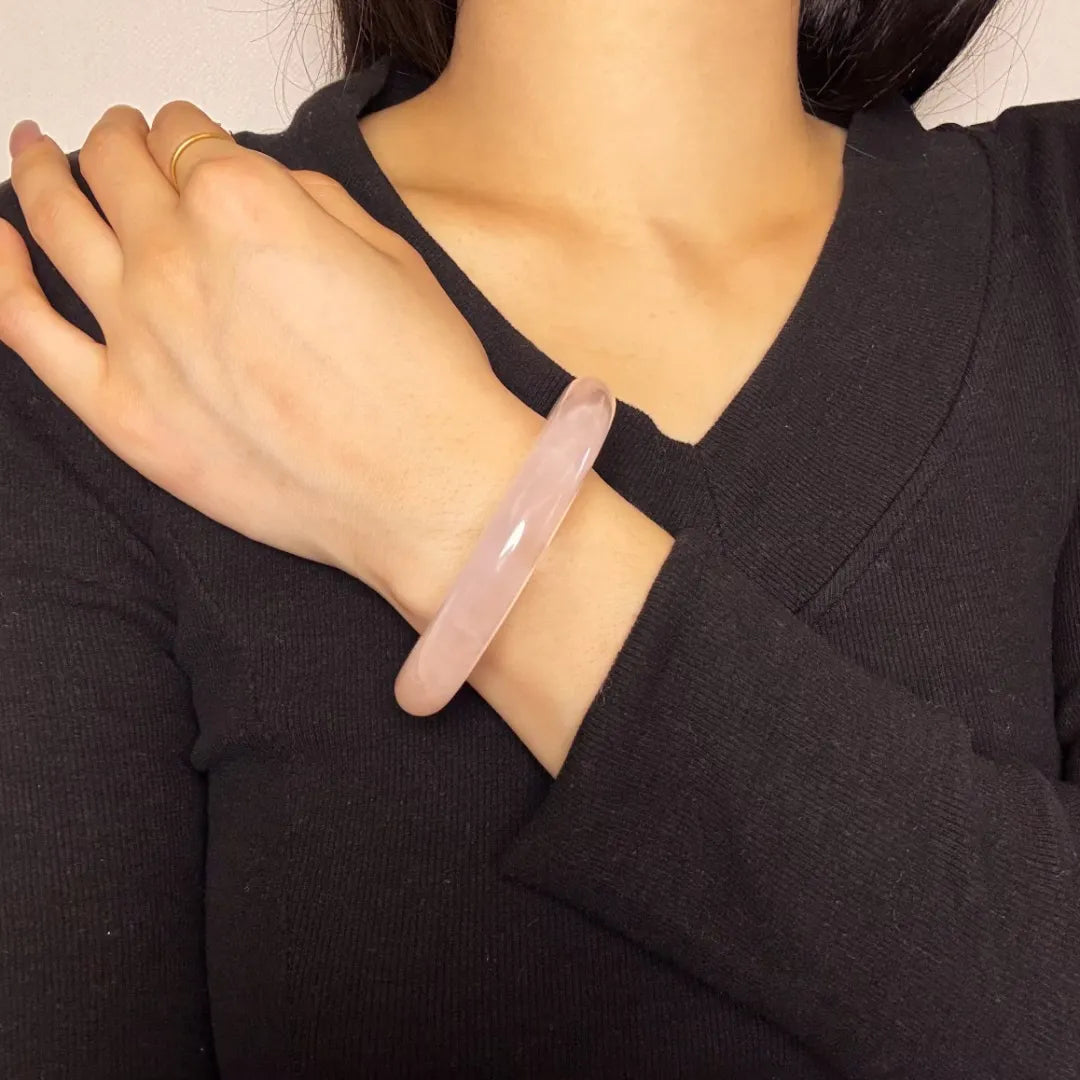
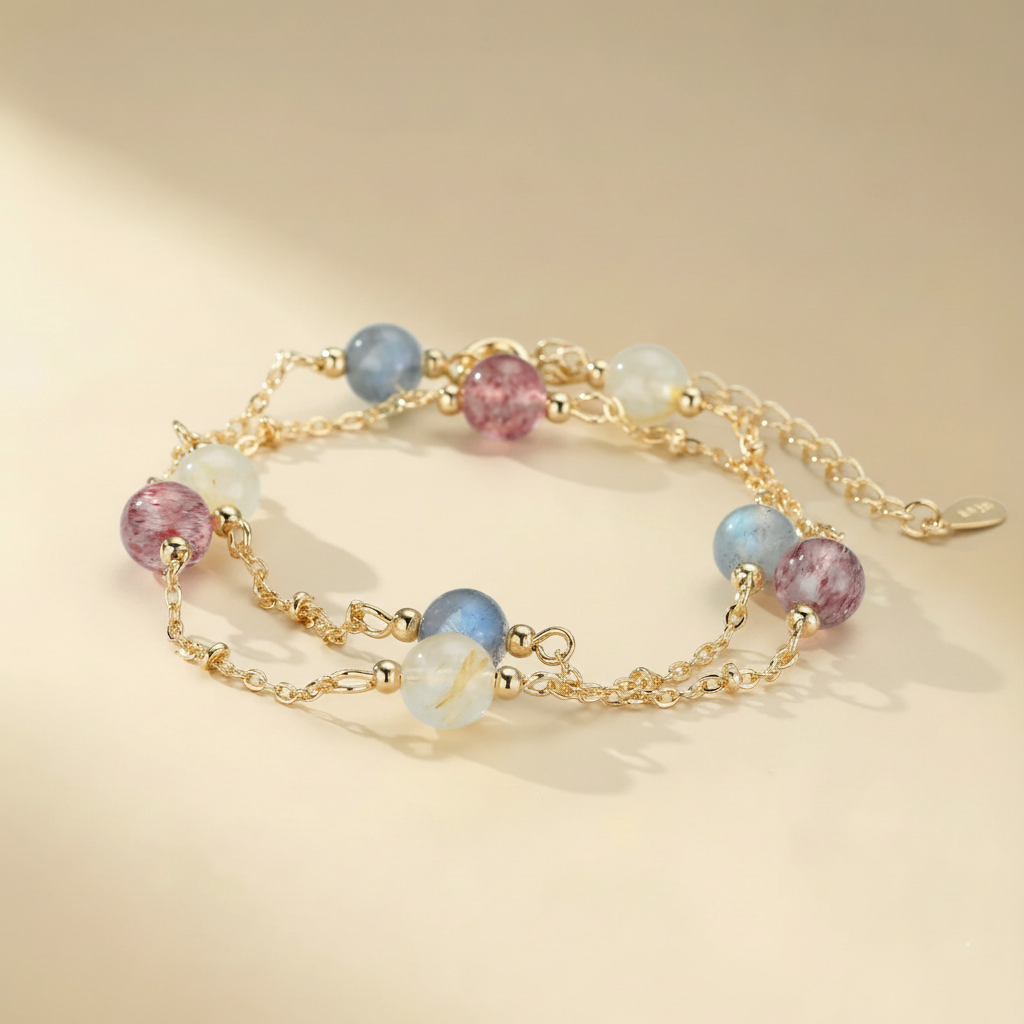
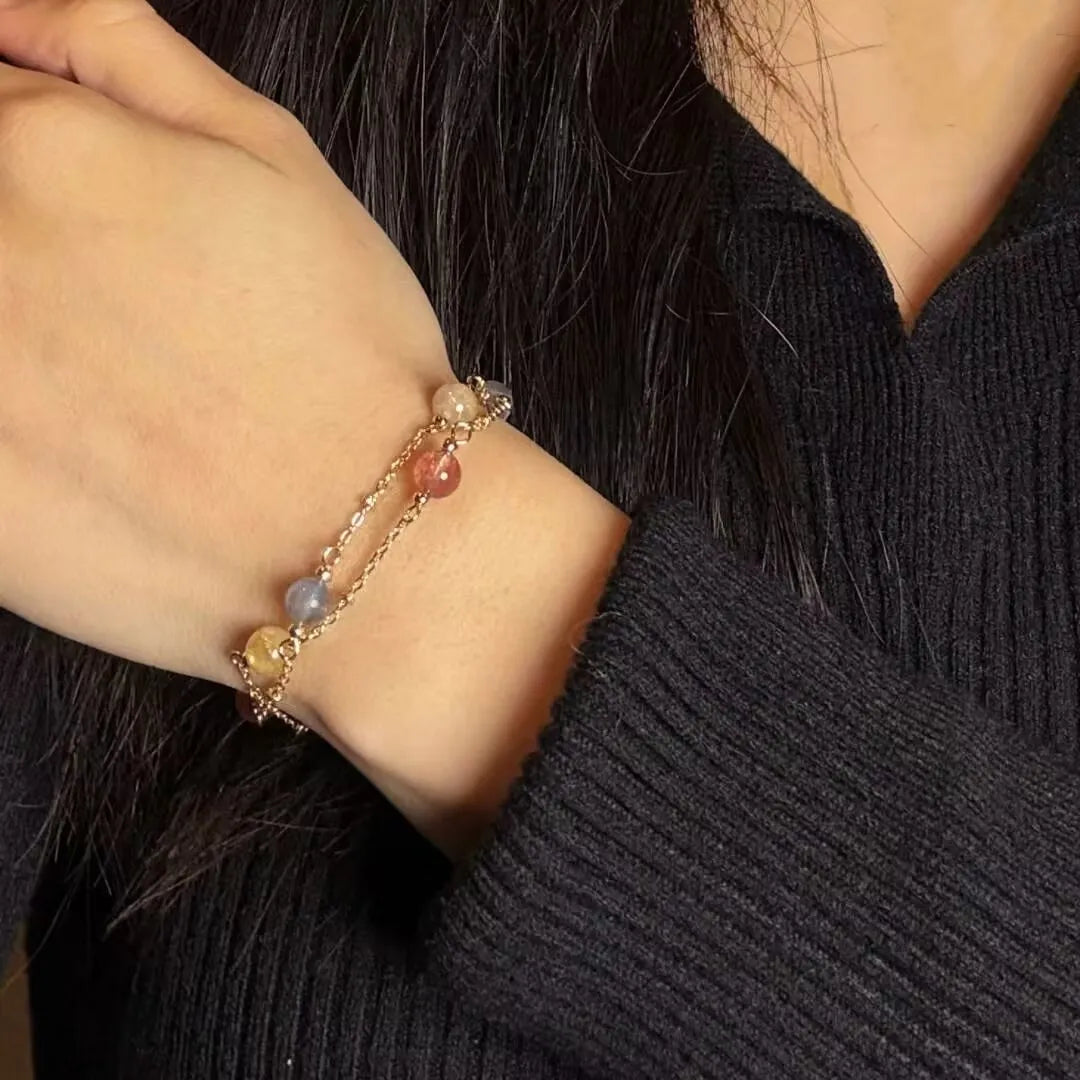
- How to recognize authentic rose quartz jewelry?
- Can you test rose quartz at home?
- Where to buy genuine rose quartz?
- Conclusion: genuine rose quartz is recognized in the details
- FAQ: genuine rose quartz or fake stone
Introduction
Rose quartz is one of the most appreciated Natural Stones in the world of jewelry, decoration and lithotherapy. With its soft color, delicate appearance and symbolic association with love, it easily wins people over. But precisely because of this popularity, there is also a small drawback: imitations are becoming more and more common.
You have bought a bracelet, a pendant, a tumbled stone or a rose quartz tree of life, and you are wondering whether it is really a natural rose quartz stone? You are not alone. Many people today want to recognize genuine rose quartz before buying or after receiving their order.
In this article, we will look together at simple, concrete and useful signs to distinguish authentic rose quartz from a fake stone. You do not need to be a gemologist to start observing the right details. All it takes is a little attention, natural light… and a curious eye.
To better understand the world of this gentle and symbolic stone, you can also read our complete article: Rose Quartz: Stone of Love and Gentleness.
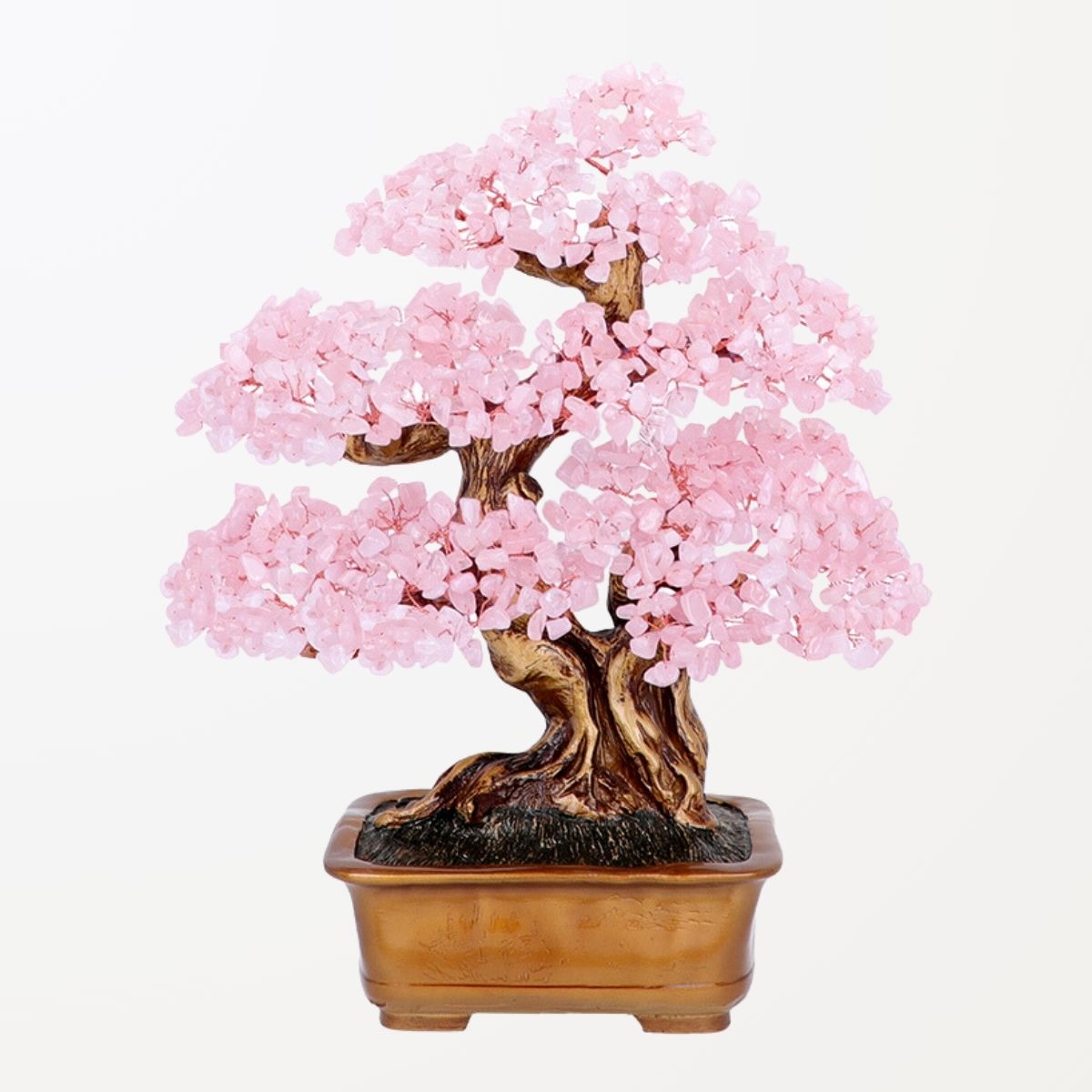
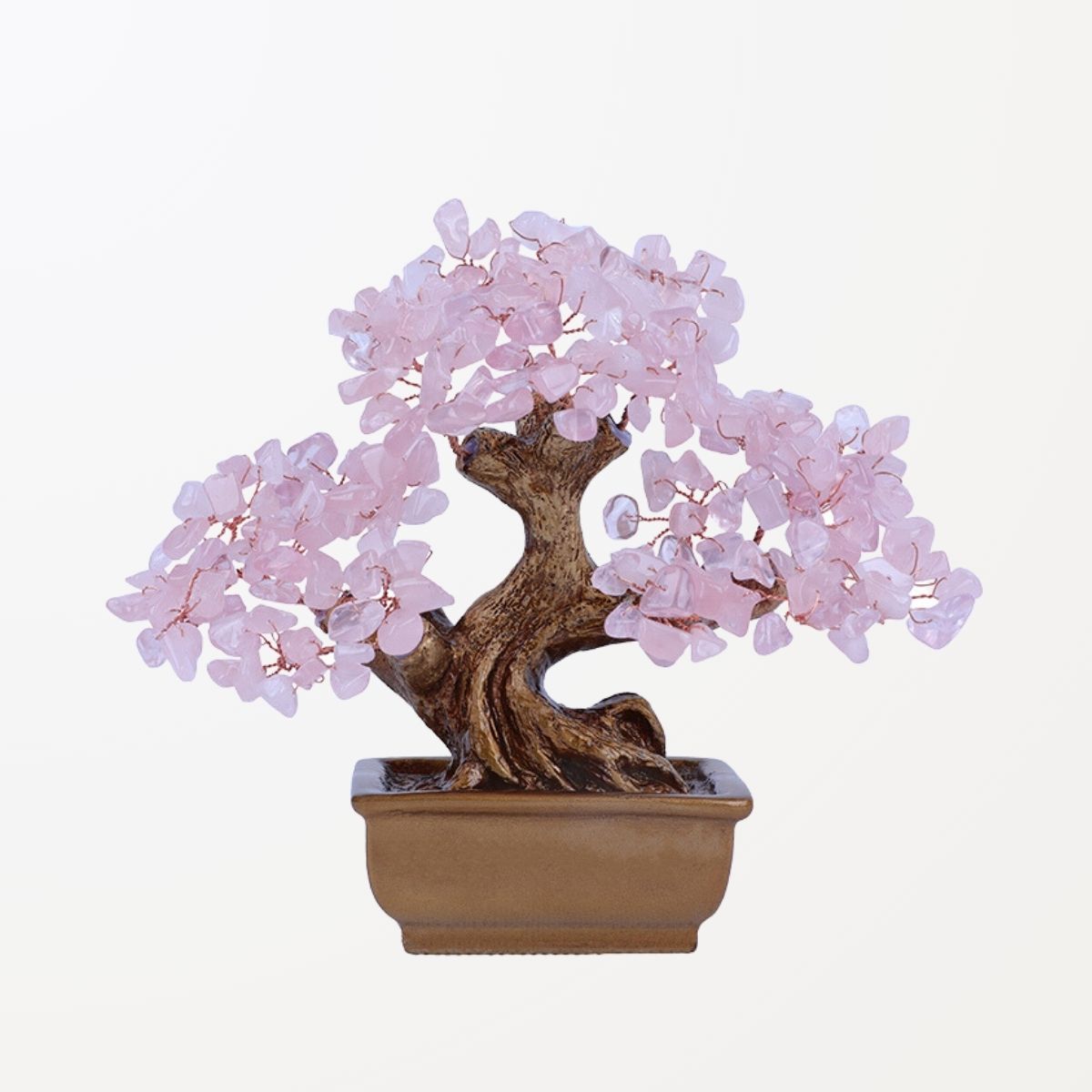
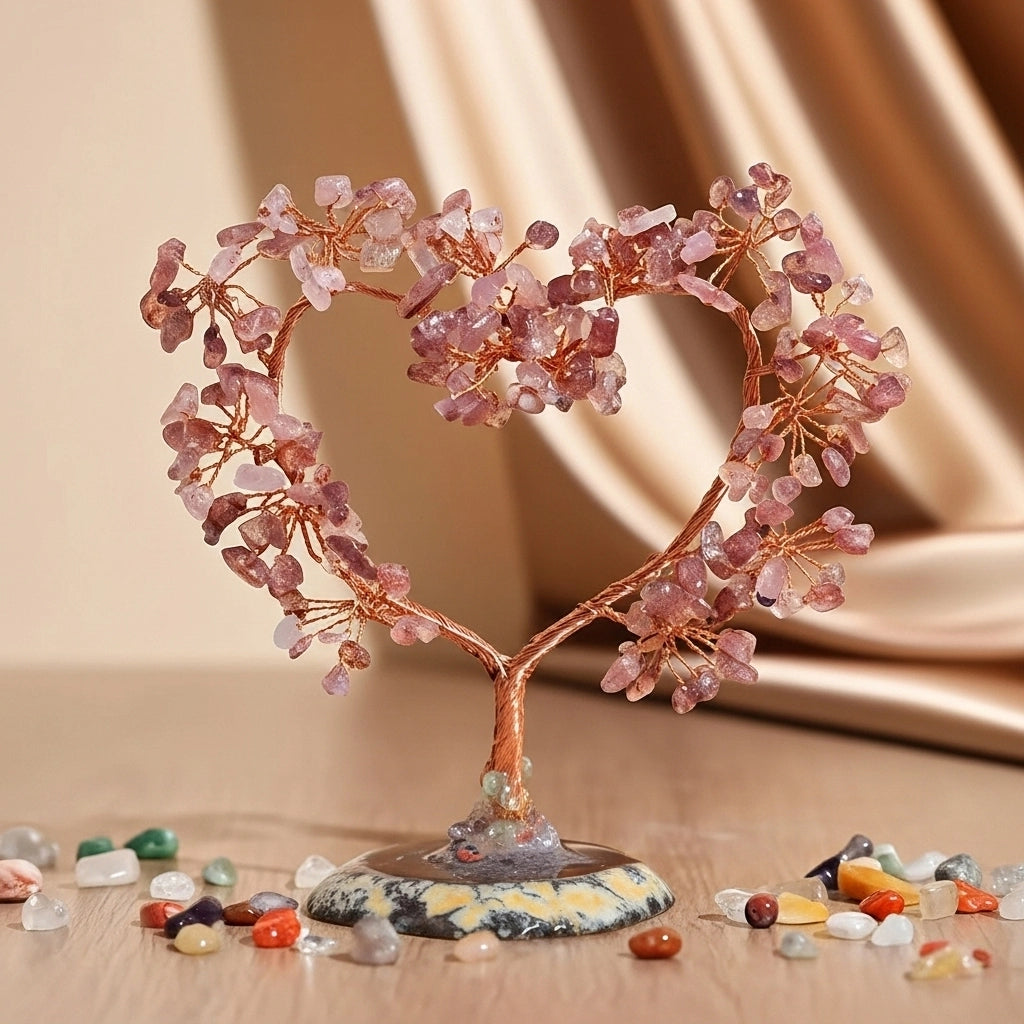
Our Rose Quartz Trees of Life
Why is rose quartz so often imitated?
Rose quartz is a highly sought-after stone. It is found in bracelets, necklaces, pendants, rings, tumbled stones, pebbles, spheres, trees of life and decorative objects. Its pale pink color immediately evokes softness, tenderness and love.
But when a stone becomes popular, the market follows. And sometimes, it follows a little too quickly. As a result, some imitations are sold as genuine natural stones.
The most common imitations
Fake stones can be made from different materials:
- pink-tinted glass;
- colored resin;
- plastic;
- artificially dyed white stone;
- low-quality quartz treated to improve its color;
- synthetic beads imitating the appearance of rose quartz.
Some imitations are easy to recognize, especially when they have a very plastic-like look or a color that is far too vivid. Others are more deceptive, especially in online photos. This is where careful observation becomes important.
Rose quartz also holds an important place in energetic practices. To explore this aspect further, discover: Why Rose Quartz Is a Must-Have Stone in Lithotherapy.
What does genuine rose quartz look like?
Before spotting a fake stone, you first need to know what real rose quartz looks like. And contrary to what one might think, an authentic stone is not always perfectly pink, shiny and uniform. In reality, it is often the opposite.
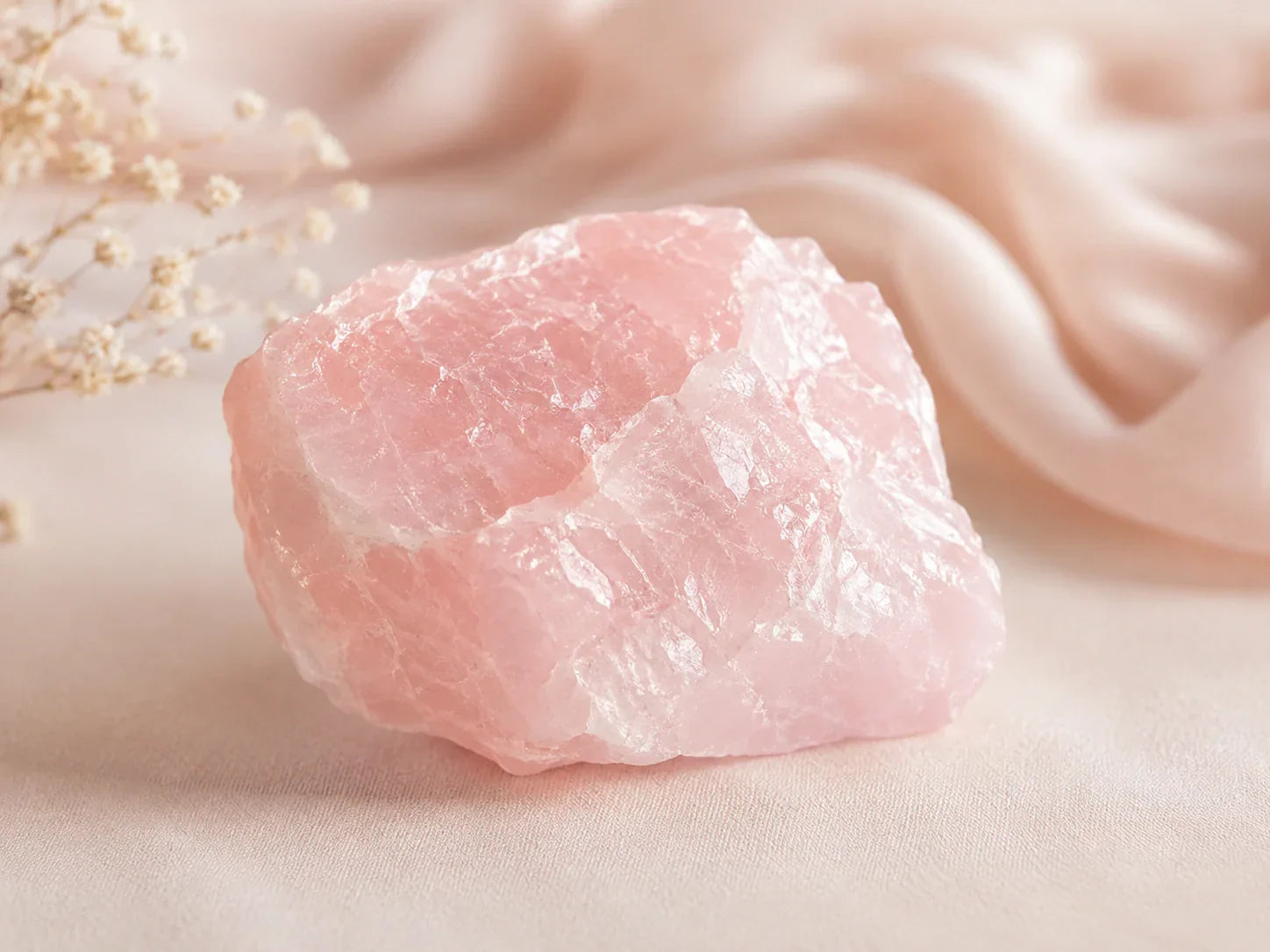
A soft and natural color
Genuine rose quartz generally has a shade that is:
- pale pink;
- milky pink;
- slightly whitish;
- sometimes almost translucent;
- sometimes more opaque.
The color may vary from one stone to another. Some stones are very light, others a little pinker. But be careful: natural rose quartz is rarely candy pink, neon pink or perfectly uniform. If the stone seems too perfect, too vivid or too “pretty to be true,” it is best to stay alert.
A genuine natural stone often has nuances. It may show lighter areas, soft reflections or internal variations. These small differences are not flaws. On the contrary, they contribute to the stone’s charm.
Visible inclusions and irregularities
In Natural Stones, inclusions are common. Rose quartz may contain:
- small internal cracks;
- whitish veils;
- cloudier areas;
- natural lines;
- tiny irregularities.
These details are sometimes visible to the naked eye, especially if you observe the stone in daylight. A stone that is too smooth, too transparent and without any variation may suggest glass or a synthetic material.

How to recognize genuine rose quartz?
To recognize genuine rose quartz, you should not rely on just one criterion. It is best to observe several elements together: color, temperature, transparency, inclusions, weight and price.
1. Observe the color in natural light
The first step is to look at the stone near a window or outdoors, without artificial light that is too yellow or too white.
Genuine rose quartz often has a soft, slightly irregular color. It may be pale, milky or slightly translucent. An imitation, on the other hand, may have a very uniform, overly intense or artificial color.
Small tip: if all the beads in a bracelet are exactly identical, with the same color, the same transparency and no imperfection, it is worth asking questions. In nature, stones rarely like to make perfect copy-pastes.
2. Touch the stone to check its coolness
Natural stones are generally cool at first contact. When you take genuine rose quartz in your hand, it often gives a feeling of coolness, then gradually warms up with body heat.
An imitation made of plastic or resin often feels warmer from the start. It also warms up very quickly. This test is not enough on its own, but it can give a first clue.
3. Examine the transparency
Rose quartz can be opaque, semi-translucent or slightly transparent depending on its quality. However, it generally does not have the appearance of perfectly clear glass.
If your stone is totally transparent, shiny like glass and without any inclusion, it could be an imitation. Real rose quartz often has a softer visual texture, sometimes a little cloudy, as if the light were diffusing inside.
4. Look at the internal inclusions
Inclusions are good indicators. To observe them, place the stone under natural light and turn it gently. You may see small lines, milky areas or differences in density.
In a rose quartz piece of jewelry, the beads may also show slight variations between them. This is rather reassuring. A natural rose quartz stone rose quartz does not need to be perfect to be authentic.
5. Assess the weight of the stone
A real natural stone often has a certain weight in the hand. It feels denser than plastic or resin. Glass can also be heavy, so this criterion is not absolute, but it can help when combined with the other observations.
A natural rose quartz bracelet, for example, should give a feeling of substance. If it seems very light and almost “hollow,” it may be an imitation.
6. Beware of prices that are too low
Price is another important clue. Rose quartz remains a relatively affordable stone, but that does not mean a well-crafted piece of jewelry or a large natural piece should cost almost nothing.
An extremely low price for a very pink, very shiny, very large and supposedly natural stone should raise suspicions. The quality of the stone, the size, the polishing, the jewelry setting and the seriousness of the seller always influence the final price.
Genuine rose quartz or fake stone: comparison table
Here is a simple table to help you spot the most common differences.
| Criterion | Genuine rose quartz | Fake stone or imitation |
| Color | Pale pink, milky, natural | Bright pink, neon or too uniform |
| Appearance | Nuances, inclusions, cloudy areas | Too perfect, too smooth |
| Touch | Cool at first | Warm or warms up very quickly |
| Transparency | Opaque to semi-translucent | Too transparent, glass-like appearance |
| Weight | Dense and mineral feeling | Very light if plastic or resin |
| Price | Consistent with the quality | Too low for a “perfect” stone |
| Beads | Slight variations between them | 100% identical beads |
Rose quartz and lithotherapy: why does authenticity matter?
The link between rose quartz and lithotherapy is very strong. This stone is often associated with self-love, emotional gentleness, comfort and soothing the heart. It is also frequently connected to the heart chakra.
Of course, lithotherapy never replaces medical advice or professional support. It is rather part of a personal well-being approach, symbolism and connection to minerals.
But for people who choose a stone for its energetic dimension, authenticity becomes important. An imitation made of plastic or glass may be pretty as decoration, but it does not have the same natural origin or the same symbolic value as genuine rose quartz.
To go further on this topic, you can read: Benefits and Properties of Rose Quartz.



How to recognize authentic rose quartz jewelry?
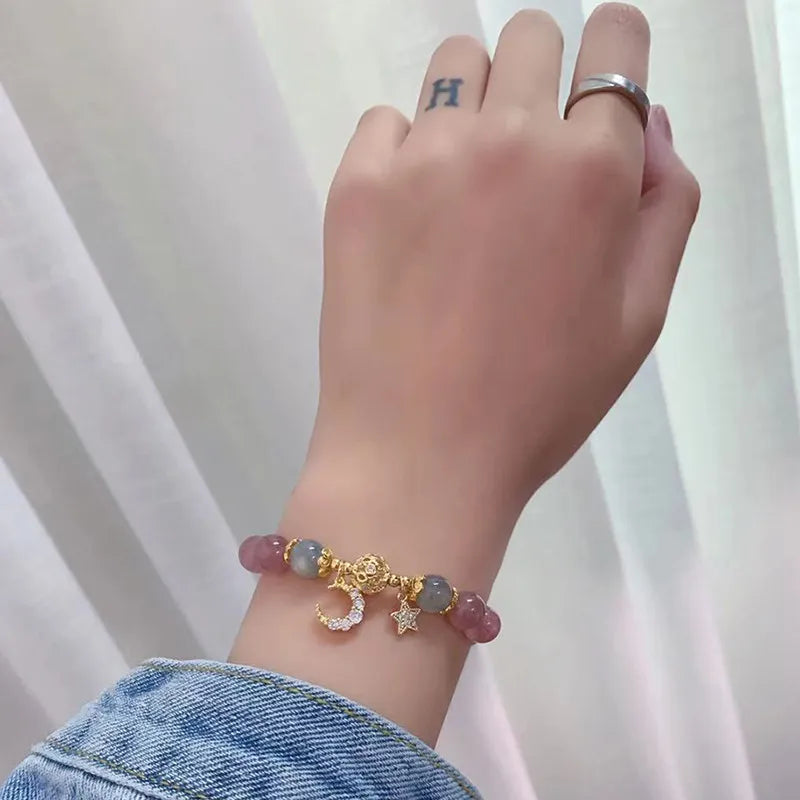
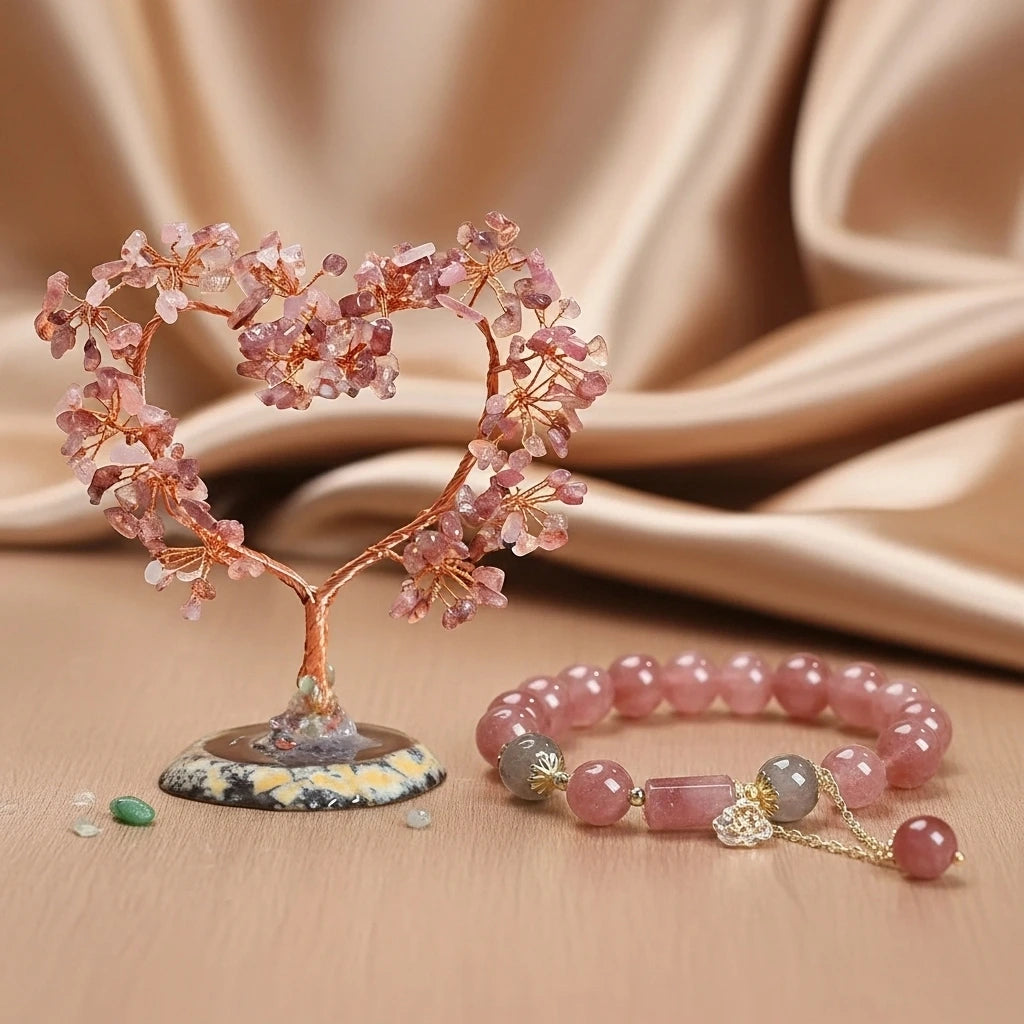
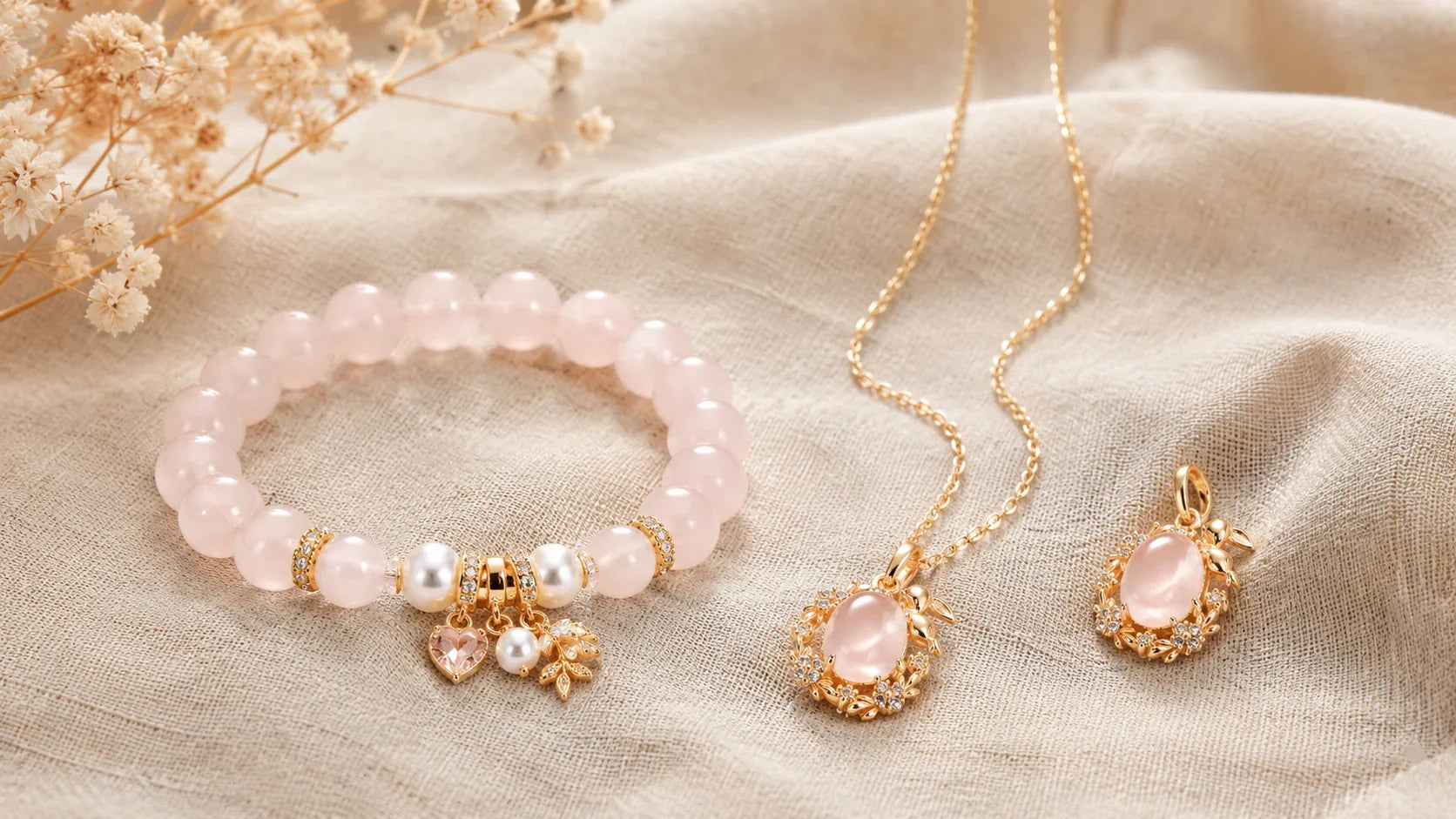
Rose quartz jewelry is very popular, especially bracelets, necklaces and pendants. But how can you know whether the jewelry really contains a natural stone?
Observe the beads one by one
In a bracelet, natural beads are not always perfectly identical. There may be:
- slight differences in color;
- internal inclusions;
- beads that are milkier than others;
- small irregularities visible under the light.
If all the beads are perfectly pink, perfectly smooth and without any nuance, they may be synthetic or dyed beads.
Check the finish of the jewelry
Authentic jewelry does not depend only on the stone. You should also observe:
- the quality of the thread;
- the strength of the assembly;
- the metal finishes;
- the comfort when worn;
- the regularity of the polishing.
A good natural stone piece of jewelry should be pleasant to wear, well assembled and clearly described by the seller.
If you like combining elegance and mineral softness, you can read: Rose Quartz Jewelry: Elegance and Energy.





Can you test rose quartz at home?
Yes, some checks can easily be done at home. They do not replace the expertise of a gemologist, but they already help avoid the most obvious mistakes.
Simple tests to do
Here is a practical checklist:
- observe the stone in natural light;
- check whether the color is soft or artificial;
- touch the stone to feel its coolness;
- look at the internal inclusions;
- compare it with reliable photos of natural rose quartz;
- read the seller’s description;
- check customer reviews;
- avoid prices that are too good to be true.
Tests to avoid
Some people advise scratching the stone to test its hardness. Quartz does indeed have a hardness of around 7 on the Mohs scale, but this type of test can damage your jewelry or your stone. It is better to avoid aggressive methods, especially if the stone has sentimental value.
The smartest test remains overall observation. A single characteristic is not enough. It is the combination of signs that allows you to get a better idea of authenticity.

Where to buy genuine rose quartz?
To avoid unpleasant surprises, it is best to buy from a shop specializing in natural stones. A good shop should provide clear descriptions, realistic photos and information about the materials used.
Good habits before buying
Before ordering, take the time to check:
- the transparency of the product page;
- information about the stone;
- the quality of the photos;
- customer reviews;
- return conditions;
- the shop’s specialization.
A serious shop does not necessarily promise “magical” or perfect stones. Instead, it highlights authenticity, natural beauty and the particularities of each piece.
Conclusion: genuine rose quartz is recognized in the details
Recognizing genuine rose quartz requires a little observation, but it is not that complicated. A real natural stone often has a soft color, nuances, inclusions and a cool feeling to the touch. It is not perfect, and that is precisely what gives it its charm.
To avoid imitations, beware of stones that are too pink, too uniform, too shiny or sold at surprisingly low prices. Also take the time to choose a shop specializing in Natural Stones, capable of clearly presenting its jewelry, stones and decorative objects.
Rose quartz is a stone full of softness, but to fully enjoy its beauty and symbolism, it is better to choose an authentic stone. After all, when looking for a stone of love, it is best to start with a relationship of trust.
FAQ: genuine rose quartz or fake stone
How do I know if my rose quartz is real?
To recognize real rose quartz, observe its color, its coolness to the touch, its natural inclusions and its transparency. An authentic stone is often soft, milky, slightly irregular and cool at first contact.
Is very pink rose quartz necessarily fake?
Not necessarily, but a very vivid, uniform or artificial color should catch your attention. Natural rose quartz is generally softer and more nuanced.
Can rose quartz have cracks?
Yes. Small internal cracks, veils and inclusions are common in natural stones. They do not necessarily mean that the stone is damaged.
Can a fake stone be beautiful?
Yes, an imitation can be pretty as decoration or fashion jewelry. But it does not have the same mineral, symbolic or energetic value as real natural rose quartz.
Is rose quartz useful in lithotherapy?
Rose quartz and lithotherapy are often associated with love, emotional soothing, tenderness and the heart chakra. Its use remains a personal well-being practice.
Read more
Discover rose quartz, a natural stone associated with love, gentleness and emotional harmony. This article presents its benefits, its role in lithotherapy, and its uses in jewelry and decoration. Y...
Discover the world of rose quartz jewelry, a natural stone appreciated for its elegance, softness, and symbolism linked to love. This article guides you through the benefits of rose quartz in cryst...


