

Genuine or Imitation Carnelian: Tips to Identify a Real Energy Stone
- Introduction
- Carnelian: why is this stone so often imitated?
- The “profile” of a genuine carnelian
- Genuine or imitation carnelian: the step-by-step method (without getting it wrong)
- Reliable tips to identify a genuine carnelian (without pro equipment)
- Natural, heated, dyed carnelian: real or fake?
- Carnelian vs look-alike stones: avoid mix-ups
- Recognizing genuine carnelian on jewelry: the practical guide
- Carnelian and crystal healing: how to stay pragmatic while staying passionate
- Where to buy genuine carnelian with confidence?
- Care: preserve carnelian’s shine (and avoid unpleasant surprises)
- To go further
- Conclusion
- FAQ – Genuine carnelian or imitation
Introduction
Buying a carnelian should be a simple pleasure: a warm-looking stone, comfortable to wear, and often chosen in crystal healing for its energizing symbolism. But between overly uniform beads, “carneleans” that look like neon-orange candy, and vague descriptions, one question keeps coming back: how can you recognize a genuine carnelian among imitations and treated stones?
In this article, we’ll do better than generic advice like “look at the color.” You’ll learn how to spot the authenticity signs of a carnelian from Natural Stones, understand treatments (heat, dyeing, stabilization), and test your stone sensibly—without turning your living room into a lab. The goal is simple: give you a reliable, progressive, “anti-bluff” method to buy and wear a real carnelian with confidence.
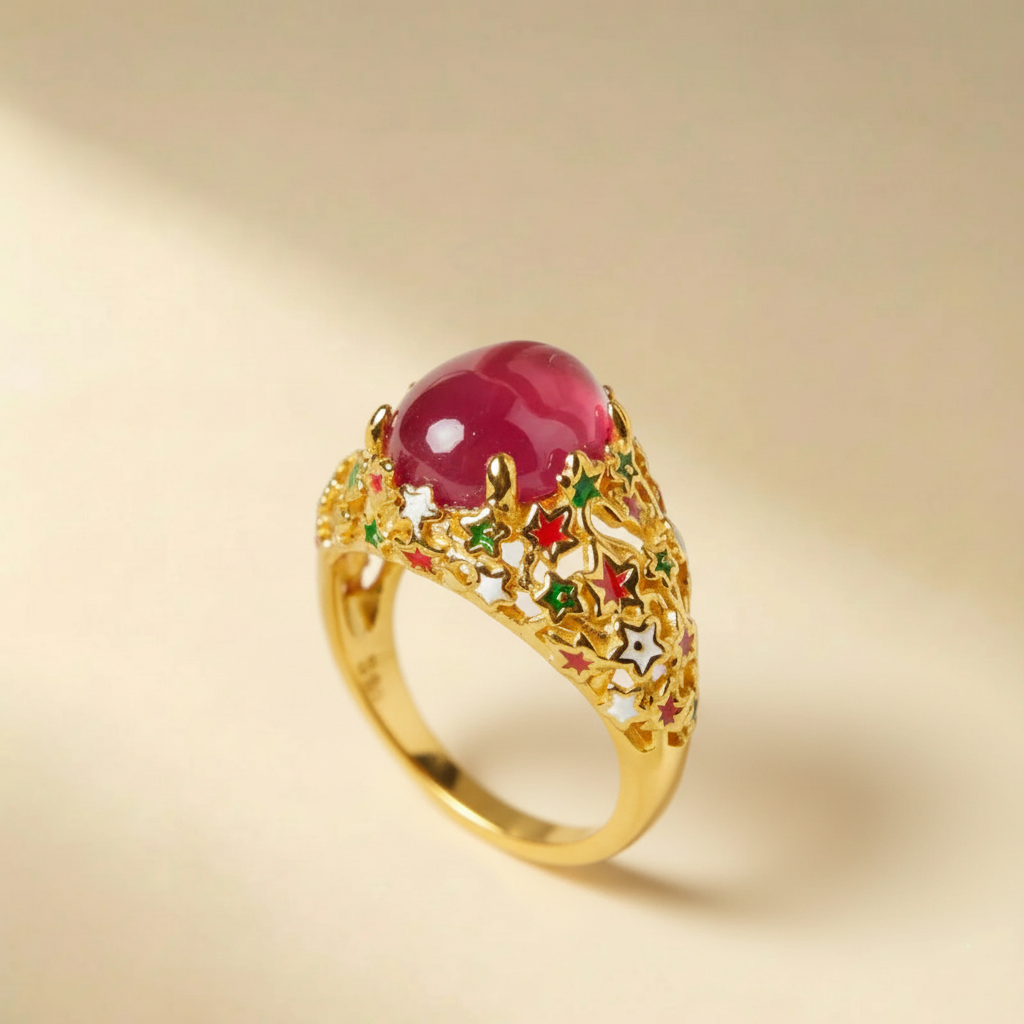
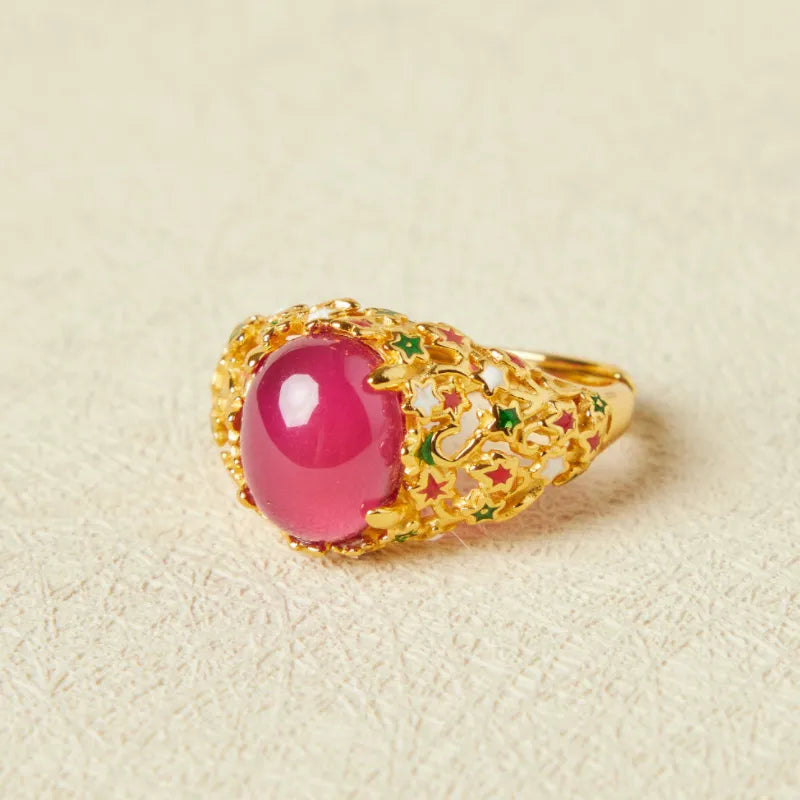
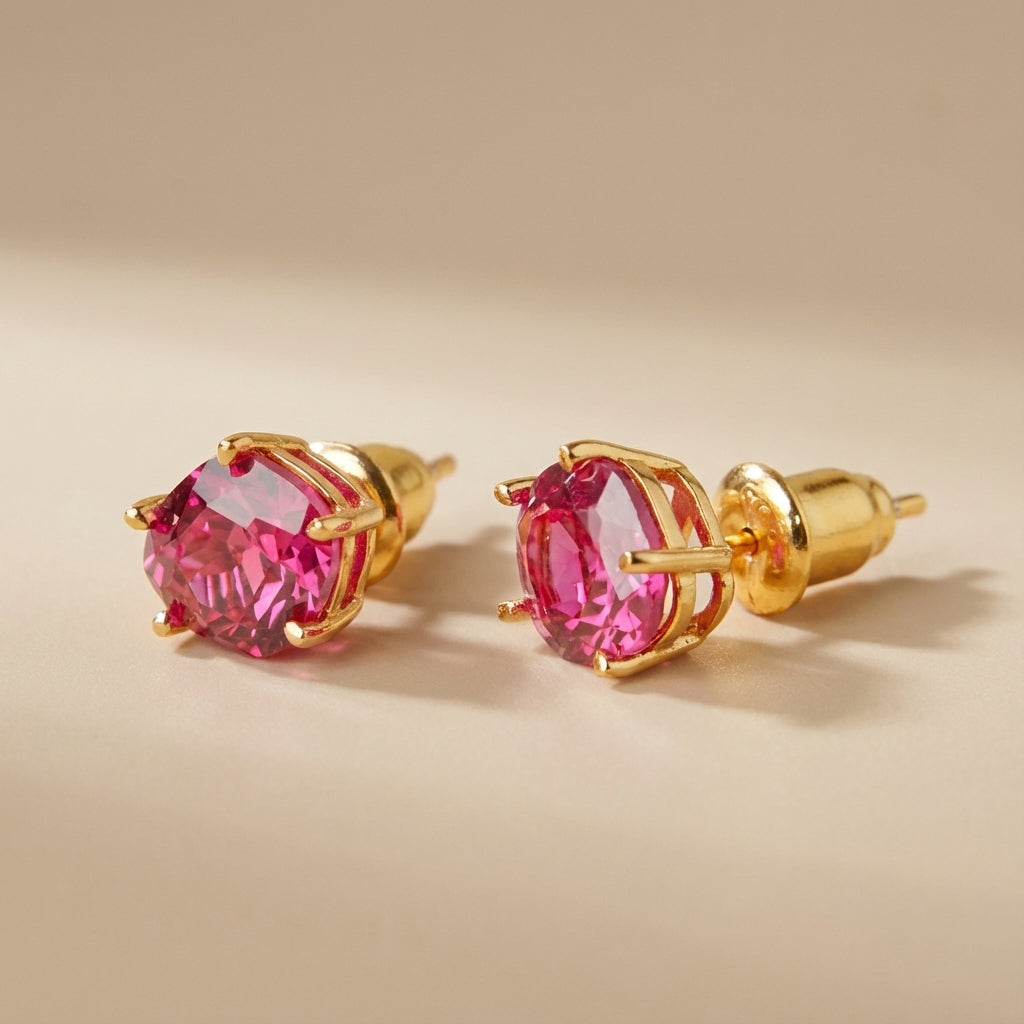
Our Carnelian Jewelry
Carnelian: why is this stone so often imitated?
Carnelian is one of those stones that ticks many boxes: beautiful color, good availability, generally accessible price, and a strong presence in the world of jewelry and crystal healing. Result: it also attracts… imitators.
A stone in high demand in jewelry
Carnelian belongs to the large family of chalcedonies (microcrystalline), just like agate. It shows tones ranging from soft orange to brownish red, sometimes with lighter zones, sometimes more “smoky.” In jewelry, it works well: beads, cabochons, pendants, bracelets. This popularity creates a wide market, where “variable quality” supply can easily mix with serious offerings.
A common confusion: imitation, treated stone, “similar” stone
When people talk about “fake carnelian,” they sometimes lump together:
- Pure imitation : colored glass, resin, plastic, composite.
- Treated natural stone : chalcedony heated or dyed to enhance the color.
- Look-alike stone : orange agate, orange jasper, dyed quartz, sometimes sold (intentionally or not) as carnelian.
The issue isn’t only “real or fake.” The real challenge is transparency: knowing what you’re buying and paying a fair price for a genuine carnelian (or for a treated natural stone that’s properly disclosed).
The “profile” of a genuine carnelian
Before pulling out a loupe, let’s start with the essentials: what does a real carnelian look like in real life?
Color: natural, warm, rarely uniform
Natural carnelian offers a range from:
- light orange (apricot),
- to deeper orange,
- all the way to brownish red, sometimes slightly “terracotta.”
What should alert you: a too saturated color, neon-orange style, or a uniform “varnished” red. In Natural Stones, color has life. It isn’t always perfectly even, especially in a large cabochon.
Transparency: from translucent to semi-opaque
Many carneleans are translucent: they let light pass through, especially along the edges, without being transparent like glass. Some can be more opaque depending on density and cut, but a “perfect windowpane” effect is suspicious.
Inclusions and micro-variations: the reassuring imperfection
A natural carnelian may show:
- slightly cloudy zones,
- fine shade variations,
- sometimes tiny, irregular internal structures.
Note: we’re not looking for a “dirty” stone. We’re looking for a living stone, not an industrial material.
Touch and feel: mineral vs plastic
At room temperature, a natural stone often feels cooler at first contact than resin or plastic (which quickly take on skin temperature). This isn’t absolute proof, but it’s a useful clue.

Genuine or imitation carnelian: the step-by-step method (without getting it wrong)
Here’s a three-level approach. The idea: start with the simplest, non-destructive tests, then refine if needed.
- Observation : color, transparency, patterns, bubbles, shine.
- Simple-tool check : 10x loupe, phone flashlight, scale.
- Careful tests : density, “sound” (ring), and micro hardness tests only if the stone isn’t set.

Reliable tips to identify a genuine carnelian (without pro equipment)
Natural light is your best ally
Look at the stone near a window, in daylight (not under very cold or very yellow LED). A genuine carnelian often shows nuances, depth, sometimes a slight gradient.
In contrast, colored glass can look “flat” or too uniformly orange. Some resins give a “perfect” color, but without mineral depth.
Look for bubbles: the most telling clue against glass
With a loupe (or by zooming with your phone), inspect the inside:
- Round bubbles are typical of glass.
- Regular “floating” structures too.
Natural Stones can have inclusions, but neatly round bubbles are rarely natural in this context.
Check for “too perfect” bead uniformity
A bracelet of beads that are all identical (same shade, same transparency, same shine) isn’t automatically fake… but statistically, it’s suspicious.
In a natural batch, even sorted, you often see:
- micro tone variations,
- one bead a bit lighter,
- another a bit more “rusty.”
Absolute uniformity can indicate a synthetic material or a heavily dyed stone.
Observe the bead drill holes
The drill hole is an excellent indicator:
- On a dyed stone, color can be stronger around the hole (the dye penetrated differently).
- On resin, the hole edges can look more “melted,” too smooth.
Also check for material build-up or an odd shine around the drill hole.
“Warmth” test: useful, but interpret correctly
Hold the stone in your hand, then place it on your cheek or the inside of your wrist.
- A natural stone feels cooler at first.
- Resin/plastic feels more “neutral” and warms up quickly.
Note: this test depends on size, room temperature, and mounting material. It’s a clue, not a verdict.
Shine: mineral vs “varnish”
A polished carnelian has a soft vitreous shine, but often less “mirror” than industrial glass. If the shine looks “varnished,” very uniform, with a “coating” feel, be wary.
Tip: look at the reflections. On glass, they’re often very crisp—almost too perfect.
Edge transparency (flashlight test)
Turn on your phone flashlight and place the stone in front of it:
- A genuine carnelian lets light through with a warm, diffused look.
- Glass may let light through too cleanly, sometimes with an evenly bright core.
- Resin may produce an artificial “milky” diffusion.
On a cabochon, focus on the edges: that’s where the material gives itself away.

The “sound” (gentle test)
If you have two stones (or two beads) and they lightly touch:
- Natural stones often produce a small, sharp “tic.”
- Plastic/resin tends to sound dull.
This test is subjective, but combined with other clues, it helps.
Density test (no chemicals, just water + scale)
Carnelian (chalcedony) has a density around ~2.6 (order of magnitude). Resins and plastics are often much lighter; glass can be close but varies.
Simple method (if the stone isn’t set and doesn’t mind water):
- Weigh the stone (weight A).
- Fill a small container with water, suspend the stone in the water without touching the sides (apparent weight B).
- Approximate density = A / (A - B).
This test isn’t perfect, but it can clearly rule out a light plastic. Dry well afterward.
Beware of “too candy-orange” colors
This is one of the most common traps. Imitations aim to seduce with a flashy, very “instagrammable” shade. In Natural Stones, carnelian usually has a more organic tone: warm orange, russet, brick red.
Streaks and internal zones: natural, but not “printed”
Some imitations (composites) can show artificial motifs that are too repetitive, like a print. In natural carnelian, variations are rarely symmetrical or repeated.
Price and commercial consistency
A genuine carnelian isn’t the most expensive stone in the world, but a “XXL carnelian” jewel sold at a ridiculously low price should trigger a mental quality check. Ask yourself the right questions:
- What country of origin is stated?
- Is there any mention of treatments?
- Are the photos realistic (without excessive filters)?
- Is there a clear return policy?
Natural, heated, dyed carnelian: real or fake?
This is where many people get lost. A stone can be natural and treated, and still remain a natural stone in the mineralogical sense. But it’s not “100% unmodified.”
Heat treatment: very common in chalcedonies
Heat can intensify certain shades. In the gem world, heat treatment is an old and widespread practice. The problem arises when:
- heat is used to “imitate” a higher grade,
- or when it isn’t disclosed, especially if the price goes up.
Dyeing: the sensitive point
Dyeing can turn pale chalcedony into very saturated orange. That’s no longer carnelian “as nature made it,” even if the base is mineral.
Possible clues:
- color too uniform,
- shade concentration around drill holes,
- color zones that seem “on the surface.”
Stabilization and composites: watch the boundary
Some pieces are stabilized (resin-impregnated) or reconstituted (powder + binder). That often moves away from the classic idea of Natural Stones as “pure” jewelry stones. It’s not necessarily “illegal,” but it must be clearly disclosed.
Carnelian vs look-alike stones: avoid mix-ups
To recognize a genuine carnelian, you also need to know its look-alikes.
Carnelian vs orange agate
Carnelian and agate are cousins (chalcedony). Agate often shows more pronounced bands or structures. But there are orange agates that look very similar visually.
What helps: carnelian is often more “solid” in color, less banded, with a warm depth.
Carnelian vs orange jasper
Jasper is generally more opaque, sometimes with an “earthy” look, more visible patterns, and stronger opacity.
Carnelian vs colored glass
Glass often gives itself away with:
- internal bubbles,
- perfect uniformity,
- too “pure” transparency,
- sometimes too mirror-like shine.
Carnelian vs resin/plastic
Often lighter, warmer to the touch, sometimes a “too smooth” feel.

Recognizing genuine carnelian on jewelry: the practical guide
When the stone is set (ring, pendant, earrings), you can’t test everything. But you can observe intelligently.
What to look at first
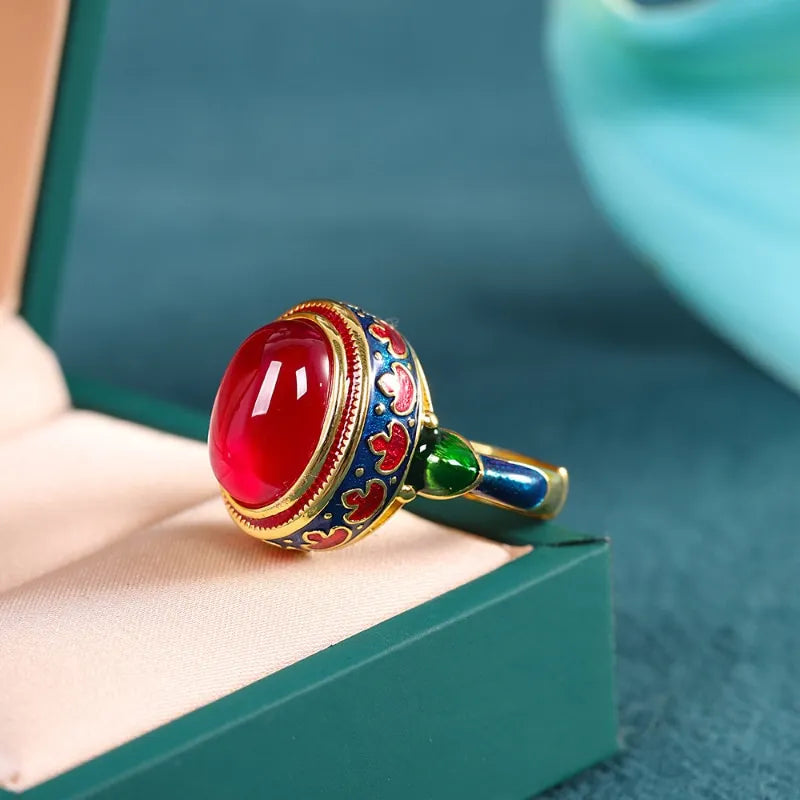
- Color consistency : natural and believable, or too “candy-like.”
- Reflections : mineral vs varnish.
- Stone edge : depth, light diffusion.
- Any holes or hidden areas : clues of dyeing or material.
Common pitfalls with bead bracelets
- Beads identical down to the millimeter, totally uniform color.
- Plastic-like shine.
- Drill holes too “clean,” or conversely dye concentrated around the hole.
The right questions to ask before buying
Without being suspicious, you can ask:
- Is it natural carnelian? Was there any treatment (heat, dyeing)?
- What is the origin (if known)?
- Can I see a photo in natural light?
- What is the return policy if the stone doesn’t match?
A serious seller answers clearly. A vague seller piles up fuzzy terms (“premium energy stone,” “superior quality”) without concrete information.
Carnelian and crystal healing: how to stay pragmatic while staying passionate
In the world of crystal healing, carnelian is often associated with ideas like vitality, drive, motivation, and creativity. Whether you fully embrace it or approach it symbolically, many people look for a genuine carnelian for the “authentic” dimension of the mineral.
One important point: if your approach is energetic, you have every interest in choosing a stone that is:
- well described,
- from a clear supply chain,
- not “masked” by aggressive dyeing,
- and that you genuinely like visually.
Because in the end, the most “effective” stone in your everyday life is often the one you feel like wearing.



Where to buy genuine carnelian with confidence?
There’s no magic place, but there are signs of seriousness.
Signs of a reliable seller
- Precise descriptions (material, possible treatments).
- Multiple photos, in natural light if possible.
- Information on size, and origin when known.
- Clear return policy.
- Accessible customer service.
Do you need a certificate?
For a “common” carnelian, a gemological certificate isn’t systematic. However, for valuable pieces (large cabochon, high-end jewelry), an appraisal can be relevant.
What matters most day-to-day: transparency, price consistency, and the option to return.
Care: preserve carnelian’s shine (and avoid unpleasant surprises)
Carnelian is relatively durable, but not invincible.
- Avoid prolonged contact with chemicals (perfume, detergents).
- Store it separately if you have other jewelry (to limit micro-scratches).
- Clean it with a soft cloth and lukewarm water if necessary.
- If your stone is potentially dyed, avoid long soaks.
Simple care keeps the polish pleasant and the color stable, especially if you wear your jewelry often.
To go further
Here are useful reads if you want to dive deeper into carnelian, its uses in jewelry, and its world in crystal healing:
- Carnelian: Stone of Vitality and Motivation
- Benefits and Properties of Carnelian
-
Carnelian Jewelry: Elegance and Energy
Conclusion
Recognizing a genuine carnelian doesn’t come down to a “miracle test,” but to a smart approach: observe color and depth, hunt for bubbles, check natural variations, use light and a loupe, and keep a clear eye on the consistency of price and the seller’s claims. With these habits, you’ll avoid most imitations and choose a carnelian that matches what you expect from Natural Stones, whether for style, collecting, or crystal healing.
How can you recognize a genuine carnelian at a glance?
A real carnelian often shows nuances and depth of color. A shade that’s too uniform or too “flashy” may indicate an imitation or a dyed stone.
What are the signs of a glass imitation?
Internal air bubbles (small round bubbles) are the most common clue. Glass can also look too perfect and too transparent.
Can carnelian be completely opaque?
Yes, some carneleans are more opaque depending on quality and cut. But many are slightly translucent on the edges when held up to the light.
How do you do a simple test with your phone light?
Place the stone in front of your phone flashlight: carnelian diffuses a warm and often uneven light. An imitation may let through a light that’s too uniform.
Why are some carneleans very dark (red)?
This can come from the stone’s thickness, its quality, or a heat treatment. Check translucency at the edges under light.
Read more

Discover the benefits and properties of Carnelian in crystal healing: a natural stone renowned for supporting energy, motivation, and self-confidence. In this article, you will learn how to use it ...
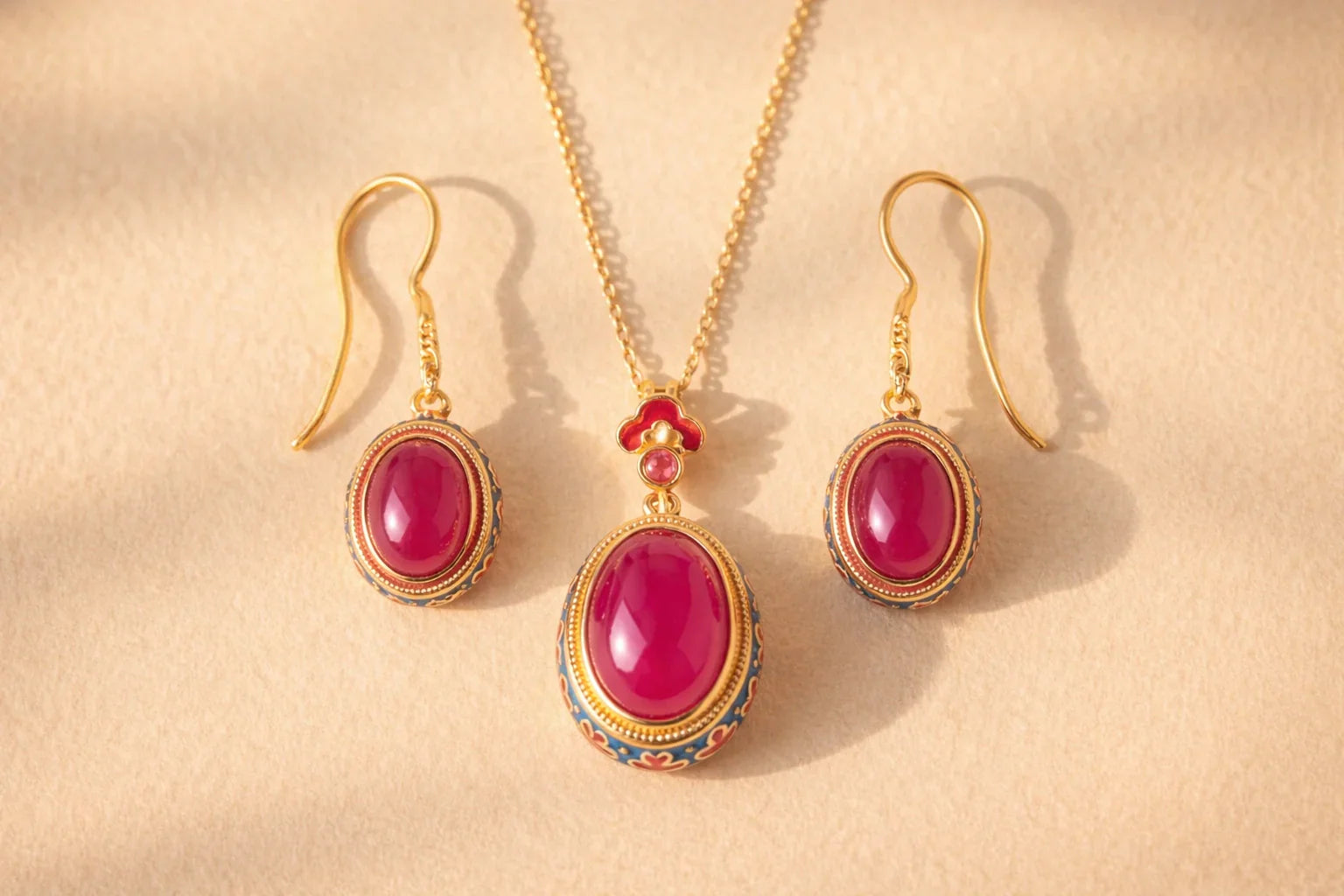
Discover why carnelian jewelry is so popular: a luminous, elegant natural stone that is easy to wear every day. This article explains the meaning of Carnelian, its uses in crystal healing, how to c...


