
History and Legends of Ginkgo: From Antiquity to Today
- Introduction: Ginkgo, a tree like no other ```
- Origins: Ginkgo, a survivor from ancient times
- Ginkgo in ancient civilizations: Medicine and spirituality
- Myths and legends: When Ginkgo becomes a symbol
- Ginkgo in Europe: A late yet powerful fascination
- Ginkgo in modern decor: Aesthetics and serenity
- Ginkgo in jewelry: From leaf to personal talisman
- The Ginkgo symbol: Between tradition and modernity
- Conclusion: One leaf, a thousand stories
- FAQ – History of the Ginkgo Symbol
Introduction: Ginkgo, a tree like no other
What if there were a tree capable of crossing ages, resisting catastrophes, and continuing to grow peacefully where everything was destroyed? This isn’t the beginning of a fantasy novel but the true story of the Ginkgo, a fascinating plant species that has inspired admiration, respect, and wonder for millennia.
Known for its fan-shaped leaf and exceptional longevity, the Ginkgo is not only a botanical treasure. It also carries a powerful symbol—that of resilience, inner peace, memory, and connection between worlds. Even today, it stands in Asian temples, on bustling city streets, in zen interiors, and even on our jewelry.
But where does this powerful symbol come from? What is the history of Ginkgo, and how has its symbol been shaped over the centuries? Let’s dive into a journey through time, between historical facts and legendary tales.
Our Ginkgo Jewelry
Origins: Ginkgo, a survivor from ancient times
Ginkgo biloba is often called a “living fossil.” And for good reason: its direct ancestors appeared over 270 million years ago—long before the dinosaurs. It’s one of the oldest known tree species and, above all, the only living member of its lineage. It has seen ice ages, mass extinctions, and climate upheavals—without ever disappearing.
Originating in China, the Ginkgo likely survived in remote mountainous regions, protected from drastic climate changes and human activity. It was later intentionally cultivated by humans, notably in Buddhist monasteries and temples.
Its longevity is impressive: some specimens are over 1,000 years old. The oldest known one still grows today in China’s Shanxi province, within the Gu Guanyin Temple. It is said to have been planted around the year 1000!
The tree also stands out for its unique ability to resist urban pollution, pests, fire, and even radiation. A striking example? After the atomic bomb in Hiroshima in 1945, when the city was leveled, several Ginkgos near the epicenter survived and sprouted new leaves a few months later. They still stand today, living symbols of renewal and peace.
To discover the incredible resilience of Ginkgo, consult the Complete Guide to Ginkgo: Tree of Resilience and Symbol of Longevity.
Ginkgo in ancient civilizations: Medicine and spirituality
In China, Ginkgo has been cultivated for over 2,000 years. The tree is highly respected in Taoist culture, which sees it as a bearer of wisdom and longevity. Buddhist monks also played a major role in its spread, planting it in sacred gardens.
The fruit of Ginkgo (actually a seed) has been used in traditional Chinese medicine since antiquity. It is consumed for its beneficial effects on memory, blood circulation, and vitality. It’s no coincidence that Ginkgo is now one of the world’s most popular supplements.
Beyond medicine, Ginkgo carries a strong spiritual dimension. It is perceived as a bridge between earth and sky, between body and mind. Its leaf, which divides into two lobes, is sometimes interpreted as a symbol of yin and yang, of harmonious duality.
To delve deeper into Ginkgo’s spiritual symbolism and benefits, the article Ginkgo Biloba: Spiritual Meanings and Benefits is essential reading.

Myths and legends: When Ginkgo becomes a symbol
The history of the Ginkgo symbol is rich in tales—sometimes mythological, often poetic. In China, some legends say that Ginkgo shelters ancient spirits. It is also seen as a guardian of souls, protecting the dead and accompanying their passage to the afterlife.
In Japan, Ginkgo is among the most sacred trees. It symbolizes peace and longevity, and its leaves are often used in Shinto rituals. A Japanese proverb says: “He who plants a Ginkgo thinks of his great-grandchildren.”
A famous legend tells that a Ginkgo was planted in front of a temple in Tokyo more than 800 years ago by a Buddhist monk. The tree became so wide that it hid prayers within its folds, and people came to leave wishes there, hoping the tree would carry them to the gods.
Ginkgo is also closely associated with renewal. After the war, it was chosen as a symbol of reconstruction in Japan. Its image is even used by the city of Tokyo as an official emblem.
To discover more fascinating stories about Ginkgo and its legends, read History and Legends of Ginkgo: From Antiquity to Today.
Ginkgo in Europe: A late yet powerful fascination
It was in the 18th century that Ginkgo arrived in Europe, brought back by German and French botanists fascinated by its unique appearance. The first known European specimen is said to have been planted in the Utrecht Botanical Garden in 1730.
Enlightenment intellectuals admired it for its strange beauty and mysterious origin. Goethe, the German poet, fell literally in love with it. He even dedicated a famous poem, “Ginkgo Biloba,” in which he compares the Ginkgo’s double leaf to loving union.
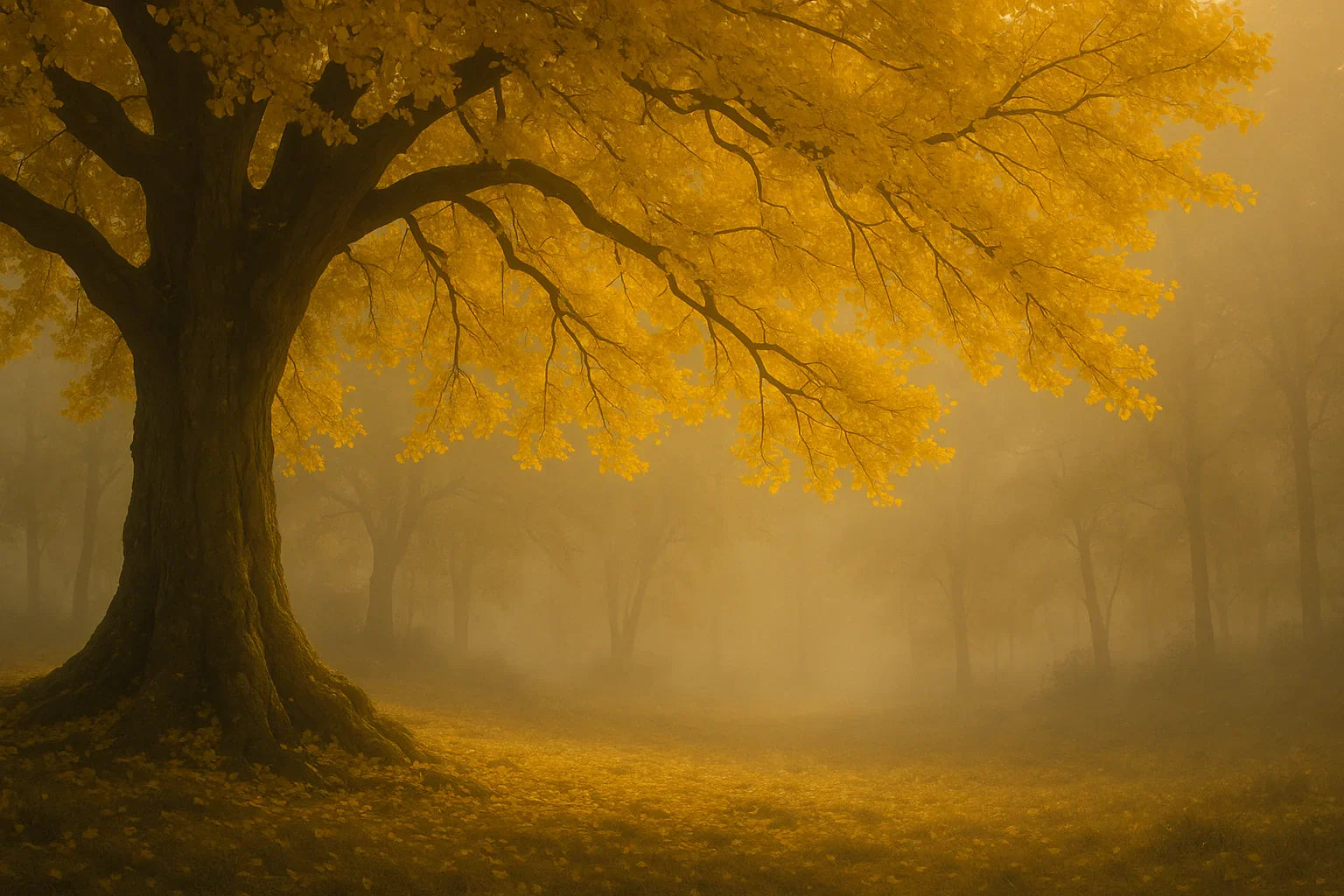
Enthusiasm spread through royal courts and botanical gardens. Over time, Ginkgo took root in cities as an ornamental tree, notably for its hardiness and its beautiful golden color in autumn.
In Western symbolism, it quickly became associated with immortality, memory, wisdom, and also with faithful love, due to the shape of its leaf, reminiscent of two united hearts.

Ginkgo in modern decor: Aesthetics and serenity
Today, Ginkgo is no longer just a tree: it is also a central element of zen and nature-inspired decor. Its elegant leaves inspire many designers, decorators, and artisans.
They appear engraved on home accessories, printed on cushions or wallpapers, or stylized in wall art. Ginkgo decor evokes tranquility, nature, and harmony. It’s a popular motif in feng shui, Scandinavian, or minimalist atmospheres.
The symbolism of Ginkgo in decor goes far beyond aesthetics: it invites meditation, inner calm, and reconnection to the essential. It is also a way to bring a touch of ancient Eastern wisdom into one’s home.
For concrete ideas on how to integrate Ginkgo into your interior, the article Integrating Ginkgo into Decoration: Aesthetics and Serenity is an excellent resource.
Ginkgo in jewelry: From leaf to personal talisman
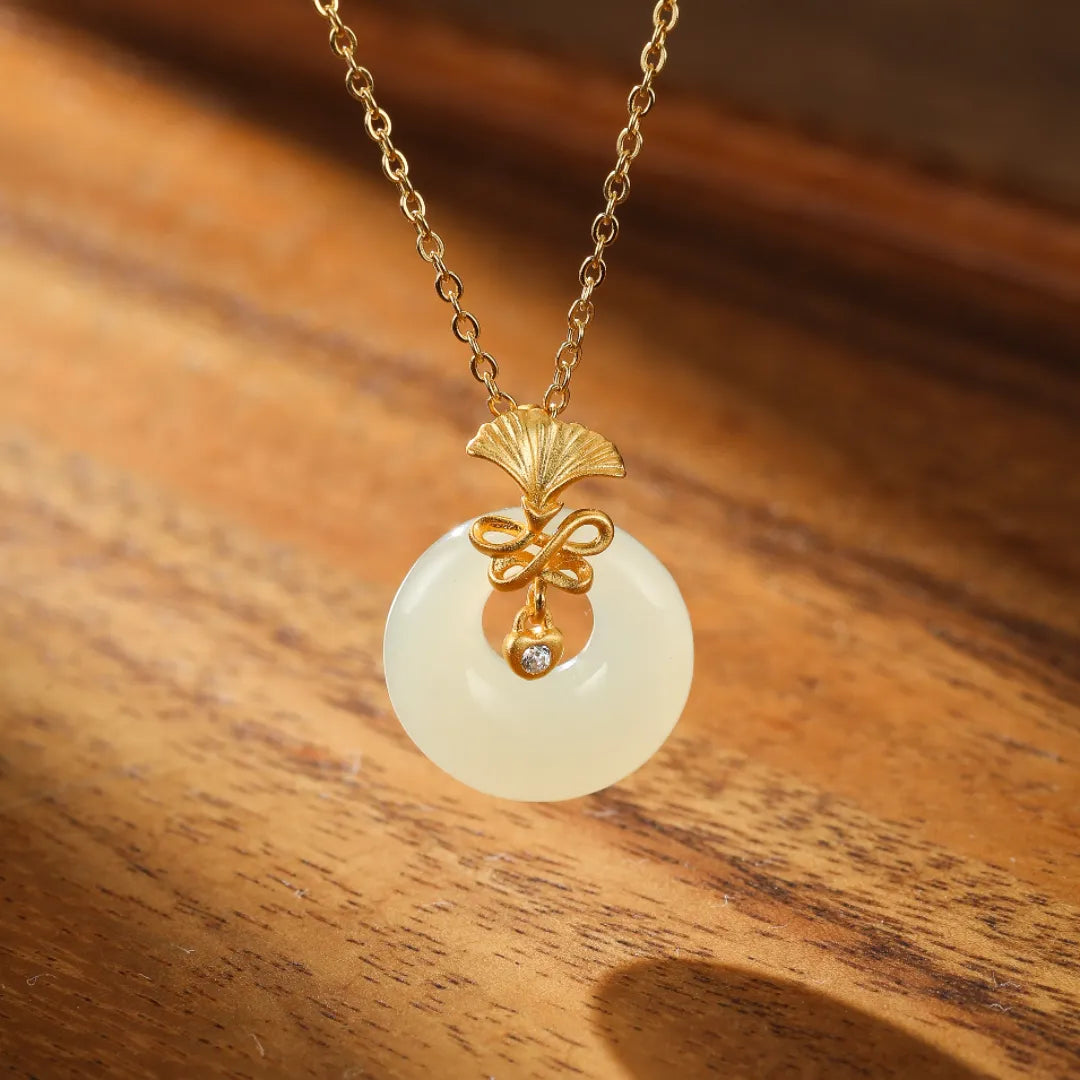
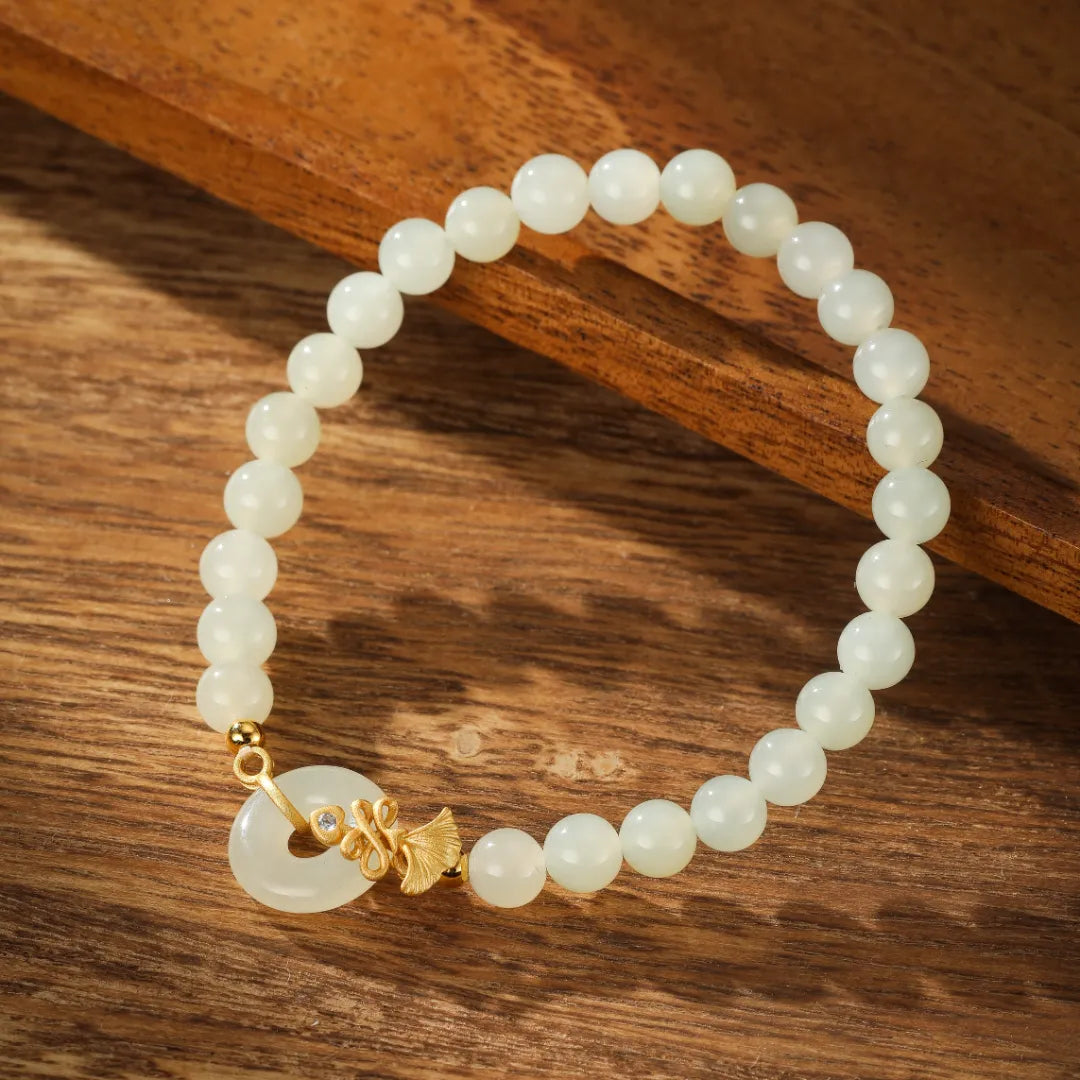
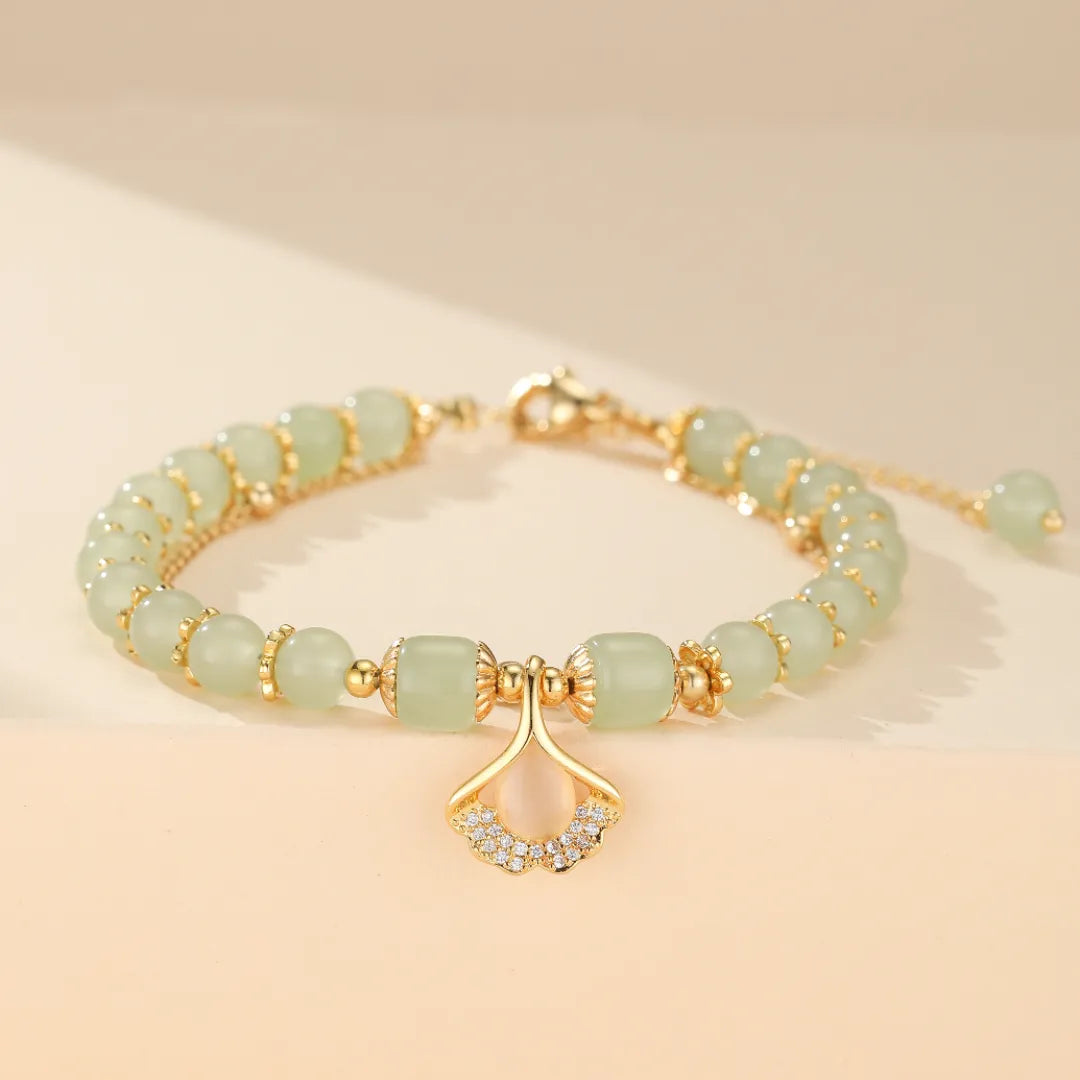
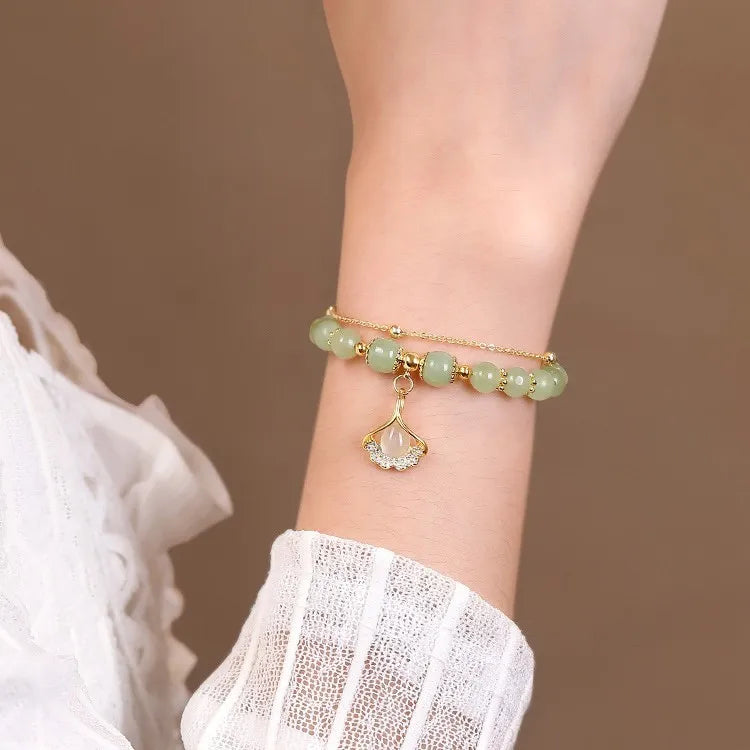
Another realm where Ginkgo flourishes today is jewelry. Its unmistakable leaf has become a staple motif in contemporary pieces.
Necklaces, earrings, rings, bracelets… The Ginkgo leaf is interpreted in gold, silver, brass, and sometimes natural stone. Beyond its organic beauty, it carries strong symbolism: resilience, transformation, and inner peace.
Wearing Ginkgo jewelry often expresses an attachment to these values. It’s also a daily reminder of serenity and inner strength. In some cultures, gifting Ginkgo jewelry is a wish for long life and happiness to the recipient.
If you’d like to learn more about this symbolic and elegant trend, the article Ginkgo Leaf Jewelry: Natural Elegance and Symbolism explores the topic in depth.

The Ginkgo symbol: Between tradition and modernity
The history of the Ginkgo symbol is a journey through cultures, civilizations, and ages. From sacred tree to emblem of resilience—through medicine, art, and design—Ginkgo embodies the wisdom of living things and our ability to weather storms with grace.
It is rare for a single tree to concentrate so many meanings: longevity, peace, memory, transformation, balance. Its image accompanies us in times of transition, doubt, and rebuilding. It is both ancient and modern, rooted in tradition yet fully relevant today.
In a world in search of bearings, the Ginkgo symbol reminds us of something essential: even through trials, life can begin anew—slowly, patiently, but surely.




Conclusion: One leaf, a thousand stories
Whether planted in a garden, depicted in a painting, or hanging around your neck, Ginkgo continues to speak to our souls. Its longevity, aesthetics, and profound meaning make it far more than a simple tree: a messenger of time, a universal symbol.
So next time you come across a Ginkgo leaf, pause for a moment. Notice its shape, its lightness, its quiet strength. And remember: behind this leaf lies a millennia-old story—that of a tree which, without a word, shares its wisdom with us.
Why is Ginkgo nicknamed a “living fossil”?
Ginkgo is nicknamed a “living fossil” because it has existed for over 270 million years and is the only surviving species of its lineage. It has endured many natural upheavals—including ice ages and mass extinctions—without disappearing.
What are the main symbolic meanings of the Ginkgo leaf?
The Ginkgo leaf symbolizes resilience, inner peace, memory, balance, and longevity. It also evokes harmonious duality—often interpreted as yin and yang—and serves as a bridge between earth and sky in many traditions.
How is Ginkgo used in modern decor?
In modern decor, Ginkgo is a central motif for creating zen and nature-inspired atmospheres. Its form appears on home accessories, cushions, wallpapers, and wall art. It helps foster an atmosphere of tranquility, meditation, and reconnection to what matters.
Why gift jewelry in the shape of a Ginkgo leaf?
Gifting jewelry shaped like a Ginkgo leaf is a symbolic gesture conveying wishes of longevity, happiness, peace, and resilience. Wearing such a piece is a reminder of inner strength and calm, and it represents a link to the millennia-old wisdom of this tree.
What place does Ginkgo hold in Japanese culture?
In Japan, Ginkgo is a sacred tree symbolizing peace and longevity. Its leaves are used in Shinto rituals, and the tree also represents renewal—especially after World War II, when it embodied reconstruction and hope in Tokyo.
Read more
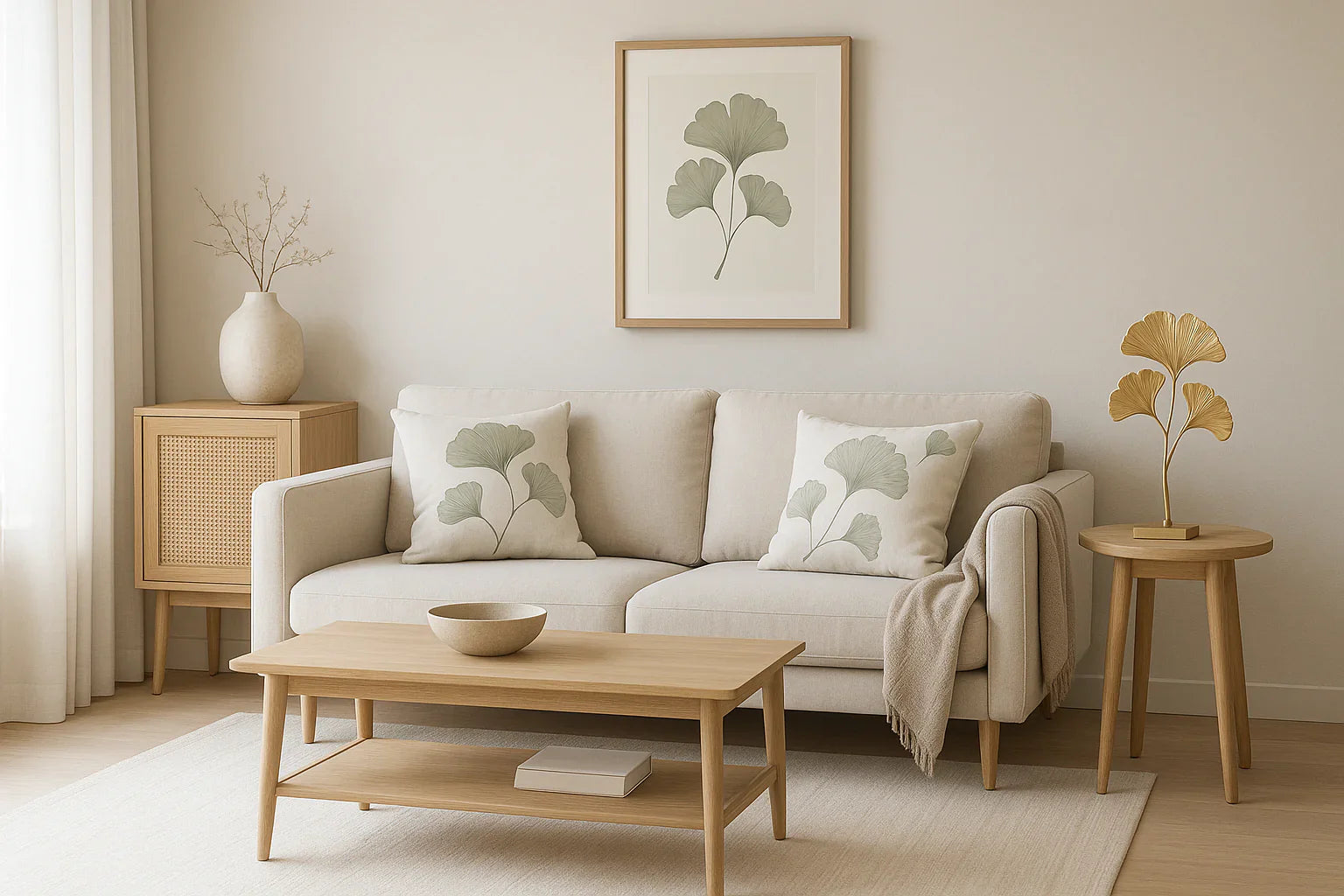
Discover how to integrate Ginkgo into your decor to combine natural aesthetics and inner serenity. Between powerful symbolism, design trends, and practical inspirations, this article explores all f...
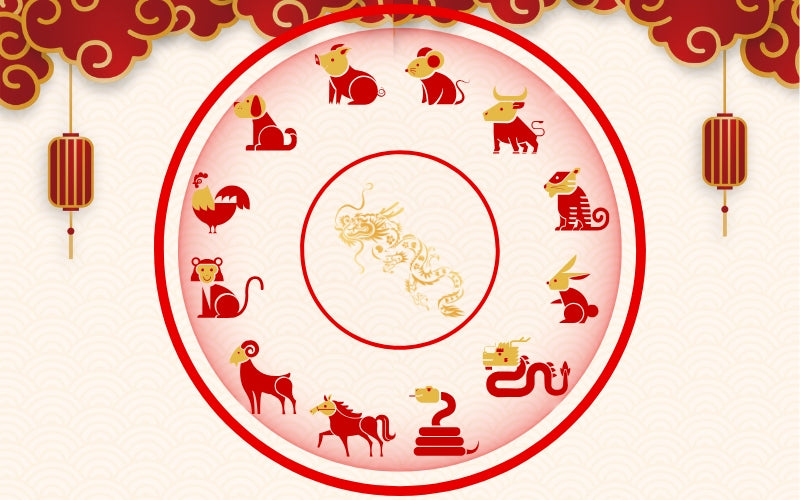
Dive into the fascinating world of the 12 animals of the Chinese zodiac and discover what your birth year reveals about your personality. Meanings, compatibilities, personality traits… a complete g...


