
Obsidian: Stone of Truth and Spiritual Protection
- Introduction
- What is obsidian?
- Spiritual meaning of obsidian
- The virtues of obsidian in lithotherapy
- Obsidian and chakra: which energy centers is it associated with?
- How to use obsidian daily?
- The different varieties of obsidian
- Which stones pair well with obsidian?
- How to cleanse and recharge obsidian?
- Who is obsidian suitable for?
- Also read: other natural stones to discover
- Conclusion
- Also discover
- FAQ: frequently asked questions about obsidian
Introduction
Mysterious, intense, and deeply fascinating, obsidian holds a unique place in the world of Natural Stones. Unlike other minerals appreciated for their softness or soothing energy, it is often described as a direct, revealing, and protective stone. In lithotherapy, it is associated with inner truth, grounding, and spiritual protection. It attracts those who want to move forward with greater clarity, better understand their emotions, and shield themselves from negative influences.
But what makes obsidian so unique? Why does it generate so much interest among lithotherapy enthusiasts, spirituality lovers, and people seeking inner balance? Behind its dark and shiny appearance lies a stone born from fire, formed by the rapid cooling of volcanic lava. This connection with the depths of the Earth fuels its symbolism: obsidian does not avoid uncomfortable truths, it brings them to light.
In this article, we will explore the origin of obsidian, its meaning, the obsidian virtues most often mentioned in lithotherapy, its daily uses, its different varieties, its associations with other stones, and the precautions to know in order to use it wisely. The goal is simple: to offer you rich, clear, and useful content designed for both readers and SEO.
For a broader overview of the mineral world, you can read Complete Guide to Natural Stones: Properties, Meaning and Use.
Our Obsidian Jewelry
What is obsidian?
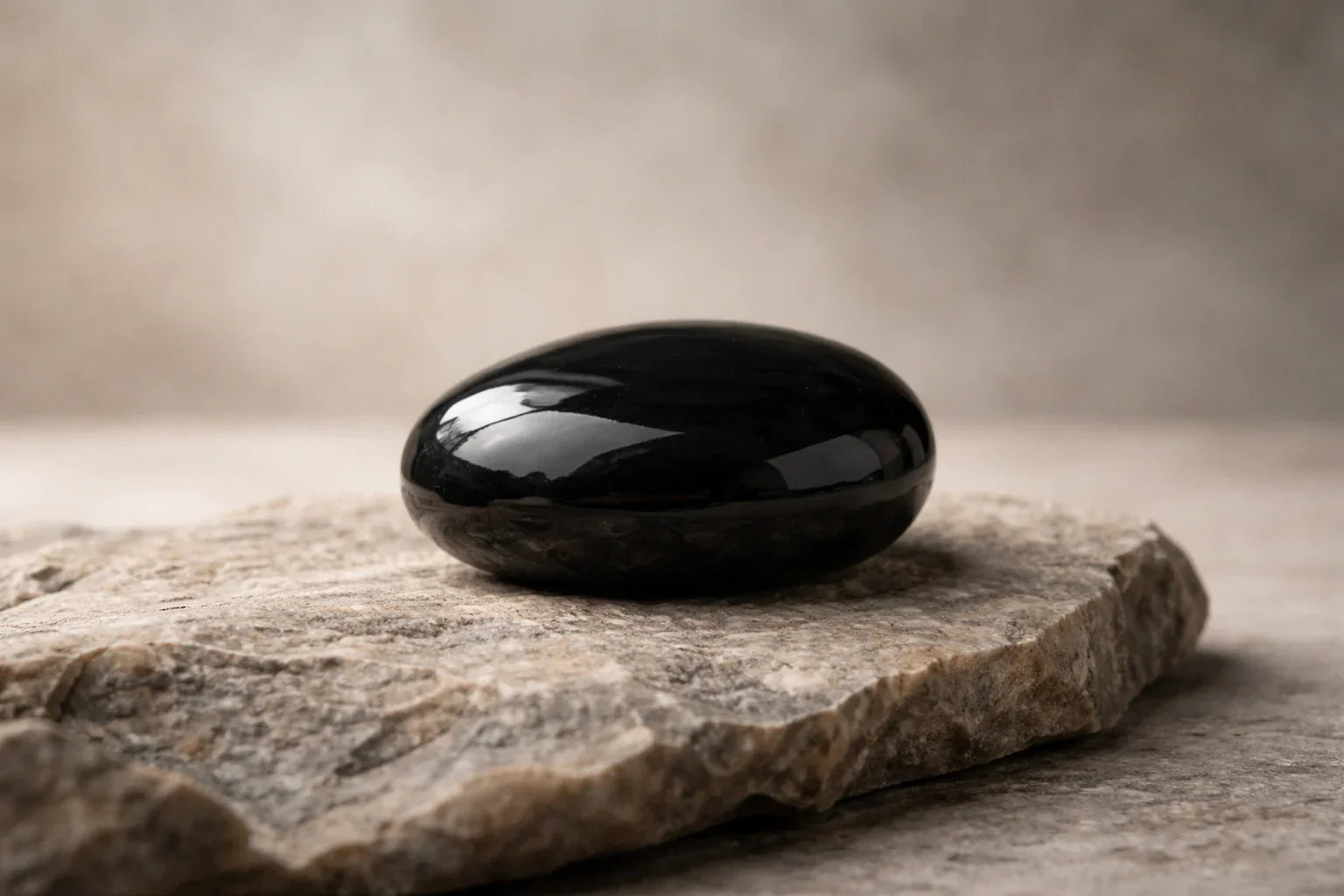
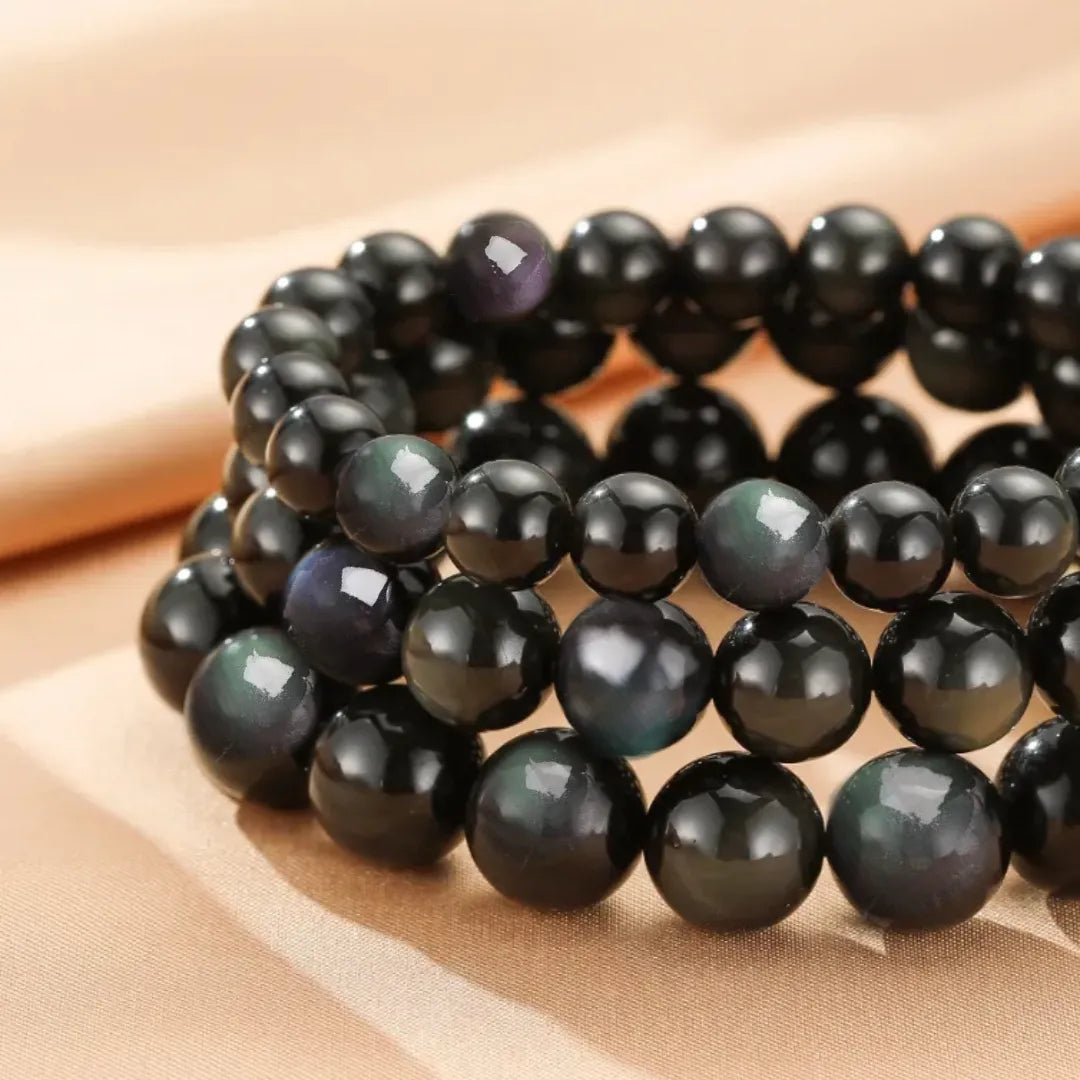
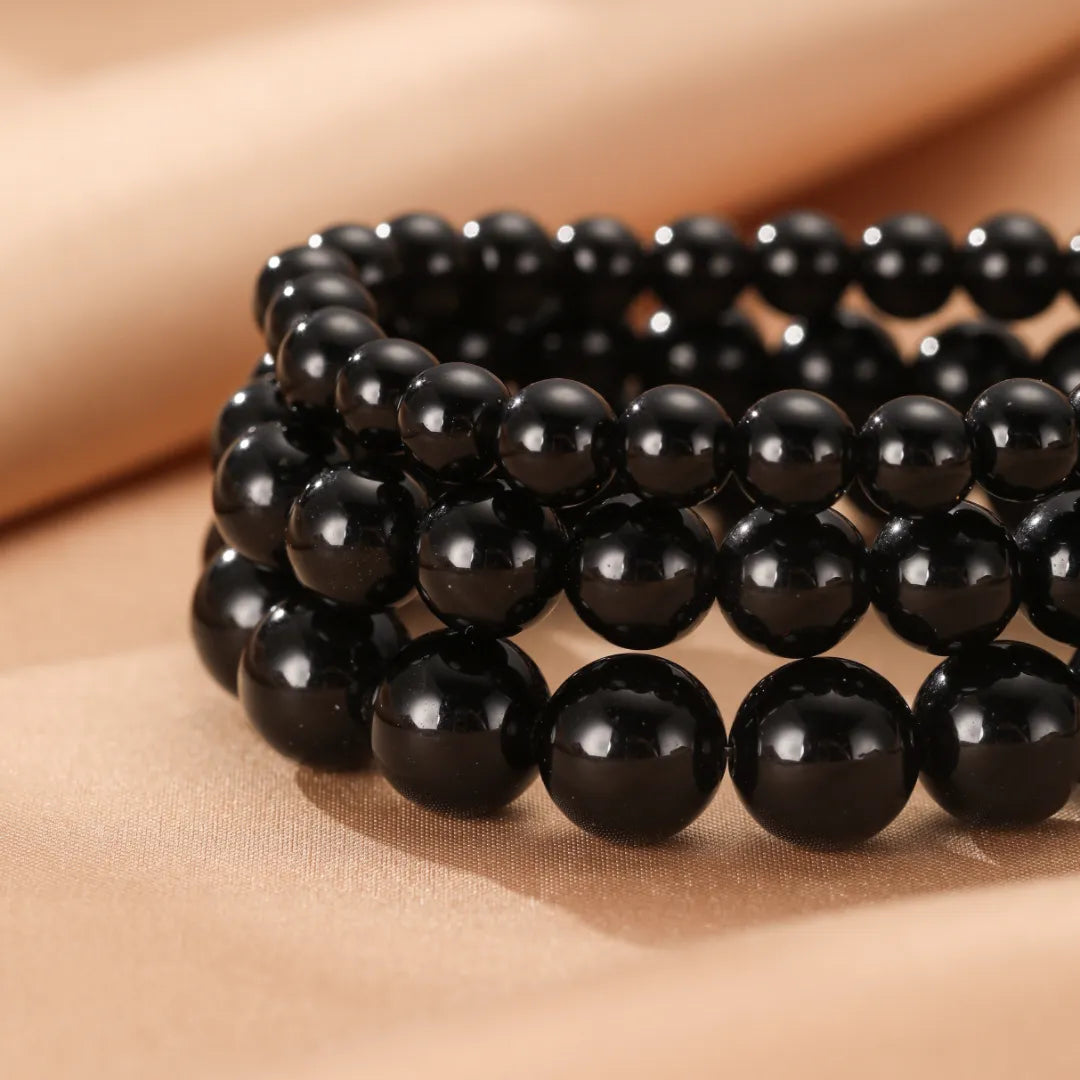
Obsidian is a natural volcanic rock, often classified among the most powerful Natural Stones on a symbolic level. Technically, it is volcanic glass formed when lava cools very quickly, without giving crystals time to develop. The result is a smooth, shiny, dense material, sometimes deep black, sometimes streaked with golden, silver, or iridescent reflections.
This formation process gives it a unique identity. While other stones take shape slowly in the depths of the earth, obsidian is born in the urgency of fire and cooling. This contrast between intensity and solidification is precisely what fuels its reputation in lithotherapy: it is often perceived as a stone of confrontation, truth, and transition.
Visually, obsidian captivates with its understated elegance. It can be:
- black and opaque
- golden with luminous reflections
- silver with metallic nuances
- snowflake with natural light patterns
- rainbow with subtle iridescence
- mahogany with reddish-brown tones
Over the centuries, it has been used to make ritual objects, blades, mirrors, and amulets. So it is not just a decorative stone or a trendy piece of jewelry: it also carries a strong cultural history linked to protection, observation, and clairvoyance.
Symbolically, obsidian often evokes three essential dimensions:
- clarity
- protection
- grounding
Its reputation as a stone of truth comes from the fact that it is said to bring to consciousness what has been buried: fears, blockages, repetitive patterns, inner tension. This explains why it appeals so much to people engaged in personal or spiritual development.
To deepen your understanding of the symbolic meaning of Natural Stones, you can read Meaning of Natural Stones and Spiritual Symbolism.
Spiritual meaning of obsidian
If obsidian fascinates so much, it is because it is not only beautiful: it carries an especially powerful spiritual symbolism. In lithotherapy, it is generally associated with truth, spiritual protection, and bringing inner shadow areas to light. Where some stones accompany gently, obsidian invites you to face what needs to be understood.
This dimension of truth lies at the heart of its identity. Obsidian is often described as a mirror of the soul. The image is striking: it reflects, reveals, exposes. It does not “create” the truth, but it is believed to help you see more clearly what is already there. This symbolism explains why it is often chosen during periods of transition, self-questioning, or inner work.
Why is obsidian called the stone of truth?
Because it is traditionally linked to lucidity. In the imagery of lithotherapy, it helps to:
- identify emotional blockages
- become aware of certain repetitive patterns
- clarify a confusing situation
- distinguish authentic intuition from projected fears
- know yourself better
This reputation as a stone of truth does not mean it is “harsh” in a negative sense. Rather, it invites inner honesty. In this sense, it can be valuable for people who feel they are circling around a problem without being able to clearly express it.
A stone of spiritual protection
The other major symbolic axis of obsidian is protection. It is often described as a shield stone, capable of helping to protect against heavy energies, oppressive atmospheres, or certain overwhelming emotional influences. This protection is not only directed outward. It also concerns the ability to keep your center, avoid becoming scattered, and strengthen your grounding.
In a spiritual approach, obsidian is therefore associated both with:
- energetic protection
- inner stability
- recentering
- mental clarity
- grounding in reality
Its intensity also explains why some people prefer to use it in moderation, especially at the beginning. In lithotherapy, it is often recommended for those who feel ready to undertake sincere inner work without idealizing the process.
To better understand the energetic role of stones in a well-being practice, discover Introduction to Lithotherapy: Understanding the Energy of Natural Stones.

The virtues of obsidian in lithotherapy
Among the most common searches around this stone, the question of obsidian virtues naturally comes up. In lithotherapy, obsidian is known for its energy that is at once protective, revealing, and stabilizing. However, it is important to maintain a nuanced approach: stones belong within a personal well-being and symbolism framework and never replace medical advice or professional support when necessary.
1. A protective stone against negative energies
This is probably obsidian’s best-known virtue. It is often chosen by people who feel easily affected by their environment, relationship tensions, or atmospheres they perceive as heavy. In lithotherapy, it is associated with a form of spiritual protection that helps create a clearer energetic boundary.
It can be used to:
- strengthen the feeling of inner safety
- encourage greater stability in stressful environments
- help set boundaries
- support emotional recentering
2. A support for introspection
Obsidian is also sought after for its connection to inner truth. It is often used in introspection, meditation, or personal reflection. Many consider it a stone that helps bring forth what needs to be seen, understood, or transformed.
This introspective dimension may appeal to people who wish to:
- better understand their emotional reactions
- break out of repetitive mechanisms
- clarify their intentions
- gain perspective on certain fears
- move toward a form of inner coherence
3. A grounding stone
In the world of Natural Stones, obsidian is often linked to grounding. It is associated with returning to the present, finding stability, and reconnecting with matter, the body, and concrete reality. This quality is especially appreciated during times of mental dispersion, emotional overload, or uncertainty.
Grounding, in this perspective, can translate into:
- a sense of recentering
- a stronger presence to oneself
- a clearer relationship to lived situations
- a greater ability to remain stable in the face of outside turbulence
4. Support during periods of transformation
Obsidian often accompanies turning points. Career change, end of a cycle, a new personal chapter, the need to turn a page: its symbolism resonates with periods when you feel that something must be reorganized. It is not so much linked to comfort as to transition. It helps bring order, see clearly, and move forward with greater awareness.
5. A stone that invites caution and self-listening
This is important information and often not discussed enough: obsidian is not always the best entry point for everyone at every moment. Its energy is frequently described as intense. Highly sensitive people may prefer to use it gradually, for short periods, before increasing the frequency of contact. This measured approach is often more relevant than overly enthusiastic use right from the start.
To go further on the use of Natural Stones in a well-being approach, read Benefits and Properties of Natural Stones in Lithotherapy.
Obsidian and chakra: which energy centers is it associated with?
In lithotherapy, obsidian is mainly linked to the root chakra. This energy center, located at the base of the spine in energy traditions, is associated with safety, stability, the relationship to the body, and grounding in the concrete world. It is no coincidence that obsidian, born from volcanic fire, is connected to it: it evokes earthly strength, density, and presence.
Obsidian and the root chakra
When we talk about the root chakra, we often refer to fundamental needs: feeling safe, staying grounded, and building a solid foundation. Obsidian is appreciated in this context because it symbolizes:
- grounding
- stability
- protection
- the courage to face reality
- the ability to stay centered
Some varieties of obsidian can also be used in more introspective practices, especially when it comes to bringing subtler mechanisms to light. But its favorite terrain remains the foundation, the base, rootedness.
Why is this association relevant?
Because many everyday imbalances begin with a form of disconnection: too much stress, too many thoughts, not enough presence. Obsidian reminds us of the importance of returning to what matters most. It does not promise an escape into abstract spirituality; instead, it suggests a path of embodied lucidity.

How to use obsidian daily?
One of obsidian’s great strengths is its versatility. It can be worn, placed in a living space, or used during chosen moments of recentering. Depending on your sensitivity and your goal, there are several simple ways to incorporate it into your daily life.
Wearing obsidian as jewelry
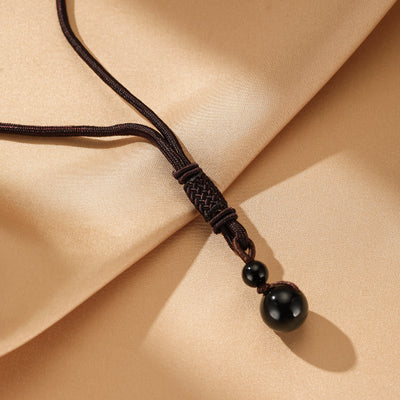
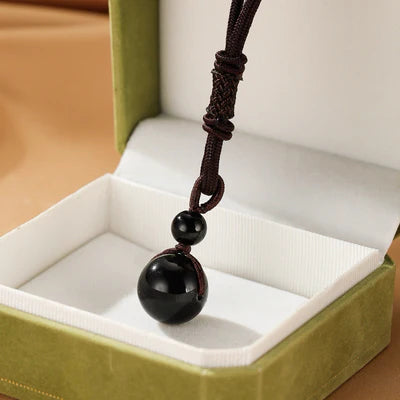
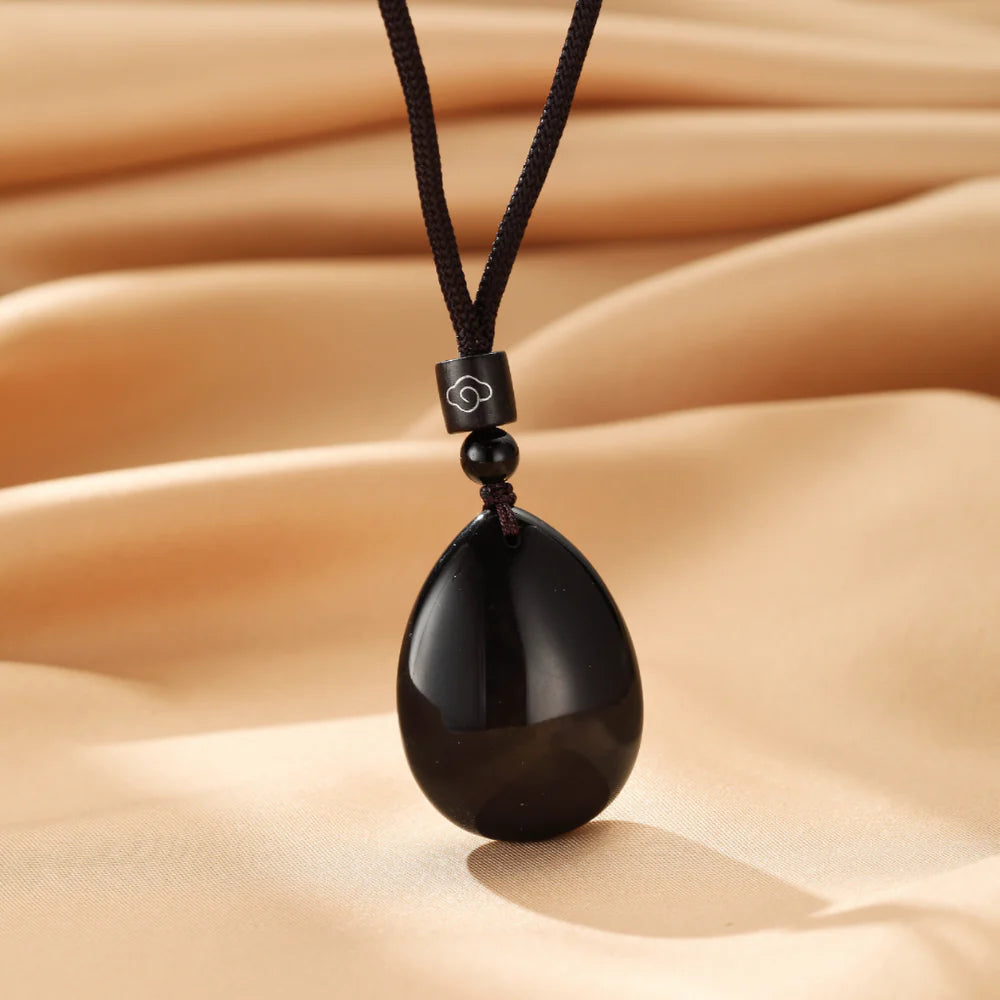
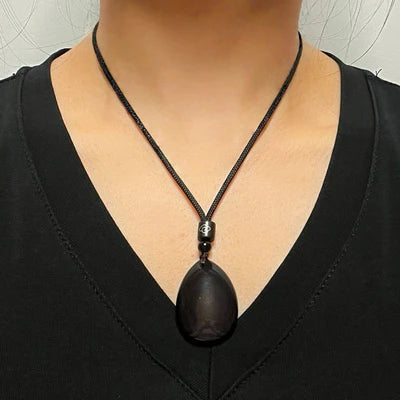
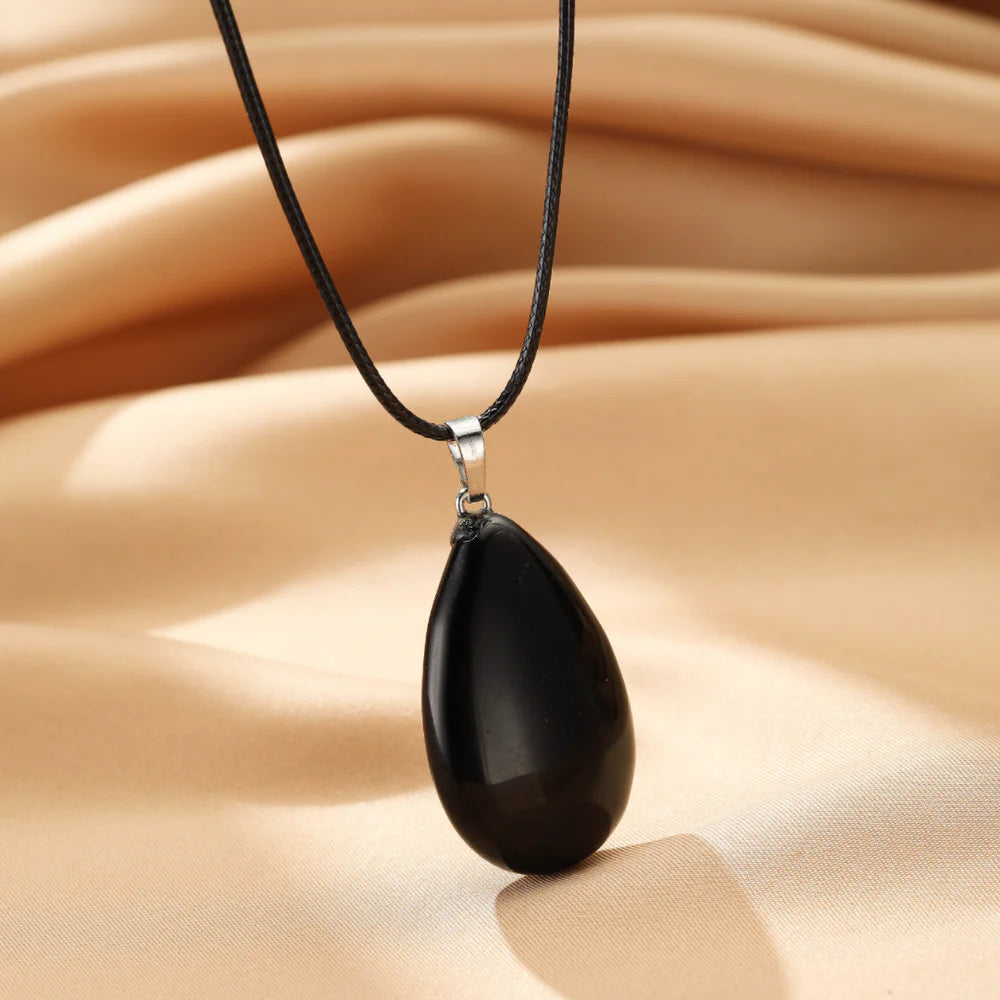
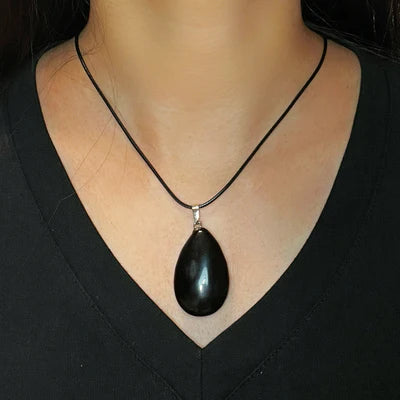
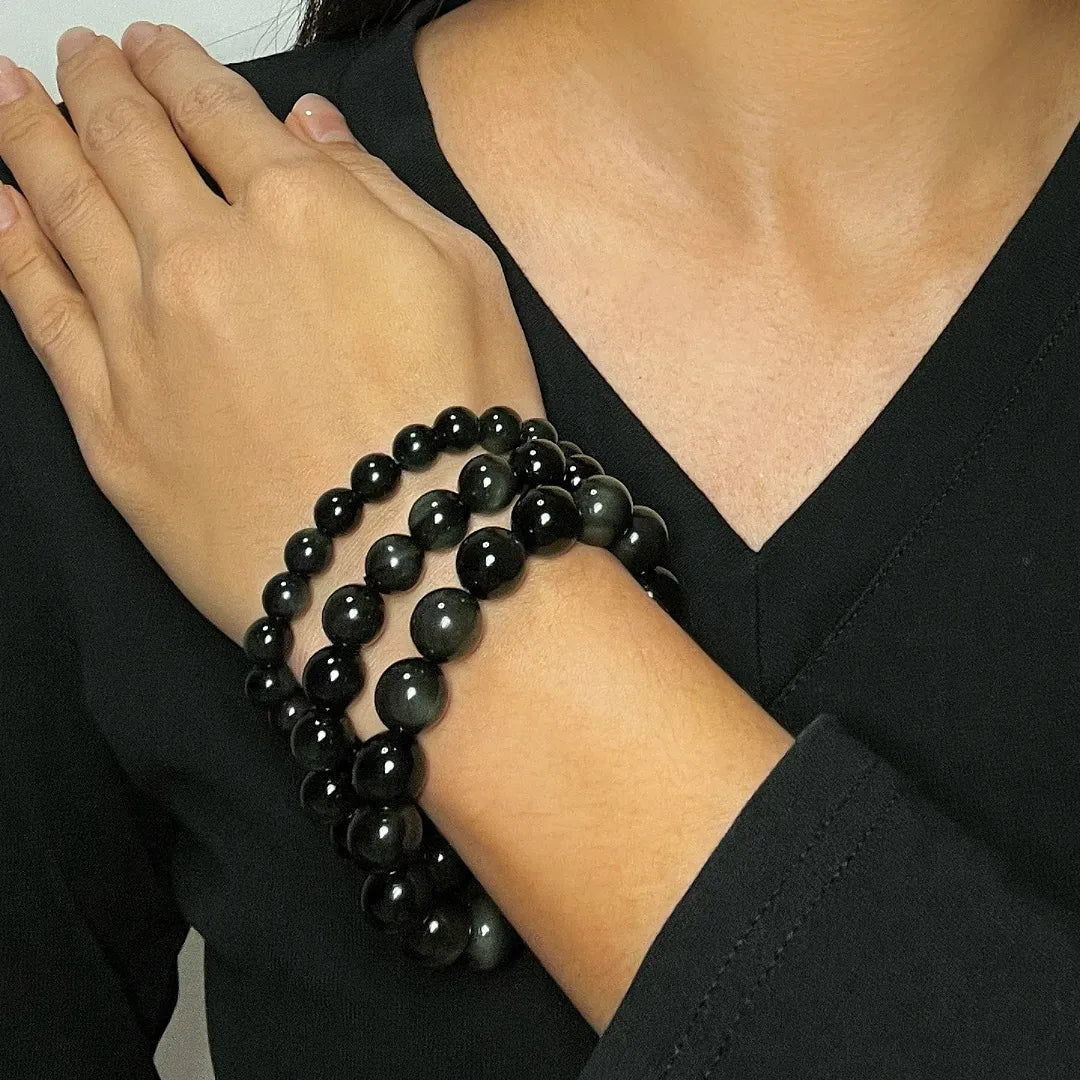
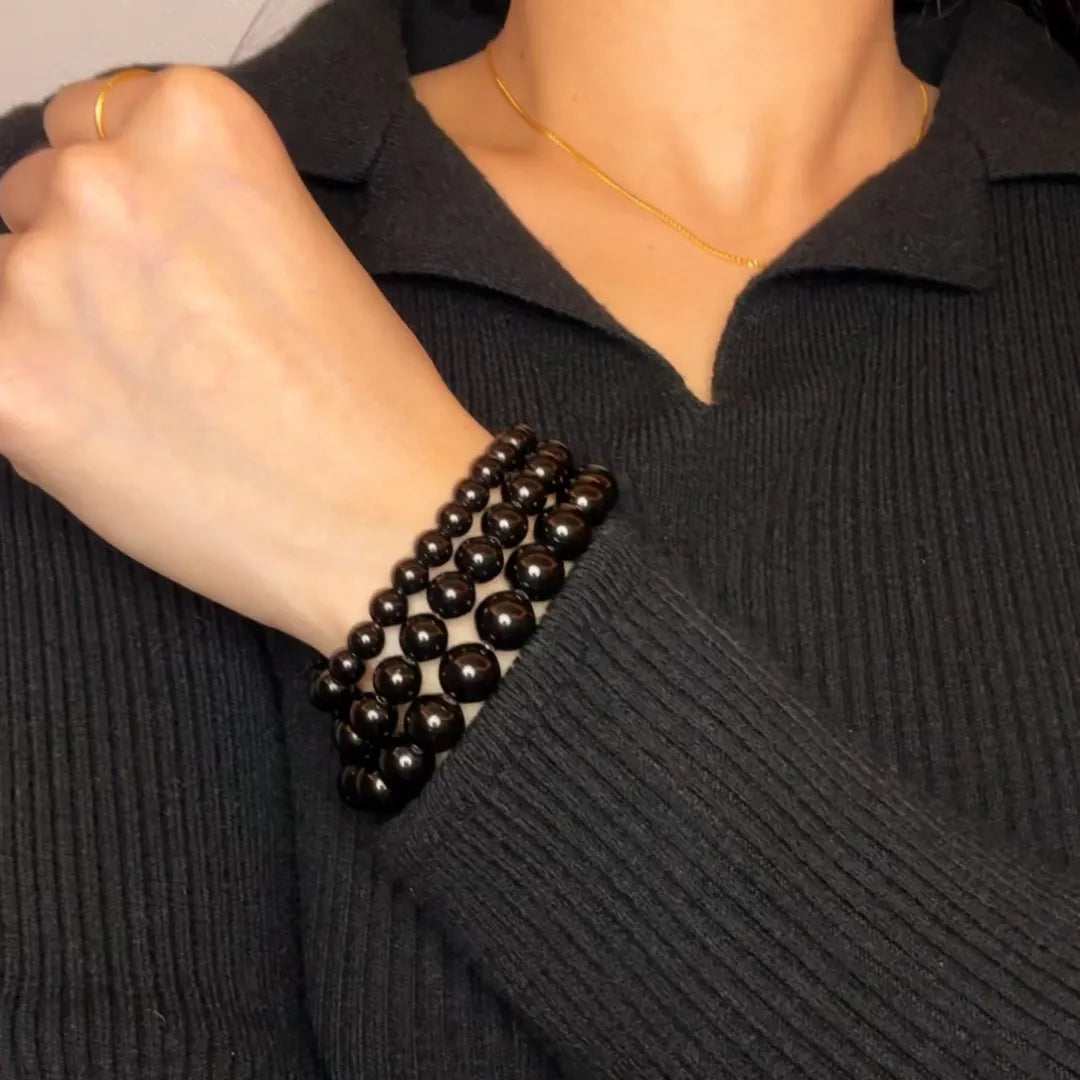
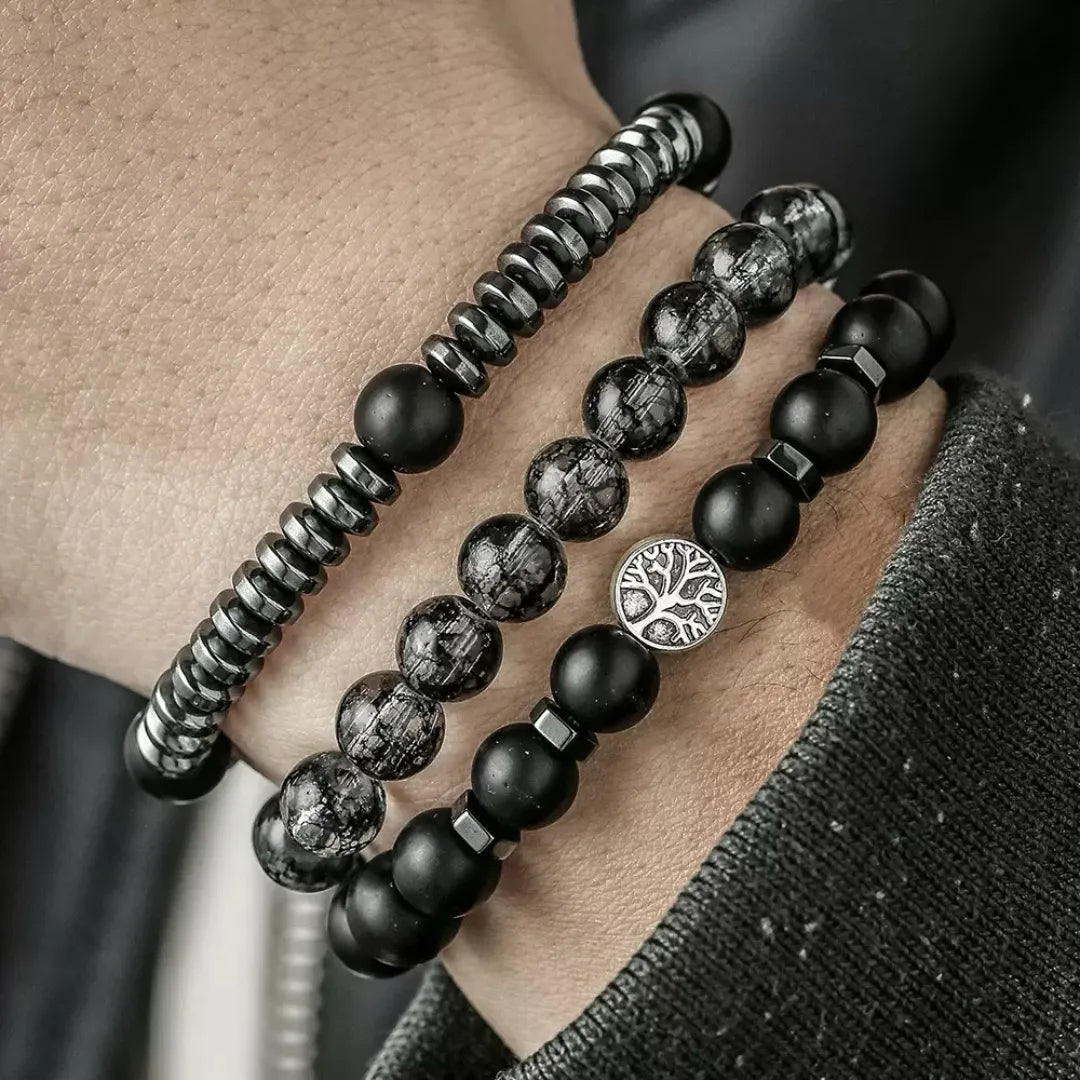
An obsidian bracelet, necklace, or pendant lets you keep the stone close to you throughout the day. This is often the preferred option for people who want to benefit from its symbolism of protection and grounding without having to set up a specific ritual.
Obsidian jewelry is also appreciated for its sober and elegant aesthetic. Its deep color matches many different styles, making it a stone that is as appealing visually as it is symbolically.
Using obsidian as a tumbled stone
Slipped into a pocket, a bag, or placed on a desk, tumbled obsidian is discreet and practical. It can accompany a busy workday, a stressful journey, or an important period of reflection. Some people like to hold it in their hand for a few minutes when they feel the need to recenter.
Meditating with obsidian
Obsidian can also be used in a calm moment, during meditation or introspection. In this context, it is often advised to go gradually. A few minutes may sometimes be enough to open a rich space for reflection. The idea is not to force an experience, but to observe honestly what emerges.
Integrating obsidian into your home
In an entryway, a reading corner, an office, or a space dedicated to well-being, obsidian can find its place as both a decorative and symbolic object. It fits especially well in interiors seeking an atmosphere that is mineral, elegant, and soothing at the same time.
Here are a few simple ways to use obsidian daily:
- as a bracelet to maintain a sense of protection
- as a pendant for closeness to the body
- as a tumbled stone in your pocket
- on a desk to encourage recentering
- in a meditation space
- in the entrance of a home as a symbol of protection
To discover how to wear stones or integrate them into your environment, read Natural Stone Jewelry: Elegance, Benefits and Symbolism and Decoration and Well-being: How to Incorporate Natural Stones into Your Interior.




The different varieties of obsidian
We often speak of “obsidian” as if it were one single uniform stone. In reality, there are several varieties, each appreciated for its visual nuances and its specific symbolism. This diversity is interesting both from an SEO and editorial perspective, because it helps answer precise searches and varied needs.
Black obsidian
This is the best known variety. Intense, deep, and minimalist, it symbolizes truth, protection, and grounding. It suits those looking for a direct, structuring stone strongly linked to stability.
Golden obsidian
Golden obsidian stands out for its luminous reflections. It is often associated with clarity, self-awareness, and a finer reading of situations. Its appearance also makes it a highly appreciated stone in jewelry-making.
Silver obsidian
With its subtle metallic reflections, it evokes intuition, elegance, and observation. It appeals to people attracted to stones with a mysterious yet refined look.
Snowflake obsidian
It can be recognized by its pale patterns on a dark background. Its symbolism is often linked to the balance between shadow and light. It is generally perceived as a little gentler in its approach, which can reassure people discovering obsidian for the first time.
Rainbow obsidian
Rarer and very fascinating, it shows multicolored iridescence when turned in the light. It is often chosen for its subtler and more introspective aspect.
Mahogany obsidian
With its brown and reddish tones, it connects the power of obsidian with a warmer energy. It is appreciated for its link to stability, vitality, and the feeling of safety.

Which stones pair well with obsidian?
Pairing obsidian with other Natural Stones allows you to nuance its energy or build a coherent combination depending on a specific goal. Some people seek more softness, others more intuition, confidence, or emotional clarity. Stone pairings are therefore interesting for enriching a personal lithotherapy practice.
Here are a few pairings that are often appreciated:
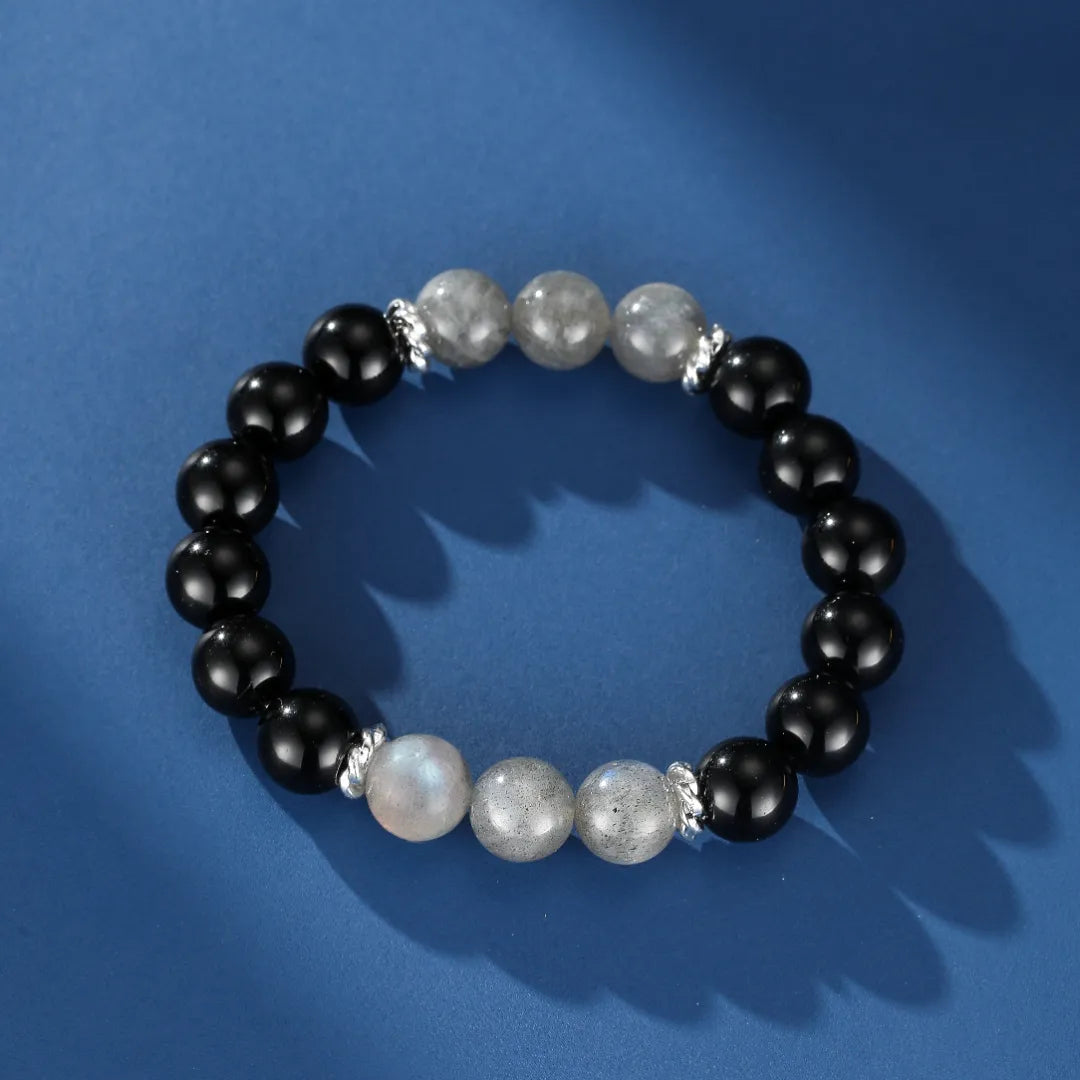
- obsidian + labradorite : to combine protection and intuition
- obsidian + amethyst : to balance grounding and spiritual harmony
- obsidian + tiger’s eye : to strengthen confidence and courage
- obsidian + rose quartz : to soften introspection with gentle energy
- obsidian + lapis lazuli : to unite inner truth and clear expression
- obsidian + moonstone : to balance lucidity and sensitivity
The value of these combinations is also educational: they show that Natural Stones are not chosen randomly. Their symbolism, their color, their use, and their emotional resonance often matter just as much as their aesthetic appearance.
How to cleanse and recharge obsidian?
Like many Natural Stones used in lithotherapy, obsidian is associated with cleansing and recharging practices. Even though methods vary depending on schools of thought and personal sensitivity, the general idea remains the same: caring for the stone so that it keeps its symbolic place in your routine.
Commonly mentioned cleansing methods
Among the most common approaches are:
- smudging
- sound
- intention
- sometimes clear water, with caution depending on the finish of the object
Smudging, with sage or palo santo depending on preference, is often appreciated for its simplicity. Sound, through a singing bowl or bell, can also suit people who prefer to avoid contact with water.
Recharging obsidian
For recharging, several options are often mentioned:
- moonlight
- a quartz cluster
- a geode
- a moment of recentering with clear intention
What matters most is regularity and coherence with your own practice. There is no need to turn caring for your obsidian into a complicated protocol. A simple, respectful, and conscious approach is generally enough.
Who is obsidian suitable for?
Obsidian does not leave people indifferent. It often attracts those who feel the need to protect themselves, recenter, or engage in a more lucid relationship with themselves. It is particularly suited to certain profiles.
It may interest:
- people going through a period of change
- those who feel easily influenced by their environment
- people seeking inner clarity
- those looking for a grounding stone
- lithotherapy enthusiasts drawn to protective stones
It sometimes requires a more gradual approach for:
- highly sensitive people
- those just beginning with very intense stones
- profiles who prefer softer, more enveloping energies
This point deserves to be highlighted because it adds accuracy to the article. Obsidian is not “too strong” by nature; it simply requires self-awareness. This is often where the true quality of a lithotherapy practice lies: in observation, moderation, and personal coherence.
Also read: other natural stones to discover
Obsidian belongs to a much broader universe, that of Natural Stones and lithotherapy. If you want to expand your knowledge of stones, compare their symbolism, or build a more harmonious set according to your needs, several other articles can complement your reading:
- Aquamarine: Stone of Serenity and Communication
- Amethyst: Stone of Wisdom and Spiritual Harmony
- Green Aventurine: Stone of Luck and Personal Growth
- Citrine: Stone of Joy and Abundance
- Carnelian: Stone of Vitality and Motivation
- Jade: Stone of Wisdom, Harmony and Prosperity
- Labradorite: Stone of Protection and Intuition
- Lapis Lazuli: Stone of Truth and Communication
- Malachite: Stone of Transformation and Emotional Healing
- Tiger’s Eye: Stone of Strength and Self-Confidence
- Peridot: Stone of Light and Renewal
- Moonstone: Stone of Femininity and Intuition
- Rose Quartz: Stone of Love and Gentleness
- Turquoise: Stone of Balance and Communication
Conclusion
Obsidian is much more than a dark stone with magnetic aesthetics. In the universe of Natural Stones, it stands out through its symbolic intensity, its connection to truth, its reputation for spiritual protection, and its ability to encourage grounding. In lithotherapy, it is often chosen by those who want to move forward with greater lucidity, better understand their inner mechanisms, and strengthen their stability in the face of everyday turbulence.
What makes obsidian so precious is precisely its lack of superficiality. It does not only attract through its appearance, it also challenges through what it represents. It invites you to return to what matters most, to protect yourself without closing off, to observe without fleeing, and to move forward without lying to yourself. In an era saturated with noise, that may well be its greatest strength.
Whether you are drawn to black obsidian, the snowflake variety, golden reflections, or the rarer rainbow obsidian, this stone deserves to be discovered with curiosity, respect, and discernment. And if you explore lithotherapy more broadly, it can be a fascinating starting point for better understanding the symbolic language of Natural Stones.
Also discover
- Explore our Obsidian Jewelry Collection
- Read Benefits and Properties of Obsidian
- Read Genuine or Fake Obsidian: How to Identify an Authentic Natural Stone
- Browse Obsidian Jewelry: Elegance and Energy
What is the meaning of obsidian?
Obsidian is generally associated with truth, spiritual protection, grounding, and lucidity. In lithotherapy, it symbolizes the ability to clearly see what deserves to be understood or transformed.
What are the best-known obsidian virtues?
The obsidian virtues most often mentioned relate to protection, introspection, grounding, and help with inner clarification. It is appreciated for its energy perceived as structuring and revealing.
How do you use obsidian in lithotherapy?
You can wear it as jewelry, keep it in your pocket, place it in your home, or use it in meditation. The main thing is to choose a simple, regular use that fits coherently with your daily life.
Which obsidian should you choose?
It all depends on your sensitivity and your intention. Black obsidian is the most classic for protection and grounding. Snowflake obsidian may feel gentler. Golden obsidian often attracts people seeking clarity and self-awareness.
Can you wear obsidian every day?
Yes, many people wear obsidian daily, especially as a bracelet or pendant. However, it is advisable to observe your feelings, especially at the beginning, in order to adapt the frequency of use accordingly.
Read more

Discover why malachite jewelry is so appealing to lovers of natural stones. Combining elegance, symbolism, and crystal healing, natural malachite stands out for its unique beauty and the energies a...

Obsidian is one of the most highly valued natural stones in crystal healing for its properties of protection, grounding, and inner truth. In this article, discover the benefits of obsidian, its eve...


