

Natural or Imitation Moonstone: How to Recognize a True Intuitive Stone
- Introduction
- Why is Moonstone so highly sought after?
- Recognizing Moonstone: the first signs of a natural stone
- The most common Moonstone imitations
- How to recognize real Moonstone before buying?
- Comparison table: real Moonstone or imitation?
- Mistakes to avoid when identifying Moonstone
- Moonstone and lithotherapy: why authenticity matters
- Moonstone Jewelry: how to choose well?
- How to care for a real Moonstone?
- Conclusion: recognizing real Moonstone with care and common sense
- FAQ: recognizing a real Moonstone
Introduction
Moonstone has always fascinated people. Soft, luminous, and mysterious, it attracts both lithotherapy enthusiasts and lovers of delicate jewelry. But here is the small catch: its success has also opened the door to many imitations. Opalescent glass, resin, opaline, confused stones… it can sometimes be difficult to know whether you are holding a real Moonstone or simply a well-presented copy.
So, how can you recognize a real Moonstone? What details should you observe before buying a piece of jewelry? And above all, how can you avoid traps without becoming a gemologist overnight? In this article, we will look together at the essential signs for distinguishing a natural Moonstone from an imitation, with simple, practical, and easy-to-apply advice.
To better understand the symbolic world of this stone, you can also read the article Moonstone: Stone of Femininity and Intuition.
Our Moonstone Jewelry
Why is Moonstone so highly sought after?
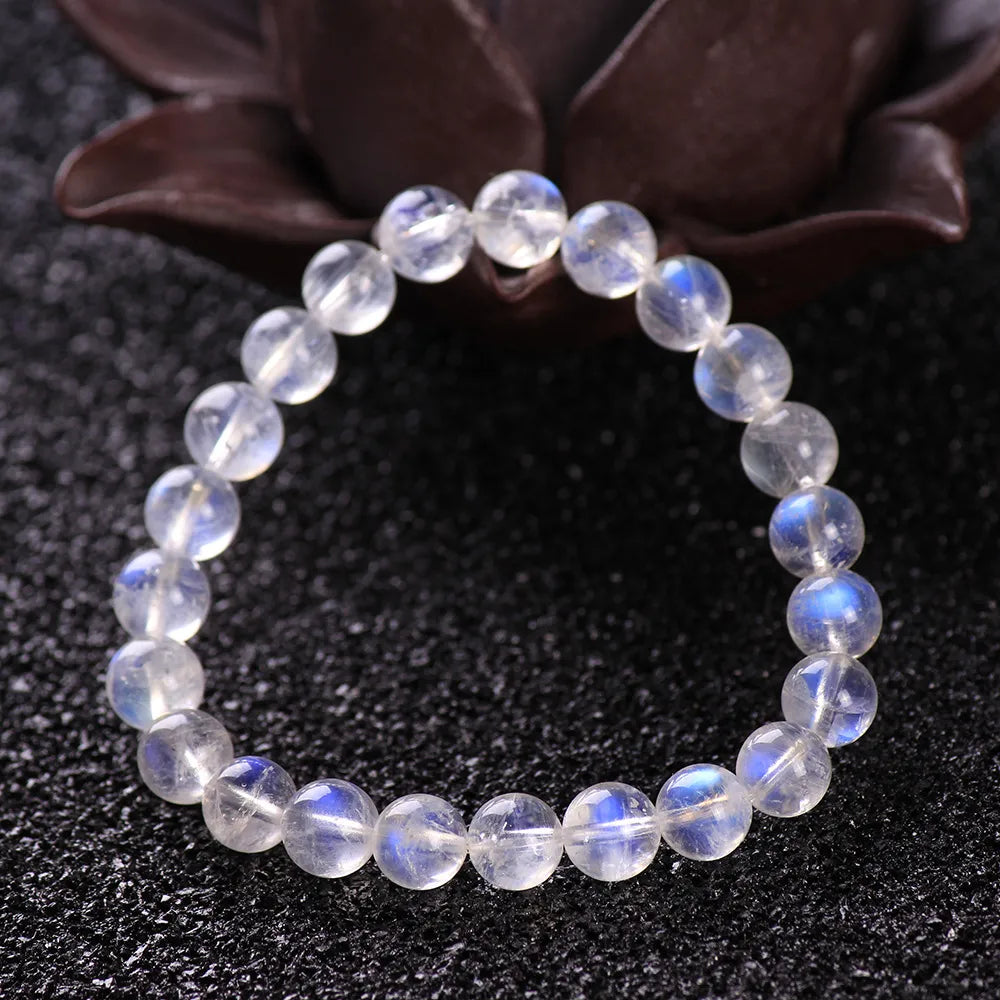
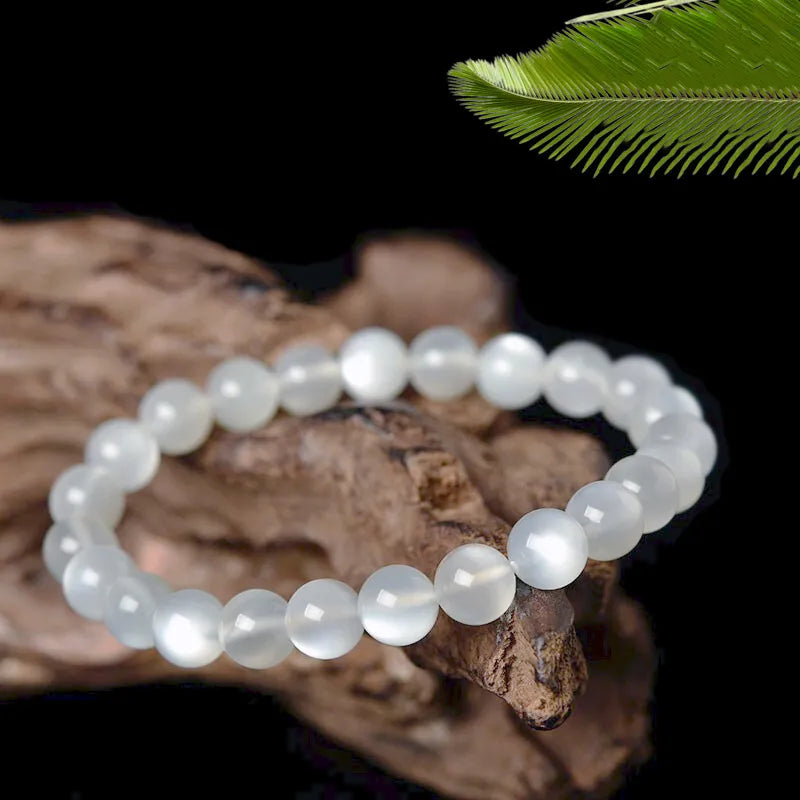
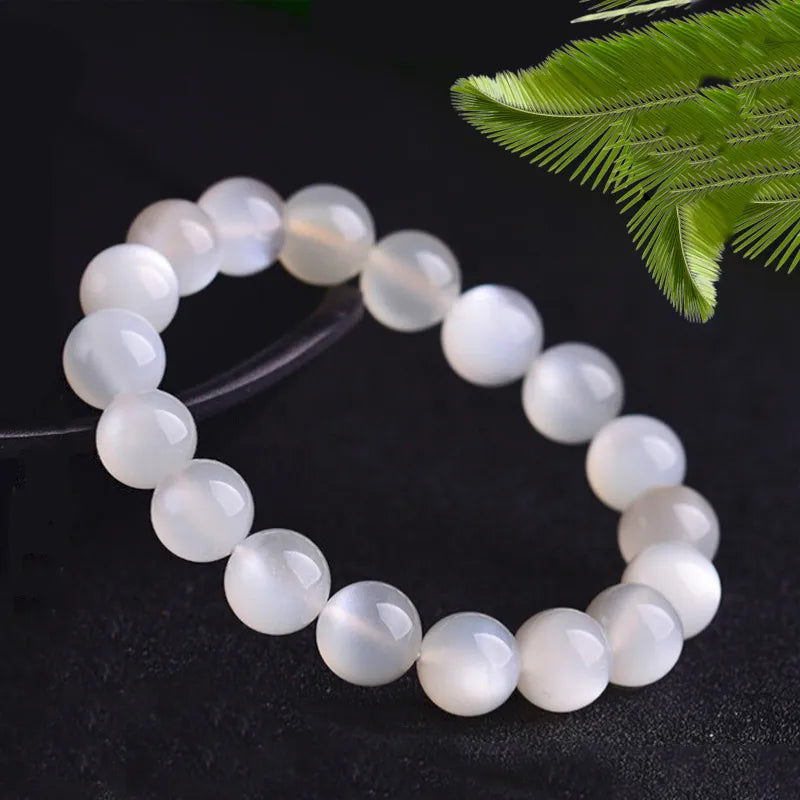
Moonstone is a natural stone belonging to the feldspar family. Its best-known feature is its soft, luminous reflection, often white, silvery, or bluish. This optical phenomenon, called adularescence, gives the impression that light is floating inside the stone. It is precisely this mysterious veil that makes Moonstone so recognizable… when it is authentic.
In lithotherapy, Moonstone is traditionally associated with:
- intuition;
- femininity;
- emotional balance;
- inner softness;
- soothing energy;
- self-awareness.
It is a stone often chosen by people who want to reconnect with their emotions or strengthen their intuitive sensitivity. It is also highly appreciated in jewelry because it pairs easily with silver, gold, stainless steel, and bohemian, minimalist, or elegant styles.
But the more popular a stone becomes, the more imitations it attracts. And Moonstone is no exception. To explore its symbolism and uses further, also discover Moonstone: Meanings, Virtues, and Must-Have Jewelry.
Recognizing Moonstone: the first signs of a natural stone
Before talking about imitations, it is first necessary to understand what a real Moonstone looks like. Contrary to what one might sometimes imagine, a natural stone is not always perfect. It may show nuances, small inclusions, more opaque areas, or slightly transparent zones.
Observe the stone’s reflections
The first clue to check is the reflection. A real Moonstone generally has a soft, almost milky glow. Its reflection does not remain fixed: it changes according to the angle of the light. When you move the stone, you may see a silvery, white, or sometimes bluish glow appear.
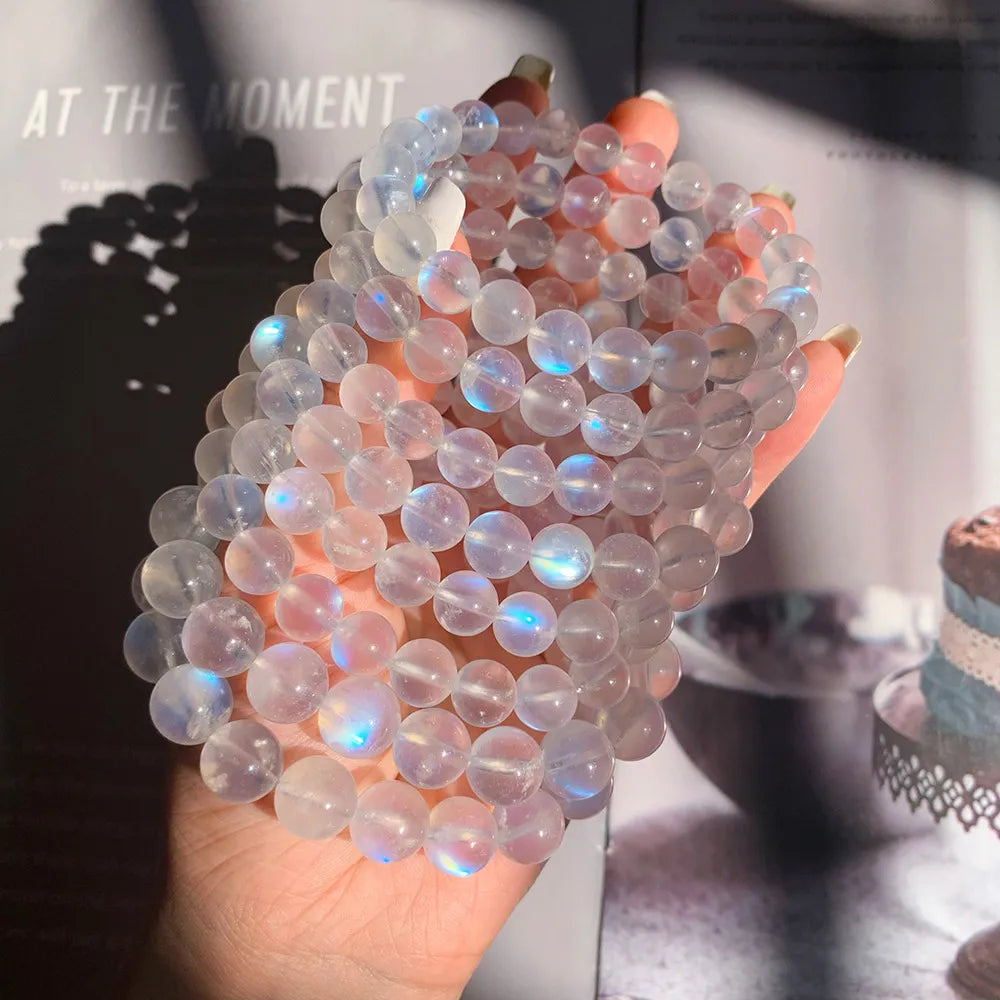
An imitation, on the other hand, may have a shine that is too uniform, too bright, or too artificial. It may look pretty at first glance but lack depth. The reflection often seems to sit on the surface, whereas that of a real stone seems to come from within.
Spot natural irregularities
A real Moonstone may have:
- fine internal lines;
- small inclusions;
- color variations;
- milky areas;
- irregular transparency.
These details are not flaws. On the contrary, they may indicate that the stone is natural. A stone that is too perfect, with no nuance, no inclusions, and an identical color throughout, should catch your attention. Nature loves small details. Imitations, however, often love perfection that is a little too smooth.

The most common Moonstone imitations
The difficulty with Moonstone is that some imitations are very appealing. They shine, catch the light, and please the eye… but they are not necessarily natural.
Opaline: the most common confusion
Opaline is often confused with Moonstone. It has bluish, milky, and very luminous reflections. Yet opaline sold in fashion jewelry is generally a synthetic material or opalescent glass.
It can be very beautiful, of course, but it should not be presented as real Moonstone. The main difference lies in its appearance: opaline often has a color that is too regular and a more “candy-like,” almost unreal shine.
Opalescent glass
Glass can imitate the soft reflections of Moonstone. It is often more uniform, smoother, and sometimes shinier. By looking closely, you may sometimes notice tiny bubbles or an appearance that is too perfect.
Resin or plastic
These imitations are generally lighter and warmer to the touch. They can be used in very inexpensive jewelry. To the naked eye, they may be misleading at first, but they often lack density and depth.
White labradorite or “Rainbow Moonstone”
An interesting detail: some stones sold under the name “Rainbow Moonstone” are actually white labradorite. This is not necessarily a scam if the seller is transparent, because this trade name is very widespread. But mineralogically, it is not exactly the same stone as classic Moonstone.
How to recognize real Moonstone before buying?
To avoid unpleasant surprises, it is important to observe several criteria at once. One clue alone is not always enough, but the combination can guide you.
1. Check the overall appearance
A real Moonstone has a soft, natural, sometimes slightly cloudy appearance. It may be translucent or opaque depending on its quality and variety. If it seems too perfect, too shiny, or too colorful, you should remain cautious.
2. Look at the stone from different angles
Place the stone near a source of natural light and turn it gently. The reflection should move subtly. On an imitation, the shine is often more static or too uniform.
3. Touch the stone
A natural stone is usually cool at first contact. It then warms up with the heat of your hand. A plastic or resin imitation may feel warmer immediately and lighter.
4. Analyze the weight
Moonstone, like many minerals, has a certain density. A resin imitation may seem abnormally light. This test is not foolproof, especially for small pieces of jewelry, but it can complement the other observations.
5. Beware of prices that are too low
A very low price does not always indicate an imitation, but it should encourage you to check the product description. A real Moonstone requires extraction, selection, cutting, and setting. All of this has value.


Comparison table: real Moonstone or imitation?
| Criterion | Real Moonstone | Imitation |
| Reflections | Soft, deep, changing | Too shiny, fixed, or artificial |
| Color | White, cream, silvery, bluish, sometimes peach | Too uniform or too vivid |
| Inclusions | Possible and natural | Often absent or artificial |
| Touch | Cool at first contact | Warmer if plastic or resin |
| Weight | Mineral feel, denser | Sometimes very light |
| Price | Consistent with quality | Often very low |
| Appearance | Natural, nuanced, lively | Too perfect or too smooth |
This table can serve as a quick reference, but it does not replace buying from a serious shop. The most important thing remains the seller’s transparency: clear description, mention of natural stone, realistic photos, and precise information.
Mistakes to avoid when identifying Moonstone
When you want to buy Moonstone jewelry, it is easy to be seduced by a beautiful photo. However, a few mistakes are common.
Relying only on photos
Photos may be retouched, artificially lit, or taken from a very flattering angle. A Moonstone may appear bluer, shinier, or more transparent than it really is.
Confusing beauty with authenticity
An imitation can be very pretty. The problem is not that it is beautiful, but that it is sold as a natural stone when it is not. Transparency is essential.
Looking for a stone with no imperfections at all
Many people think that a real stone must be flawless. In reality, small irregularities are often a good sign. A real Moonstone may have inclusions, internal veils, and variations in shade.
Performing aggressive tests
Avoid scratching, heating, or exposing your stone to chemical products to check its authenticity. Moonstone has medium hardness and can be sensitive to impact. It is better to observe, compare, and ask for advice rather than damage your jewelry.
Moonstone and lithotherapy: why authenticity matters
In lithotherapy, the authenticity of a stone is important because natural stone enthusiasts above all seek a connection with a material that comes from nature. An imitation may be aesthetic, but it will not have the same symbolism or the same energetic value for those who practice lithotherapy.
Real Moonstone is often used to accompany periods of change, encourage intuition, and bring a sense of inner calm. It is also linked to feminine softness, emotional balance, and listening to one’s feelings.
Of course, lithotherapy does not replace medical advice or professional treatment. However, it can be part of a personal well-being approach, just like meditation, relaxation rituals, or symbolic objects one enjoys wearing.
To go further into its energetic uses, read Benefits and Properties of Moonstone.

Moonstone Jewelry: how to choose well?
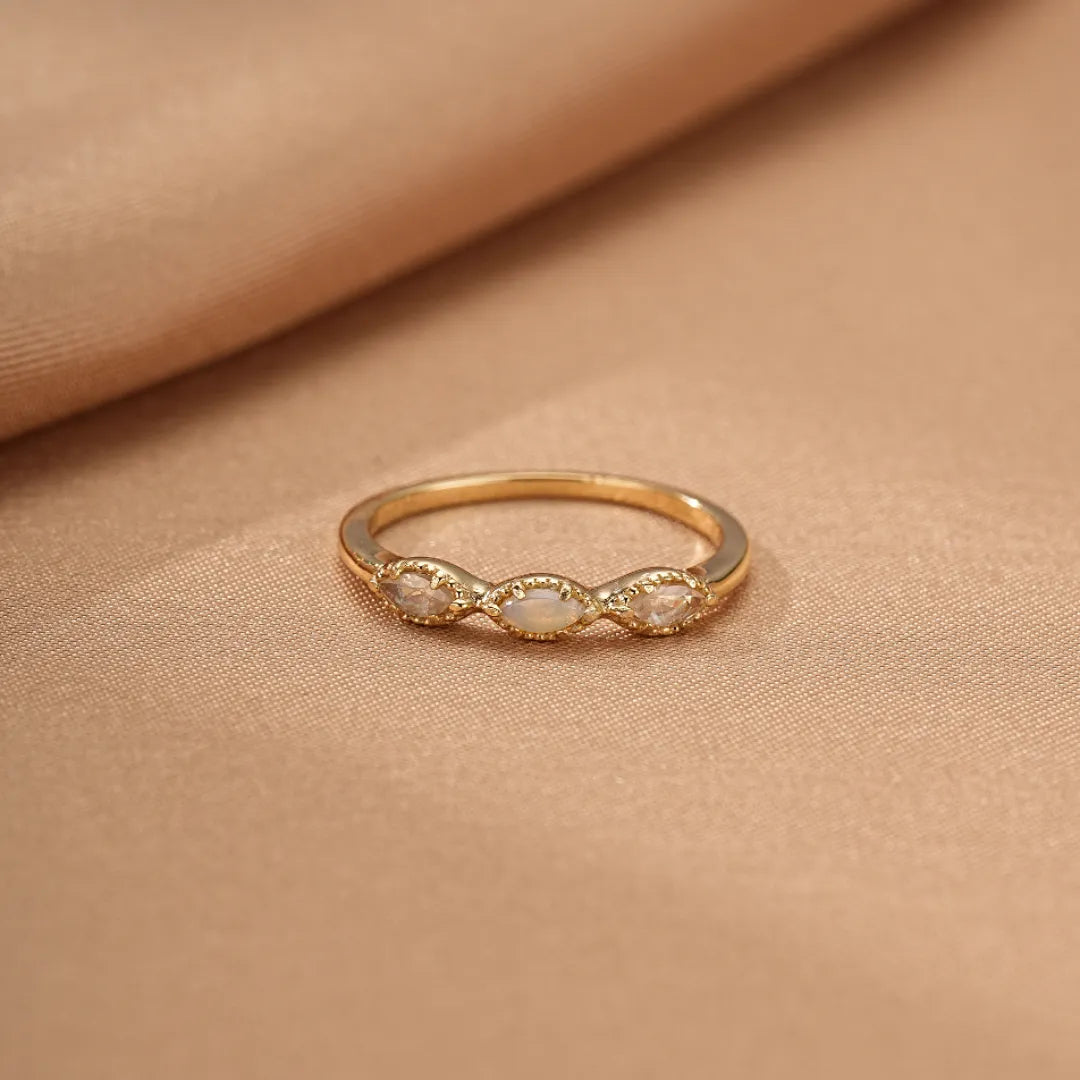
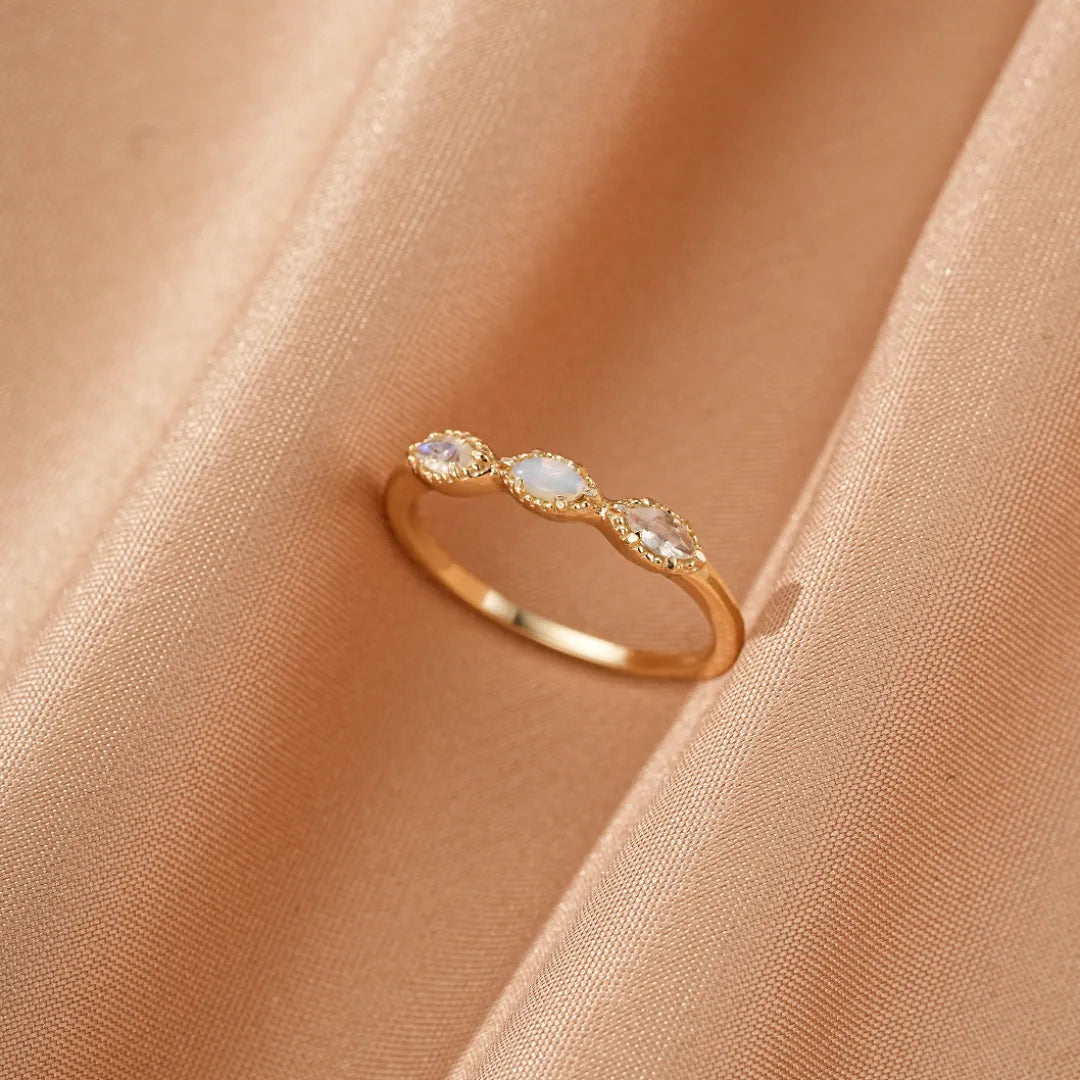
Moonstone jewelry is highly appreciated because it allows you to wear this natural stone every day. Bracelet, ring, pendant, necklace, or earrings: each piece of jewelry has its own charm.
The Moonstone bracelet
The bracelet is ideal for those who like to keep their stone close to them throughout the day. It can be worn alone or combined with other natural stones.
The Moonstone pendant
The pendant highlights the stone close to the heart. It is a choice often appreciated for its symbolic and elegant dimension.
The Moonstone ring
The ring immediately draws the eye. It is refined but requires a little more care because hands are exposed to impact, water, and everyday products.
Moonstone earrings
They bring a luminous touch to the face, with a style that is both soft and sophisticated.
Before buying a piece of jewelry, always check:
- the mention “natural stone”;
- the quality of the photos;
- the jewelry description;
- the type of metal used;
- the shop’s reputation;
- the care advice.
To discover how to combine beauty and energy in your accessories, also read Moonstone Jewelry: Elegance and Energy.

How to care for a real Moonstone?
Once you have chosen your Moonstone, you need to take care of it. This stone has medium hardness, but it can be sensitive to impact and scratches. It therefore deserves gentle attention, just like its appearance.
Here are a few simple tips:
- avoid chemical products, perfumes, and detergents;
- remove your jewelry before sports, showering, or cleaning;
- store your Moonstone separately from harder stones;
- clean it with a soft, slightly damp cloth;
- avoid prolonged exposure to direct sunlight.
For people who use Moonstone in lithotherapy, some like to purify it with clear water or smoke cleansing, then recharge it in moonlight. The essential thing is to choose a gentle method that respects the stone.
Conclusion: recognizing real Moonstone with care and common sense
Recognizing real Moonstone mainly requires observation. A real natural stone has soft reflections, visual depth, subtle nuances, and sometimes small imperfections. Conversely, an imitation often appears too perfect, too light, too uniform, or too shiny.
Before buying, take the time to check the jewelry description, the seller’s transparency, and the consistency of the price. If in doubt, it is better to choose a shop specializing in natural stones and Moonstone jewelry.
Moonstone is not just a pretty stone: it is an intuitive, elegant, and symbolic stone, highly appreciated in lithotherapy. When well chosen, it can become a precious piece of jewelry to wear every day, both for its charm and for what it represents.
FAQ: recognizing a real Moonstone
How can you tell if a Moonstone is real?
Observe its reflections, inclusions, touch, weight, and price. A real Moonstone often has a soft, changing, and deep reflection, with natural nuances.
Does a real Moonstone always have blue reflections?
No. Some Moonstones have bluish reflections, but others show white, silvery, cream, or pearly reflections. Intense blue is not mandatory.
Can a natural Moonstone be imperfect?
Yes. Inclusions, color variations, and small irregularities are common in natural stones. They are part of their charm.
Can you wear Moonstone every day?
Yes, but with care. It is recommended to avoid impacts, chemical products, and prolonged water exposure to preserve its shine.
How do you care for a natural Moonstone?
Clean it with a soft, slightly damp cloth. Avoid harsh products and store it separately from harder stones to limit scratches.
Read more

Discover moonstone, a natural stone associated with femininity, intuition and emotional balance. This article explores its meanings, its benefits in crystal healing, its everyday uses and its most ...

Discover moonstone jewelry, elegant creations that combine natural beauty, softness, and symbolic energy. This natural stone, highly valued in crystal healing, is associated with intuition, feminin...


