
Natural Stones for Meditation and Mindfulness
- Introduction:
- Why use natural stones for meditation?
- The ideal natural stones for meditation and mindfulness
- Natural stones and chakras: an essential balance for meditating
- How to use natural stones during meditation?
- Practical tips for choosing and caring for your meditation stones
- Conclusion: integrating natural stones into a sustainable meditative practice
- FAQ – Natural Stones, Meditation, and Lithotherapy
Introduction:
Meditation and mindfulness have, over the years, become true pillars of mental and emotional well-being. Faced with a daily life often driven by stress, mental overload, and distraction, more and more people are looking for natural tools to re-center themselves and regain balance. Among these tools, natural stones hold a special place.
Used for millennia in different spiritual traditions, natural stones are now at the heart of lithotherapy, an energetic practice based on the vibrational properties of minerals. Combined with meditation, they help deepen concentration, harmonize the chakras, and strengthen grounding in the present moment.
But how do natural stones really work in meditation? Which ones are best suited for mindfulness? And how should you use them properly to get all the benefits? That’s what we’ll explore in depth in this article.
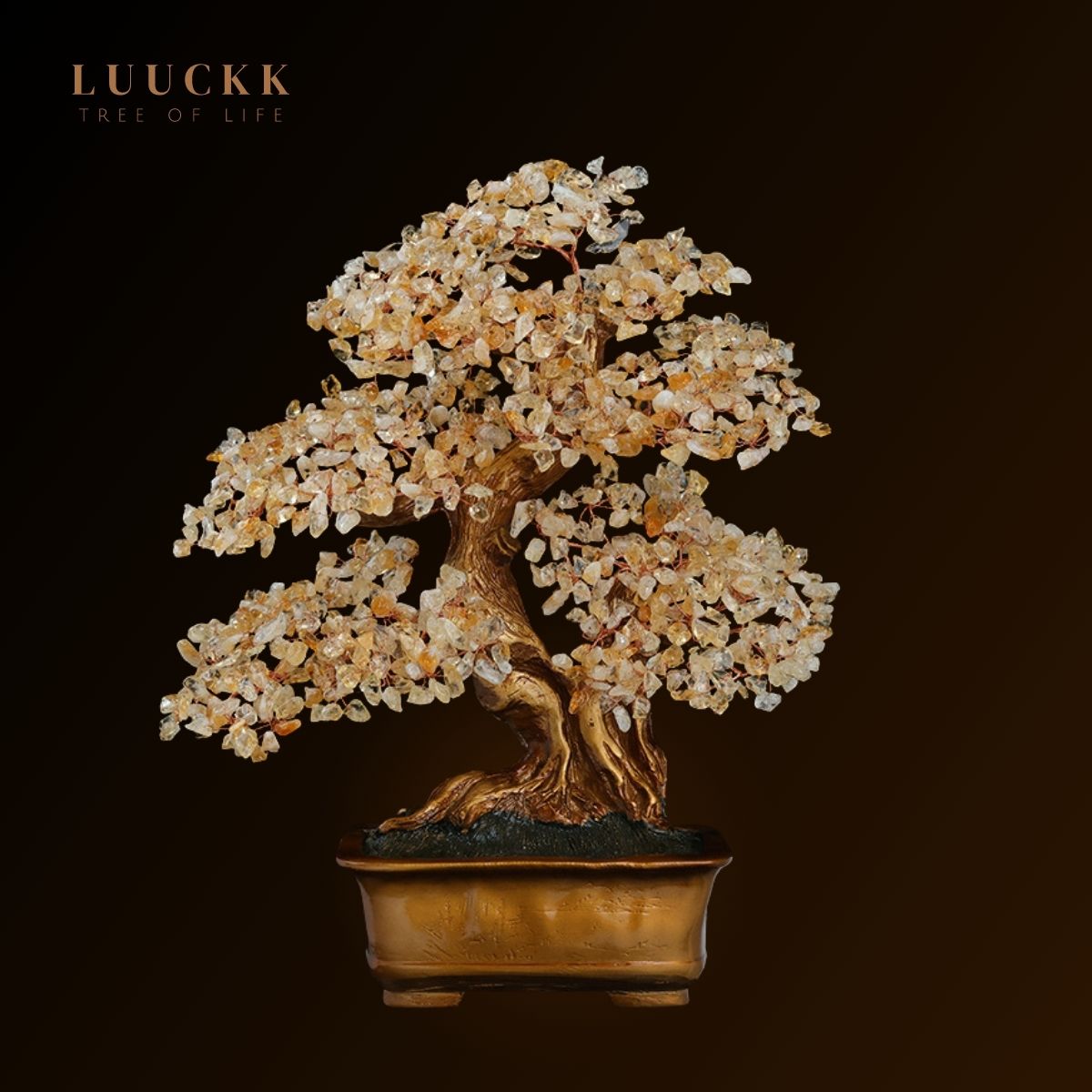
Our Tree of Life in Natural Stones
Why use natural stones for meditation?
The vibrational energy of natural stones
Natural stones are not just decorative objects. Each mineral has a unique crystalline structure, formed over millions of years deep within the Earth. This structure generates a specific vibration—an energetic frequency capable of interacting with our own energy field.
In lithotherapy, it is considered that the human body also emits vibrations. When these are disrupted by stress, negative emotions, or mental fatigue, inner balance can be weakened. Natural stones, thanks to their stable frequencies, are thought to act like energetic regulators, promoting overall harmonization.
During meditation, this vibrational exchange is particularly interesting. As the mind is calmer and more receptive, the energy of the stones can be perceived more subtly, making it easier to let go and focus.
Meditation and lithotherapy: a natural alliance
Meditation aims to observe the present moment without judgment, while lithotherapy seeks to rebalance inner energy. Together, these two practices complement each other perfectly.
Using natural stones during meditation can help you:
- Calm the mind and reduce intrusive thoughts
- Strengthen your meditative intention
- Promote a better mind-body connection
- Support focused work on the chakras
This synergy is especially appreciated by beginners, who find in stones a tangible support to stay focused during their sessions.
To deepen your understanding of the energetic basics of natural stones, you can read the article:
Introduction to Lithotherapy: Understanding the Energy of Natural Stones

The ideal natural stones for meditation and mindfulness
All natural stones can accompany meditation, but some are particularly recognized for their soothing, spiritual, or introspective properties. The choice above all depends on the intention you want to set.
Amethyst: mental calm and spiritual elevation
Amethyst is undoubtedly the stone most associated with meditation. Known for its soothing properties, it helps calm the flow of thoughts and establish a state of deep serenity. It is often used for meditations focused on spirituality, inner wisdom, and mental clarity.
Placed near the body or in the meditation space, amethyst encourages an environment conducive to contemplation and introspection.
Rose quartz: meditating in the energy of the heart
Rose quartz is the stone of the heart chakra. In meditation, it is especially recommended for practices related to self-love, emotional healing, and compassion.
It supports those who want to soothe emotional wounds, cultivate kindness, or simply reconnect with gentler emotions. Its reassuring vibration is ideal for mindfulness meditations centered on sensations and emotions.
Labradorite: protection and energetic grounding
Labradorite is often considered a protective stone. In meditation, it acts like an energetic shield, helping you stay protected from external influences.
It is recommended for sensitive or empathic people who tend to absorb surrounding emotions. Combined with grounding, it helps you stay centered while exploring deep meditative states.
Lapis lazuli: intuition and inner clarity
Lapis lazuli is a stone linked to wisdom and intuition. In meditation, it supports concentration, lucidity, and inner expression.
It is particularly appreciated for introspective meditations, visualization practices, or moments of deep reflection. Its vibration stimulates awareness and helps you better understand your thoughts and feelings.
Natural stones and chakras: an essential balance for meditating
Understanding the role of chakras in meditation
Chakras are energy centers distributed along the spine. Each is associated with physical, emotional, and spiritual functions. When a chakra is imbalanced, it can show up as emotional blockages or difficulty concentrating.
Meditation often aims to harmonize these energy centers. Natural stones, thanks to their specific vibrations, are used to stimulate, soothe, or rebalance the chakras in a targeted way.
Which natural stones for which chakras?
- Root chakra : red jasper, hematite (grounding, stability)
- Sacral chakra : carnelian, moonstone (creativity, emotions)
- Solar plexus chakra : citrine, tiger’s eye (confidence, willpower)
- Heart chakra : rose quartz, green aventurine (love, emotional balance)
- Throat chakra : lapis lazuli, aquamarine (expression, communication)
- Third eye chakra : amethyst, sodalite (intuition, clarity)
- Crown chakra : rock crystal, amethyst (spiritual connection)
In meditation, stones can be placed directly on the chakra concerned or held in the hand to encourage energy flow.
To discover in more detail how stones act on the chakras, see:
Natural Stones to Rebalance Your Chakras
How to use natural stones during meditation?
Meditating with a stone in your hand
This is the simplest and most accessible method. Simply choose a natural stone that matches your intention, hold it in your hand or place it on your heart, then focus on your breathing.
This approach helps channel attention and maintain a constant connection with your meditative intention.
Placing stones on the chakras
For a deeper energetic meditation, stones can be placed directly on the chakras. This technique is often used during longer sessions, supporting focused work on one or more energy centers.
It is recommended to get comfortable in a quiet place and stay attentive to the sensations you feel.
Creating a meditation space with natural stones
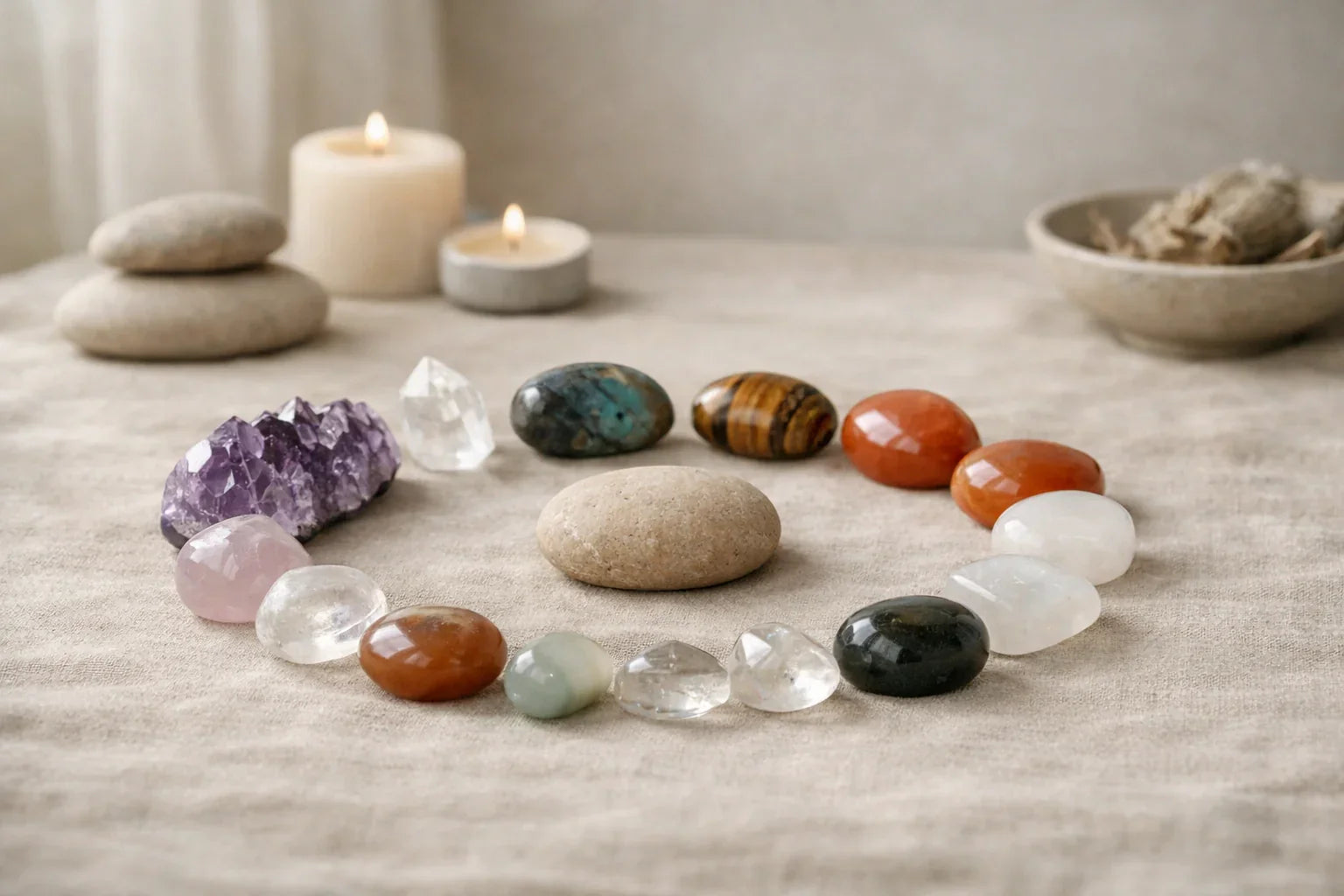
Natural stones can also be arranged around the meditation space: on an altar, near a candle, or in the form of a tree of life made of natural stones.
They help create a soothing and energetically harmonious atmosphere, ideal for the regular practice of meditation and mindfulness.
To learn how to integrate natural stones into an overall energy practice, discover:
How to Use Natural Stones in Energy Healing

Practical tips for choosing and caring for your meditation stones
Choosing a natural stone is not based only on its theoretical properties. Intuition plays an essential role. It is recommended to:
- Clearly define your meditative intention
- Notice the stones that naturally draw your attention
- Test different stones to feel their effects
Care is also essential. Stones used in meditation absorb surrounding energies and must be regularly cleansed (water, smoke cleansing, indirect salt) and recharged (natural light, geodes, quartz clusters).
Conclusion: integrating natural stones into a sustainable meditative practice
Natural stones offer valuable support for meditation and mindfulness. Thanks to their energetic properties, they support calming the mind, balancing the chakras, and reconnecting with yourself.
Used with intention and consistency, they become true allies of inner well-being. Whether you are a beginner or an experienced practitioner, integrating lithotherapy into your meditation can greatly enrich your experience.
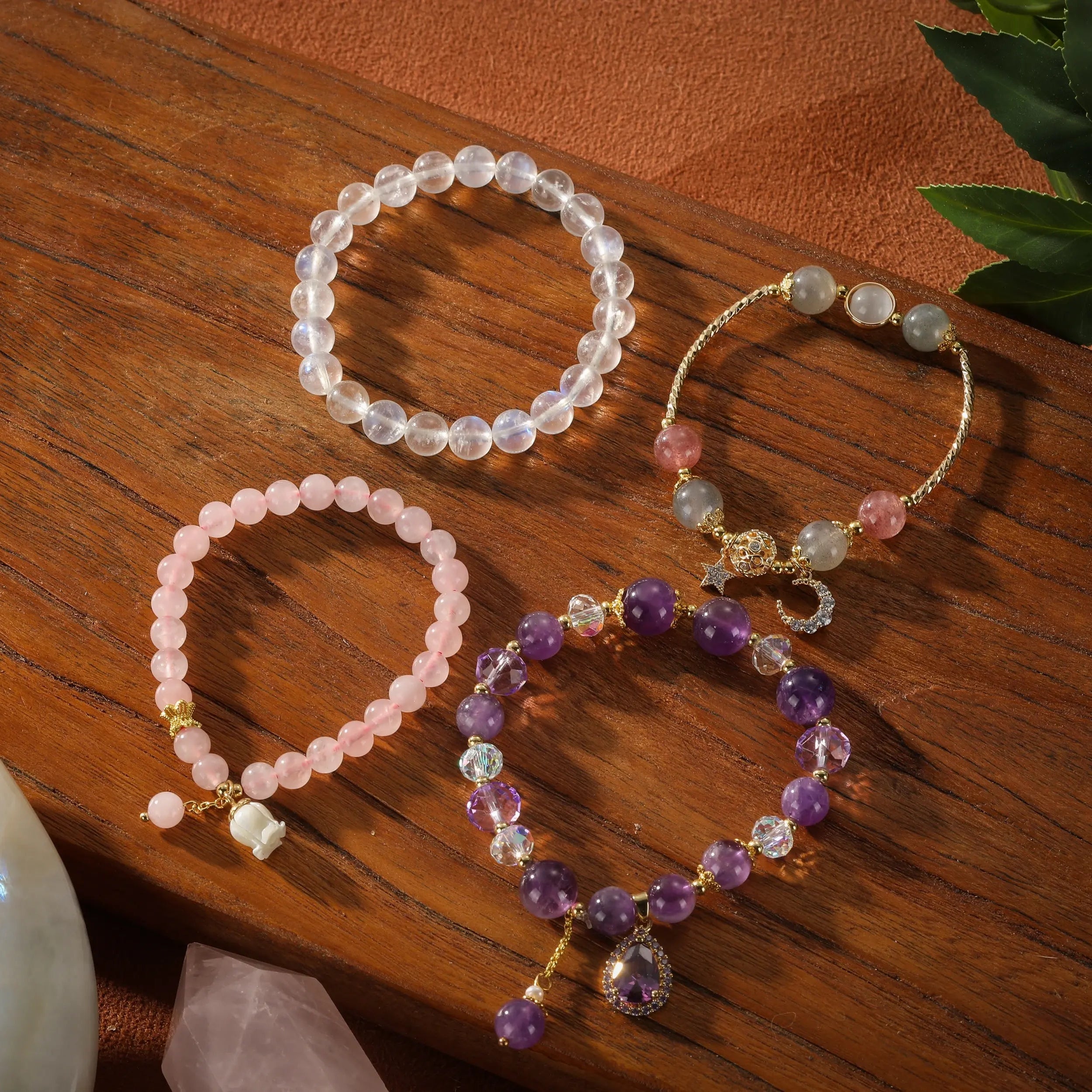
To go further, discover our selection of jewelry and trees of life made of natural stones and energetic objects designed to support your meditative practice and harmonize your energy every day.
Which natural stones are best for meditation?
The natural stones most used in meditation are amethyst to calm the mind, rose quartz for emotional balance, lapis lazuli for concentration, and labradorite for energetic protection.
How do you use natural stones during a meditation session?
Stones can be held in the hand, placed on the chakras, or arranged around the meditation space to promote concentration and energetic harmonization.
Do natural stones really affect the chakras?
In lithotherapy, each natural stone is said to have a specific vibration that would interact with the chakras, helping to rebalance energy and support meditative work.
How do you choose a natural stone for mindfulness?
Choosing a natural stone is based both on its energetic properties and on intuition. It is recommended to select a stone according to the desired meditation goal.
Can beginners use natural stones to meditate?
Absolutely. Natural stones are accessible to beginners and can serve as a support to facilitate concentration and grounding during meditation.
Read more

Discover how to use natural stones in your energy treatments to harmonize your chakras, rebalance your emotions, and enhance your well-being. A complete guide combining lithotherapy, practical tech...
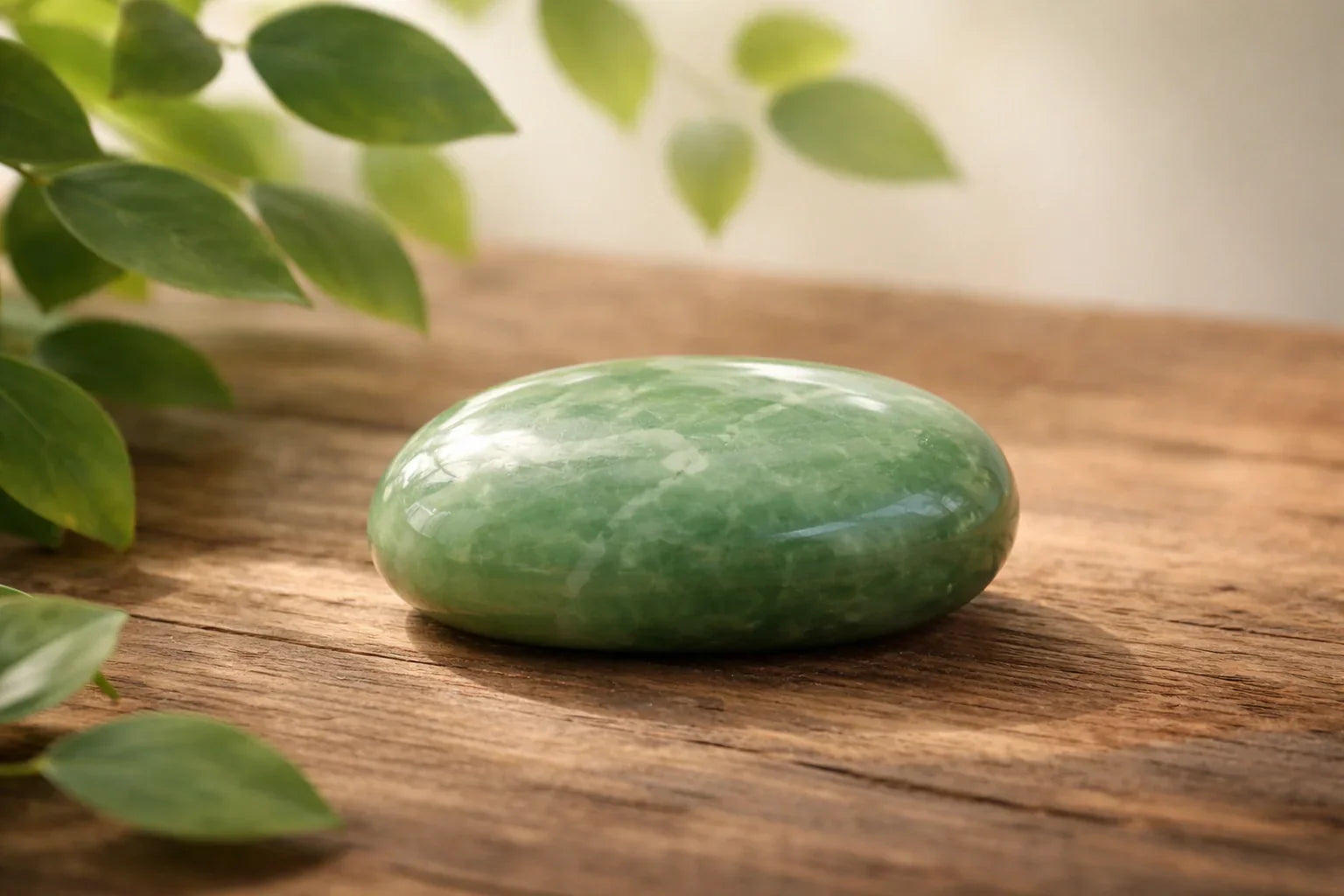
Discover all the secrets of Jade, an iconic natural stone symbolizing wisdom, harmony, and prosperity. From its benefits in lithotherapy to its use in jewelry or home décor, explore a comprehensive...


