
Genuine or Imitation Aquamarine: How to Recognize a Real Blue Stone
- Introduction :
- Aquamarine: between natural beauty and symbolic power
- Why has it become essential to tell a real aquamarine apart?
- 1. Color: the number one clue… but watch out for appearances
- 2. Transparency and inclusions: imperfect but authentic
- 3. Hardness: a simple at-home test
- 4. Temperature and feel: a stone that “lives”
- 5. Weight: aquamarine has density
- 6. Price: too good to be true?
- 7. Buying from a trusted seller: your best guarantee
- Aquamarine in lithotherapy: a stone that deserves to be real
- The virtues of aquamarine: much more than just a blue color
- The elegance of jewelry made with genuine aquamarine
- Summary: criteria for recognizing genuine aquamarine
- Conclusion: better a real stone than deceptive beauty
- To go further:
- FAQ – Everything you need to know about genuine Aquamarine
Introduction :
Aquamarine, with its ocean-blue color and gentle energy, has fascinated people for centuries. Associated with the sea, mental clarity, and serenity, it is now one of the most sought-after natural stones, both for its properties in lithotherapy and for its beauty in jewelry.
But here’s the catch: as this stone has grown in popularity, imitations have multiplied. So how do you tell the difference between a genuine aquamarine and a simple counterfeit? What visual, physical, and energetic clues help you recognize a real blue stone? That’s exactly what we’ll explore in depth in this article.
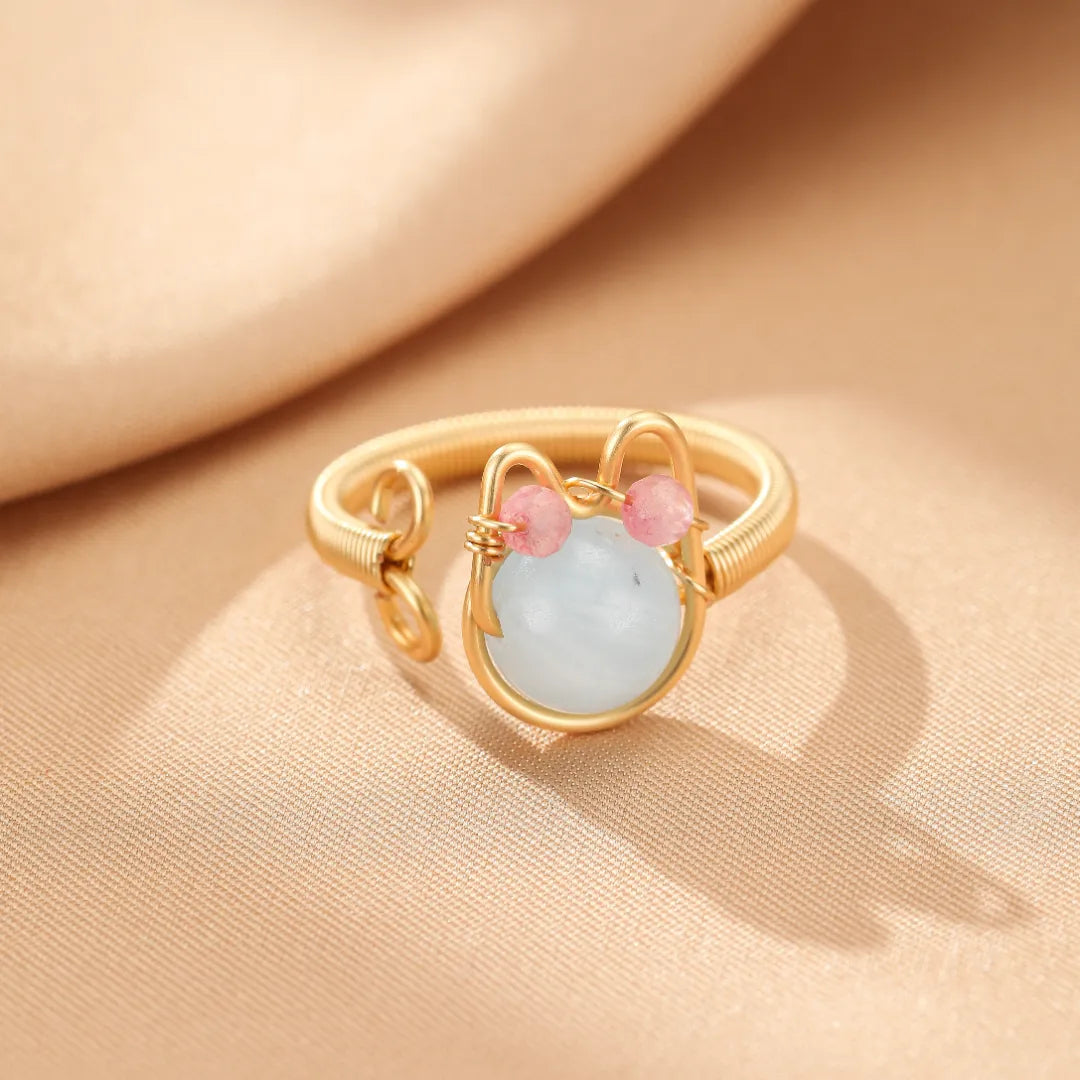
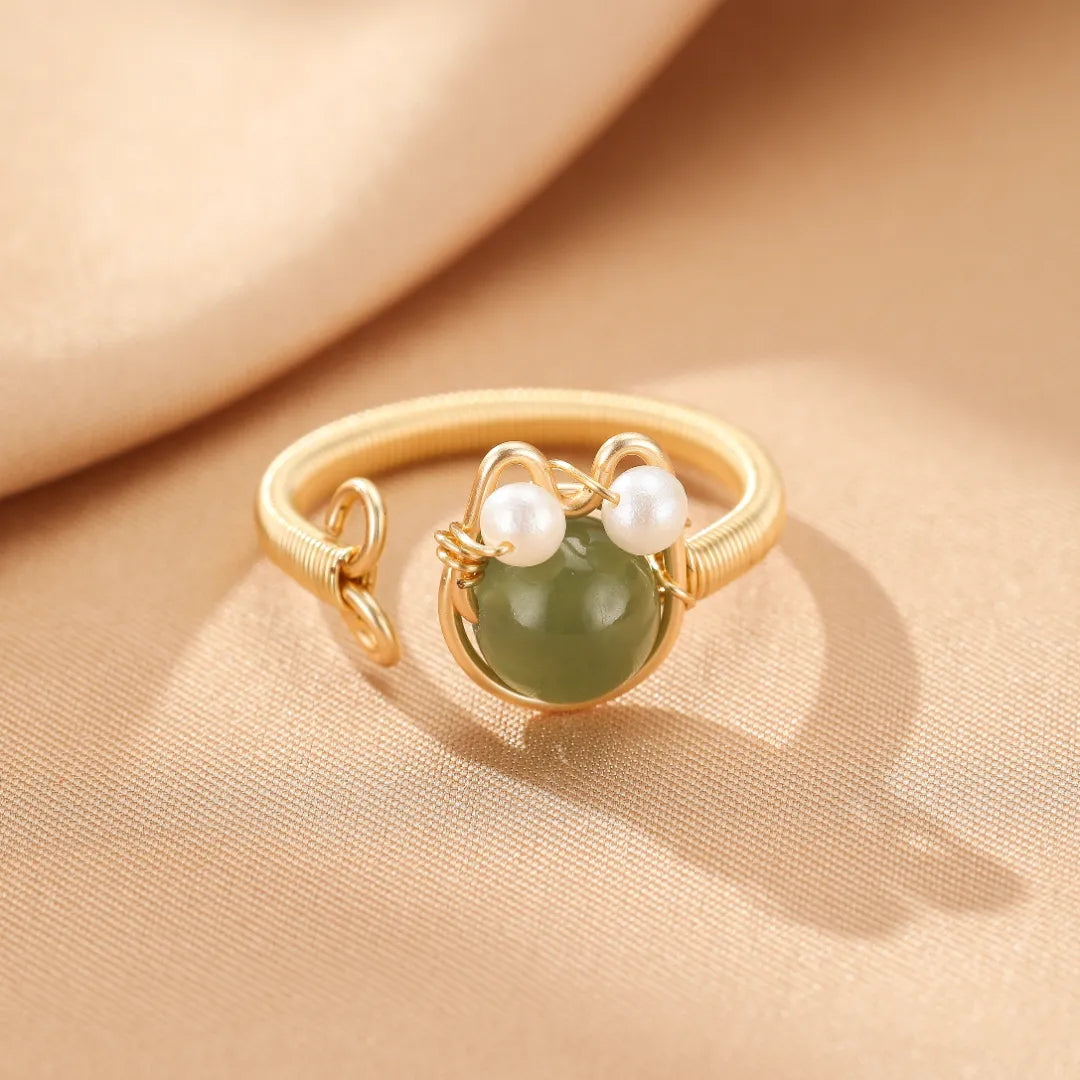
Our Aquamarine Jewelry
Aquamarine: between natural beauty and symbolic power
Before learning how to tell the authentic from the fake, it’s essential to understand what makes aquamarine so special.
Aquamarine is a semi-precious stone belonging to the beryl family, just like emerald. Its hue ranges from pale blue to blue-green, reminiscent of the crystal-clear waters of tropical seas. Its name comes from the Latin aqua marina, which literally means “sea water,” an obvious nod to its captivating color.
Beyond its beauty, aquamarine is deeply rooted in esoteric and spiritual beliefs. It is often associated with inner peace, communication, and protection for travelers. In many traditions, sailors wore it as a talisman to calm waves and soothe storms.
This stone is also highly valued in lithotherapy for its benefits for the mind and emotions, promoting serenity, clarity of thought, and sincere expression.
To learn more about the origin, history, and symbolism of this stone, I invite you to read the article Aquamarine: Stone of Serenity and Communication.

Why has it become essential to tell a real aquamarine apart?
With the surge in demand for natural stones and the rise of lithotherapy, the crystal market has seen a wave of imitations appear. And unfortunately, not all of them are easy to spot with the naked eye.
Some counterfeits are made from colored glass, heat-treated aquamarines, or even other minerals that are chemically reconstructed to mimic aquamarine’s color.
The problem? These stones may look nice, but they don’t have any of the expected energetic properties. They don’t “vibrate,” don’t bring serenity, and are nothing more than decorative objects. For those seeking a true connection with the stone or investing in a lasting piece of jewelry, it’s therefore crucial to know how to identify a genuine aquamarine.
1. Color: the number one clue… but watch out for appearances
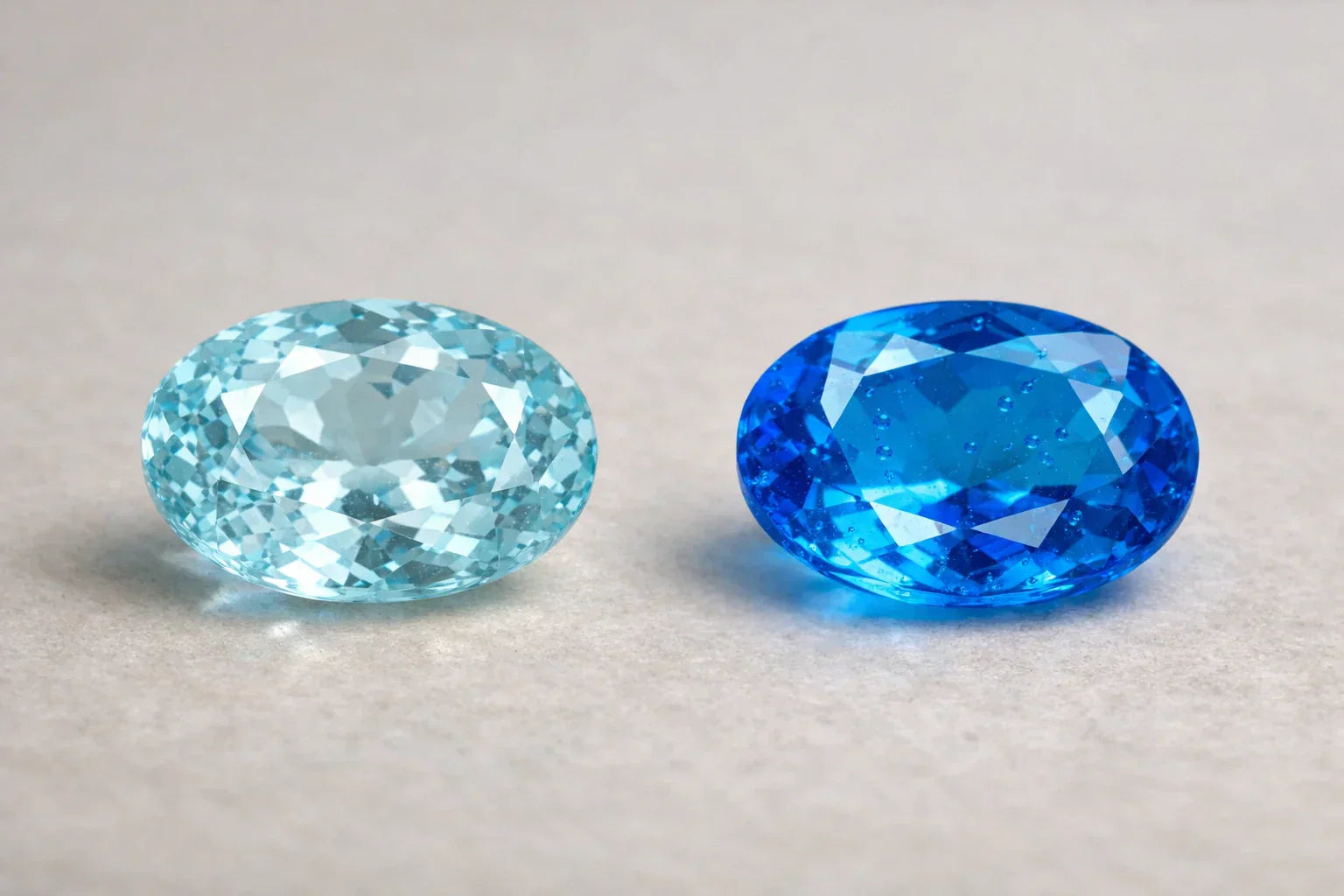
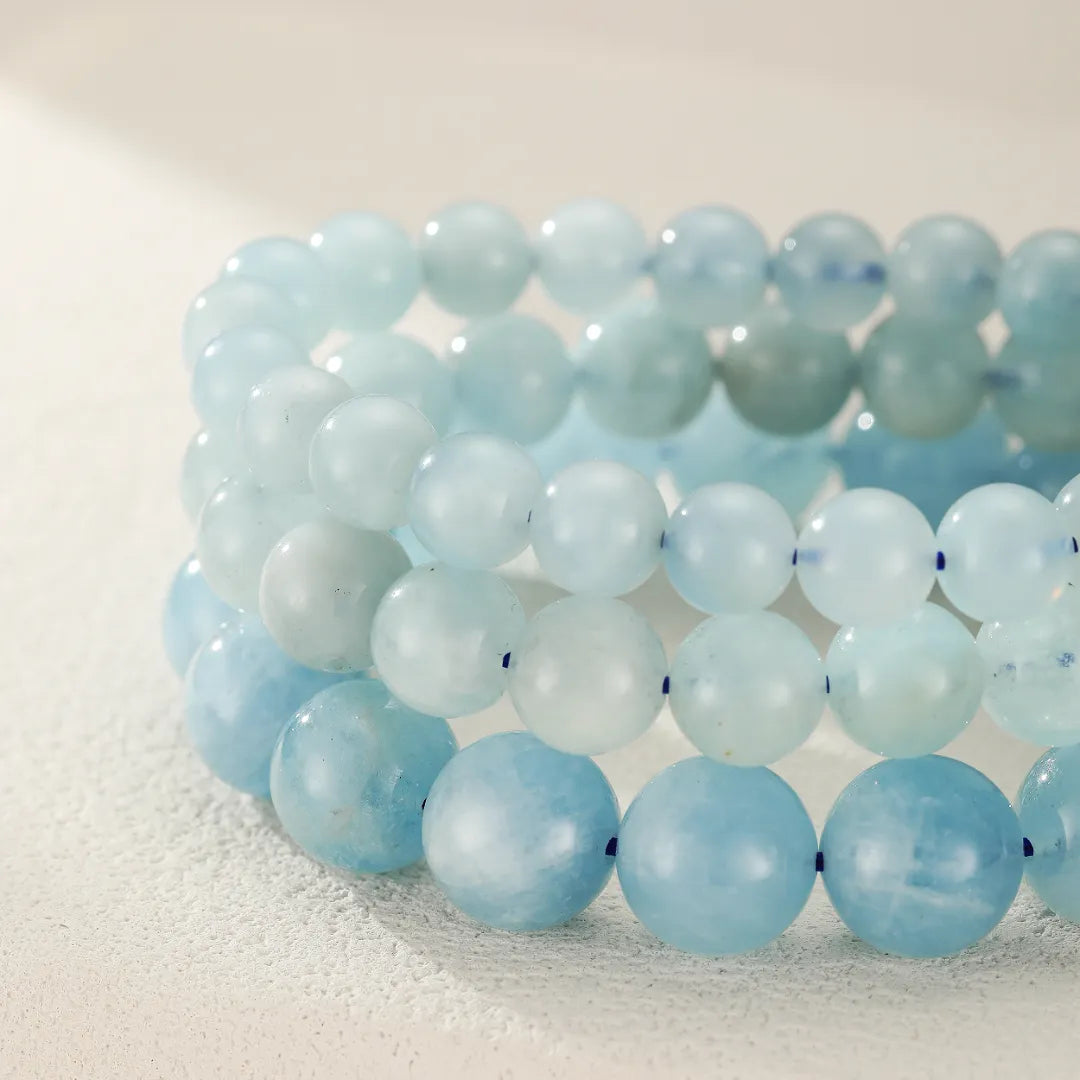
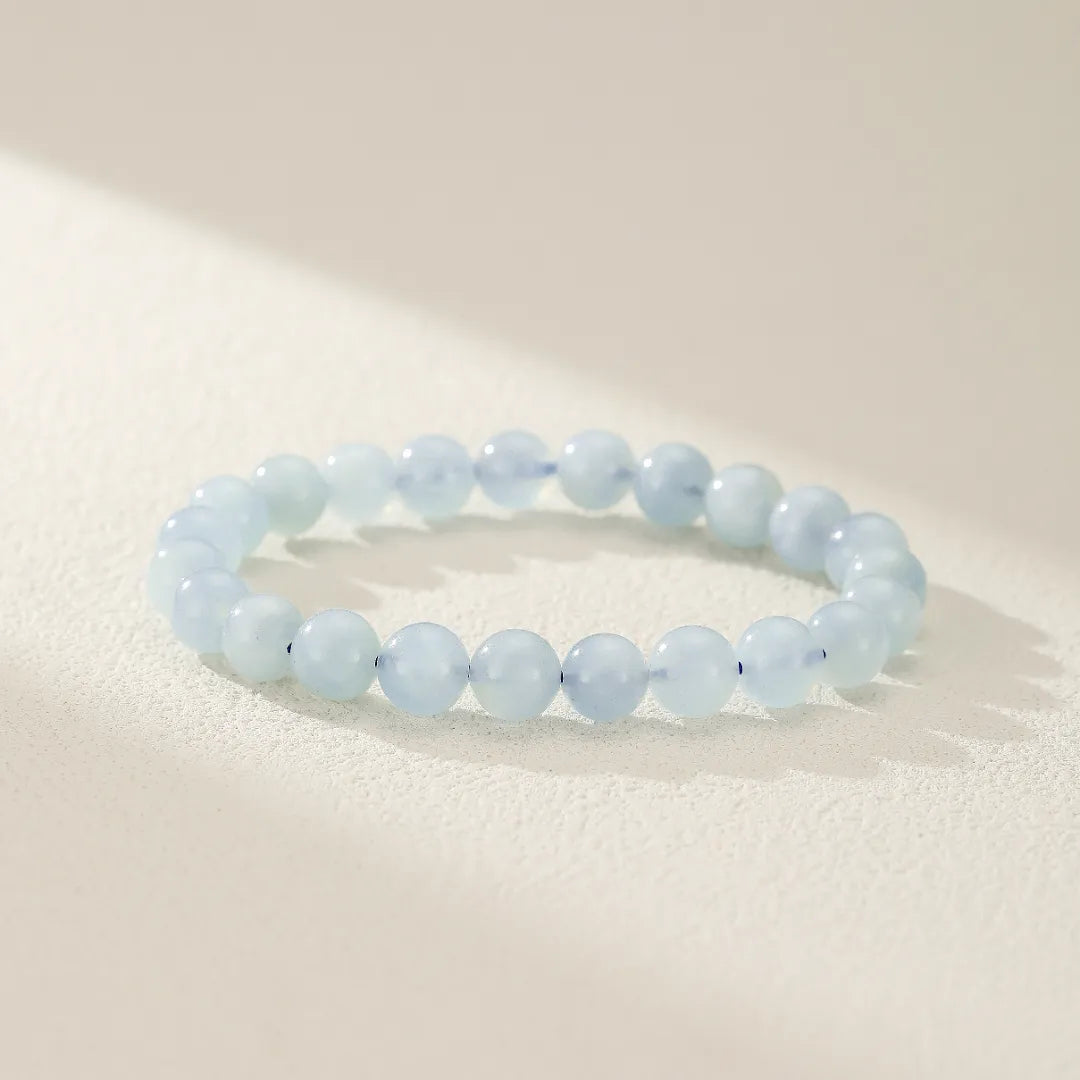
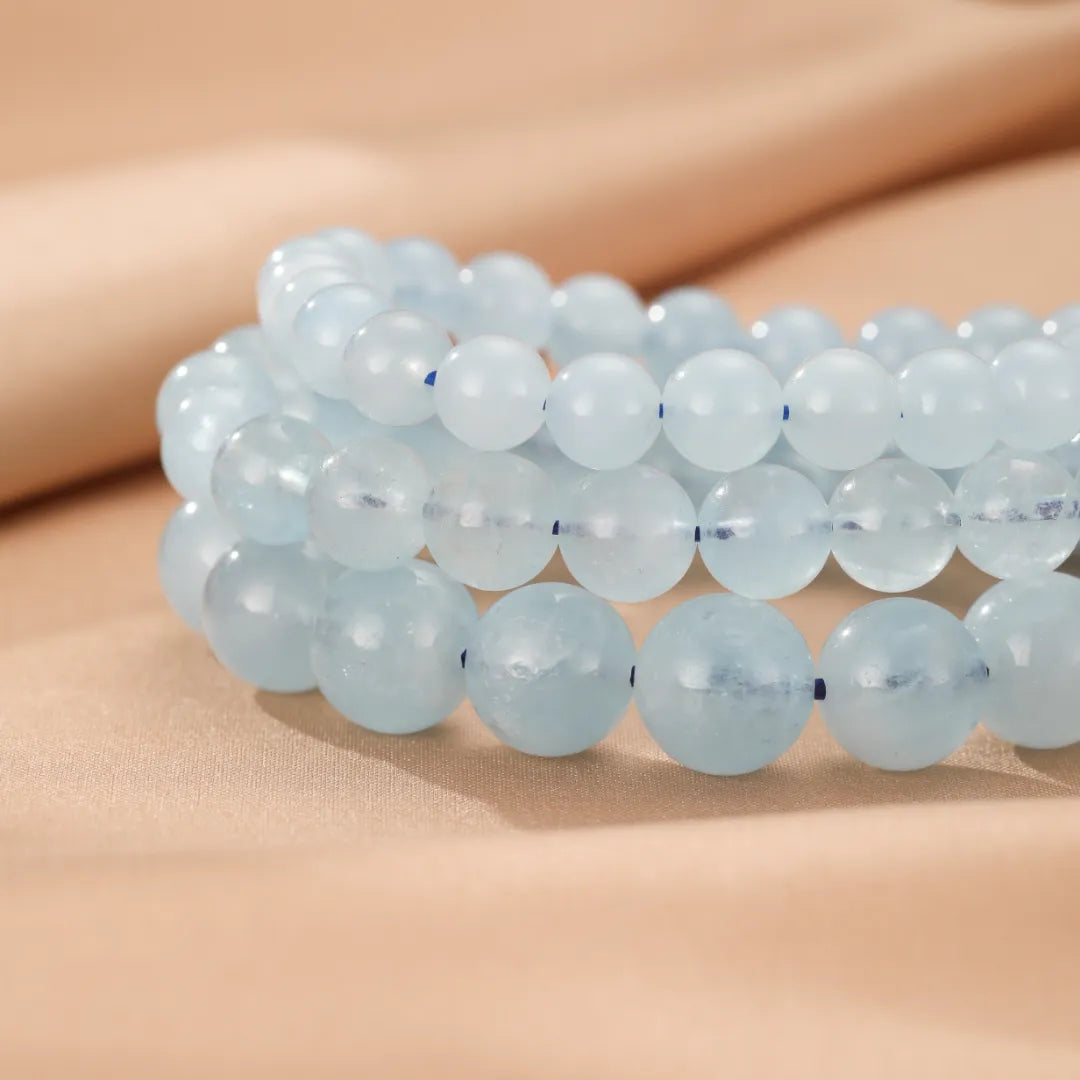
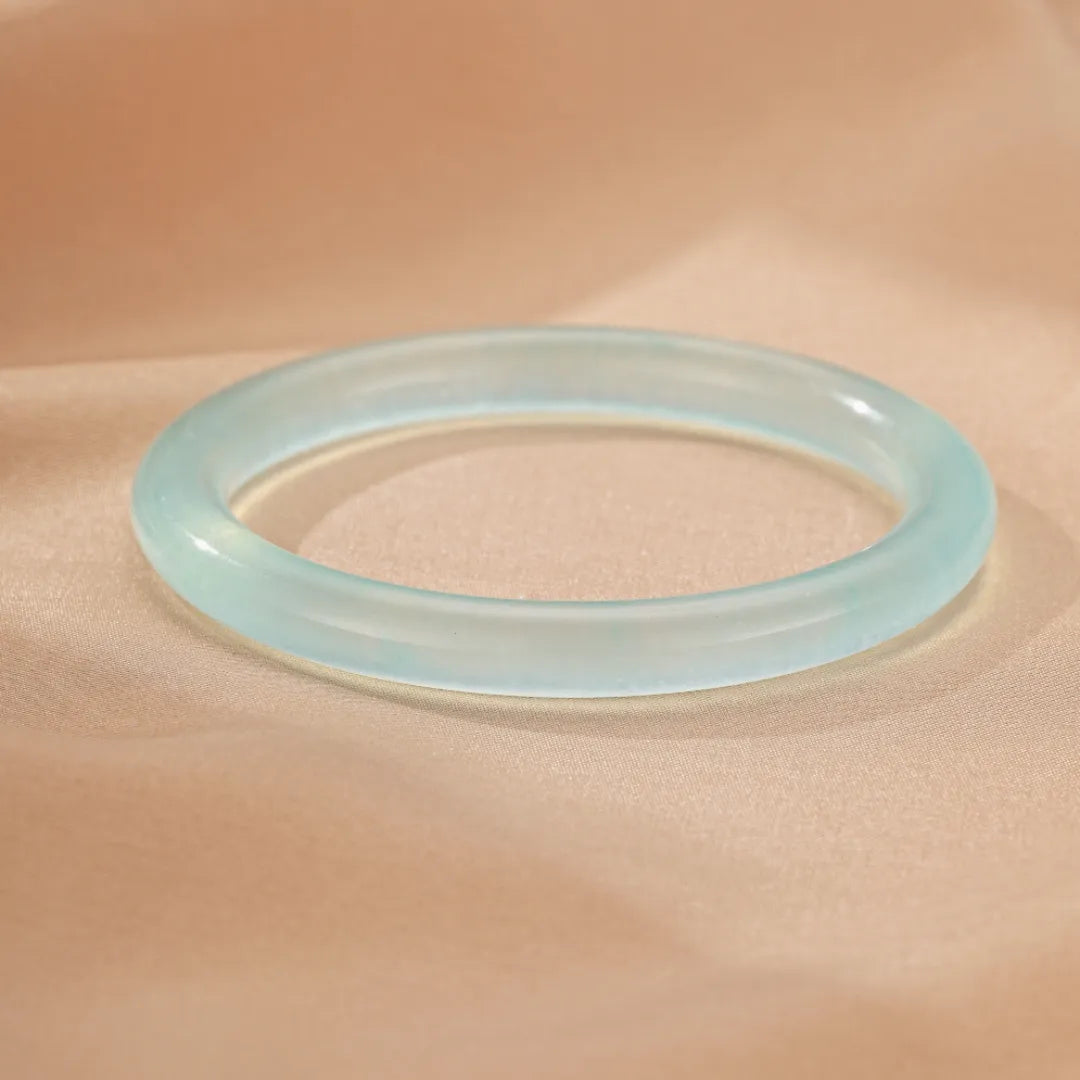
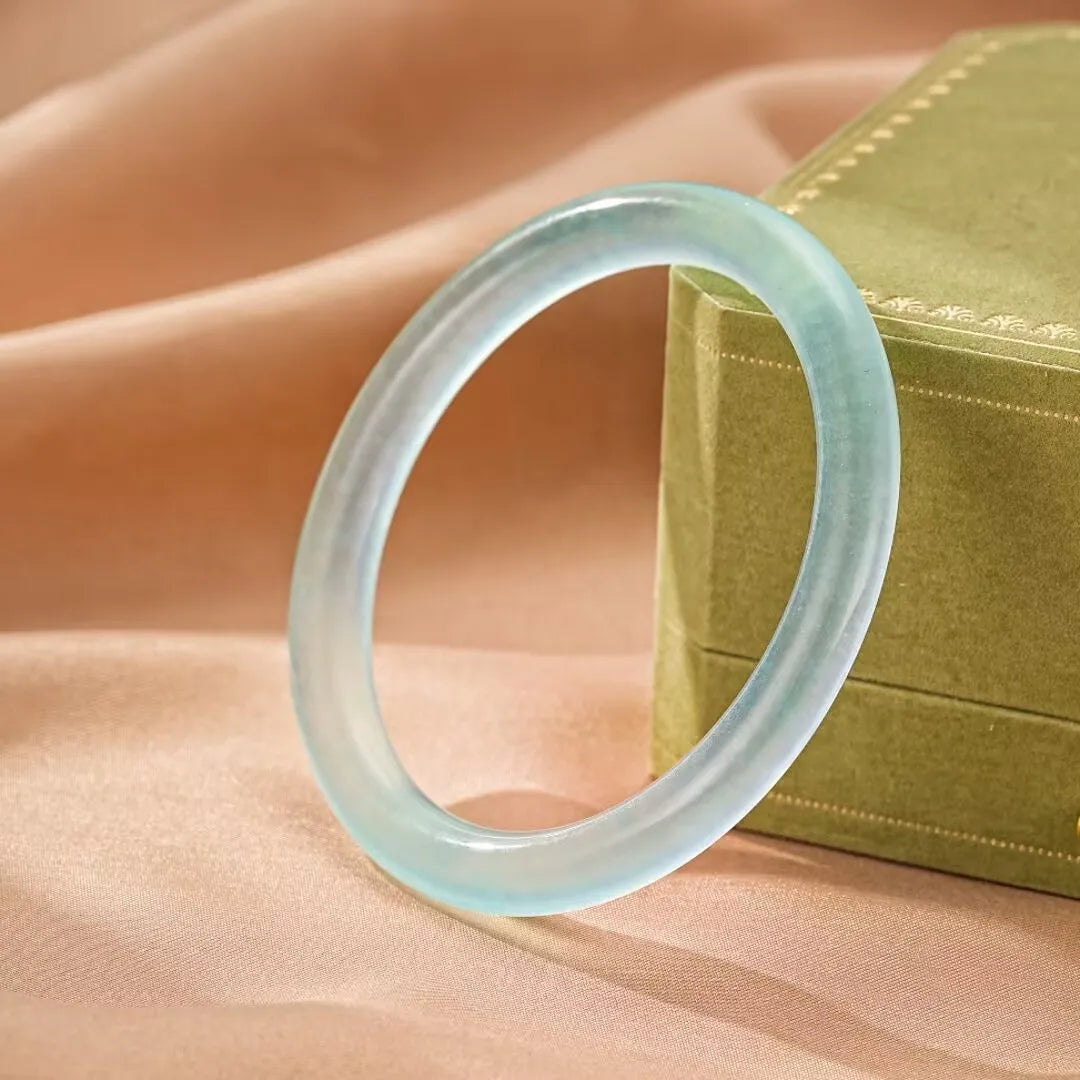
A genuine aquamarine generally has a soft, clear color ranging from light blue to blue-green. This shade can be very subtle, sometimes almost transparent with a slight touch of azure.
Imitations, on the other hand, are often more vivid—too blue, even an unnatural “electric” blue. This kind of artificial color is often achieved through heat treatment or by adding dyes to glass.
Another point to watch: color consistency. In a real stone, the color may vary slightly, with areas that are more or less intense. A color that is too uniform and perfect is often a sign of imitation.
2. Transparency and inclusions: imperfect but authentic
Contrary to what you might think, a real aquamarine isn’t necessarily perfectly transparent. It may show natural inclusions: tiny cracks, bubbles, or internal striations that attest to its geological origin.
Synthetic stones or glass, by contrast, are often too perfect, without the slightest imperfection. Those small irregularities are precisely what make the beauty and authenticity of a natural stone.
3. Hardness: a simple at-home test
Aquamarine has a hardness of 7.5 to 8 on the Mohs scale. This means it can scratch glass.
If you’re unsure, you can do a simple test: try scratching a glass surface with the stone. If it leaves a mark, it’s likely you’re dealing with a genuine aquamarine. Be careful, however, not to damage the stone or the surface; this test should be done with caution.

4. Temperature and feel: a stone that “lives”
Natural stones have a distinctive trait: they feel cool to the touch. Even after being left in a warm room, they retain a certain freshness because they take time to absorb body heat.
Plastic or glass imitations, by contrast, warm up quickly and don’t provide that characteristic cool sensation.
5. Weight: aquamarine has density
A genuine aquamarine is denser than most synthetic materials used in counterfeits. At equal volume, it therefore feels heavier in the hand.
This criterion is subjective, but it can be an additional clue—especially if you have other stones to compare.
6. Price: too good to be true?
A good-quality natural aquamarine isn’t a cheap stone. If you’re offered aquamarine jewelry at a ridiculously low price, be cautious. That doesn’t mean all expensive stones are authentic, but an abnormally low price often reflects questionable quality or a synthetic product.
7. Buying from a trusted seller: your best guarantee
In a market as vast as that of natural stones, it’s essential to choose a recognized, transparent, and passionate seller. A serious professional can provide authenticity certificates, traceability of the stones, and guide you in your choice.
At LUUCKK, for example, each aquamarine jewelry piece comes from a rigorous selection of genuine stones, to guarantee our customers authenticity and quality.
Aquamarine in lithotherapy: a stone that deserves to be real
In lithotherapy, only a genuine aquamarine has the energetic frequencies capable of acting on the body and mind. It’s not just a beautiful object, but a true wellness tool.
Aquamarine is said to soothe tension, promote communication, strengthen intuition, and help with letting go. It’s often used to balance the throat chakra, improve personal expression, and encourage inner listening.
But once again, these benefits can only be felt with an authentic stone—connected to the earth and carrying millions of years of geological history.
To dive deeper into this topic, read the article Why is Aquamarine Appreciated in Lithotherapy?


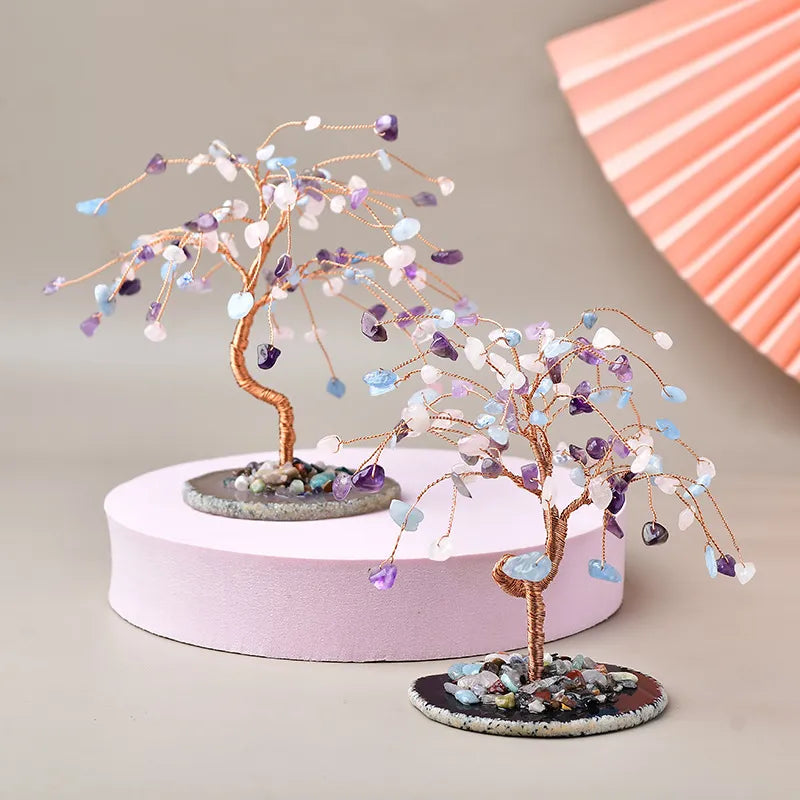
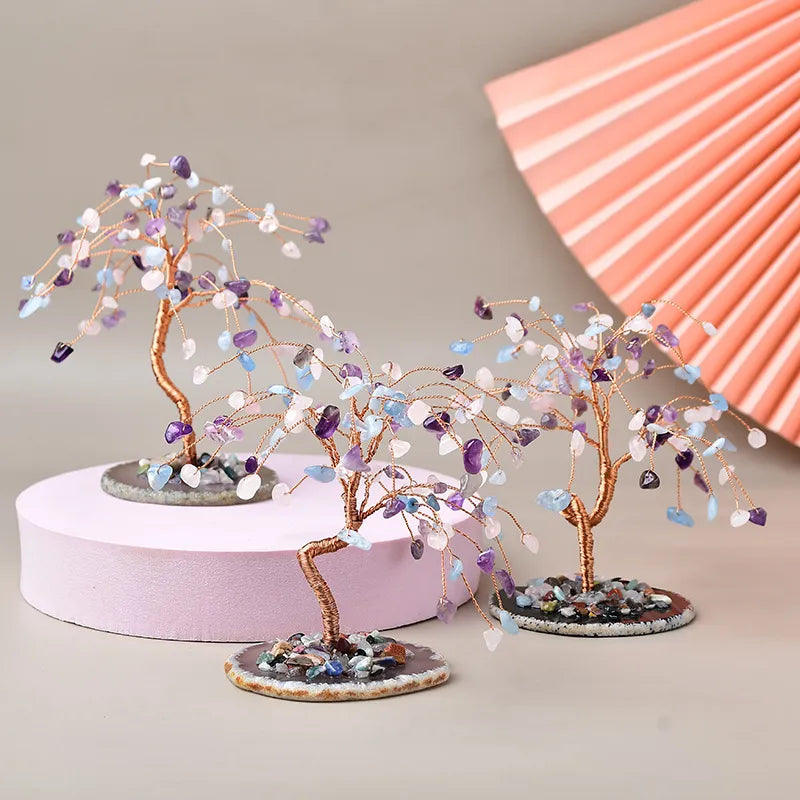
The virtues of aquamarine: much more than just a blue color
Aquamarine is especially recommended during periods of stress, anxiety, or difficult communication. It promotes inner calm, mental clarity, and helps you express your emotions more easily.
Some traditions also attribute physical virtues to it: it is said to relieve pain related to the throat and sinuses, and strengthen the immune system.
To learn more about its energetic effects, discover the article Benefits and Properties of Aquamarine

The elegance of jewelry made with genuine aquamarine
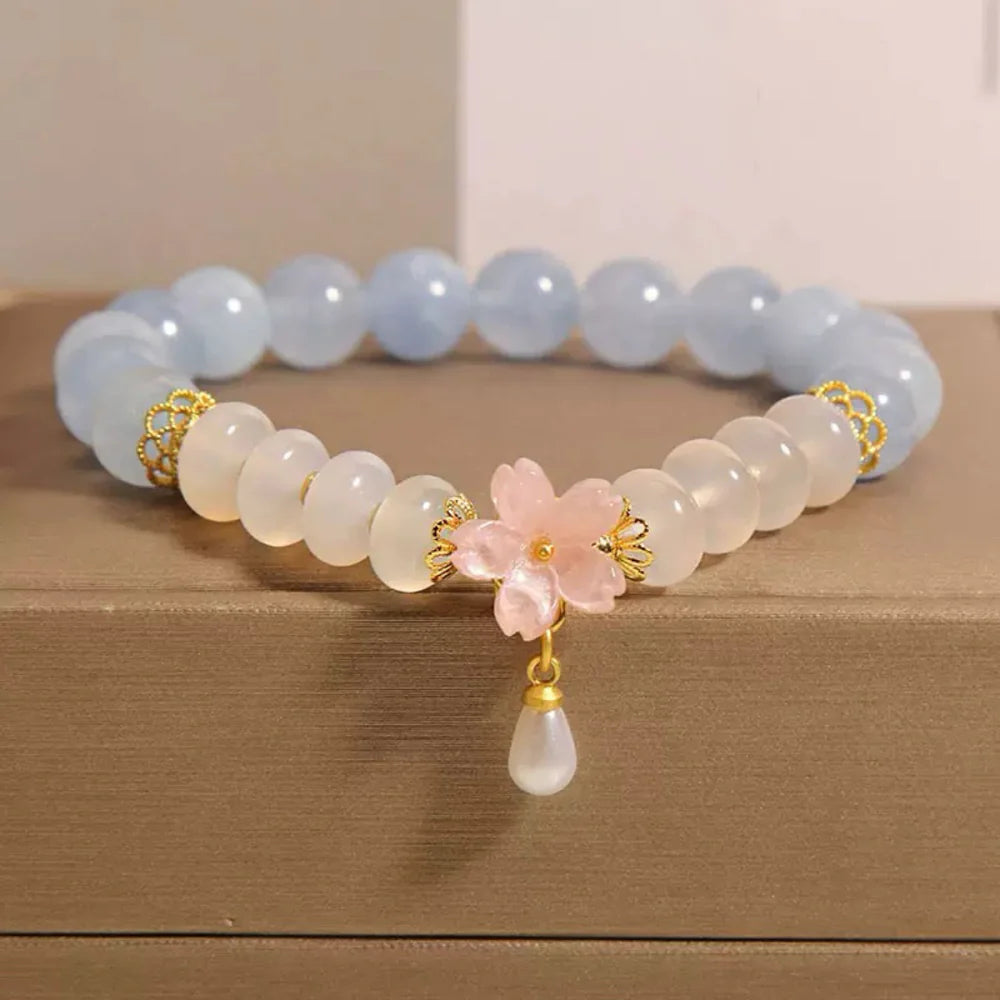
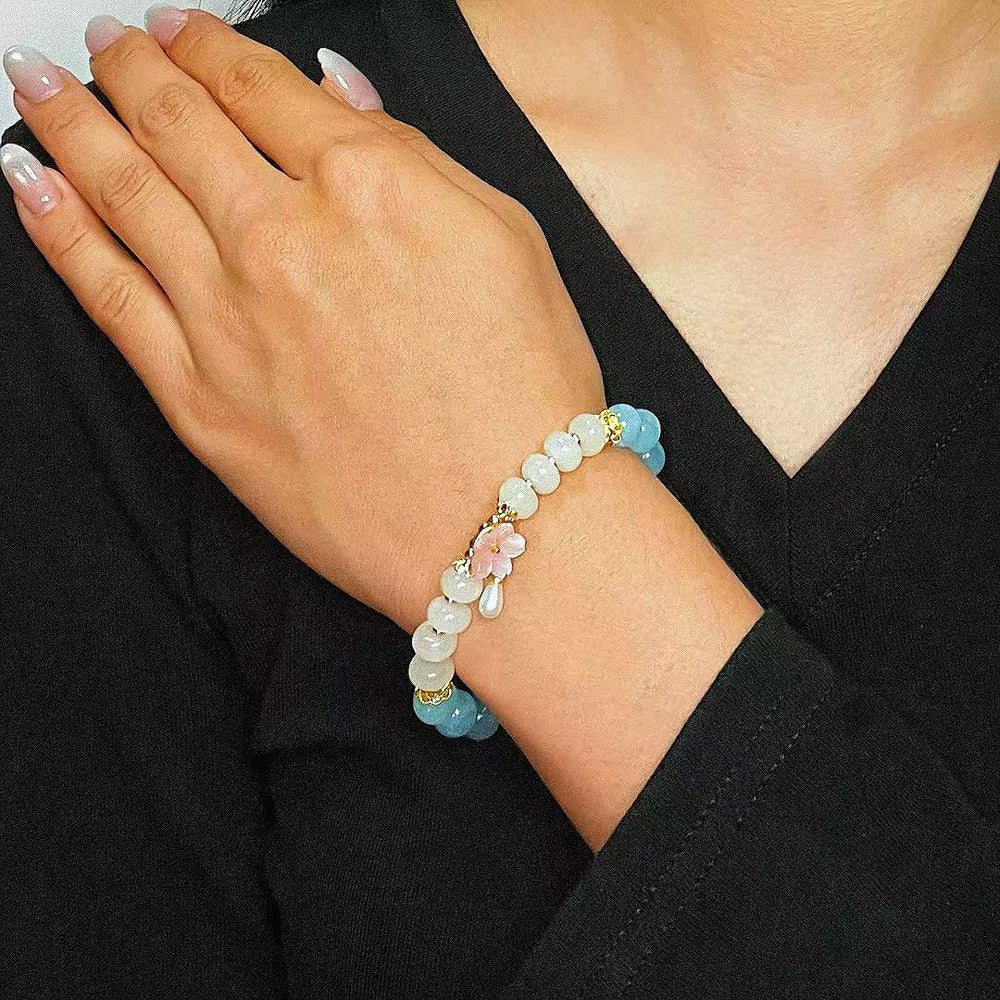
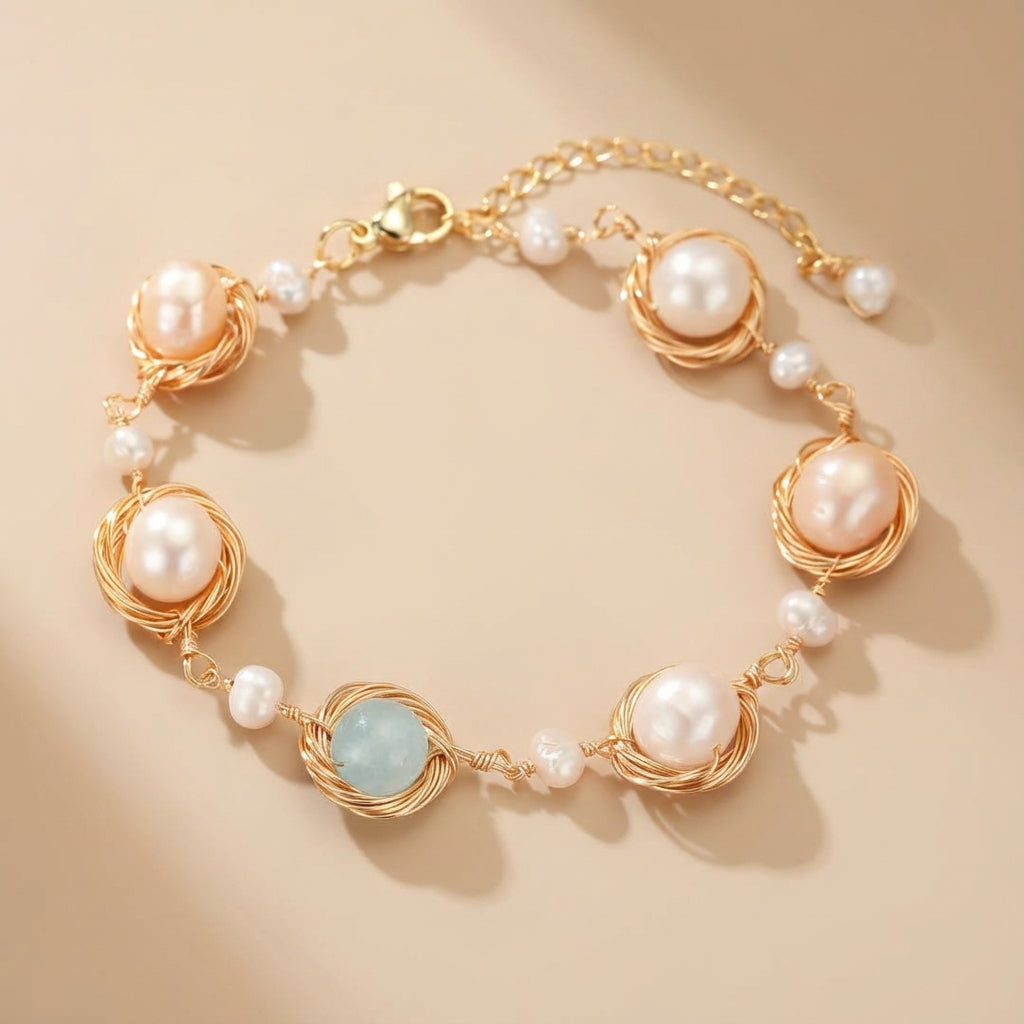
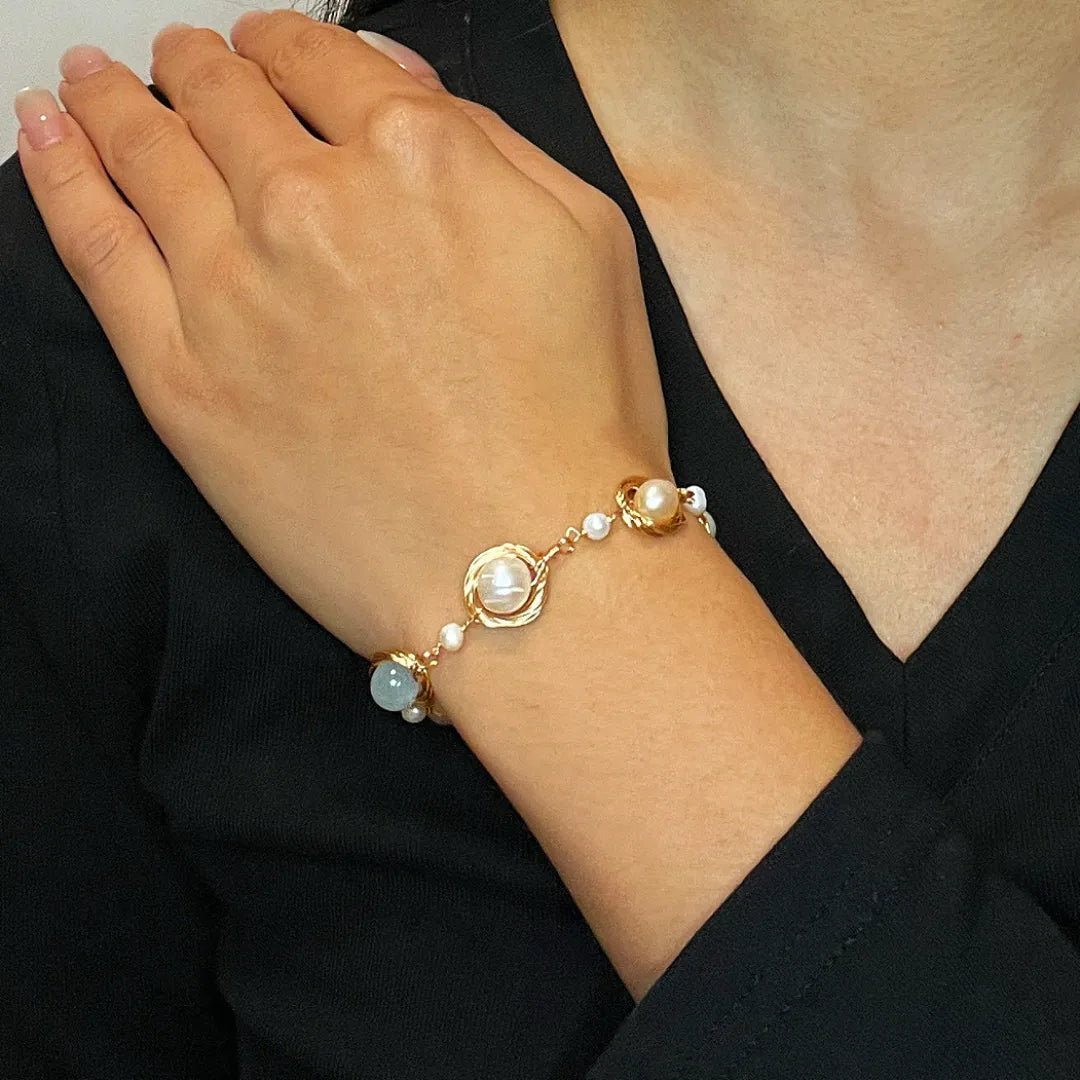
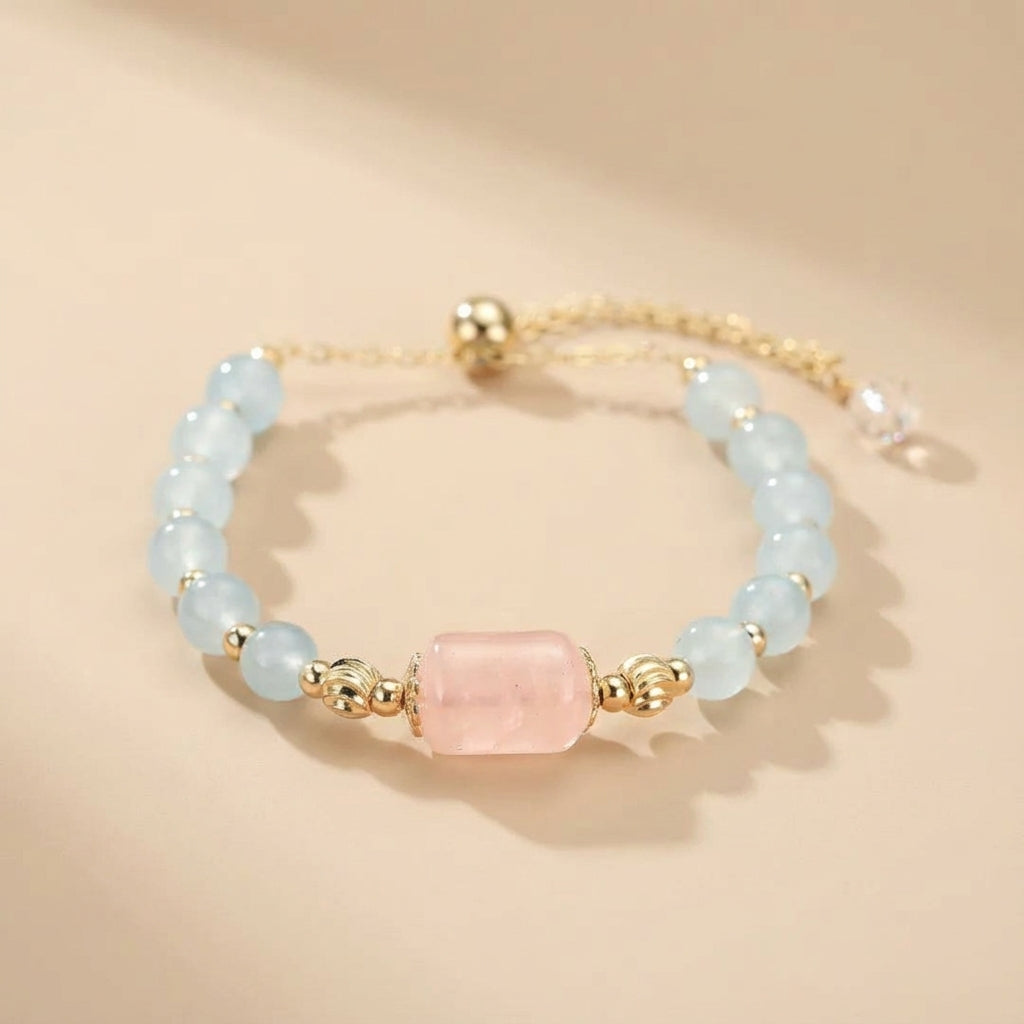
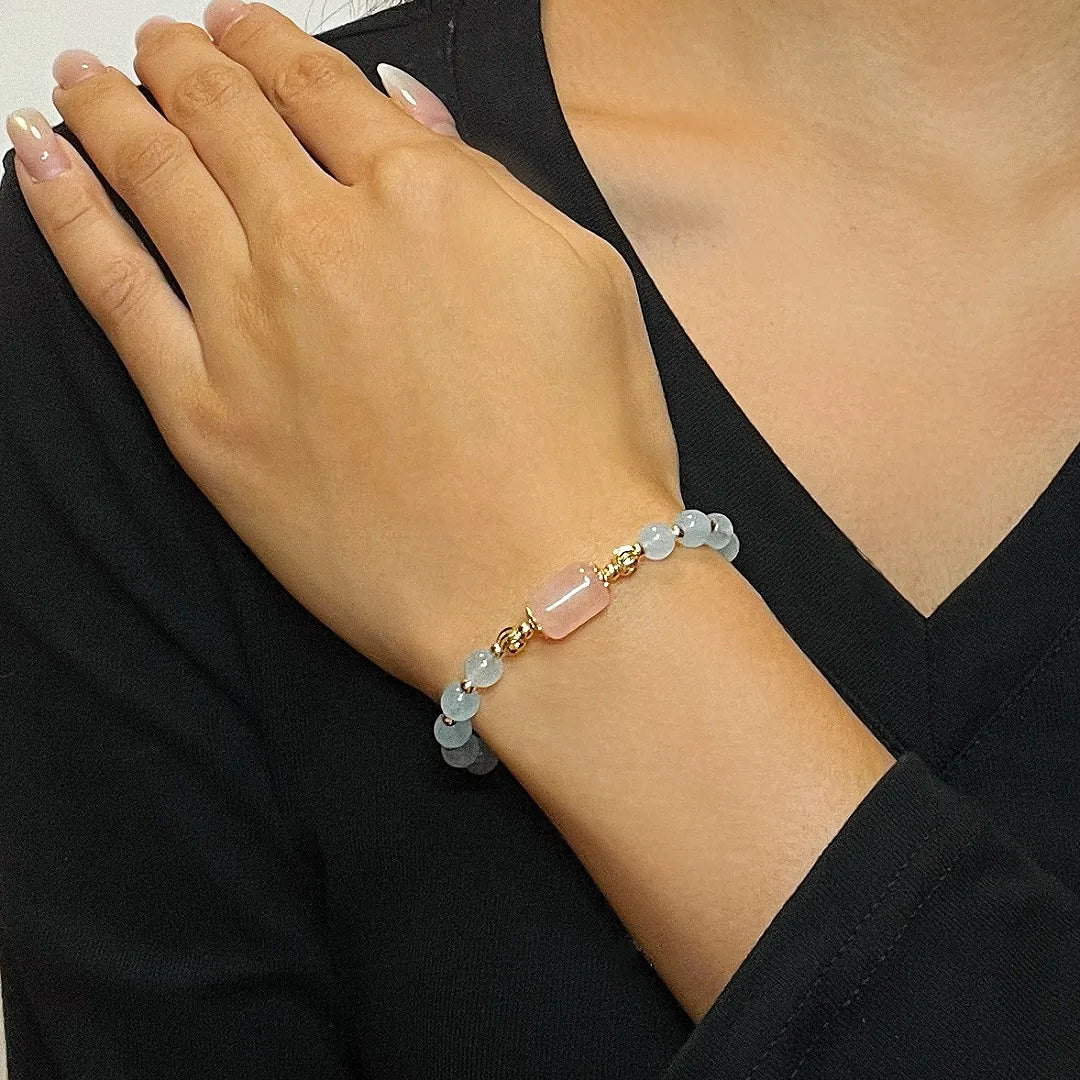
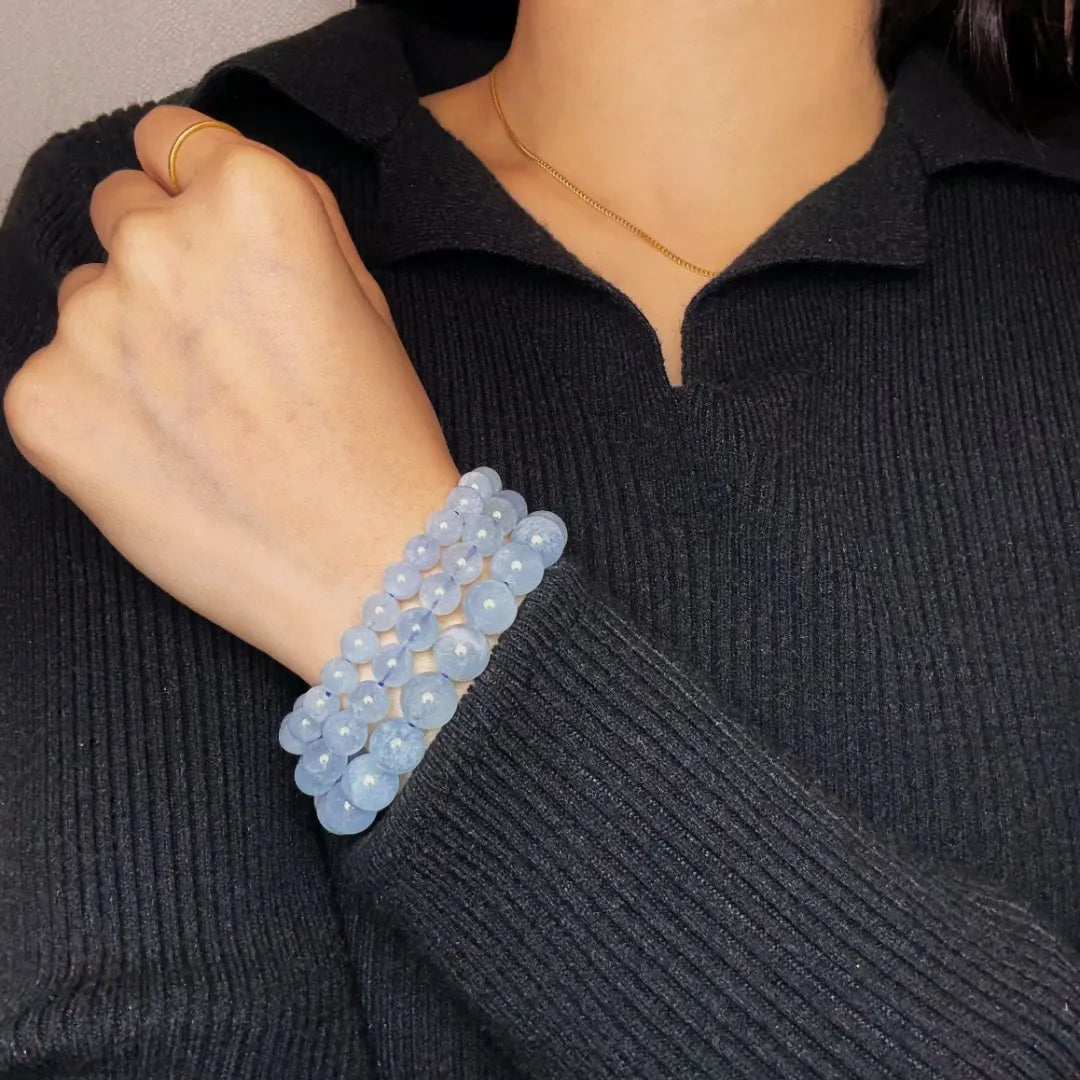
Beyond its spiritual and emotional benefits, aquamarine is also a stone of rare elegance. Worn as jewelry, it catches the light, evokes the sea, and draws attention.
Whether as a bracelet, pendant, or ring, aquamarine pairs perfectly with silver, white gold, or even copper to create pieces that are both chic and natural.
Choosing aquamarine jewelry means asserting your style while staying connected to a soothing energy.
To learn more, please read our article Aquamarine Jewelry: Elegance and Energy
Summary: criteria for recognizing genuine aquamarine
To help you remember the essentials, here’s a quick recap of the criteria to check:
- Color : soft, pastel, natural blue-green
- Transparency : a few inclusions are normal
- Hardness : able to scratch glass (7.5 – 8 on the Mohs scale)
- Temperature : cool to the touch, slow to warm up
- Weight : relatively dense
- Price : realistic but not too low
- Seller : professional, transparent, with a certificate if possible
Conclusion: better a real stone than deceptive beauty
In a world where appearances can be easily imitated, authenticity becomes a precious value. This applies just as much to human relationships as to the natural stones we choose to bring into our daily lives.
Aquamarine, a true jewel of nature, deserves to be recognized for what it is. Whether you wear it as jewelry, place it in your home, or use it in lithotherapy, make sure it is authentic. Only then will you be able to fully benefit from its light, peace, and energy.
To go further:
Here is a selection of complementary articles on this topic:
- Aquamarine: Stone of Serenity and Communication
- Aquamarine Jewelry Collection
- Tree of Life Aquamarine Collection
- Benefits and Properties of Aquamarine
- Aquamarine Jewelry: Elegance and Energy
- Why is Aquamarine Appreciated in Lithotherapy?
- Genuine or Imitation Aquamarine: How to Recognize a Real Blue Stone
How can you recognize a genuine aquamarine with the naked eye?
A real aquamarine has a soft light-blue to blue-green color, gentle and slightly variable. It may contain small natural inclusions. If the shade is too vivid or too perfect, be cautious.
Do fake aquamarines have benefits in lithotherapy?
No. Only authentic natural stones emit energetic vibrations. Imitations (glass or plastic) are inert and have no effect in lithotherapy.
Can aquamarine change color over time?
A natural aquamarine retains its color, but prolonged exposure to sunlight may slightly lighten it. Dyed stones, on the other hand, can fade quickly.
Does aquamarine scratch glass?
Yes, because its hardness is 7.5 to 8 on the Mohs scale. It can therefore scratch glass, which is a good indicator of authenticity.
Is aquamarine suitable for all zodiac signs?
It is particularly associated with water signs like Pisces and Cancer, but its soothing qualities can benefit everyone.
Read more
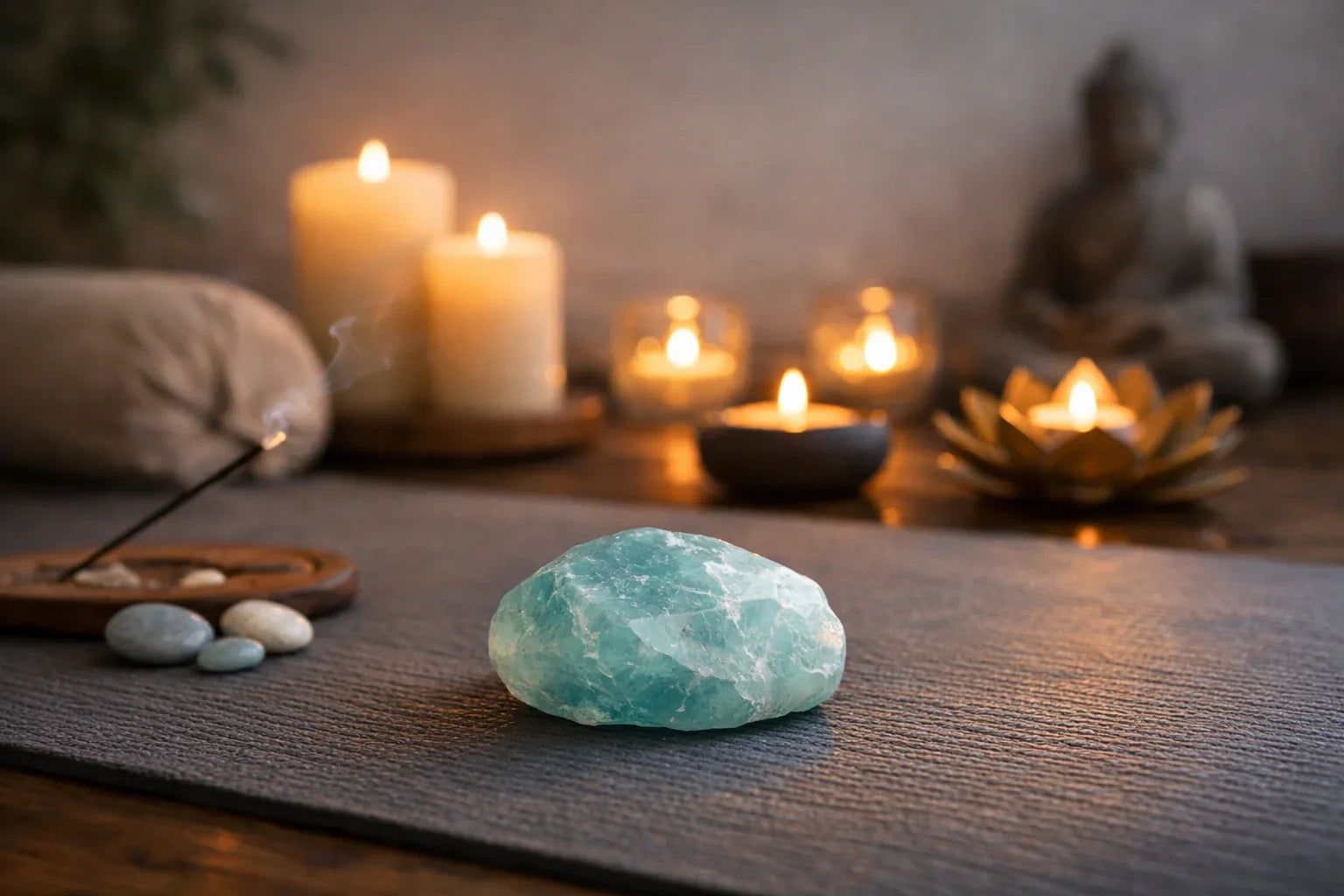
Discover the properties and benefits of Aquamarine, a natural stone with soothing energies. Used in lithotherapy to promote serenity, communication, and emotional balance, it is found both in jewel...
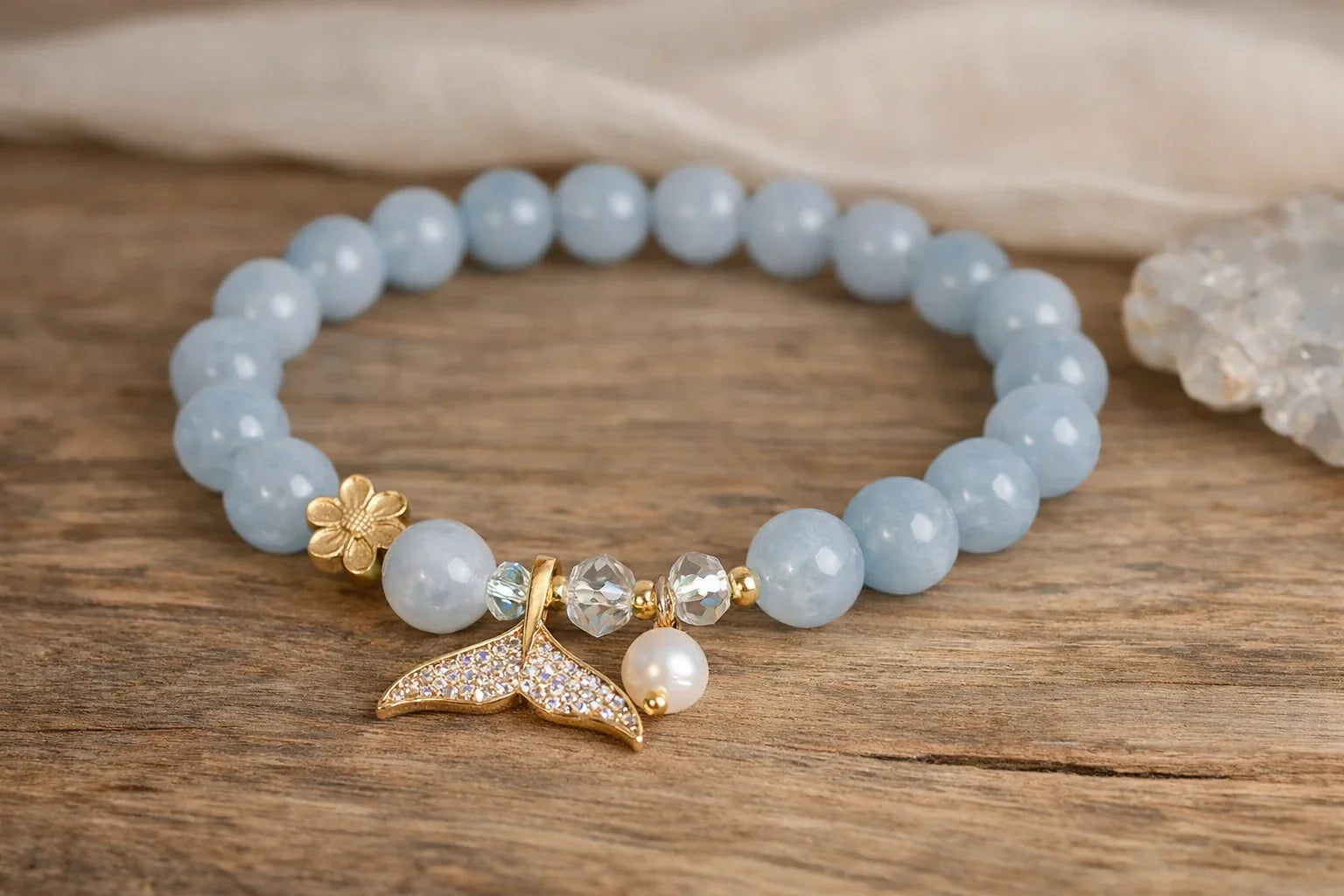
Discover the secrets of aquamarine jewelry, a natural stone that combines beauty with energetic properties. Elegance, serenity, communication… this gemstone fascinates with its soothing color and i...


