
Lapis Lazuli: Stone of Truth and Communication
- Introduction
- Lapis Lazuli: identity card of a natural stone unlike any other
- Why is it called the “stone of truth”?
- Virtues and benefits of Lapis Lazuli in lithotherapy
- Lapis Lazuli and chakras: throat and third eye, the duo “I understand / I speak”
- How to use the natural stone Lapis Lazuli daily (without making it complicated)
- Genuine or fake Lapis Lazuli: how to tell a natural stone from imitations?
- Cleansing and recharging Lapis Lazuli: safe methods and common mistakes
- Lapis Lazuli and style: when natural stone jewelry tells a story
- Stone combinations: what synergies with Lapis Lazuli?
- Conclusion: Lapis Lazuli, a stone that helps you speak up without losing yourself
- FAQ – Lapis Lazuli: Stone of Truth and Communication
Introduction
Among the most recognizable Natural Stones, Lapis Lazuli has that unmistakable something: a deep blue, sometimes crossed by lighter veins and sprinkled with golden flecks. But beyond its appearance, the natural stone lapis lazuli fascinates for one simple reason: for centuries it has been linked to truth, lucidity, and the art of making yourself understood… without necessarily raising your voice.
In this article, we go beyond the usual generalities. You’ll discover a complete, practical overview: geological origin, symbolism, lapis lazuli virtues, lapis lazuli benefits in lithotherapy, concrete uses, mistakes to avoid (cleansing, care), and even how to spot an authentic lapis. The goal: give you rich, useful, actionable content—no fluff.
Our Lapis Lazuli Jewelry
Lapis Lazuli: identity card of a natural stone unlike any other
A “stone” that is actually a rock (and that changes everything)
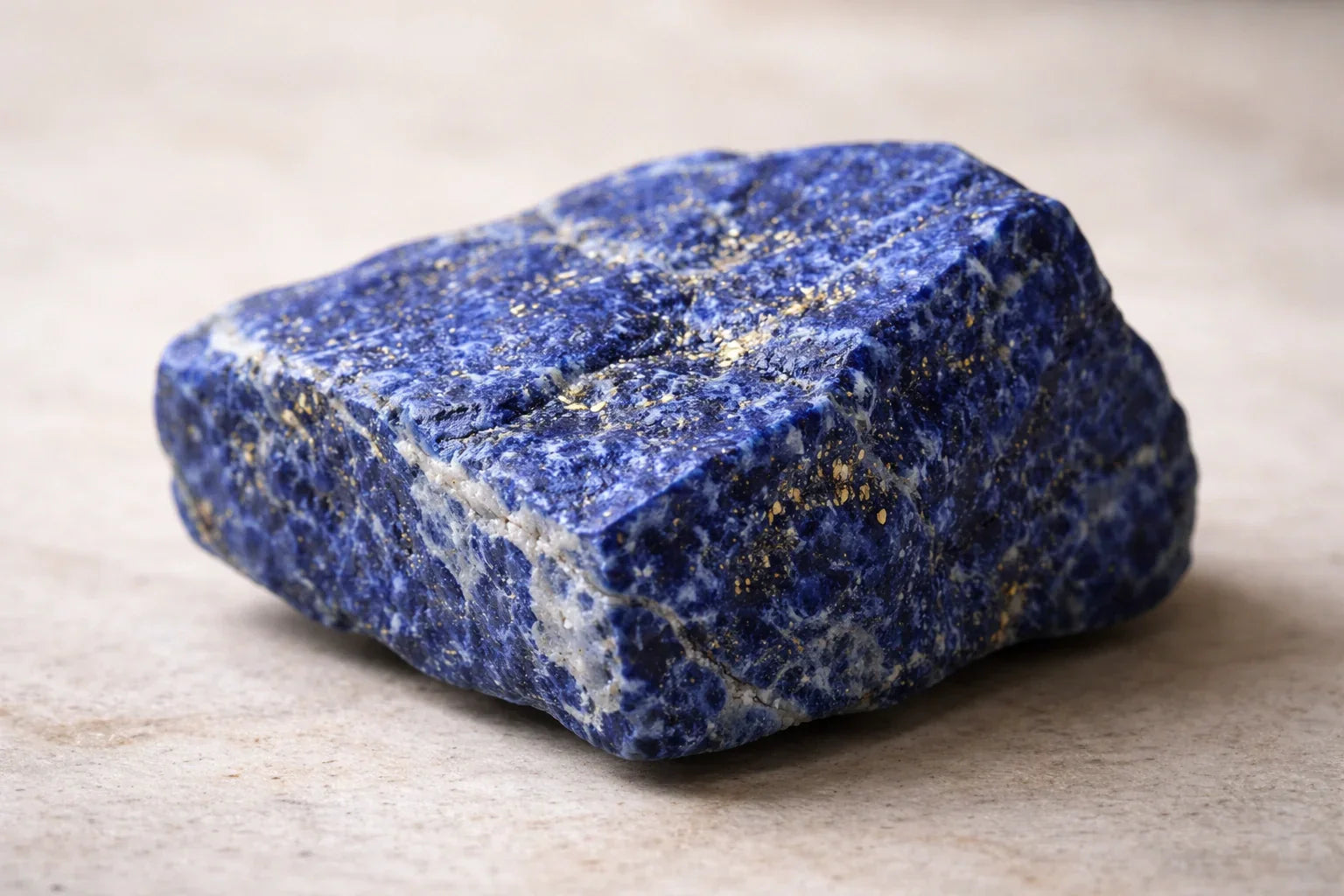
First fact many people don’t know: lapis lazuli isn’t a single mineral in the strict sense, but a rock made mainly of lazurite (which gives the blue color), often accompanied by calcite (white) and pyrite (golden flecks). This composition explains why two lapis stones can look very different.
- Intense, uniform blue : usually rich in lazurite, highly sought after.
- Presence of pyrite : often appreciated when it is fine and “starry” (not in large patches).
- Calcite veins : they can be subtle and elegant, or on the contrary reduce the depth of the blue (a matter of taste and quality).
Where does Lapis Lazuli come from?
Historically, the most renowned deposits come from Afghanistan (Badakhshan), mined since Antiquity. Lapis is also found in Chile, Russia, Pakistan… but the “high-end” lapis sought in jewelry is often associated with Afghan deposits for the depth of its blue.
A stone that “traveled” through history… and through painting
Lapis lazuli is tied to a very tangible cultural history: it was used to produce the pigment natural ultramarine, one of the most precious pigments in the Middle Ages and the Renaissance. It was sometimes reserved for religious works and “sacred” elements of a painting, so high was its value. It’s one of the rare examples where a stone directly influenced art history.
Key takeaway : lapis lazuli isn’t just beautiful. It tells a story of material, symbolism, and transmission.
To go further: Complete Guide to Natural Stones: Properties, Meaning and Use

Why is it called the “stone of truth”?
Lapis Lazuli is associated with truth along two main axes: inner truth (lucidity, discernment) and relational truth (clear communication, self-expression).
Inner truth: lucidity, discernment, mental clarity
When we talk about “truth” in lithotherapy, it’s not about absolute truth, but about the ability to see yourself more clearly: spotting contradictions, putting words to what feels confused, distinguishing intuition from impulse.
In a practical approach, this “lucidity” often translates into:
- a better ability to calmly analyze a situation;
- less mental scatter;
- a feeling of “putting order” in your ideas.
Relational truth: saying things without making them more complicated
Communication isn’t just talking: it’s also knowing how to phrase things, listen, clarify, and sometimes say no without feeling guilty. Lapis lazuli is often chosen by people who:
- struggle to express their needs;
- fear conflict (so they stay silent until they explode);
- tend to over-justify themselves for too long.
Its image as a “communication stone” is therefore tied to one goal: finding a more accurate voice. Not harsher. Not colder. Just more aligned.
To go further: Meaning of Natural Stones and Spiritual Symbolism
Virtues and benefits of Lapis Lazuli in lithotherapy
This section answers the most common searches directly: lapis lazuli virtues, lapis lazuli benefits, and how to integrate this natural stone lapis lazuli into a coherent lithotherapy routine.
Emotional benefits: easing inner pressure
On an emotional level, lapis lazuli is often associated with a kind of mental relaxation: when the mind is saturated, you ruminate, and you feel “full” of thoughts. In a routine, some people use it as an anchor to return to the present.
Usage ideas (simple and realistic):
- hold it in your hand for 3 minutes before an important conversation;
- wear it when you know you’ll have to speak up (meeting, interview, delicate exchange);
- pair it with a writing ritual (journaling) to clarify your thoughts.
Benefits for communication: a more fluid voice
This is the best-known association: lapis is linked to communicating better. Concretely, this can show up as:
- more ease in structuring what you want to say;
- less fear of “saying it wrong”;
- a calmer voice, a less messy delivery.
If you tend to speak too fast or get lost in details, wearing lapis can become a symbolic reminder: come back to the essentials.
Spiritual benefits: intuition, wisdom, coherence
In modern esoteric traditions, lapis is linked to intuition and wisdom. A helpful way to see it: it supports moments when you want to make a more aligned decision, stepping out of mental noise.
One interesting detail: lapis often shows up with people who enjoy learning, reading, and sharing. It’s not a rule, but a frequent observation—consistent with the image “knowledge – understanding – expression.”
To go further: Benefits and Properties of Natural Stones in Lithotherapy
Lapis Lazuli and chakras: throat and third eye, the duo “I understand / I speak”
Lapis Lazuli is often associated with two energy centers: the throat chakra (communication) and the third eye (intuition, inner vision). The interest of this duo is obvious: perceive better… to express better.
Throat chakra: speaking with accuracy
In an energetic approach, the throat symbolizes:
- expression;
- personal truth;
- the ability to say “yes” and “no” without betraying yourself.
A simple use: wear a lapis necklace when you want to work on self-expression, because the stone stays close to the symbolic area.
Third eye: clarity, intuition, discernment
The third eye is often linked to lucidity: noticing what feels true, picking up subtle signals, getting out of confusion. Lapis, through its color and symbolism, is frequently used to support meditation, visualization, or introspection.
To go further: Lapis Lazuli and Chakras: How to Harmonize Your Energies
How to use the natural stone Lapis Lazuli daily (without making it complicated)
Lithotherapy doesn’t need to be ceremonial to be consistent. What matters is coherence: one stone, one intention, one simple use.
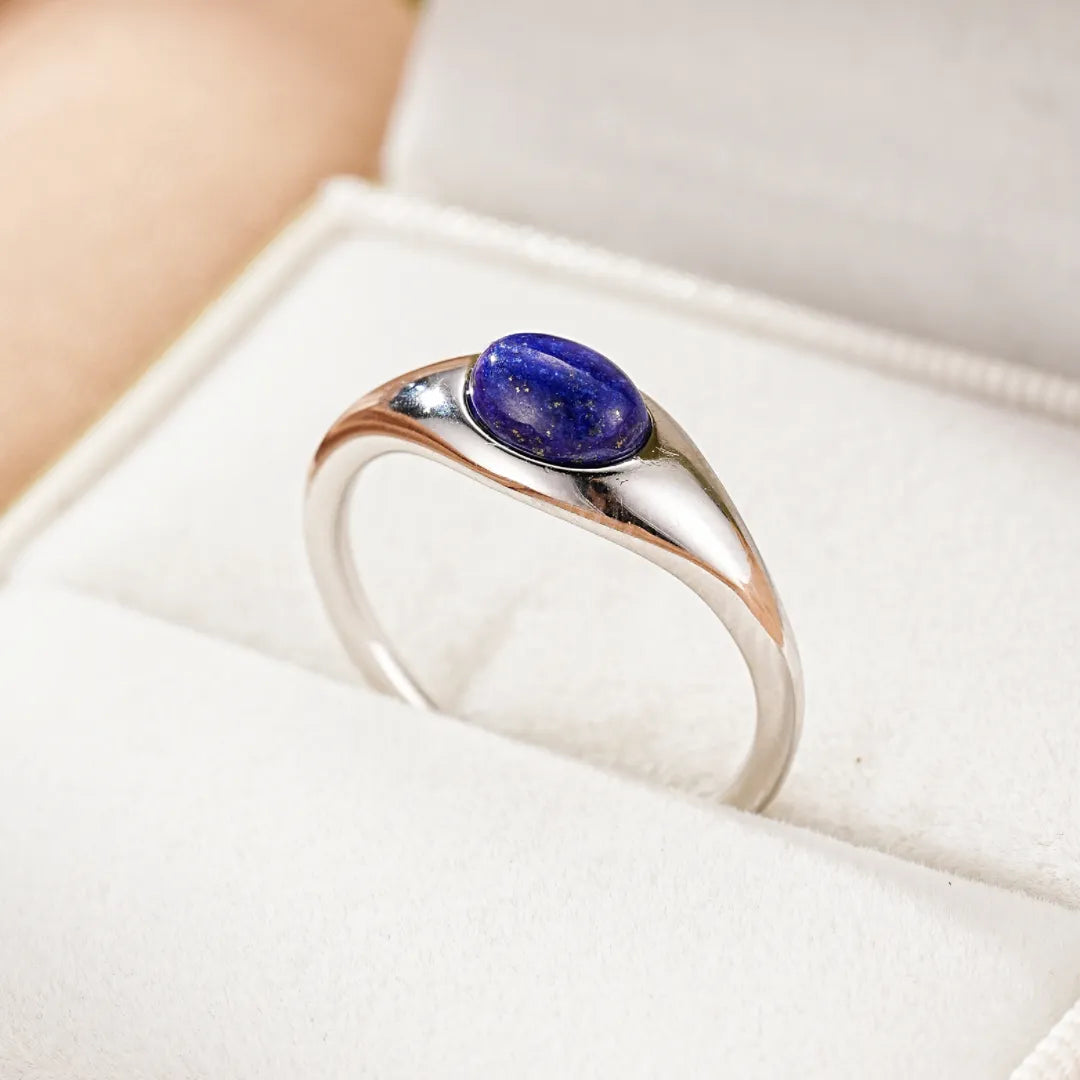
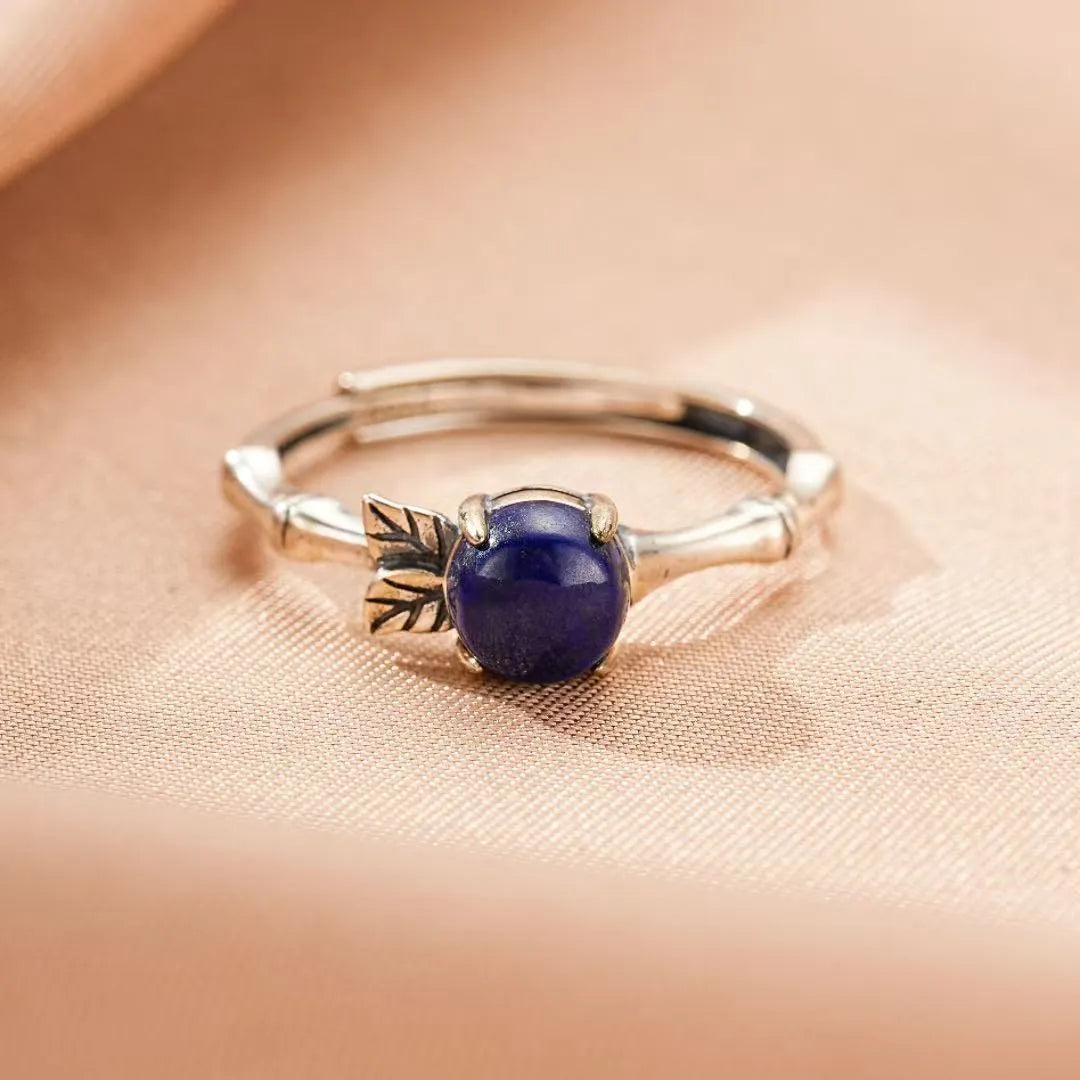
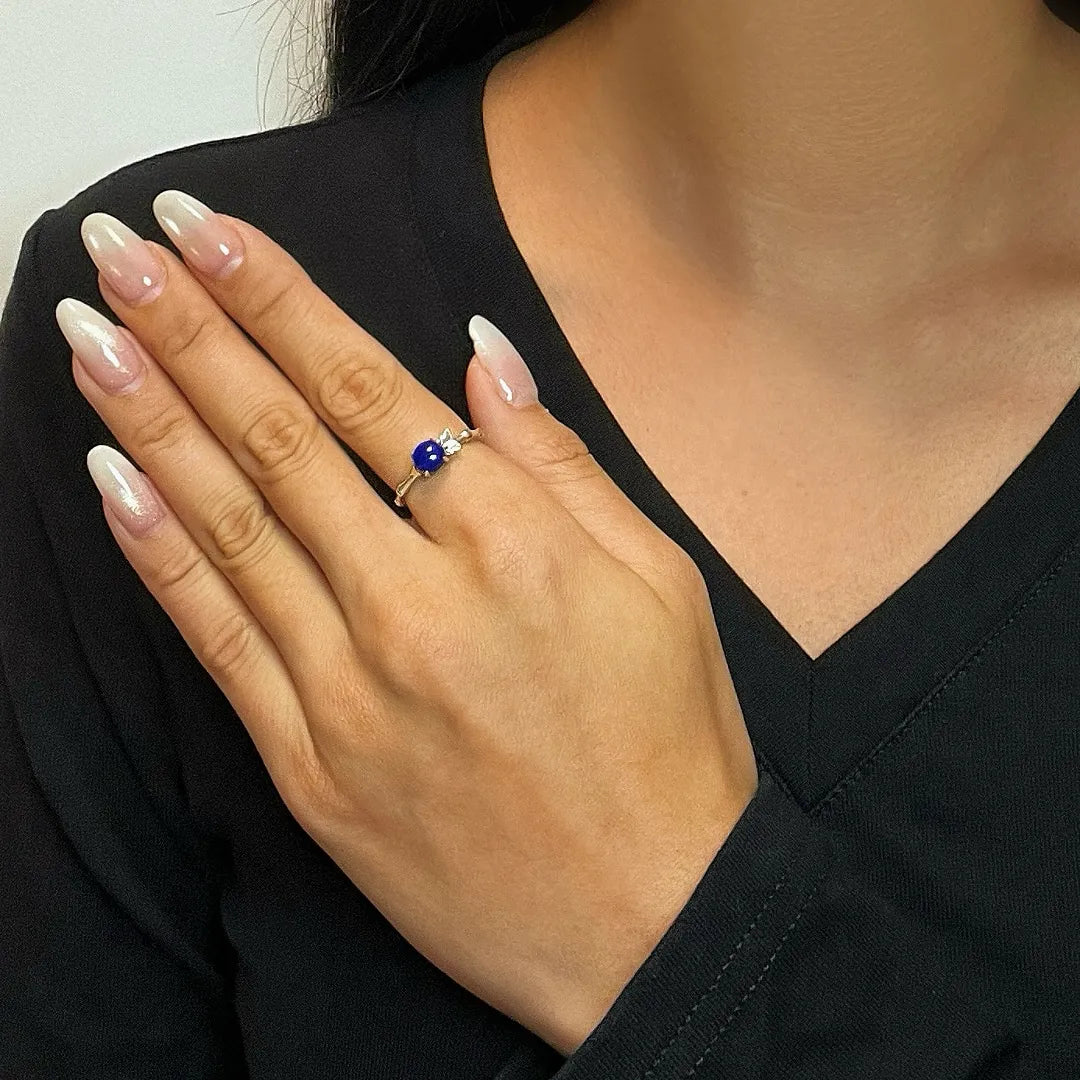
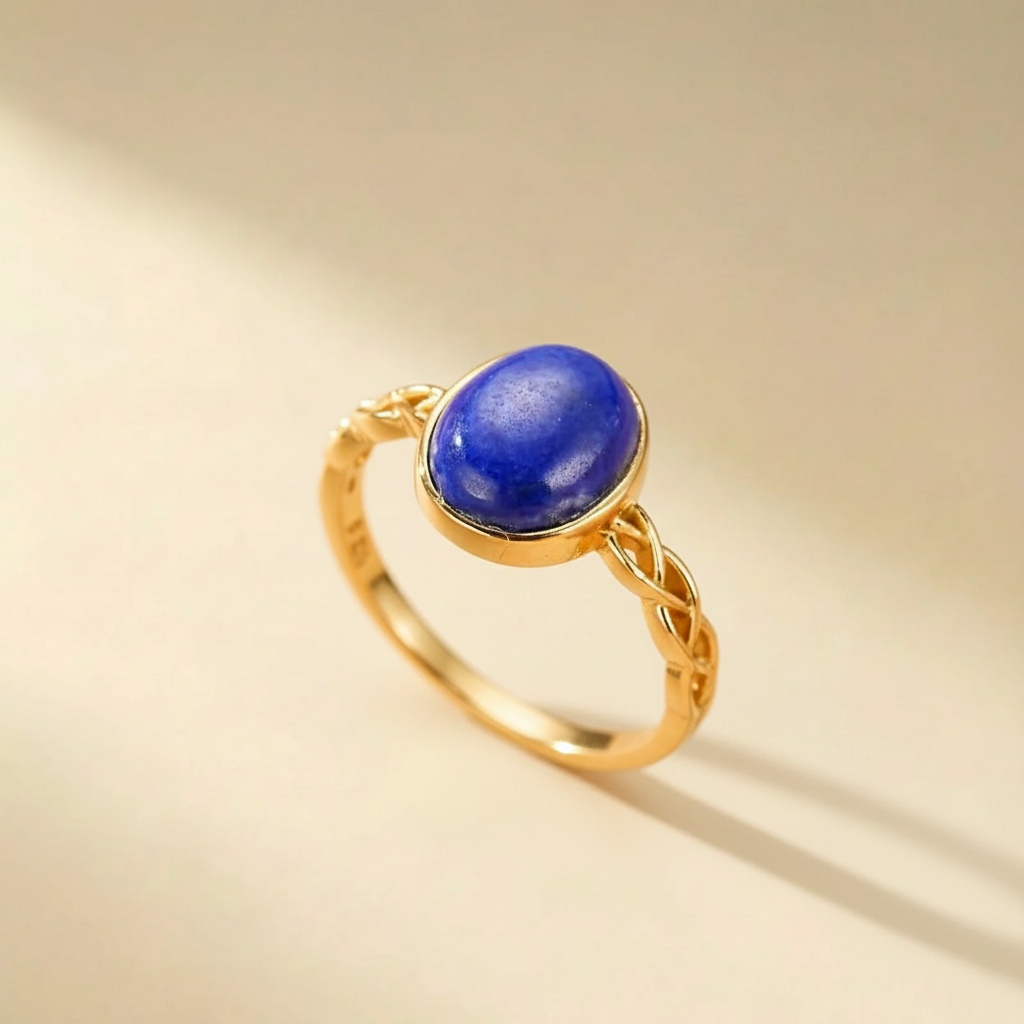
Wearing Lapis Lazuli as jewelry: aesthetics and intention
In jewelry, lapis has an advantage: it’s visually strong, elegant, and easy to pair. Depending on the piece, the symbolic use shifts slightly:
- Necklace : close to the throat, often chosen to work on communication.
- Bracelet : a discreet reminder, useful day to day.
- Ring : symbolism of decision, commitment, “I choose my truth.”
If you like a practical approach: choose a time of day to “activate” your intention (e.g., before going out: “today, I communicate clearly and calmly”). No need to overdo it—consistency makes the difference.
To go further: Lapis Lazuli Jewelry: Elegance and Energy


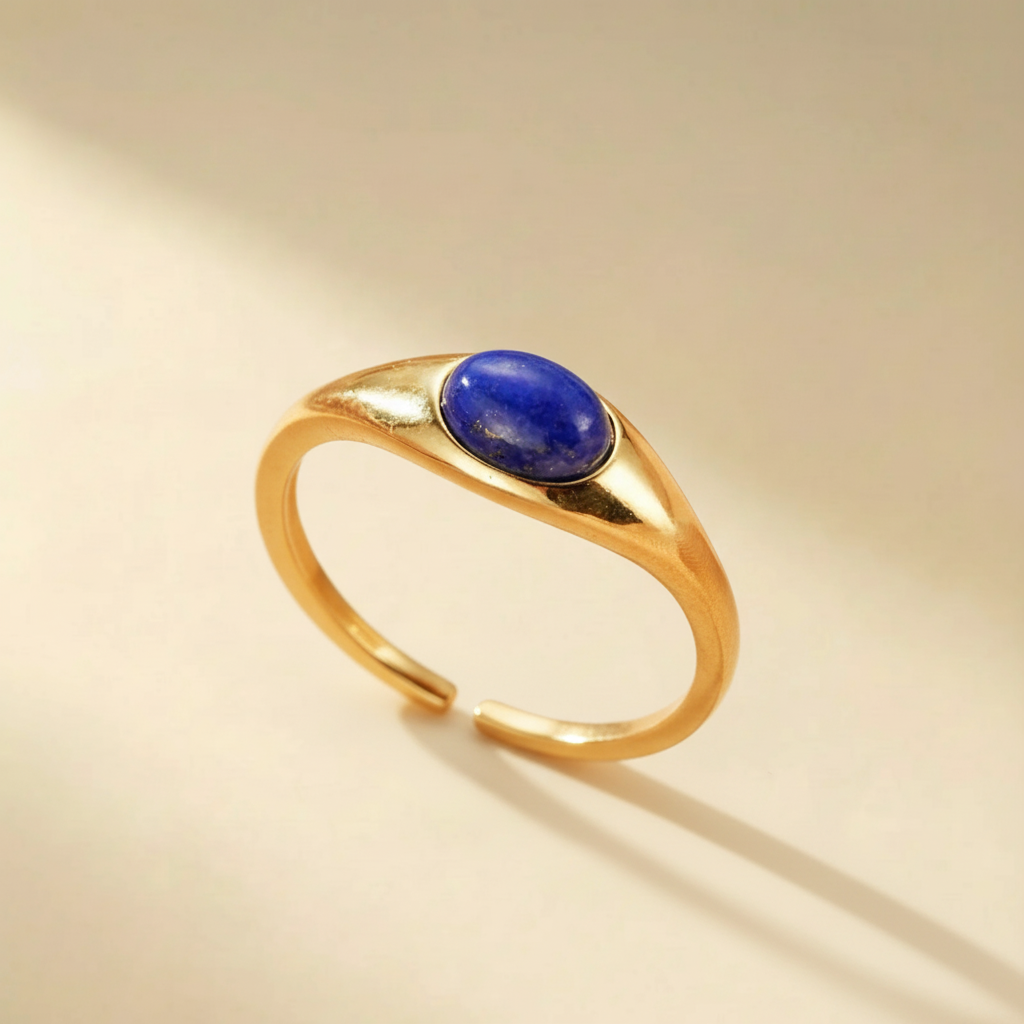
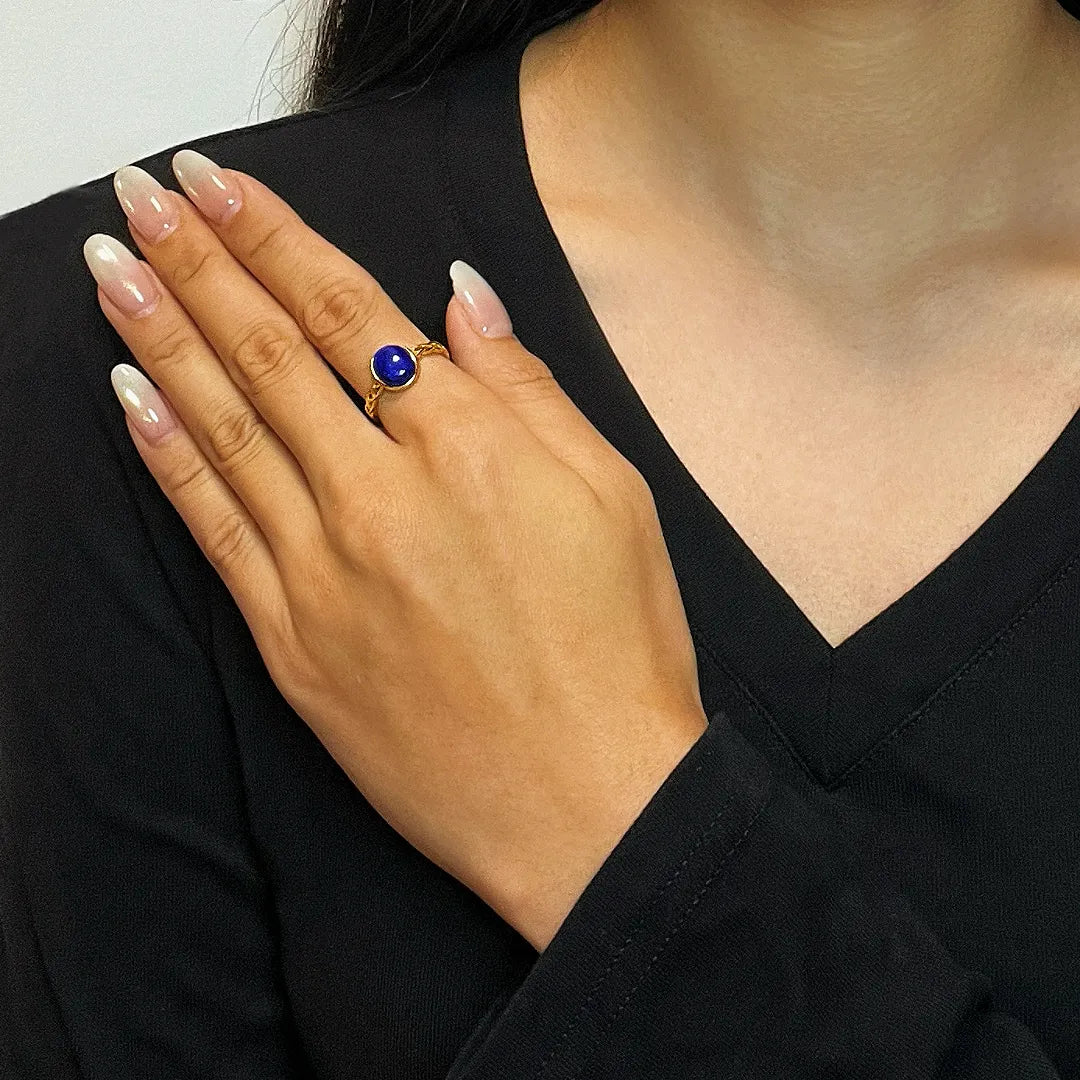
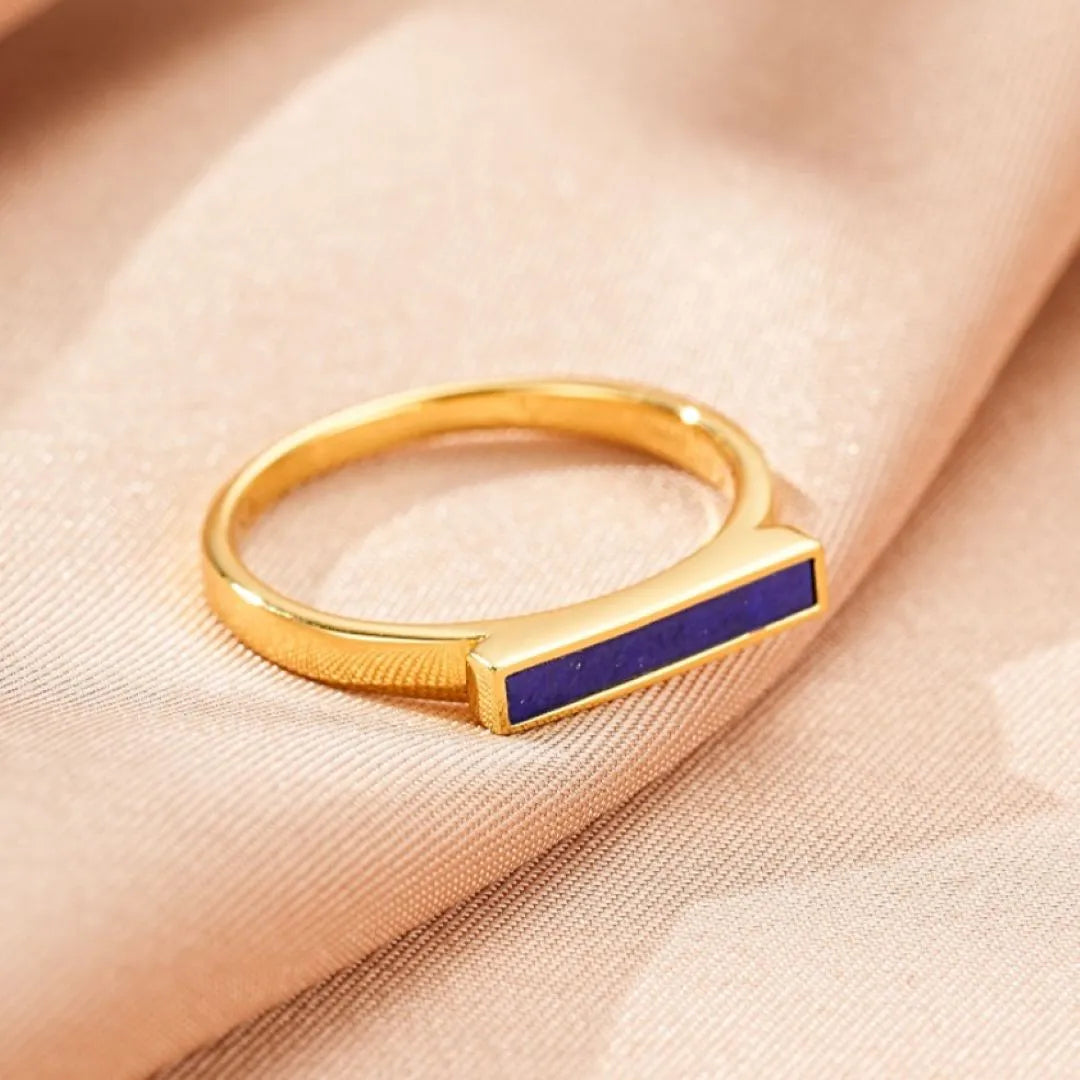
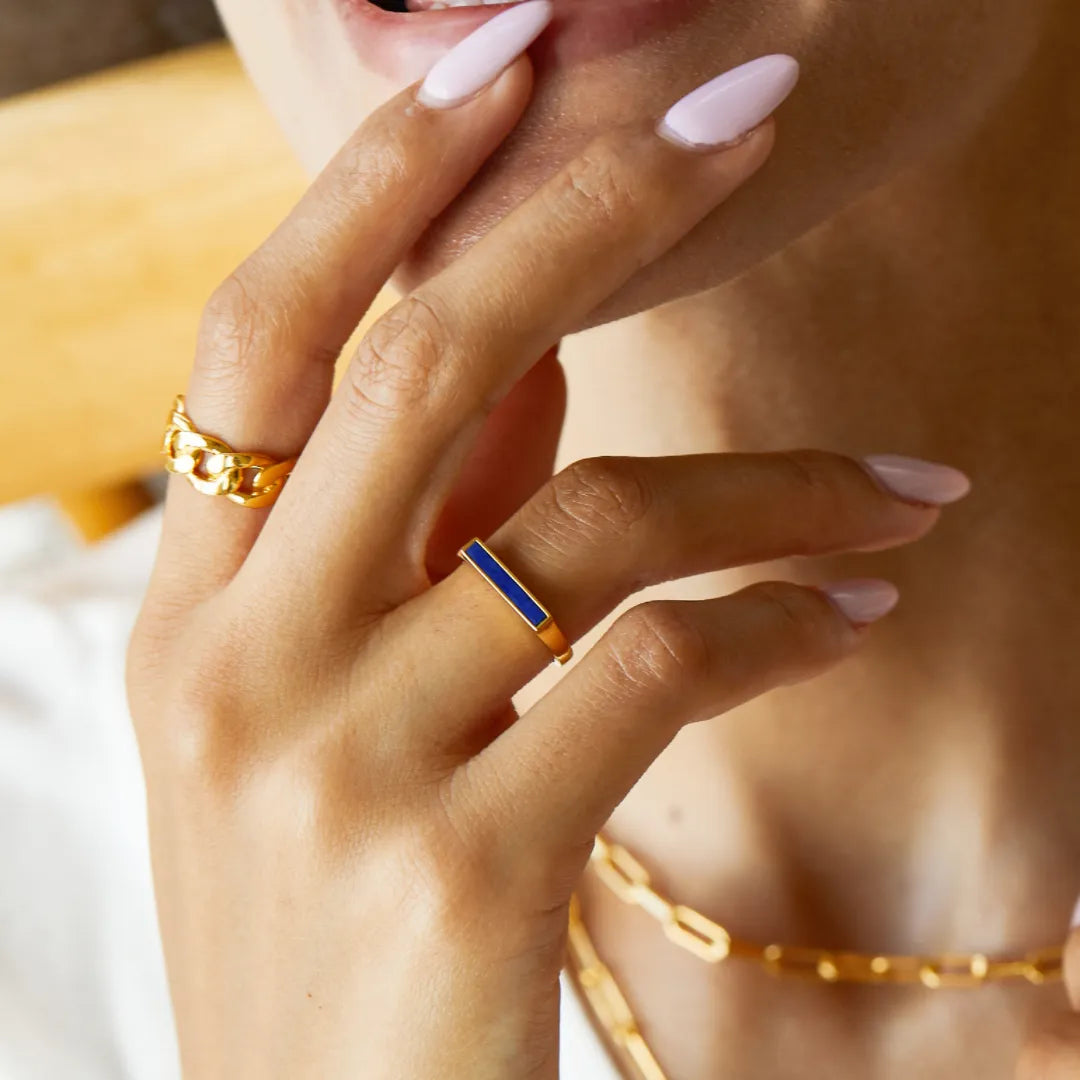


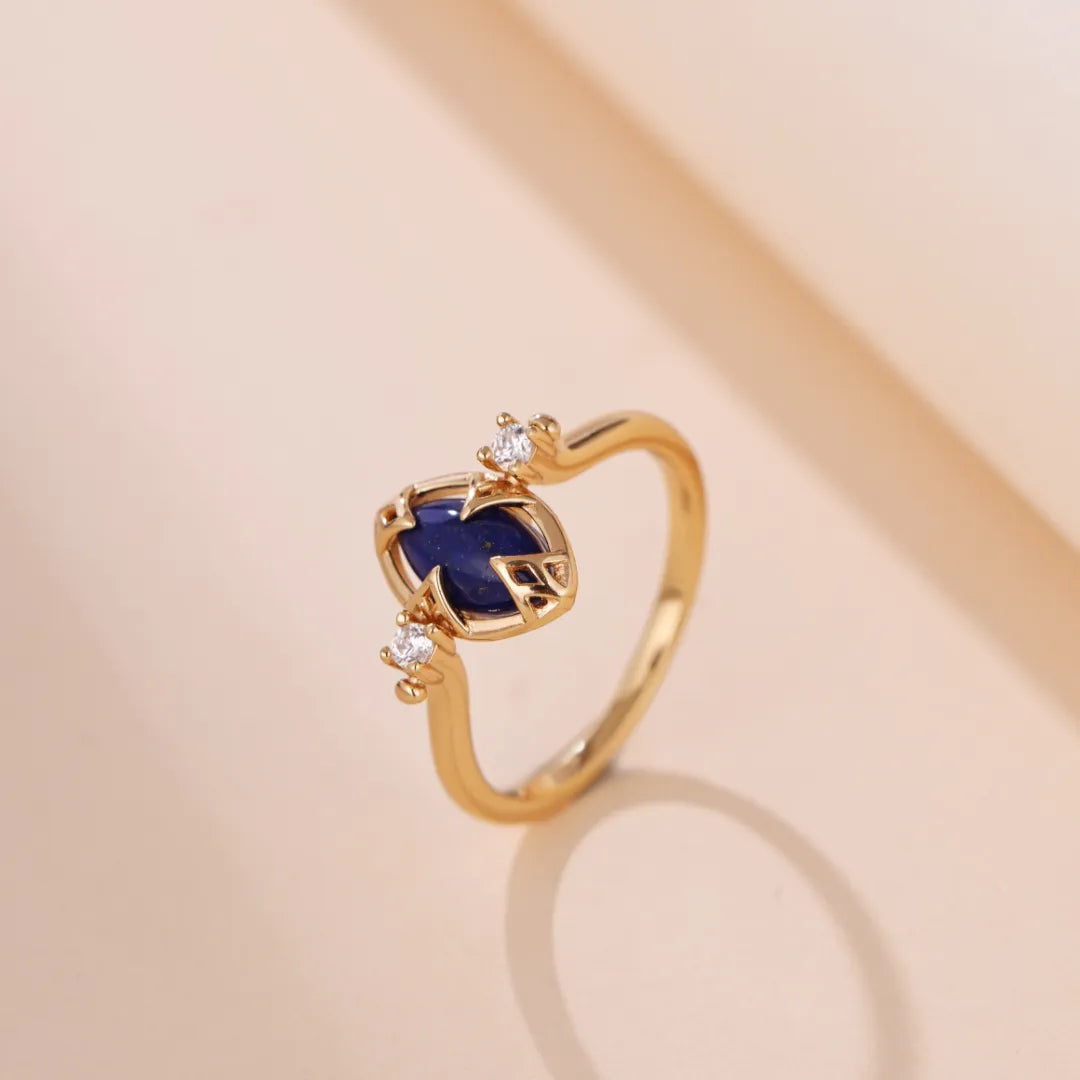

Buying and choosing your Lapis Lazuli jewelry (quality, style, use)
To choose a lapis piece:
- observe the color (depth of blue);
- look at the pyrite (fine and evenly spread rather than “massive”);
- beware of a blue that’s too uniform and “plastic-looking” (it may indicate dyeing).
And above all: choose a piece you’ll actually wear. A “perfect” stone that stays in a drawer helps neither your style… nor your intention.
To discover suitable pieces: Lapis Lazuli Jewelry Collections
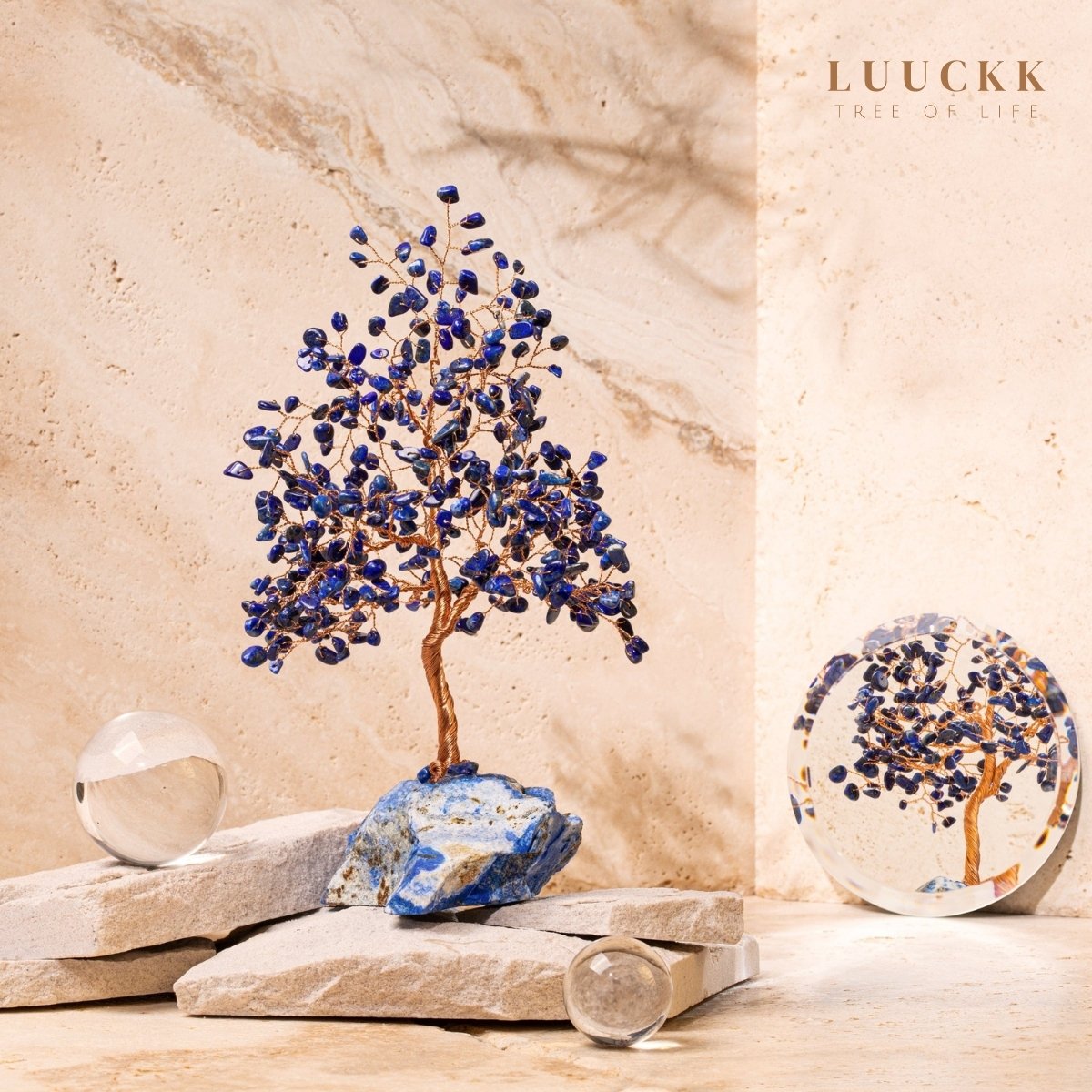
Lapis Lazuli in decoration: creating a clearer space
Lapis can also be enjoyed as décor, especially if your goal is focus, study, and mental clarity. Two placements work well:
- on a desk (work, writing, reading);
- in a calm corner (introspection, relaxation).
In an “atmosphere” approach, a stone becomes a visual marker: it reminds you of your intention. And sometimes that’s exactly what’s needed.
For a symbolic décor piece: Lapis Lazuli Jewelry & Tree of Life Collections
To go further: Decoration and Well-being: How to Incorporate Natural Stones into Your Interior




Genuine or fake Lapis Lazuli: how to tell a natural stone from imitations?
Lapis lazuli is often imitated, especially because blue sells. Knowing the most common signs helps you avoid disappointment.
Signs of natural lapis
- Pyrite : small golden specks, often irregular.
- Calcite : fine white areas (not systematic, but common).
- Depth of color : the blue can vary; it isn’t always perfectly uniform.
Signs of an imitation or a treated stone
- Blue that’s too “perfect,” too vivid, uniform with no nuance.
- Dye traces (sometimes visible in micro-cracks or on a damp cloth).
- Abnormally low price for a piece that is supposed to be large and high quality.
Another useful note: some stones are “reconstructed” (powder + resin). They can be pretty, but it’s not the same as a natural stone lapis lazuli.
To go further: Genuine or Fake Lapis Lazuli: How to Tell Natural from Imitation Stones

Cleansing and recharging Lapis Lazuli: safe methods and common mistakes
Lapis lazuli requires a bit more delicacy than other Natural Stones, because its composition (calcite, pyrite) can react to certain treatments.
Cleansing: choose gentle methods
Generally appreciated methods:
- smoke cleansing (sage, incense);
- sound (singing bowl, bell, vibration);
- resting on a geode (quartz, amethyst) or a selenite plate.
Avoid certain reflexes
- Prolonged water : may dull or weaken the stone depending on calcite presence and condition.
- Direct salt : too harsh for many stones, and lapis doesn’t like this treatment.
- Strong prolonged sunlight : can alter certain stones and finishes (especially on jewelry).
Recharging: intention + environment
Recharging isn’t just “placing the stone.” The idea is to pair it with a calm moment: by a window (soft light), moonlight, a quiet space. Most important: consistency and coherence with how you use it.
To go further: Introduction to Lithotherapy: Understanding the Energy of Natural Stones
Lapis Lazuli and style: when natural stone jewelry tells a story
Wearing a stone also means wearing an intention—and an aesthetic. Lapis has this rare quality: it can be both deep and luminous. It pairs very well with:
- neutral tones (white, beige, black) that highlight the blue;
- gold metals that echo the pyrite;
- minimalist styles (one statement piece is enough).
And if you’re looking for a “signature” logic, lapis works very well as the central stone of a personal collection: an identity stone you wear when you want to be clear, sharp, and true to yourself.
To go further: Natural Stone Jewelry: Elegance, Benefits and Symbolism
Stone combinations: what synergies with Lapis Lazuli?
Combining Natural Stones can reinforce an intention. The idea isn’t to pile up stones, but to create a coherent duo (or trio).
Calmer communication and smoother expression
- Lapis brings clarity and alignment.
- Other stones can support a softer or steadier expression.
To go further:
Wisdom, introspection, broader perspective
If your goal is to step back, learn, meditate, and clarify a life phase:
To go further:
Truth, protection, intuition (when you want to stop telling yourself stories)
Some periods call for lucidity, but also emotional protection.
To go further:
Confidence, action, motivation (speaking is good… acting is better)
When communication must be followed by action: announcing a project, defending an idea, setting a boundary.
To go further:
- Tiger’s Eye: Stone of Strength and Self-Confidence
- Carnelian: Stone of Vitality and Motivation
- Citrine: Stone of Joy and Abundance
Emotional softness and relational balance
Because telling the truth, yes… but without turning into a jackhammer.
To go further:
- Rose Quartz: Stone of Love and Gentleness
- Moonstone: Stone of Femininity and Intuition
- Peridot: Stone of Light and Renewal
- Green Aventurine: Stone of Luck and Personal Growth
Emotional transformation (when you want to change a pattern)
If you feel your truth needs a real inner turning point:
To go further: Malachite: Stone of Transformation and Emotional Healing
Conclusion: Lapis Lazuli, a stone that helps you speak up without losing yourself
Lapis Lazuli isn’t just a beautiful blue stone. It’s a natural stone lapis lazuli associated with lucidity, accurate speech, clear communication, and a form of inner wisdom. If you’re looking for one of the most coherent Natural Stones to work on “I know what I think” and “I can express it,” you’re clearly choosing well.
If you want to take action, the ideal is to integrate it into your daily life in a simple way: jewelry you wear often, a décor piece near your workspace, and a gentle cleansing routine.
To choose your piece, you can explore:
To go further: Bienfaits et Vertus de la Lapis lazuli
What is Lapis Lazuli used for in lithotherapy?
Lapis Lazuli is mainly used to support communication, mental clarity, and the expression of a more aligned personal truth.
What are the main benefits of Lapis Lazuli?
It is credited with benefits linked to calming the mind, discernment, confidence in speaking, and better listening to oneself.
Is Lapis Lazuli really a communication stone?
Yes, it’s one of its best-known associations: it supports those who want to speak more clearly, structure their ideas, and express boundaries without aggression.
Which chakra is associated with Lapis Lazuli?
Mainly the throat chakra (expression) and the third eye (intuition, lucidity).
Is Lapis Lazuli suitable for beginners with natural stones?
Yes, because it’s easy to integrate: jewelry, palm stone, decoration. It’s especially appreciated when you want to work on communication and clarity.
Read more
Discover why labradorite is one of the most fascinating natural stones, admired for both its elegance and its unique iridescent flashes. This article guides you in choosing your labradorite jewelry...
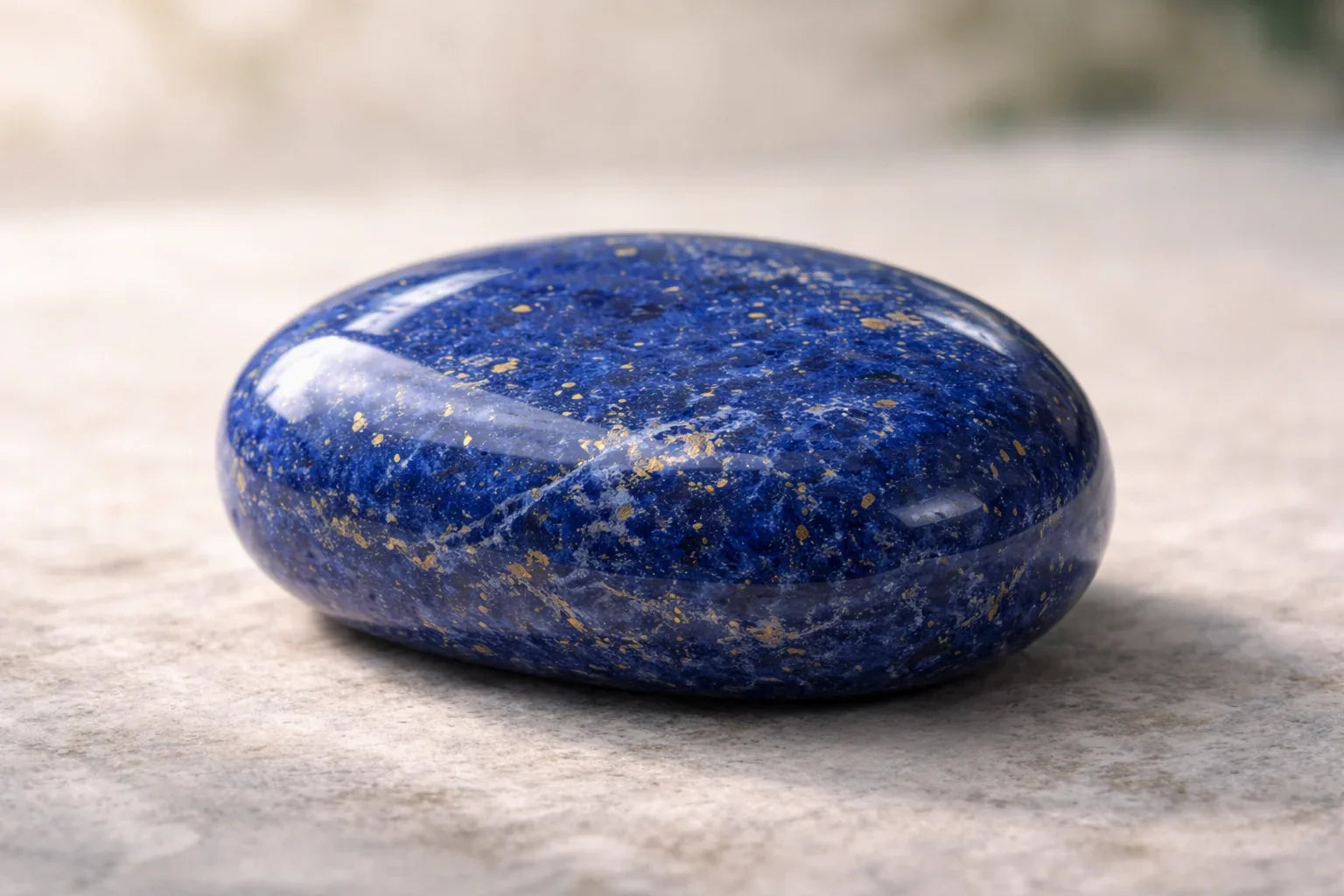
Lapis Lazuli is a fascinating natural stone, renowned in crystal healing for promoting communication, mental clarity, and intuition. Discover its benefits, its energetic properties, its connection ...


