

Natural Moonstone vs. Imitation: How to Recognize a Genuine Intuitive Gemstone?
- Introduction
- Why Is Moonstone So Highly Sought After?
- Recognizing Moonstone: The First Signs of a Natural Stone
- The Most Common Moonstone Imitations
- How to Identify Genuine Moonstone Before Buying?
- Comparison Table: Real Moonstone vs. Imitation
- Mistakes to Avoid When Identifying Moonstone
- Moonstone and Crystal Healing: Why Authenticity Matters
- Moonstone Jewelry: How to Make the Right Choice
- How to Care for Genuine Moonstone
- Conclusion: Spotting Genuine Moonstone with Care and Common Sense
- FAQ: Recognizing Genuine Moonstone
Introduction
Moonstone has captivated humanity for centuries. Gentle, luminous, and mysterious, it enchants crystal healing enthusiasts and lovers of delicate jewelry alike. Yet, its soaring popularity comes with a catch: it has opened the door to countless imitations. From opalescent glass and resin to opalite and commonly misidentified stones, it can sometimes be difficult to know whether you are holding a genuine natural Moonstone or merely a clever imitation.
So, how do you spot a real Moonstone? What details should you look for before purchasing jewelry? And above all, how can you avoid common pitfalls without becoming a certified gemologist overnight? In this guide, we explore the essential signs that distinguish a natural Moonstone from an imitation, providing clear, practical, and easy-to-apply advice.
To delve deeper into the symbolic world of this gemstone, you can also explore our article on Moonstone: Stone of Femininity and Intuition.
Our Moonstone Jewelry Collection
Why Is Moonstone So Highly Sought After?
Moonstone is a natural gemstone belonging to the feldspar mineral family. Its most celebrated feature is its soft, shimmering glow—typically white, silver, or blue. This optical phenomenon, known as adularescence, creates the illusion of light floating effortlessly within the gem. It is precisely this ethereal veil that makes Moonstone so recognizable… when it is authentic.
In crystal healing and lithotherapy, Moonstone is traditionally associated with:
- intuition;
- femininity;
- emotional balance;
- inner gentleness;
- calm and serenity;
- deep self-attunement.
It is an exquisite stone frequently chosen by those seeking to reconnect with their emotional flow or enhance intuitive insight. In fine jewelry, it is equally cherished, harmonizing effortlessly with sterling silver, gold, stainless steel, and bohemian, minimalist, or sophisticated styling.
However, the more desirable a gemstone becomes, the more copies flood the market. Moonstone is no exception. To explore its rich symbolism and uses further, discover our article Moonstone: Meanings, Benefits, and Must-Have Jewelry.
Recognizing Moonstone: The First Signs of a Natural Stone
Before evaluating imitations, it helps to understand what natural Moonstone truly looks like. Contrary to common misconceptions, an authentic stone is rarely flawless. It reveals organic nuances, faint internal inclusions, and subtle shifts between milky opacity and translucent depth.
Observe the Optical Sheen
The first clue lies in its luminous reflection. A genuine Moonstone typically showcases a soft, milky glow. This adularescence is never rigid: it glides gracefully as the angle of light shifts. When turning the stone, you will watch a silvery, white, or delicate blue shimmer ripple across its layers.
In contrast, an imitation often displays an overly uniform, glass-like, or artificial sheen. While it might look appealing at a glance, it lacks dimensionality. The shine often appears painted onto the surface, whereas a real mineral radiates light from deep within.
Spot Natural Irregularities
A genuine Moonstone can exhibit:
- fine internal lamellar fissures (centipede inclusions);
- tiny mineral inclusions;
- subtle color variations;
- milky, cloud-like zones;
- varying degrees of translucency.
These characteristics are not flaws—they are nature’s fingerprints, confirming the stone’s authentic origin. A stone that appears flawlessly uniform, without the slightest nuance or inclusion, warrants caution. Nature embraces character; synthetic replicas favor unnaturally sterile perfection.

The Most Common Moonstone Imitations
The challenge with Moonstone is that several synthetic counterparts look quite attractive. They shimmer, catch the light, and please the eye—yet they are not mined from the Earth.
Opalite: The Most Common Source of Confusion
Opalite is frequently mistaken for Moonstone. It boasts glowing, milky blue-orange reflections that appear remarkably bright. However, opalite found in fashion jewelry is a man-made synthetic glass.
While undeniably pretty, it should never be presented or sold as natural Moonstone. The telltale distinction lies in its look: opalite has a candy-like translucence, perfectly uniform coloring, and an almost surreal glow.
Opalescent Glass
Treated glass can mimic Moonstone’s luminous reflections. It is typically much smoother, hyper-consistent, and glassy. Under magnification, you may spot tiny air bubbles, a glassy fracture pattern, or an unnaturally uniform composition.
Resin or Plastic
These replicas are significantly lighter in weight and warm to the touch right away. Often found in costume jewelry, they may pass casual inspection from a distance but noticeably lack natural mineral coolness, weight, and light refraction.
White Labradorite or “Rainbow Moonstone”
An interesting gemological fact: most gemstones traded under the name “Rainbow Moonstone” are actually white labradorite. This is not deceptive provided the jeweler is upfront, as this trade name is widely embraced in the industry. However, mineralogically, white labradorite belongs to the plagioclase feldspar group, whereas classic Moonstone is predominantly an orthoclase feldspar.
How to Identify Genuine Moonstone Before Buying?
To ensure complete confidence in your purchase, always evaluate several factors together. A single clue may not tell the whole story, but their combination will guide you reliably.
1. Examine the Overall Appearance
A natural Moonstone features a soft, organic look, often slightly hazy or milky. It ranges from semi-translucent to opaque depending on the grade and variety. If the gem appears glass-clear, overly saturated, or fluorescent, proceed with discernment.
2. View the Gemstone Under Varying Angles
Place the gemstone near natural light and rotate it slowly. The luminous flash should glide subtly across the stone’s interior plane. On an imitation, the sheen is often static, flat, or rigidly identical from every perspective.
3. Feel the Surface Temperature
Natural minerals feel distinctly cool when first held against your skin, warming up only gradually. Plastic or resin imitations feel warm or room-temperature immediately and lack thermal heft.
4. Assess the Weight and Density
Like all natural crystals, Moonstone carries authentic mineral density. A resin duplicate will feel unusually featherweight. While not decisive on its own for petite jewels, weight is a valuable indicator alongside visual checks.
5. Beware of Unrealistic Prices
While an accessible price does not automatically imply a fake, extraordinarily cheap listings should prompt a careful review of product descriptions. Ethical extraction, hand-selection, artisanal cutting, and fine jewelry setting all reflect legitimate value.
Bijoux Moonstone





Comparison Table: Real Moonstone vs. Imitation
| Criterion | Genuine Moonstone | Imitation |
| Luster & Sheen | Soft, deep, dynamic adularescence | Overly glossy, static, or superficial |
| Color | White, cream, silvery, bluish, sometimes peach | Too uniform, overly saturated, or neon |
| Inclusions | Natural internal layers and micro-crystals | Completely flawless or with air bubbles |
| Touch | Cold to the touch initially | Warmer and lightweight (plastic/resin) |
| Weight | Natural mineral heft and density | Noticeably light (synthetics) |
| Price | Reflective of gemological grade | Unusually cheap |
| Overall Look | Organic, multi-dimensional, unique | Factory-perfect or flatly smooth |
While this table provides a reliable quick reference, nothing replaces buying from a trusted jeweler. A reputable brand guarantees transparency: accurate descriptions, certified natural stones, unfiltered photography, and detailed care guides.
Mistakes to Avoid When Identifying Moonstone
When shopping for Moonstone jewelry, it is easy to be swayed by a striking photograph. Here are the most frequent missteps to avoid.
Relying Exclusively on Photos
Images can be digitally enhanced, brightly lit, or captured from artificially flattering angles. A stone can appear much bluer, clearer, or more luminous than it looks in person.
Confusing Beauty with Authenticity
An imitation can look remarkably pretty. The issue is never its aesthetic appeal, but rather marketing synthetic materials under the guise of rare earth-mined gems. Transparency is paramount.
Seeking a Flawless Gemstone
Many believe that a genuine gemstone must be completely blemish-free. In reality, fine inclusions, cleavage veils, and gentle shifts in tone are hallmarks of genuine origin that lend each piece its one-of-a-kind allure.
Conducting Destructive Tests
Avoid scratching, heating, or applying household chemicals to test your jewelry. Moonstone rates 6 to 6.5 on the Mohs hardness scale and can chip under impact. Visual inspection and purchasing from trusted artisans are always safer approaches.
Moonstone and Crystal Healing: Why Authenticity Matters
In crystal healing, stone authenticity is essential. Enthusiasts seek an organic connection with geological energy shaped over millions of years. While a replica may look pleasant, it lacks the vibrational symbolism of Earth-born minerals.
Authentic Moonstone is celebrated for supporting times of transition, nurturing intuitive vision, and instilling inner peace. It is deeply aligned with feminine energy, emotional harmony, and reflective presence.
While holistic crystal practices do not replace professional medical advice, they gracefully enrich daily mindful living, meditation rituals, and personal wellness routines.
To delve deeper into its energetic attributes, read our dedicated guide on the Benefits and Healing Properties of Moonstone.

Moonstone Jewelry: How to Make the Right Choice
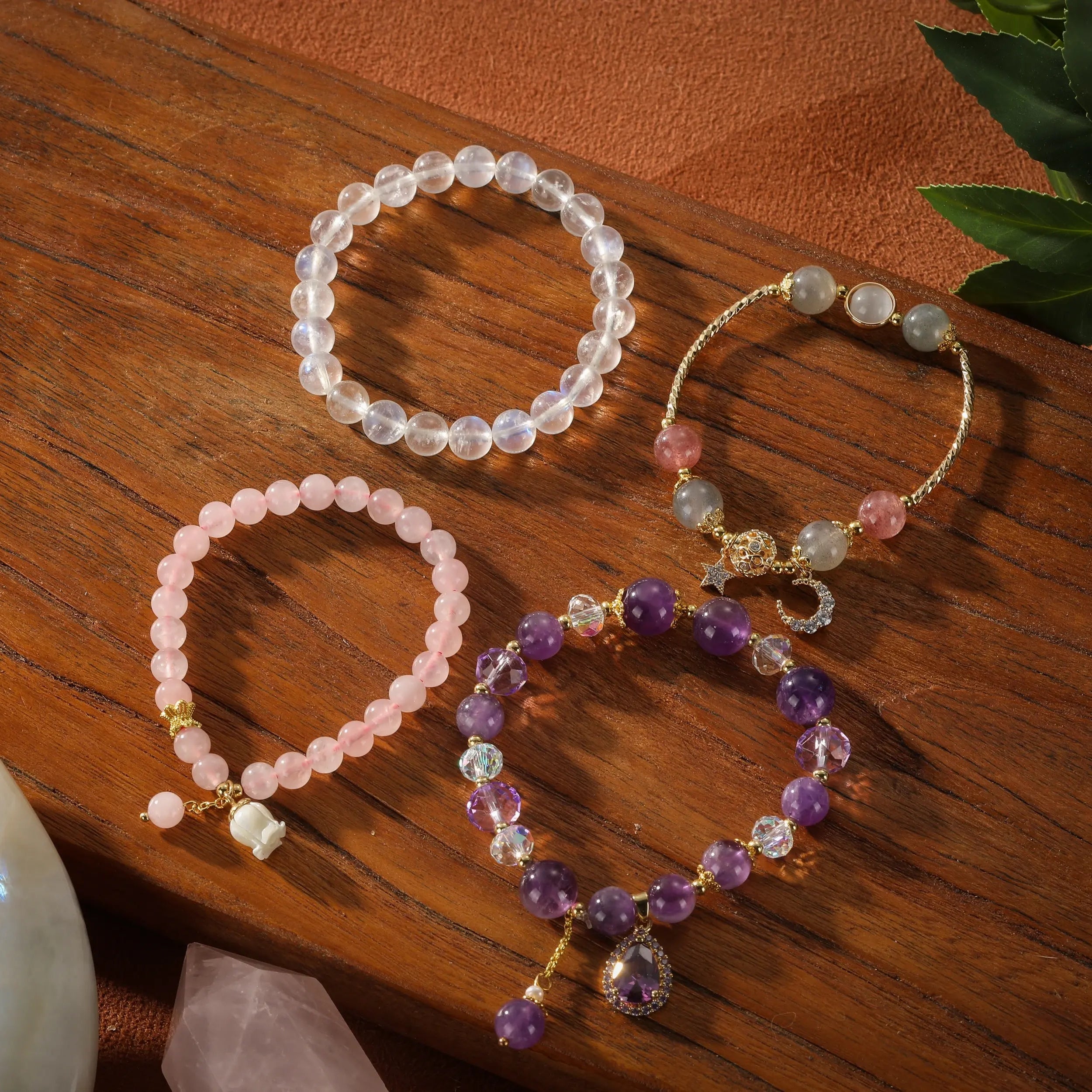
Moonstone jewelry is cherished because it allows you to wear this enchanting gemstone day after day. Whether in a bracelet, ring, pendant, necklace, or earrings, each creation offers its own captivating charm.
The Moonstone Bracelet
A bracelet is perfect for keeping your gemstone in direct contact with your pulse throughout the day. It wears beautifully on its own or stacked with companion natural stones.
The Moonstone Pendant
A pendant rests the gemstone close to the heart. It remains a timeless favorite, beloved for its refined elegance and profound symbolism.
The Moonstone Ring
A ring draws immediate attention. Exceptionally chic, it simply requires thoughtful wear, as hands are regularly exposed to hard surfaces, water, and everyday products.
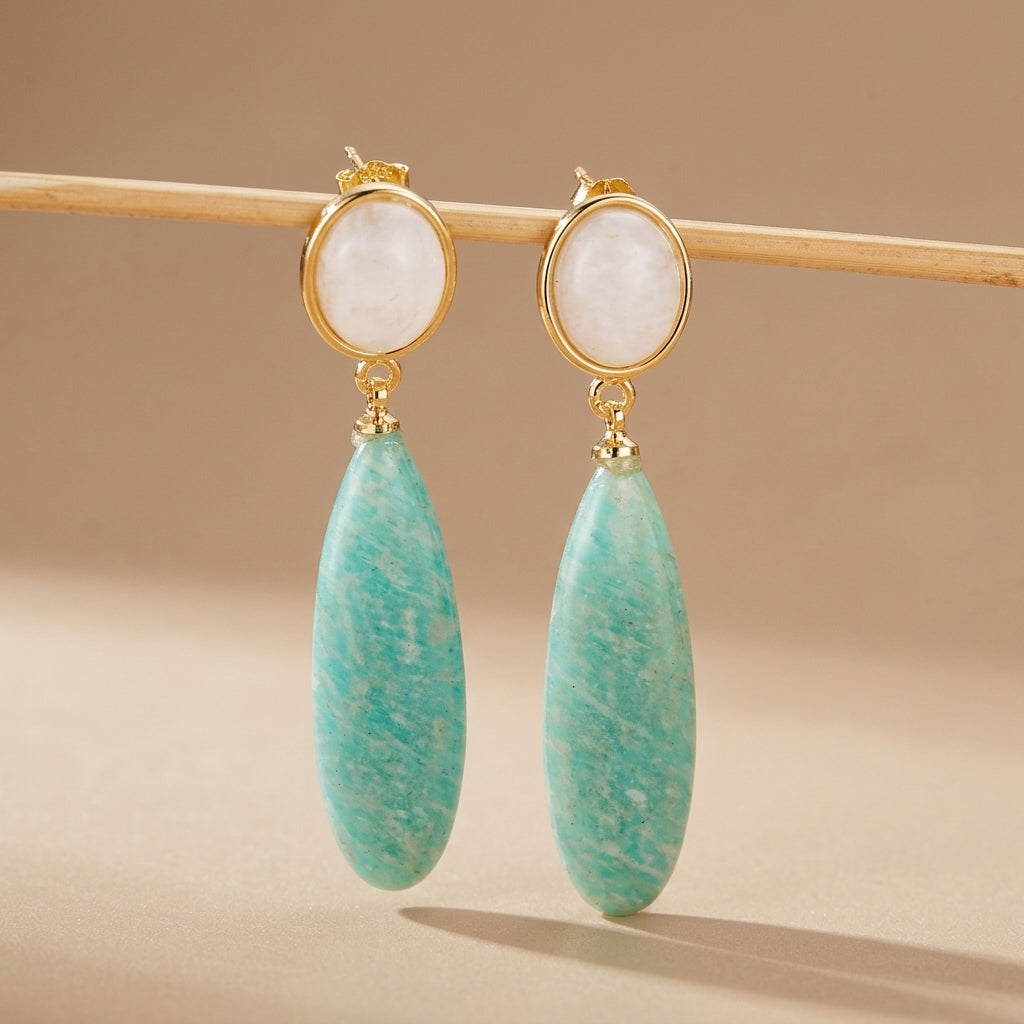
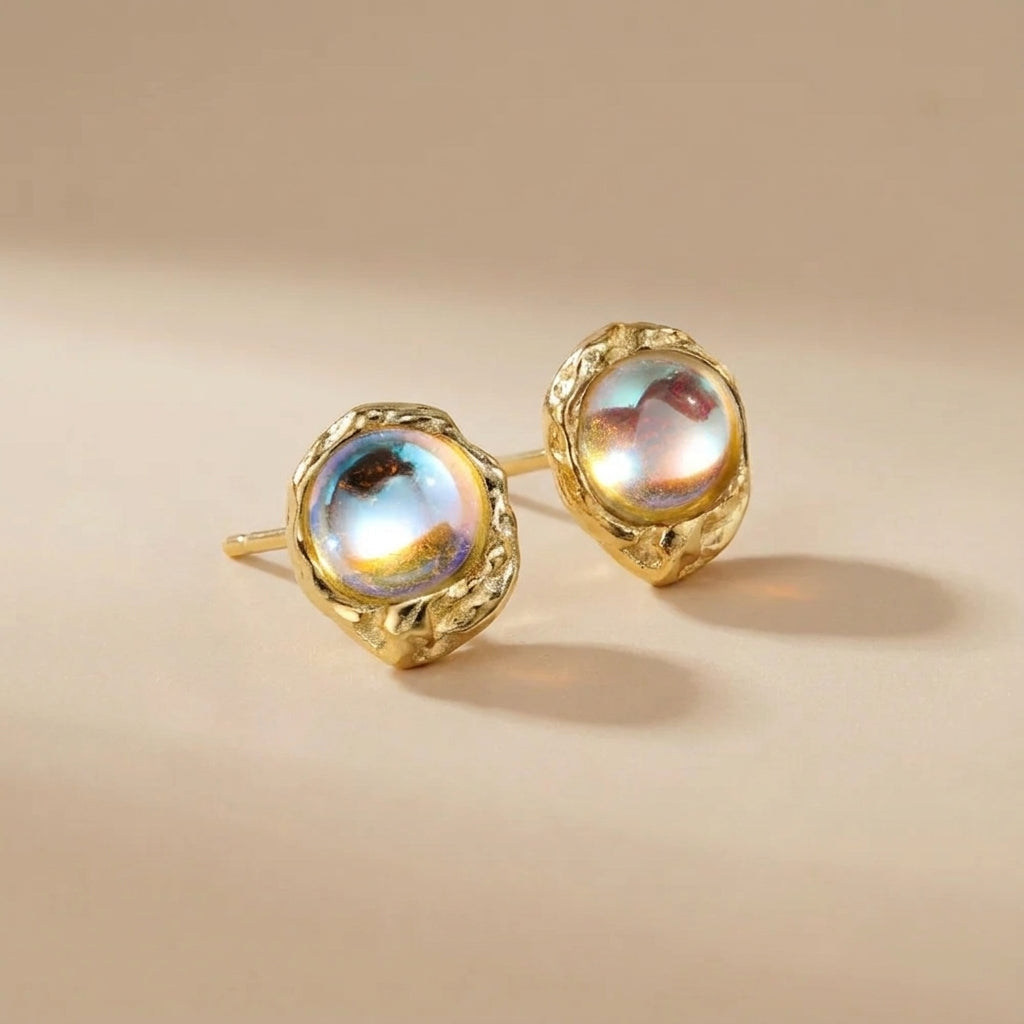
Moonstone Earrings
Earrings illuminate your face with a delicate shimmer, offering a harmonious blend of soft romance and refined sophistication.
Before acquiring a piece, always verify:
- the clear mention of “natural stone”;
- the authenticity and detail of product photographs;
- the comprehensive jewelry description;
- the precious metal setting (sterling silver, gold-plated silver, etc.);
- the brand’s reputation and customer reviews;
- provided jewelry care instructions.
To discover how to combine aesthetics and intention, read Moonstone Jewelry: Elegance and Energy.

How to Care for Genuine Moonstone
Once you have found your ideal Moonstone, mindful care preserves its natural luster. While durable for regular wear, its moderate hardness makes it sensitive to heavy shocks and abrasion.
Essential care guidelines include:
- avoid harsh chemicals, perfumes, and cleaning detergents;
- remove jewelry before workouts, swimming, showering, or chores;
- store Moonstone in an individual pouch away from harder stones;
- cleanse with a soft, slightly damp microfiber cloth;
- protect from prolonged exposure to intense direct sunlight.
For those practicing crystal healing, purify your gemstone gently with clear running water or herbal smoke, and recharge it under soft moonlight to protect its natural finish.
Conclusion: Spotting Genuine Moonstone with Care and Common Sense
Identifying genuine Moonstone is all about attentive observation. A true natural gem displays soft, shifting glows, organic depth, subtle hues, and delicate natural inclusions. Conversely, imitations often appear overly flawless, unnaturally light, monochromatic, or excessively glossy.
Before ordering, take the time to review product details, ensure jeweler transparency, and verify reasonable pricing. When in doubt, entrust your purchase to a specialist in fine natural gemstone jewelry.
Moonstone is much more than an enchanting gem: it is an intuitive, timeless symbol of gentle grace and inner harmony. Chosen with care, it will accompany you as an enduring, radiant treasure.
FAQ: Recognizing Genuine Moonstone
How can I tell if a Moonstone is genuine?
Examine its reflections, inclusions, temperature, weight, and pricing. A genuine natural Moonstone features a soft, dynamic, multidimensional adularescent glow with authentic organic nuances.
Does real Moonstone always have a blue flash?
No. While blue adularescence is highly celebrated, genuine Moonstone also displays soft white, silvery, cream, peach, or pearlescent glows. A strong blue flash is not mandatory for authenticity.
Can natural Moonstone have inclusions or imperfections?
Yes. Internal cleavage planes, fine inclusions, and subtle variations in transparency are common in natural stones. They are positive indicators of authentic Earth formation.
Can Moonstone jewelry be worn daily?
Yes, with appropriate care. To maintain its luminous brilliance, avoid sharp impacts, abrasive chemicals, and prolonged water immersion.
How do I care for my natural Moonstone?
Wipe gently with a soft, slightly damp cloth. Avoid harsh chemicals and ultrasonic cleaners, and store separately from harder gemstones to prevent scratches.
Read more

Discover natural moonstone, a luminous gemstone celebrating divine feminine energy, intuition, and emotional balance. Explore its spiritual meanings, crystal healing virtues, daily styling tips, an...

Discover moonstone jewelry: elegant creations combining natural beauty, gentle serenity, and symbolic energy. Highly revered in crystal healing, this natural gemstone is associated with intuition, ...


