
Labradorite Jewelry: Elegance and Energy
- Introduction
- Labradorite: a natural stone like no other
- Labradorite jewelry: which styles to choose to combine elegance and comfort?
- Benefits and properties of labradorite in lithotherapy: what it’s said to offer
- How to choose an authentic labradorite: criteria few people check
- How to wear labradorite: style, pairings, and small tips that change everything
- Care: keep your labradorite jewelry glowing (and avoid classic mistakes)
- Conclusion: labradorite, a jewel with character
- FAQ – Labradorite Jewelry: frequently asked questions
Introduction
Labradorite has that little something that intrigues you. At first glance, it’s a understated stone, sometimes even discreet, with smoky gray tones. Then, as soon as it catches the light, it ignites with blue, green, golden, sometimes coppery flashes. And that’s when you understand why labradorite jewelry leaves no one indifferent.
But labradorite isn’t just a showcase star. In the world of Natural Stones and lithotherapy, it’s often described as a stone of protection, associated with grounding, intuition, and a kind of daily energetic “bubble.” So, trend effect or true ally? And above all, how do you choose labradorite jewelry that’s both elegant, authentic, and suited to your lifestyle?
In this article, we’ll go far beyond generalities. We’ll talk about what makes the stone unique (and why its flashes aren’t “just” pretty), the most suitable natural stone jewelry styles depending on use, concrete criteria to recognize an authentic natural labradorite stone, common mistakes to avoid, and practical care tips to keep the glow (and the energy, if you follow lithotherapy) for as long as possible.
Our Labradorite Jewelry
Labradorite: a natural stone like no other
A play of light that’s no accident
Labradorite belongs to the feldspar family, a mineral group widely found on Earth, but some varieties have a visual magic that’s hard to match. The famous iridescent effect of labradorite, called labradorescence, isn’t a color “laid” on the surface. It’s an internal optical phenomenon: light enters the stone, reflects off fine layers or microscopic structures, then exits to create those metallic flashes.
This detail changes everything, especially when we’re talking about labradorite jewelry. Two stones of the same size can look very different: one will “flash” with the slightest movement, the other will be softer, more mysterious. It depends in particular on:
- the stone’s orientation during cutting and polishing (a point often overlooked),
- the quality of the internal structure,
- the type of flashes (dominant blue, rainbow, green or golden flashes),
- and the shape (cabochon, faceted, polished rough).
Another lesser-known point: labradorite can show “window” areas (a more transparent or less iridescent section). In a well-designed piece, the artisan chooses the most flattering face and positions the stone to catch light where it’s most visible: the center of a pendant, the outer face of a bracelet, or facing forward on a ring.
Labradorite, Natural Stones, and modern symbolism
In Natural Stones, some gems charm through their color, others through their symbolism. Labradorite does both. And that’s likely why it remains so popular in natural stone jewelry: it works for everyday elegance while carrying a strong energetic reputation.
In contemporary lithotherapy tradition, labradorite is often associated with protection, filtering “parasitic” emotions, and support during mental fatigue. What makes it interesting is that it’s frequently recommended for people who are highly solicited: relational professions, noisy environments, periods of overload, or simply days when you need to keep your calm.
And if we step away for a second from energetic vocabulary, we can also read labradorite as a stone of “adaptation”: its appearance changes with the angle, it doesn’t reveal everything at once, and it matches a wide range of clothing styles. In jewelry, that versatility is precious.
Read: Labradorite: Stone of Protection and Intuition

Labradorite jewelry: which styles to choose to combine elegance and comfort?
Labradorite jewelry has a rare advantage: it can look very chic without being “too much.” Its palette of grays and metallic flashes works with most outfits, and the iridescent effect adds a refined touch without tipping into extravagance. The secret is choosing the right type of jewelry for your use, your personality, and… your patience with maintenance.

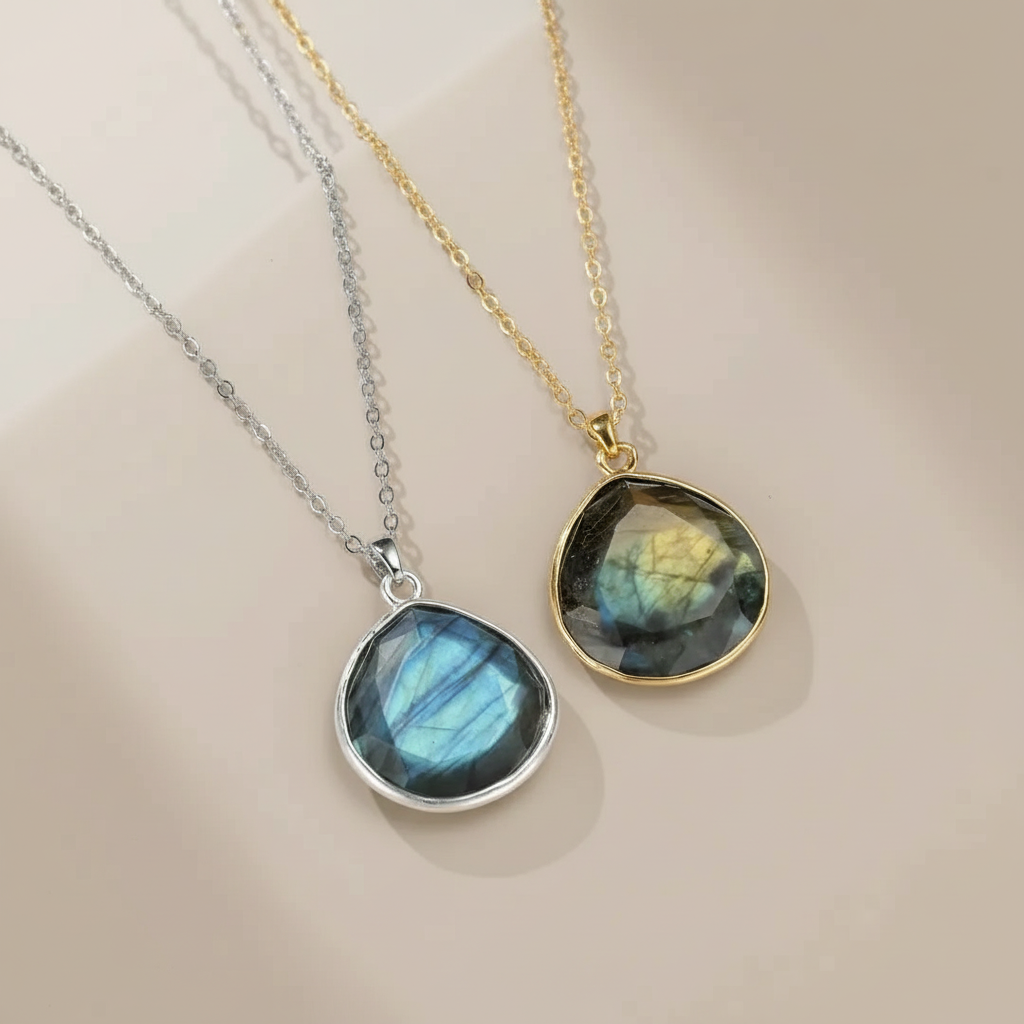
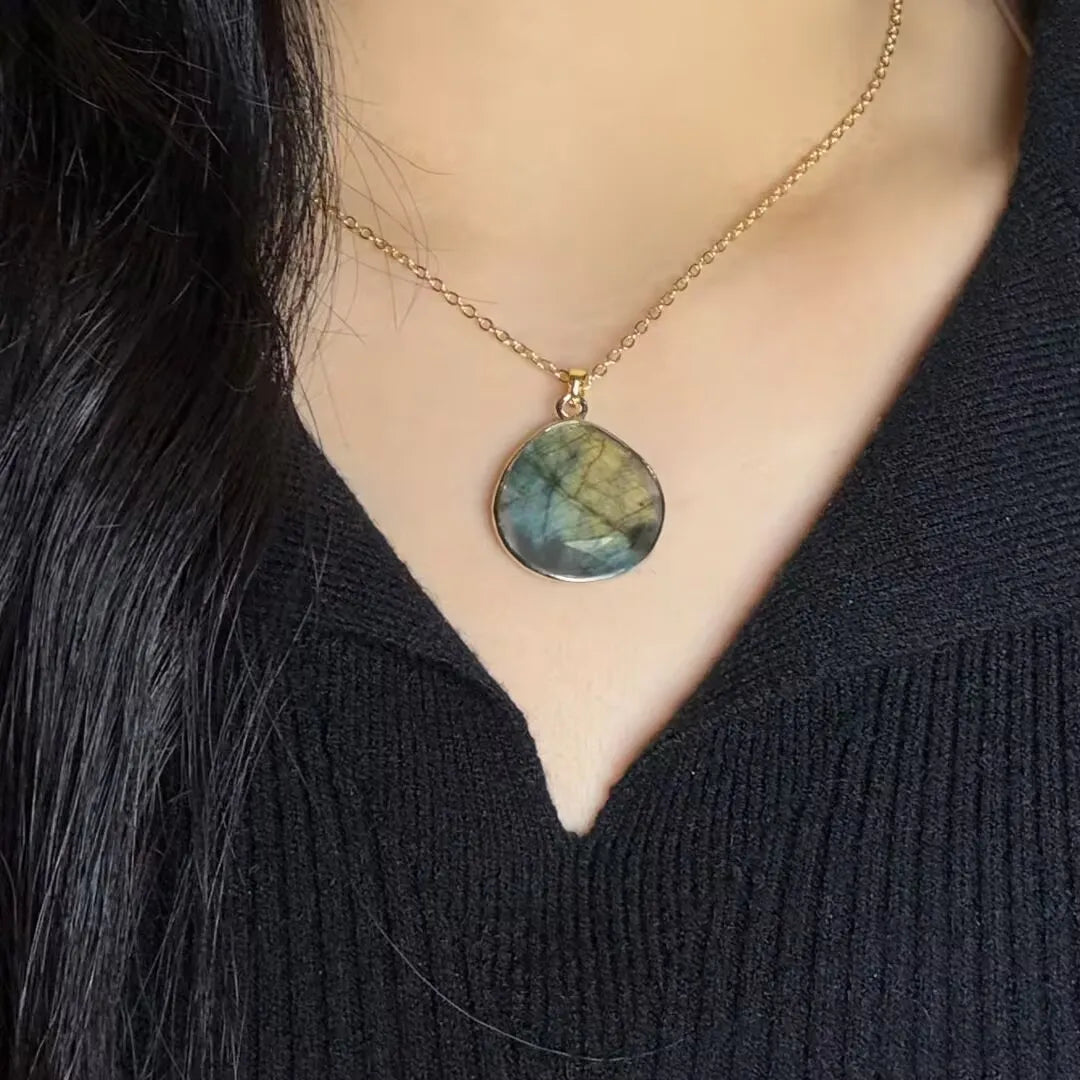

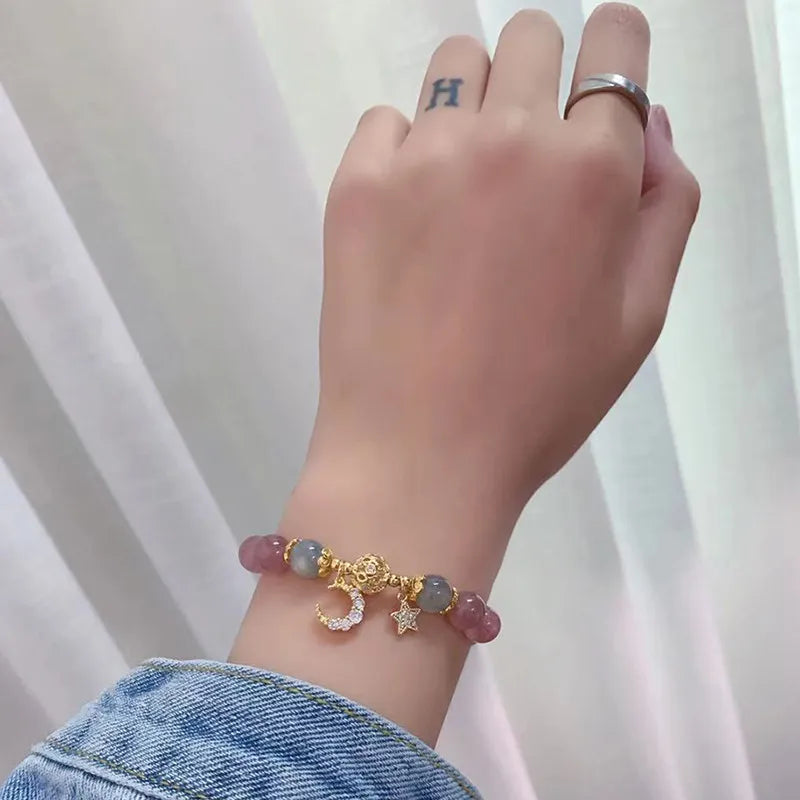


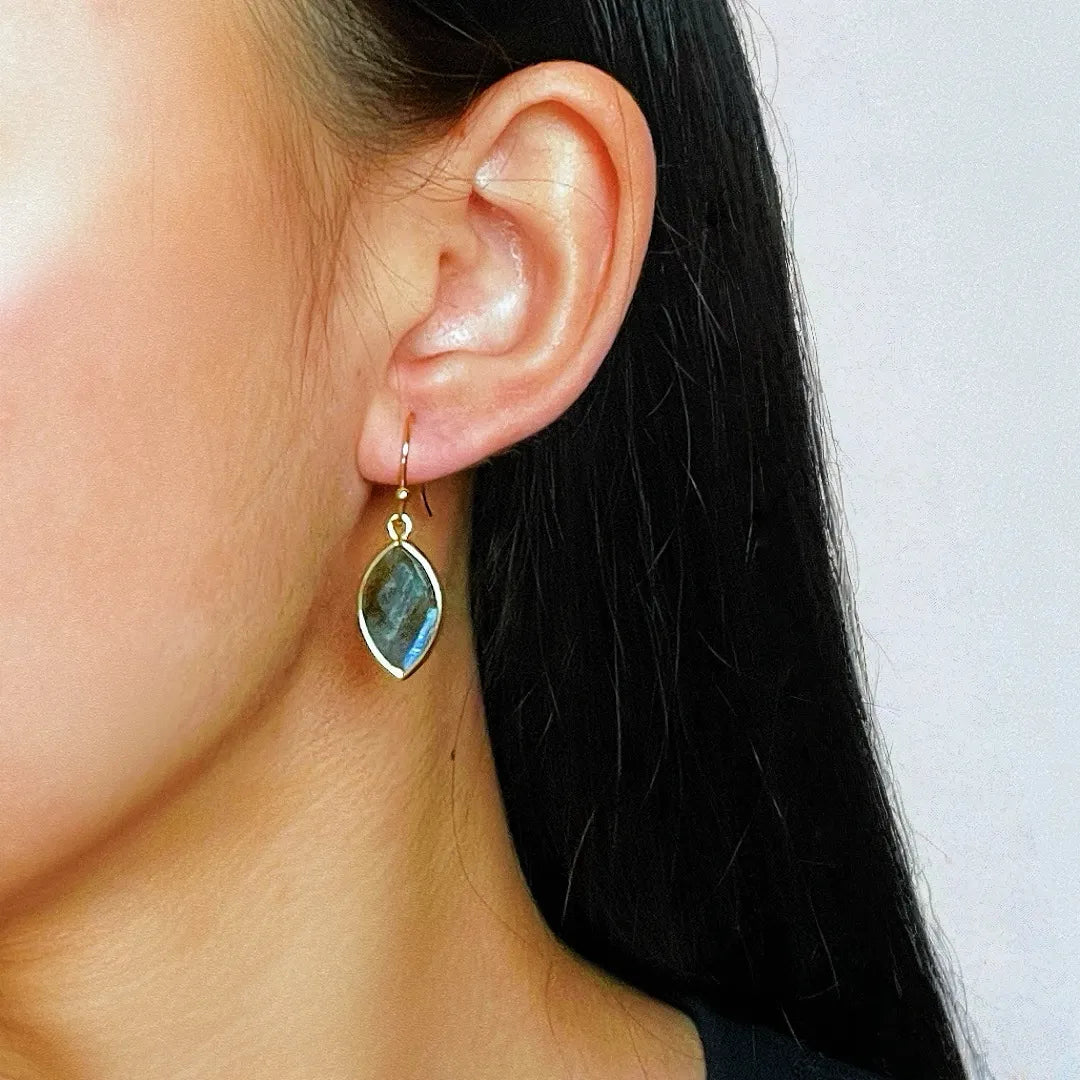
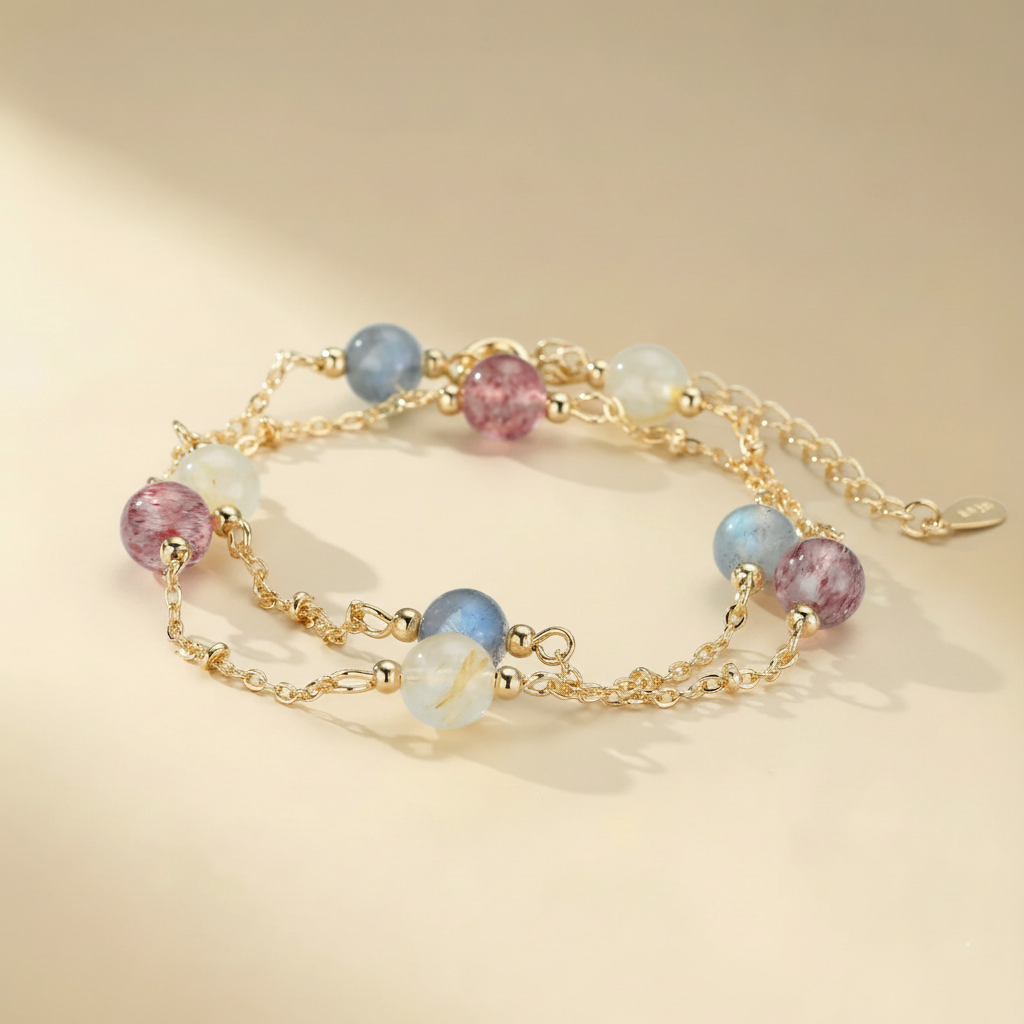
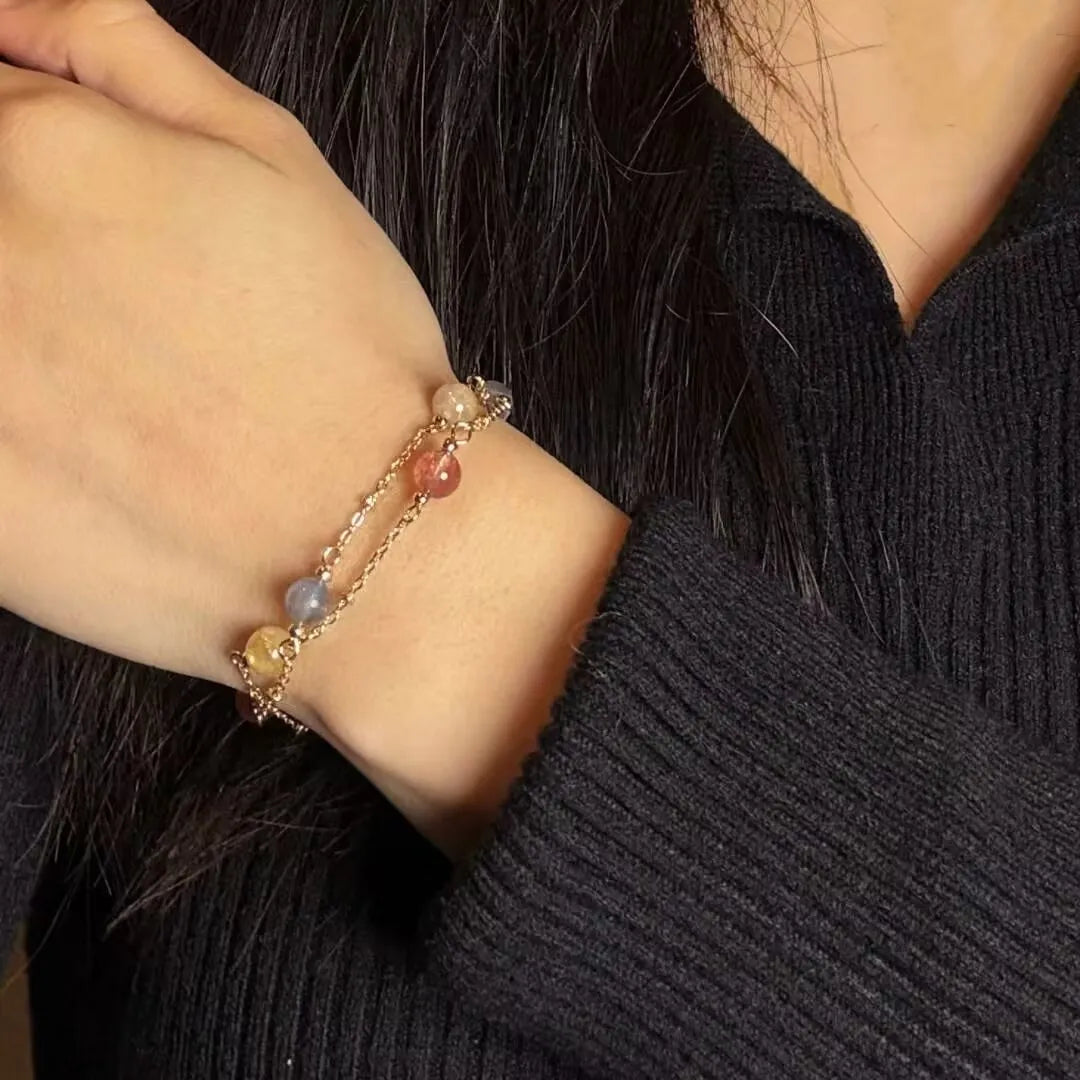
Labradorite bracelet: your everyday companion
The bracelet is often the first step into the world of natural stone jewelry. Easy to wear, easy to gift, and visible enough to enjoy the flashes. There are several approaches:
- Beaded bracelets : perfect for a casual style, easy to mix with other Natural Stones. Comfort is usually excellent, especially with quality elastic.
- Bracelets with a central stone : more “jewelry-like,” dressier, often set on a chain or bangle.
- Multi-stone bracelets : labradorite paired with other stones, interesting for setting an intention (aesthetic or lithotherapy).
Practical tip: if you work a lot on a computer, a bracelet that’s too bulky can knock against the desk. In that case, choose smaller beads (6 mm or 8 mm) or a bracelet with a flat stone.
Necklace and pendant: elegance that catches the light
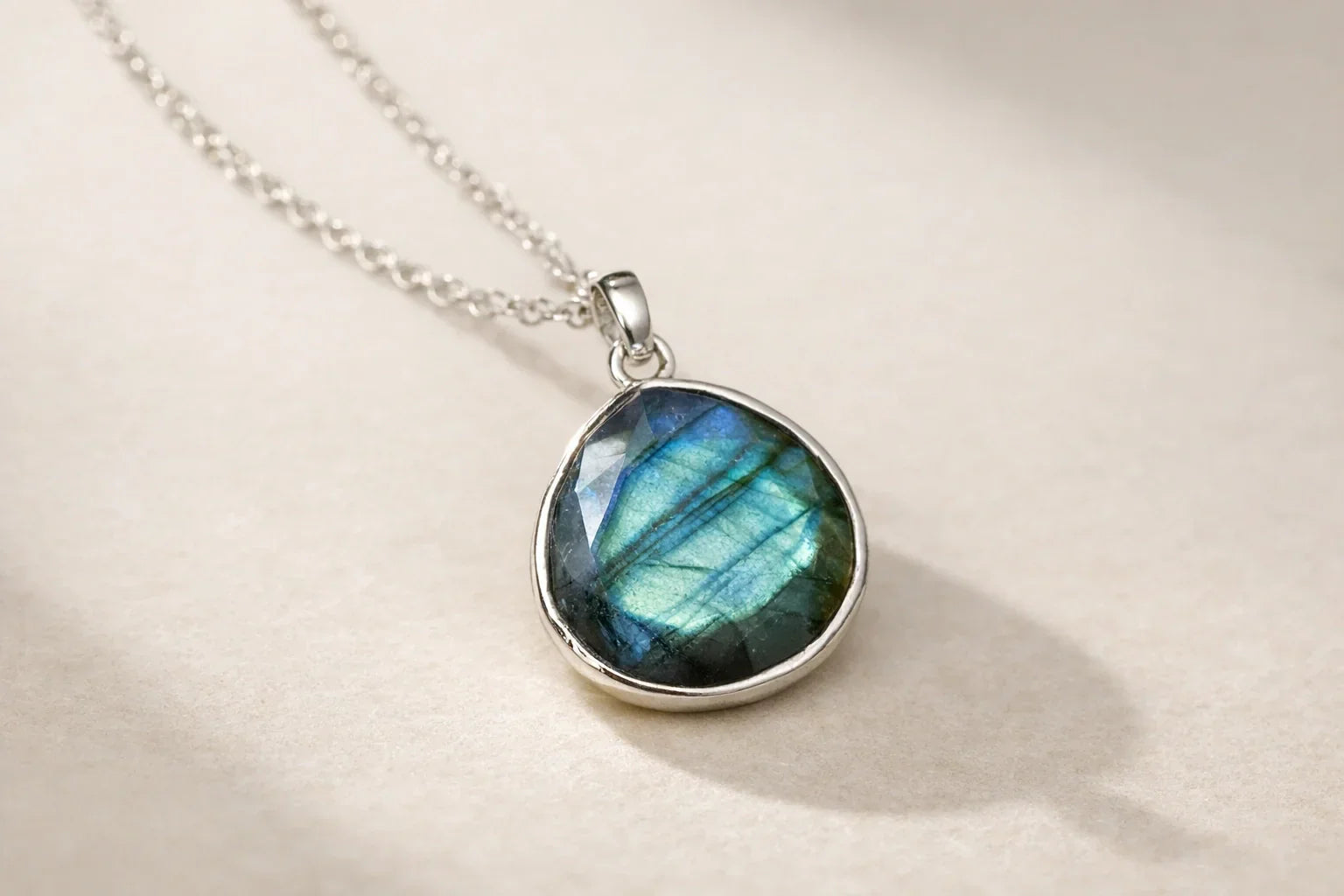
The labradorite pendant is the “signature” piece. It puts the stone front and center and catches flashes with the slightest movement. For visual impact, the cabochon shape (domed stone) remains a sure bet: it maximizes labradorescence.
A few details that make the difference:
- Length : a short pendant (choker/45 cm) highlights the stone on an open neckline; a long necklace (60–80 cm) is ideal for layered looks.
- Setting : the more open the setting (open back), the more the light plays in the stone. Conversely, a very closed setting protects more, but can limit the effect.
- Metal : 925 silver and steel naturally pair with bluish flashes; gold creates a warm, sophisticated contrast, especially if the stone has golden or green flashes.
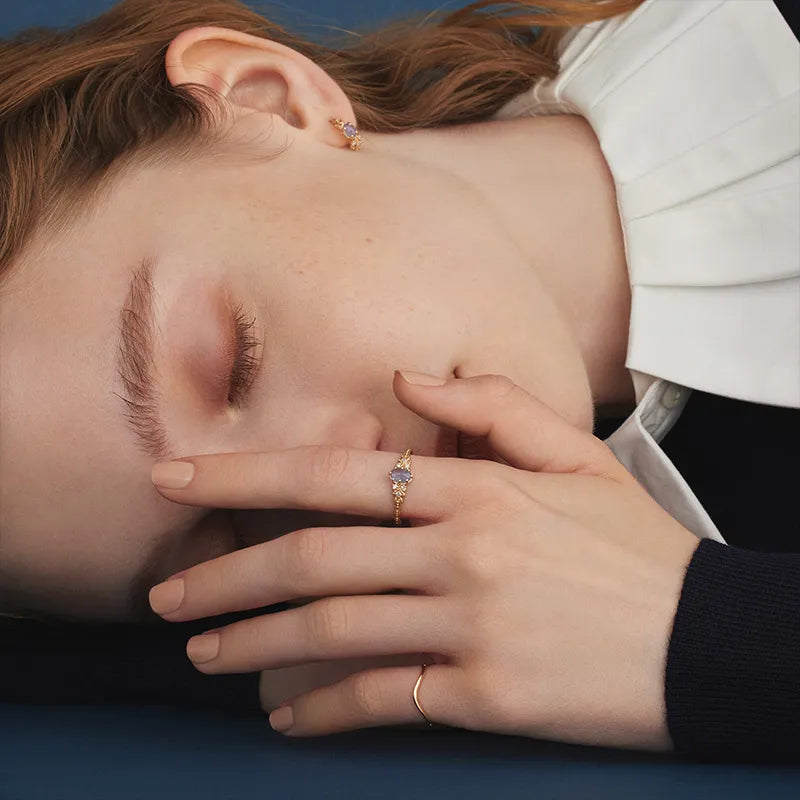
Labradorite ring: the “wow” effect at your fingertips
The ring is spectacular because the stone is close to the eye. But it’s also the most exposed piece:
- impacts against doors, keys, countertops,
- repeated friction,
- frequent contact with water and everyday products.
If you like statement rings, choose a protective setting (bezel setting or slightly raised setting) and avoid wearing it for household tasks. If you want to wear it every day, a smaller stone, well set, will often be a better choice.
Earrings: discreet or luminous, always flattering
Labradorite earrings are ideal if you’re looking for effortless elegance. They brighten the face and remain less exposed to impacts. Two common options:
- Studs : minimalist, perfect at the office.
- Dangles : dressier, stunning with hair tied back.
Style tip: labradorite loves matte fabrics (linen, wool, thick cotton) that bring out its metallic flashes.
Read: Labradorite Jewelry Collections

Benefits and properties of labradorite in lithotherapy: what it’s said to offer
Before we dive in, one simple rule: lithotherapy is a non-medical wellness approach. It can support a lifestyle, an intention, a grounding routine, but it does not replace medical advice or treatment. With that framework in place, we can talk about what labradorite symbolizes and how many people use it in daily life.
Protection: a stone often chosen when “everything spills over”
In lithotherapy language, labradorite is sometimes called a “shield” stone. It’s said to help when you feel permeable to the atmosphere, other people’s emotions, or overly stimulating environments. That doesn’t mean it “erases” problems—rather, it would help you keep a bit of distance and not absorb everything that comes your way.
In a more pragmatic reading, wearing labradorite jewelry can act as a concrete reminder: “I protect myself,” “I breathe,” “I keep my center.” And that reminder alone can change the way you move through a day.
Mental soothing: finding calm when your mind races
Many people associate labradorite with reducing mental fatigue. During overload periods (too many tasks, too many screens, too much noise), it’s often chosen as a supportive stone.
In a simple routine, some people wear a labradorite bracelet on busy days, then remove it in the evening to mark a separation between work and rest. This “transition ritual” can be surprisingly effective, even without considering yourself an expert in Natural Stones.
Intuition and clarity: a stone that invites you to listen to yourself better
Labradorite is frequently linked to intuition, discernment, and inner clarity. Again, you can read it two ways:
- lithotherapy version: the stone would stimulate subtle perception and self-listening.
- behavioral version: wearing a symbolic piece encourages you to slow down and decide less “reactively,” more “consciously.”
If you tend to hesitate, multiply scenarios, or say yes too quickly, a stone associated with clarity can become an anchor. Not a magic wand, but a reference point.
Who is labradorite often recommended for?
In popular uses, natural labradorite is often recommended for:
- highly sensitive or very empathic people,
- relational professions (care, teaching, sales, reception),
- people in transition periods (new job, moving, rhythm change),
- creatives who want to preserve their energy.
And in all cases, the best recommendation remains this: test gently. Wear your jewelry for a few hours, observe how you feel, and adjust.
Read: Benefits and Properties of Labradorite
How to choose an authentic labradorite: criteria few people check
Buying a natural labradorite stone is a bit like choosing a miniature piece of art. The stone can look gorgeous in photos and less vivid in real life—or the opposite. And in a market where you can find everything, it’s better to know the real indicators of quality.
Flashes: yes, but not just any
A beautiful flash doesn’t necessarily mean a beautiful stone, but it’s a good starting point. What you’re looking for:
- labradorescence visible from several angles,
- a flash that seems to come “from within” rather than surface shine,
- a sufficiently wide iridescent area (not just a tiny spot).
Watch out for the “spotlight” effect in photos: some images are taken with very directed light, making it look like the entire stone is blazing, when in reality the angle is very specific. A good seller often shows the stone from several angles, or on video, to avoid disappointment.
Cut and orientation: the expert detail
This is one of the most important—and least known—points. A labradorite can be good quality but poorly cut, and therefore look “dull.” The orientation of the cabochon relative to internal layers determines the strength of the flash.
If you compare two similar labradorite jewelry pieces, the one that catches light quickly has often benefited from a better orientation choice.
Natural “imperfections”: a reassuring sign
Natural stones rarely have perfect uniformity. In labradorite, you may find:
- fine inclusions,
- micro-lines,
- milkier areas.
These details aren’t necessarily flaws. In jewelry, it’s all about balance: a stone can be natural, authentic, and still less “flashy.” What matters is that the look matches what you’re searching for.
Imitations and treatments: what you need to know
You may come across:
- dyed stones,
- glass imitations,
- composite materials.
Without falling into paranoia, it’s useful to check how transparent the information is: origin, nature of the stone, any potential treatment, and price consistency. A labradorite that’s “too perfect” and too cheap should raise curiosity.
Read: Natural or Treated Labradorite: How to Recognize an Authentic Stone
How to wear labradorite: style, pairings, and small tips that change everything
Wearing natural stone jewelry is as much about style as it is about coherence. Labradorite has the advantage of being a chameleon. But with a few simple choices, it can become the piece that “finishes” an outfit.
Pairing labradorite with other Natural Stones
Here are common pairings, both aesthetically pleasing and popular in lithotherapy:
- Labradorite + rose quartz : gray/pink contrast, very soft visually.
- Labradorite + amethyst : purple + blue flashes, perfect for an elegant look.
- Labradorite + moonstone : “cool light” duo, very refined.
- Labradorite + onyx : minimalist chic, ideal for an urban style.
Practical tip: if you stack multiple bracelets, keep a consistent bead-size logic (e.g., 6 mm + 8 mm + a central stone). This avoids the “too busy” effect and highlights labradorite.
3 easy outfit ideas
- Office look
- labradorite stud earrings
- discreet bracelet
- neutral colors (white, beige, gray, navy blue)
- Evening look
- more statement labradorite pendant, silver setting
- black dress or satin top
- hair tied up to let the stone catch the light
- Weekend look
- beaded bracelets
- knit sweater, jeans
- layering with a thin chain for an effortless effect
Wearing labradorite in a lithotherapy “routine”
If you follow lithotherapy, you can turn the jewelry into an anchor:
- in the morning: put it on while stating a simple intention (“I stay calm,” “I protect myself”)
- in the evening: remove it consciously to mark the end of the day
It’s not complicated, and that’s often where Natural Stones make the most sense: in regularity, not in big ceremonies.
Care: keep your labradorite jewelry glowing (and avoid classic mistakes)
Labradorite is a stone that can last a long time, but it doesn’t like everything. Like many natural stone jewelry pieces, it needs a minimum of attention, especially if you wear it often.
Simple and safe cleaning
- Use a soft cloth to wipe the stone after the day.
- If needed: lukewarm water + mild soap, quick rinse, immediate drying.
- Avoid chemicals, perfume directly on the stone, and prolonged soaking.
Tip: put your jewelry on after perfume and cream, not before. It’s a simple rule, but it really extends the stone’s beauty.
Protecting the stone from impacts and friction
- Remove your ring to cook, DIY, or play sports.
- Store the jewelry separately to avoid scratches (especially if you have harder jewelry in the same box).
Cleansing and recharging in lithotherapy
Practices vary, but the most common remain:
- gentle cleansing (light smoke cleansing or symbolic cleaning),
- recharging in moonlight,
- resting on a geode or a quartz cluster.
If you’re just starting, keep it simple: a gentle, regular routine is better than a complicated method you’ll never apply.

Conclusion: labradorite, a jewel with character
Labradorite jewelry has that rare power: it’s effortlessly elegant, mysterious without being dark, and versatile enough to go from office to evening without changing personality. And if you’re interested in lithotherapy, natural labradorite is also one of the most appreciated Natural Stones for its symbolism of protection, clarity, and grounding.
If you’re looking for a piece of jewelry that catches the light, tells a story, and fits naturally into a natural stone jewelry collection, labradorite clearly deserves its place.
Which labradorite jewelry should you choose to get started?
The simplest choice is a beaded bracelet or a pendant: easy to wear, suited to all styles, and perfect for enjoying the flashes.
Why doesn’t my labradorite shine all the time?
The flashes depend on the angle and the light. Under diffuse lighting, it looks more understated; under directional light or sunlight, it lights up more.
How can you recognize an authentic labradorite?
A natural labradorite shows flashes that seem to come from within, sometimes with small inclusions. An imitation often looks too uniform or too “plastic.”
Can you wear labradorite jewelry every day?
Yes, especially as a bracelet or necklace. For a ring, it’s best to avoid impacts and remove the jewelry for cleaning, sports, or DIY.
Is labradorite a good gift?
Yes, because it’s elegant and versatile. A labradorite bracelet or pendant is often the safest choice to give as a gift.
Read more

How can you tell a natural labradorite from a treated labradorite? In this article, discover the most common treatments, the visual clues that don’t lie, and simple at-home tests you can do without...
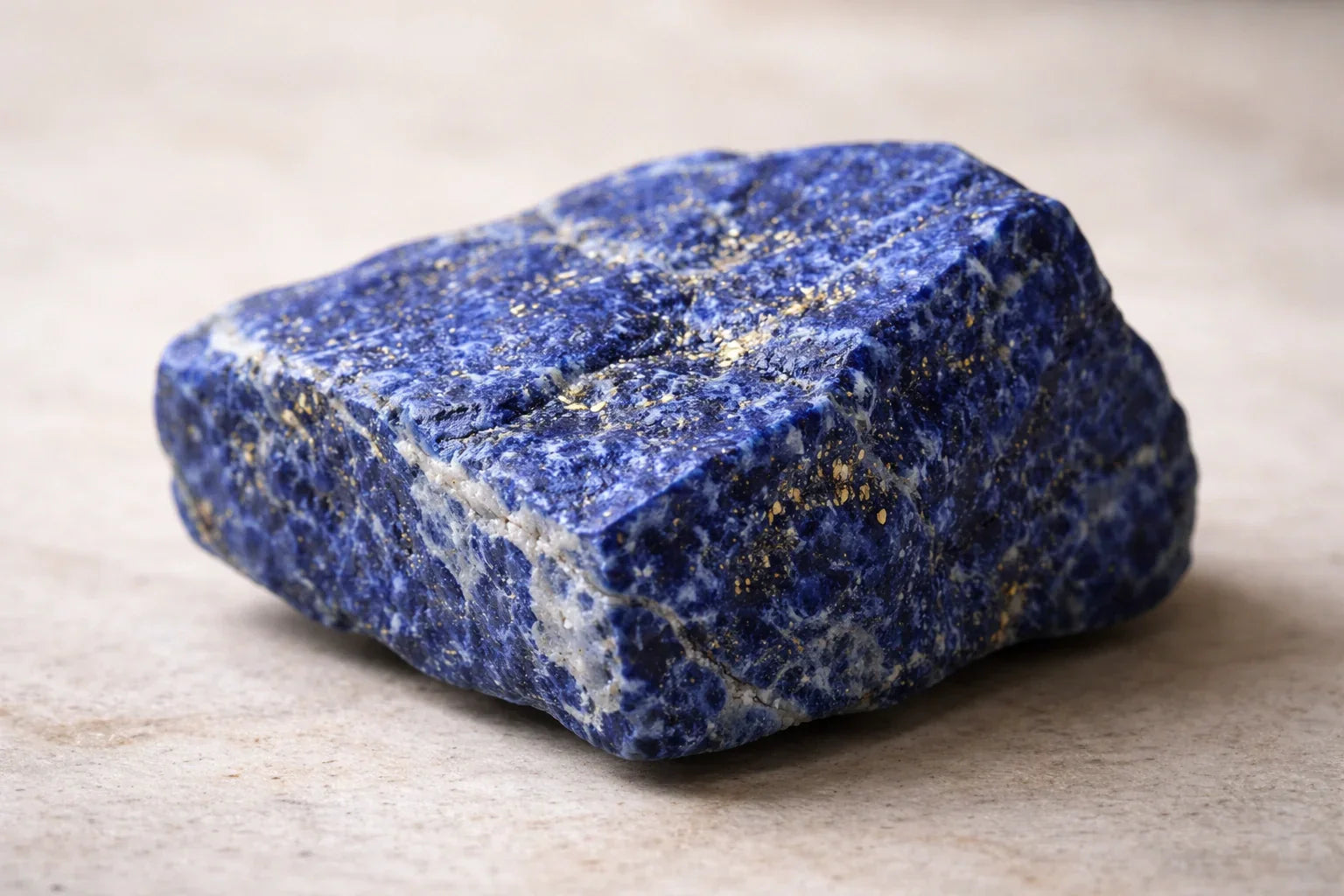
Discover Lapis Lazuli, one of the most iconic natural stones, associated with truth and communication in lithotherapy. This comprehensive guide explores its origins, symbolism, virtues and benefits...


